


Previous govts hated development, says PM Modi

Agencies
September 22, 2017

Varanasi, Sept 22: Prime Minister Narendra Modi on Friday lashed out at previous governments, saying they seemed to hate development and “looted” public money to win elections.

Starting his two-day visit to Varanasi, Mr. Modi gifted schemes worth Rs 1,000 crore to his Lok Sabha constituency.

“Development is solution to all our problems. Previous governments seemed to hate development and looted public money to win elections,” he said addressing a public meeting here.

The Prime Minister, who was speaking after inaugurating several development initiatives, said, “We not only launch but also complete projects.”

He targeted previous governments, saying they were driven by political calculations, resulting in schemes being inaugurated but never seeing completion.

‘Empowering the poor’

Asserting that his government’s effort was to empower the poor, he said, “Our aim is to see that the dream of development is fulfilled and lives of poor changes and they get opportunities.”

Mr. Modi said even the poor people do not want their future generations to eke out a living like themselves. “No poor person wants to give their children their poverty in inheritance,” he said.

He said his government shares their dream and is working to realise it. “Our government has a dream to wipe out poverty,” he said.

He inaugurated the Deendayal Hastkala Sankul — a trade facilitation centre for handicrafts and crafts museum — constructed at a cost of ₹ 300 crore.

Referring to development projects for weavers, who constitute a major chunk of the population in the city, Mr. Modi said his government wants their works to be showcased globally so as to enhance their economic prospects.

“Our weavers need a global market which will enhance their economic prospects significantly,” he said.

At the Deendayal Hastkala Sankul, Mr. Modi evinced keen interest in the wooden and glass products on display and talked to the rural artisans to encourage them.

Flags off Mahamana Express

The Prime Minister said his government has started initiatives to connect waterways for economic develoment.

He also flagged off, via a video link, the Mahamana Express train to connect Varanasi with Vadodara and Surat in Gujarat, his home state.

Mr. Modi inaugurated banking services of the Utkarsh Bank and unveiled a plaque to mark the laying of foundation stone of the headquarters building of the Bank.

The Utkarsh Bank specializes in micro-finance.

The Prime Minister dedicated a Jal Ambulance (water amublance) service and a ‘Jal Shav Vahan’ service (water—based vehicle service for ferrying bodies) to the people of Varanasi, through a video link.

On the first day of his two-day tour, he is scheduled to visit the historic Tulsi Manas Temple, where he will release a postal stamp on “Ramayana.” He will also visit the Durga Mata Temple in the pilgim city.

Comments

Add new comment

  • Coastaldigest.com reserves the right to delete or block any comments.
  • Coastaldigset.com is not responsible for its readers’ comments.
  • Comments that are abusive, incendiary or irrelevant are strictly prohibited.
  • Please use a genuine email ID and provide your name to avoid reject.
Agencies
April 27,2020

Thiruvananthapuram, Apr 27: Over 1.5 lakh Non-Resident Keralites (NRK)s, stranded in various countries, have registered online for returningto the state, once the Centre gives the nod and air services resume

The Norka (Non Resident Keralites Affairs) department had commenced the registration process at around 6pm on Sunday and within an hour 25,000 had registered, government sources said.

Till Monday morning, over 1.5 lakh NRKs have registered, the maximum is from UAE-- over 60,000.

The aged, pregnant women, children, critically ill patients, those with expired visas and those who had gone abroad on visiting visa are among thelarge numbers of people who are waiting to return.

Those wanting to return, have to get themselves tested for COVID-19 in the respective countries, where they are and register after getting a negative certificate for the infection.

Theregistration is for arranging quarantine facilitiesin the state, if necessary, and not for getting any priority on flight bookings,the sources said.

After the NRKs register themselves, the government would draw up a list on how to bring them back as per priority.

Comments

Add new comment

  • Coastaldigest.com reserves the right to delete or block any comments.
  • Coastaldigset.com is not responsible for its readers’ comments.
  • Comments that are abusive, incendiary or irrelevant are strictly prohibited.
  • Please use a genuine email ID and provide your name to avoid reject.
Agencies
August 2,2020

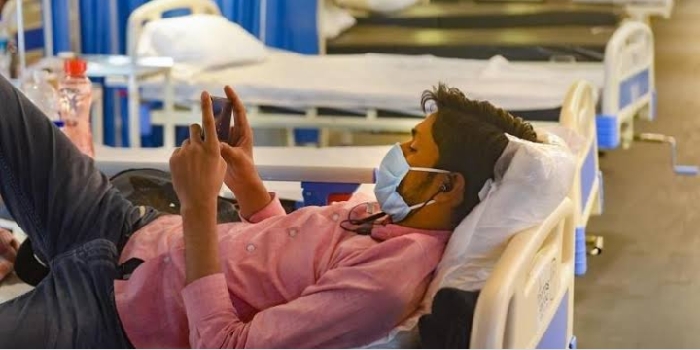
New Delhi, Aug 2: The Centre has written to all states and Union Territories stating that smartphones and tablet devices should be allowed for hospitalised Covid-19 patients so that they can interact with family and friends through video conferencing, which would provide them psychological support.

Though mobile phones are allowed in hospital wards, the missive was issued following some representation from the kin of patients alleging otherwise.

Director-General of Health Services (DGHS) in the Health Ministry Dr Rajiv Garg in the letter to the principal secretaries of health and medical education of states and Union territories said appropriate protocols for disinfecting devices and allotting timeslots can be developed by the hospital concerned to facilitate contact between patients and their family.

He underlined that administrative and medical teams should be responsive to the psychological needs of patients admitted in Covid-19 wards and ICUs of various hospitals.

"Social connection can calm down patients and also reinforce the psychological support given by the treating team. Please instruct all concerned that they should allow smartphones and tablet devices in patient areas so that the patient can video conference with their family and friends," stated the letter issued on July 29.

"Though mobile phones are allowed in the wards to enable a patient stay in touch with his or her family, we received representations from the patient families from some states stating mobile phones are not being allowed by hospital administrations because of which they were not being able to stay in contact with the patient," said Dr Garg.

Comments

Add new comment

  • Coastaldigest.com reserves the right to delete or block any comments.
  • Coastaldigset.com is not responsible for its readers’ comments.
  • Comments that are abusive, incendiary or irrelevant are strictly prohibited.
  • Please use a genuine email ID and provide your name to avoid reject.
News Network
May 14,2020

May 14: The UN’s children agency has warned that an additional 6,000 children could die daily from preventable causes over the next six months as the COVID-19 pandemic weakens the health systems and disrupts routine services, the first time that the number of children dying before their fifth birthday could increase worldwide in decades.

As the coronavirus outbreak enters its fifth month, the UN Children’s Fund (UNICEF) requested USD 1.6 billion to support its humanitarian response for children impacted by the pandemic.

The health crisis is “quickly becoming a child rights crisis. And without urgent action, a further 6,000 under-fives could die each day,” it said.

With a dramatic increase in the costs of supplies, shipment and care, the agency appeal is up from a USD 651.6 million request made in late March – reflecting the devastating socioeconomic consequences of the disease and families’ rising needs.

"Schools are closed, parents are out of work and families are under strain," UNICEF Executive Director Henrietta Fore said on Tuesday.

 “As we reimagine what a post-COVID world would look like, these funds will help us respond to the crisis, recover from its aftermath, and protect children from its knock-on effects.”

The estimate of the 6,000 additional deaths from preventable causes over the next six months is based on an analysis by researchers from the Johns Hopkins Bloomberg School of Public Health, published on Wednesday in the Lancet Global Health Journal.

UNICEF said it was based on the worst of three scenarios analysing 118 low and middle-income countries, estimating that an additional 1.2 million deaths could occur in just the next six months, due to reductions in routine health coverage, and an increase in so-called child wasting.

Around 56,700 more maternal deaths could also occur in just six months, in addition to the 144,000 likely deaths across the same group of countries. The worst case scenario, of children dying before their fifth birthdays, would represent an increase "for the first time in decades,” Fore said.

"We must not let mothers and children become collateral damage in the fight against the virus. And we must not let decades of progress on reducing preventable child and maternal deaths, be lost,” she said.

Access to essential services, like routine immunisation, has already been compromised for hundreds of millions of children and threatens a significant increase in child mortality.

According to a UNICEF analysis, some 77 per cent of children under the age of 18 worldwide are living in one of 132 countries with COVID-19 movement restrictions.

The UN agency also spotlighted that the mental health and psychosocial impact of restricted movement, school closures and subsequent isolation are likely to intensify already high levels of stress, especially for vulnerable youth.

At the same time, they maintained that children living under restricted movement and socio-economic decline are in greater jeopardy of violence and neglect. Girls and women are at increased risk of sexual and gender-based violence.

The UNICEF pointed out that in many cases, refugee, migrant and internally displaced children are experiencing reduced access to protection and services while being increasingly exposed to xenophobia and discrimination.

“We have seen what the pandemic is doing to countries with developed health systems and we are concerned about what it would do to countries with weaker systems and fewer available resources,” Fore said.

In countries suffering from humanitarian crises, UNICEF is working to prevent transmission and mitigate the collateral impacts on children, women and vulnerable populations – with a special focus on access to health, nutrition, water and sanitation, education and protection.

To date, the UN agency said it has received USD 215 million to support its pandemic response, and additional funding will help build upon already-achieved results.

Within its response, UNICEF has reached more than 1.67 billion people with COVID-19 prevention messaging around hand washing and cough and sneeze hygiene; over 12 million with critical water, sanitation and hygiene supplies; and nearly 80 million children with distance or home-based learning.

The UN agency has also shipped to 52 countries, more than 6.6 million gloves, 1.3 million surgical masks, 428,000 N95 respirators and 34,500 COVID-19 diagnostic tests, among other items.

Comments

Add new comment

  • Coastaldigest.com reserves the right to delete or block any comments.
  • Coastaldigset.com is not responsible for its readers’ comments.
  • Comments that are abusive, incendiary or irrelevant are strictly prohibited.
  • Please use a genuine email ID and provide your name to avoid reject.