


IS propoganda has not affected Indian social fabric, says Rajnath Singh

Agencies
March 15, 2018

Gurgaon, Mar 15: Home Minister Rajnath Singh has said Indian social fabric has not been affected by the emergence of the Islamic State.

"I am, however, happy that Indian social fabric has not been affected by the emergence of the Islamic State and I am sure this will not have any further impact in our country," he said.

Addressing the fourth counter-terrorism conference -- 'Changing Contours of Global Terror' -- Singh, without taking Pakistan's name, said some countries are providing sponsorship and safe havens to terrorists and this has further played a major role in the phenomenal growth of terrorism globally.

"Radicalisation of populace, particularly youths, is another trend and one of the most challenging problems being faced the world over.

"Several countries in the world have identified the problem and have taken measures to check and control the process of radicalisation and I am happy to state that India has timely busted some modules that were planning to orchestrate terrorist attacks on her soil," he said.

The home minister said providing sponsorship and safe havens have further played a major role in the phenomenal growth of global terrorism.

In addition, state support has granted terrorist groups access to resources, guidance and logistics, which would normally be beyond their capabilities, Singh said.

"Any effort to counter the activities of terrorist groups carries the danger of placing the victim nation in direct confrontation with the host nation and its resources," he said.

Singh said in the recent years, the perception of global terrorism has undergone a massive makeover with the rise of armed terror groups especially in the Middle East, South Asia and Africa.

"This phenomenon could be attributed to the diminishing control in the terror space of the Al-Qaeda leadership, which just a decade ago was the face of terrorism. The shift of AQ Network from the Middle East to South Asia is a phenomenon, which is of serious concern to India," he said.

The home minister said a new dimension of terrorism is the networking of terrorist groups with the criminal underworld including organised crime gangs, gunrunners, smugglers, drug peddlers, with hawala and parallel banking channels being used for global flows of finance.

"It has enabled global terrorist groups to use the infrastructure and terrain knowledge of local outfits for launching attacks in countries, despite having no presence in the area," he said.

The home minister said the government has kept a keen watch on the growth of IS and their ways of using social media as a key tool for ideological indoctrination, recruitment and networking by targeting young generation and intellectual Muslims.

"The potential threat posed by the ISIS are large-scale radicalisation of Muslim youths throughout the world, the rise in 'lone-wolf' and terror attacks by returnee foreign fighters to their home countries. The terror attacks in Australia and France are telling examples of such threat," he said.

Singh said IS propaganda has significantly altered jihadi discourse in India, which, so far, was rooted in grievances against the Indian state and society.

"I am, however, happy that Indian social fabric has not been affected by the emergence of the Islamic State and I am sure this will not have any further impact in our country," he said.

The home minister said India has consistently taken steps to intensify and strengthen international cooperation through various means.

Terrorism, in all forms, including, Left Wing Extremism and Insurgency, poses a challenge on the sovereignty of India and the country already faces a serious challenge due to relentless efforts of Pakistan-sponsored anti-India Islamist groups like the LeT, JeM, HUJI and Hizbul Mujahideen, he said.

Singh said the emergence of India at the global level is also being challenged by the terrorist groups, due to its vibrant economy and plural character.

Comments

Abu Muhammad
 - 
Thursday, 15 Mar 2018

Rajnathji, it is because Muslim scholars exposed IS as anti-muslim, unislamic and US-Israel sponsored international terrorist group whose leader is a Jew with a muslim name.


Sirji, why did you left out RSS, BD, VHP, Gou Rakshas, Vahinis, Senas, brigades etc. affiliated to BJP from Radicalisation, Terrorism, extremism, communalism ?? World wants to know your answer???

Add new comment

  • Coastaldigest.com reserves the right to delete or block any comments.
  • Coastaldigset.com is not responsible for its readers’ comments.
  • Comments that are abusive, incendiary or irrelevant are strictly prohibited.
  • Please use a genuine email ID and provide your name to avoid reject.
News Network
March 2,2020

New Delhi, Mar 2: As communal violence spiked in north-east Delhi earlier this week, Hindu, Muslim and Sikh residents of a colony came together and stood guard against frenzied mobs which ran riot in nearby areas vandalising homes, shops and torching cars.

They have not let their guard down even as the situation is limping back to normalcy following four days of violence that has claimed at least 42 lives and left over 200 injured.

The B-Block colony in Yamuna Vihar has a Hindu-dominated Bahjanpura on one side and Muslim populated Ghonda on the other.

People from all faiths in the locality sit outside their homes at night and deal with any suspected outsider, Arib, a dentist in his 30s, said.

"It is the sloganeering by mobs that causes panic in the dead of night. Such slogans are from both sides and we hear groups of people moving forward towards our area.

"This is where we let the Muslim locals deal with Muslim groups and Hindu residents deal with Hindu groups coming from outside," he said.

Businessmen, doctors and people working at government offices stuck together as violence reached its crest on Monday and Tuesday, and have been guarding the locality round the clock.

Earlier, the locals had claimed inadequate police deployment in the area, but were satisfied as patrolling by security personnel increased in the last two days.

Charanjeet Singh, a Sikh who owns a transport firm, said residents have ensured that not too many people gather to guard the colony at night. It has been decided not use sticks or rods, an idea which seems to have worked in maintaining peace, he said.

"I was 10 years old when we came to this locality from Uttar Pradesh's Meerut in 1982. There were riots in 1984 and tension in 2002, but even then our area remained peaceful. We have always been united and that is the way we have helped each other," Singh, who is now in his 50s, told PTI.

Faisal, a businessman in his 30s, said after two days of major violence, there was palpable tension in the area. "Nobody could sleep in the neighbourhood even on Wednesday and Thursday when the situation was brought under control," he said.

Faisal said around 4 am on Wednesday, three to four miscreants had torched a car, but were chased away by vigilant residents. They raised an alarm and others gathered, saving other vehicles parked nearby from being damaged, he added.

On the idea of not keeping sticks while guarding B-Block, Singh said, "Violence begets violence, crowd begets crowd. We thought if somebody would see sticks or rods in our hands from a distance and large crowds standing guard, it is likely they would want to come prepared. This could fuel violence."

"Now, if there is some young man returning late in the night, we identify if he belongs to our area. If not, we normally inform him about the situation and guide him to his destination, if required," he added.

Seventy-year-old V K Sharma said people in his colony never had any trouble with each other, as he blamed "outside elements" for the violence in north-east Delhi.

"Some people have some problem with symbols. If they find a particular religion's symbol on a shop, home or a car, they vandalise it.

"This is on both sides, Hindus as well as Muslims. But not all people in all religion are like that. There are good people who outnumber these handful people involved in violence," he said.

The violence happened for two days but it would take months for fear to subside, Sharma said, as he took out his two granddaughters, aged nine and two, out for ice cream.

"I cannot reduce the tension outside my home, but at least I can make these kids feel good by reducing their craving for ice cream,” he added.

Colony resident Shiv Kumar, a property consultant, and Wasim, a government official, said they too were members of this voluntary guards' team of the colony which stays up at night to fend off miscreants.

Comments

Add new comment

  • Coastaldigest.com reserves the right to delete or block any comments.
  • Coastaldigset.com is not responsible for its readers’ comments.
  • Comments that are abusive, incendiary or irrelevant are strictly prohibited.
  • Please use a genuine email ID and provide your name to avoid reject.
Agencies
February 5,2020

New Delhi, Feb 5: Following is the chronology of events in the 2012 Nirbhaya gang rape and murder case in which the Delhi High Court on Wednesday said the all the four convicts have to be hanged together, not separately.

- Dec 16, 2012: Paramedical student gang-raped and brutally assaulted by six men in a private bus and thrown out of the moving vehicle along with her male friend. The victims admitted to Safdarjung Hospital.

- Dec 17: Widespread protests erupt demanding stringent action.

- Police identify the accused - bus driver Ram Singh, his brother Mukesh Kumar, Vinay Sharma and Pawan Gupta.

- Dec 18: Ram Singh and three others arrested.

- Dec 20: Victim's friend testifies.

- Dec 21: A delinquent juvenile nabbed from Anand Vihar bus terminal in Delhi. Victim's friend identifies Mukesh as one of the culprits. Police conduct raids in Haryana and Bihar to nab the sixth accused, Akshay Kumar.

- Dec 21-22: Akshay arrested in Aurangabad district of Bihar and brought to Delhi. Victim records statement before the SDM in hospital.

- Dec 26: Following a cardiac arrest, victim flown to Singapore's Mount Elizabeth Hospital by the government.

- Dec 29: Victim succumbs to injuries and other medical conditions. Police add murder charge in the FIR.

- Jan 2, 2013: The then Chief Justice of India Altamas Kabir inaugurates fast track court (FTC) for speedy trial in sexual offence cases.

- Jan 3: Police file charge sheet against five adults accused of murder, gang-rape, attempt to murder, kidnapping, unnatural offences and dacoity.

- Jan 17: FTC starts proceedings against the five adult accused.

- Jan 28: Juvenile Justice Board (JJB) says minority of the juvenile accused is proved.

- Feb 2: FTC frames charges against five adult accused.

- Feb 28: JJB frames charges against the minor.

- Mar 11: Ram Singh commits suicide in Tihar Jail.

- Jul 8: FTC completes recording of testimonies of prosecution witnesses.

- Jul 11: Delhi High Court allows three international news agencies to cover the trial in the case.

- Aug 22: FTC begins hearing final arguments in trial against four adult accused.

- Aug 31: JJB convicts the minor for gang-rape and murder and awards three-year term at probation home.

- Sep 3: FTC concludes trial. Reserves verdict.

- Sep 10: Court convicts Mukesh, Vinay, Akshay, Pawan of 13 offences including gang-rape, unnatural offence and murder of the girl and attempt to murder her male friend.

- Sep 13: Court awards death penalty to all 4 convicts.

- Sep 23: HC begins hearing the convicts' death sentence reference sent to it by the trial court.

- Jan 3, 2014: HC reserves verdict on convicts' appeals.

- Mar 13: HC upholds death penalty to the 4 convicts.

- Mar 15: SC stays execution of 2 convicts, Mukesh and Pawan, after they file appeals. Later, stays execution of other convicts also.

- Apr 15: SC directs police to produce the dying declaration of the victim.

- Feb 3, 2017: SC says it would hear afresh the aspect of awarding death penalty to the convicts.

- Mar 27: SC reserves verdict on their appeals.

- May 5: SC upholds death penalty to four convicts, says the case falls under the category of 'rarest of rare' and the offence created "tsunami of shock".

- Nov 8: Mukesh, one of the four death row convicts in the case, moves SC seeking review of its verdict upholding the capital punishment awarded to him.

- Dec 12: Delhi Police opposes Mukesh's plea in SC.

- Dec 15: Convicts Vinay Sharma and Pawan Kumar Gupta move SC for review of its verdict.

- May 4, 2018: SC reserves order on review plea of Vinay and Pawan.

- Jul 9: SC dismisses review pleas of three convicts.

- Feb, 2019: Victim's parents move Delhi court for issuance of death warrants of the four convicts

- Dec 10, 2019: Akshay moves plea in SC seeking review of his death penalty.

- Dec 13: Victim's mother moves SC opposing review plea of convict

- Dec 18: SC dismisses Akshay's review plea.

- Delhi govt seeks death warrants for execution of death sentence to the 4 convicts

- Delhi court directs Tihar authorities to issue notice to convicts to avail their remaining legal remedies.

- Dec 19: Delhi HC dismisses plea of Pawan Kumar Gupta claiming he was a juvenile at the time of the offence.

- Jan 6, 2020: Delhi court dismisses complaint filed by Pawan's father seeking FIR against sole witness

- Jan 7: Delhi court orders 4 convicts to be hanged on January 22 at 7 am in Tihar jail.

- Jan 14: SC rejects curative petition of Vinay and Mukesh Kumar.

Mukesh files mercy petition before President

- Jan 17: President Ram Nath Kovind rejects mercy plea of Mukesh.

- Trial court issues death warrants again with execution date as February 1, 6 am.

- Jan 25: Mukesh moves SC against rejection of mercy plea.

- Jan 28: SC hears arguments, reserves verdict

- Jan 29: Convict Akshya Kumar approaches SC with curative petition

- SC rejects plea of Mukesh challenging rejection of his mercy plea.

- Jan 30: SC dismisses curative plea of Akshay Kumar Singh.

- Jan 31: SC dismisses plea filed by Pawan seeking review of its order rejecting his juvenility claim.

- Delhi court again postpones execution of the black warrants till further order.

- Feb 1: Centre moves HC against the trial court order.

- Feb 2: HC reserves judgement on Centre's plea.

- Feb 5: HC dismisses Centre plea against trial court order; says all 4 convicts have to be hanged together. It directs the convicts to pursue all legal remedies within a week, failing which the authorities ordered to take action in accordance with law.

Comments

Add new comment

  • Coastaldigest.com reserves the right to delete or block any comments.
  • Coastaldigset.com is not responsible for its readers’ comments.
  • Comments that are abusive, incendiary or irrelevant are strictly prohibited.
  • Please use a genuine email ID and provide your name to avoid reject.
Agencies
August 2,2020

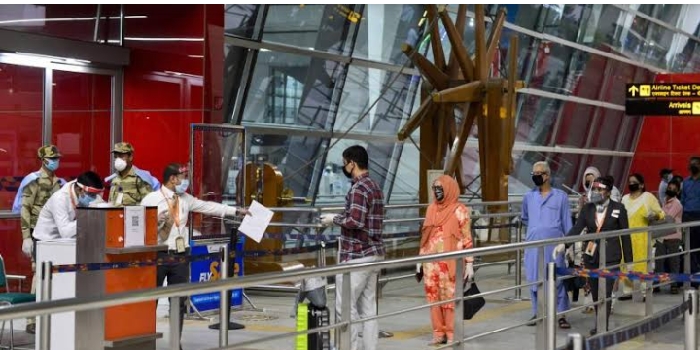
New Delhi, Aug 2: The Ministry of Health and Family Welfare on Sunday issued fresh guidelines for international passengers coming to India amid the COVID-19 pandemic. The new guidelines will be implemented from 12:01 am on August 8.

The ministry has also asked all passengers to submit a self-declaration form online at least 72 hours before travel.

"All travellers should submit self-declaration form on the on the online portal (www.newdelhiairport.in) at least 72hours before the scheduled travel," the guidelines said.

It also said that those coming to India must give an undertaking that they would undergo mandatory quarantine for 14 days as prescribed by the government. "They should also give an undertaking on the portal that they would undergo mandatory quarantine for 14 days i.e. 7 days paid institutional quarantine at their own cost, followed by 7 days isolation at home with self-monitoring of health," it added.

Giving exemptions in some cases, the guidelines mentioned, "Only for compelling reasons/cases of human distress such as pregnancy, death in the family. Serious illness and parent (s) with children of 10 years or below, home quarantine may be permitted for 14 days."

"If they wish to seek such exemption, they shall apply to the online portal at least 72 hours before boarding. The decision taken by the government as communicated on the online portal will be final," it said further.

The guidelines further said that travellers could request for exemption from institutional quarantine by submitting a negative RT-PCR test report on arrival.

"This test should have been conducted within 96 hours prior to undertaking the journey. The test report should be uploaded on the portal for consideration," it added.

Passengers have also been asked to download the Aarogya Setu app on their mobile phones.

Comments

Add new comment

  • Coastaldigest.com reserves the right to delete or block any comments.
  • Coastaldigset.com is not responsible for its readers’ comments.
  • Comments that are abusive, incendiary or irrelevant are strictly prohibited.
  • Please use a genuine email ID and provide your name to avoid reject.