Qamarul Islam to attend Dubai KCF’s Ishq-e-Rasool on Jan 8

[email protected] (CD Network)
January 5, 2016

Dubai, Jan 5: To mark the birth anniversary of Prophet Muhammad (pbuh) Dubai KCF will be organizing Ishq - e-Rasool conference on Friday, January 8, at Flora Grand Hotel Auditorium Dubai nearby Al Rigga Metro station at 6 p.m. Gulf Ishara, the mouthpiece monthly magazine of the KCF UAE will be released on this occasion.

aqamarulislamSayyid Thwaha Bafaki Thangal will lead the evening spiritual Majlis with opening prayer. Burda and Na’athe Sherief will be recited by Ustad Abdul Rasheed Haneefi. Winner of Talent Year 2015 State SSF Aashiq Kajuru and Salim Ujire will be awarded. The special guest at the ceremony is Deputy Qazi, Senior scholar of Kodagu Shaikuna Mahmood Musliyar Edappala. KCF UAE Assuffa Dars leader Ibrahim Saqafi Kedumbadi will deliver lecture on “Hubbu Rasool”.

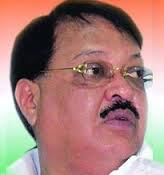
The Valedictory will be held at 8:15 pm. President of the National Council of the UAE, Abdul Hamid Saadi Isvaramangala will preside over. Minority Welfare Department of Karnataka government and the Wakf minister Qamarul Islam will inaugurate the event.

The first copy of Kannada monthly "Gulf Ishara" Shaikuna Mahmood Musliyar Edappala will be handed over to the consul General of India Dubai HE Anurag Bhushan. NK Muhammad Shafi Sa’adi President State SSF will deliver introductory address.

Editor of Ishara Abdul Hameed Bajpe will introduce monthly magazine. KCF International Committee General Secretary Haji Sheikh Bava, Mangalore, State SSF Vice President Abdul Rahman Rizwi Kalkatta, Usman Haji Zaith, General Secretary KCF UAE National Council, Director of Siraj Malayalam Gulf Version Abdul Hameed PMH Ishwaramangala , Siraj Editor KM Abbas ,ICF GCC General secretary Abdul Azeez Saqafi Mambad, Editor of Prawasi Vayana Malayalam Mohammed Shareef Karasheri, Dr. Sadashiv Bangera, Director of Dubai Thumbe Clinic. Bashir Bolwar (President Al- Khadisa Dubai) M.Ebrahim Muluru (Vice-President BCF Dubai ) among others will attend.

This was announced at a press conference by Mahbub Rahman Saqafi (President KCF Dubai); Kalandar Kabaka (General Secretary KCF Dubai); Saifuddin Patel Aranthod (Secretary of the Reception Committee) and Muhammad Rafeek Kalladka (Secretary KCF Administration Division in Dubai).

Comments

Rameez
 - 
Tuesday, 5 Jan 2016

If he was a true Ishq-e-rasool (S.a.w), he would follow the Sunnah with a beard.

Add new comment

  • Coastaldigest.com reserves the right to delete or block any comments.
  • Coastaldigset.com is not responsible for its readers’ comments.
  • Comments that are abusive, incendiary or irrelevant are strictly prohibited.
  • Please use a genuine email ID and provide your name to avoid reject.
Agencies
February 6,2020

Even more than three years after demonetisation and all-out efforts to make most transactions through electronic, cash is still king, as it thrives in a digital India, said fintech start-up Paytm founder Vijay Sekhar Sharma.

"While cashless economy is not possible in India, less cash economy will be in the future. Less cash is the only solution, not the elimination of cash," Sharma told IANS in an interview after unveiling an all-in-one payment gateway on Tuesday.

Asserting that it would take 5-10 years for India to make the transition to digital payments from the traditional mode of cash, Sharma, 41, said the e-payment industry benefitted more from the November 8, 2016 note ban and withdrawal of old Rs 1,000 and Rs 500 denominations.

"I think it (demonetisation) helped the industry despite lack of specific help. But the world has changed since then. It is about the scale of distribution of merchants that is what is propelling digital payments," said Sharma.

Most of the cash not only came back into circulation, but also remains as the mode of payment for the majority due to its convenience for the people used to such transactions.

Expounding Paytm's zero service charge, Sharma said the strategy is sustainable as it leads to acquiring more customers and merchants, enabling newer business opportunities.

Paytm also does not levy a service charge to small merchants for its payments services, unlike organised players like Uber.

"Though there is a monetisation model, the merchants who are small shopkeepers, become our financial services customers as they open a bank account, which is profitable."

Paytm secured a Payments Bank license from the Reserve Bank of India to offer a savings bank account, Rupay debit card and money transfer services.

"We are banking on payment services acquiring customers and merchants who avail banking, lending, insurance, wealth and software services like billing software and business ledger software services eventually," Sharma noted.

The mobile first bank services include zero balance and zero digital transaction charge accounts.

"Basically, payments, cloud, commerce and financial services are a cohort we follow. So, payments is our customer as well as merchant acquisition. If it breaks even, we are happy because other line items make more money, he affirmed.

Noting that in a market like India, one cannot price services at a premium unlike in a developed country like the US, the billionaire businessman said a consumer in a developing country would not be able to afford such a hefty charge.

Forbes ranked Sharma as India's youngest billionaire in 2017, with a net worth of $2.1 billion.

While several countries operate on the model of higher service charges, Sharma said newer business models have to be discovered in India, as customer lifecycle value is accounted for more stages than in other nations.

Asked about an upscale retailer like Zara not giving a wallet payment option during its recent end of season sale in Bengaluru, Sharma said Paytm was addressing such hiccups with its all-in-one payment solutions.

"It's an opportunity, because if the retailer has our all-in-one point of sale machine, where in they enter the amount, it shows both the Quick Response code (QR) and card payment options," he observed.

Sharma compared older swiping payment machine to feature phones and modern ones to feature-rich smartphones.

"If you notice, they look like feature phones and the modern day card machine is more a smartphone like. You can add the smatphone components, which can add the features," reiterated Sharma.

Though Paytm's all-in-one QR point of sale machine integrates the billing system, its chief executive said it was not ideal to have an independent QR feature.

Paytm has 16 million strong merchant user base, which Sharma aims to raise to 26 million base in the next one year.

Sharma has launched in this tech city an all-in-one payment gateway and Paytm Business Payments solution, which enable digital payments through multiple methods for small and medium enterprises (SMEs) and an Android point of sale machine.

With the new gateway solution, collecting digital payments through multiple methods can be achieved seamlessly while Paytm Business Payments solution enables automated vendor payments, including employee salaries and customer refunds among others.

The One97 Communications-owned Paytm aims to help SMEs streamline and digitise their business activities using its new solutions, which enhance the overall efficiency of both accepting and making payments.

Paytm has a data bank of over 200 million saved cards and bank accounts, a feature which enables partner apps to shorten transaction times and propel faster conversions while using the all-in-one payment gateway.

Complementing the two solutions, Sharma also launched an all-in-one Android point of sale machine, which can accept payments through all forms such as cards, wallets, UPI apps and even cash.

The device has a QR code that supports all contact and contactless payments, coming with integrated billing software customized solutions for different sectors such as catering, ticketing, parking and others.

The handheld Android device is equipped with an in-built printer, scanner and can also generate bills.

Valued at $16 billion, Paytm is not alone in the fiercely competitive Indian fintech space where a dozen players like PhonePe, MobiKwik, Kotak 811 and deep pocketed international giants Google Pay and Amazon Pay are in the fray.


Comments

Add new comment

  • Coastaldigest.com reserves the right to delete or block any comments.
  • Coastaldigset.com is not responsible for its readers’ comments.
  • Comments that are abusive, incendiary or irrelevant are strictly prohibited.
  • Please use a genuine email ID and provide your name to avoid reject.
News Network
April 20,2020

Hubballi, Apr 20: Dejected over failure to get alcohol for almost one month, a forty-five year old man and his sister died after consuming hand sanitizer in Kalghatgi taluk of Dharwad district on Sunday.

The deceased persons, identified as Basavaraj Venkappa Kuruvinkoppa and Jambavva Kattimani (50) of little hamlet Gambyapur, died at Karnataka Institute of Medical Sciences (KIMS).

The wife of the deceased person has lodged a complaint at Kalghatgi police station stating that her husband had been addicted to alcohol since the last 10-12 years.

Basavaraj and his sister have reportedly consumed hand sanitizer several times since the last 2-3 days, severely deteriorating their health as they felt it is replacement for liquor and has high levels of spirit content.

They were admitted to KIMS only by Sunday early morning after complaining of serious pain in the stomach. The KIMS director Dr Ramalingappa Anthartani said that the deceased appears to have consumed too much sanitizer and the doctors couldn't save their life as they approached the hospital very late.

He also claimed that he is awaiting the postmortem report to know how much quantity of hand sanitizer the deceased had consumed.

"Condition of the patients was very critical when they were admitted to KIMS hospital. It seems that they had drunk too much hand sanitizer for non-availability of liquor. Consumption of hand sanitizer could prove fatal as it has high chemical contents" KIMS director Dr Ramalingappa Anthartani said

The Karnataka government has prohibited the sale of liquor ever since the Centre declared lockdown to control the spread of Coronavirus. This has prompted the alcohol addicts to buy liquor by paying hefty prices in the black market.

But, many poor people in villages have started consuming cheaper hooch and this trade has recently flourished in the rural areas.

Hooch trade has also prompted officials of the excise department to conduct raids in several villages of North Karnataka region. The many theft cases of liquor shops are reported in Karnataka as drunkards have become desperate to get alcohol.

The Karnataka government was planning to allow the sale of liquor after the end of the first phase of lockdown. But, the rising cases of Corona positive cases has prompted it to extend the ban on liquor sale until May 3.

Comments

Add new comment

  • Coastaldigest.com reserves the right to delete or block any comments.
  • Coastaldigset.com is not responsible for its readers’ comments.
  • Comments that are abusive, incendiary or irrelevant are strictly prohibited.
  • Please use a genuine email ID and provide your name to avoid reject.
News Network
January 8,2020

Bengaluru, Jan 8: The Karnataka government on Tuesday decided to adopt a no-fail approach for Class 7 examinations for government and private schools following the state syllabus.

The report card of a student doesn’t carry ‘pass’ or ‘fail’ remark, but points to his or her strengths and weaknesses in each subject in the exams, which will now be called Common Evaluation Exam.

The quality cell of the Karnataka Secondary Education Examination Board (which conducts SSLC exams) will prepare question papers, which will be evaluated at the district level by government and private schoolteachers. The Class 7 exams will be held in March.

The Common Evaluation Exam follows the Continuous Comprehensive Evaluation (CCE) currently practised under the Right to Education Act. “The formative and summative assessments (tests, projects and quizzes) will be held as usual,”KG Jagadeesha, commissioner of public instruction, said.

Edu dept to launch helpline by March

For the March exam, summative assessment 2 will be held with half the syllabus. Other modalities (exam duration and total marks) will be announced next week,” said KG Jagadeesha. The CCE system will continue for classes 8 and 9. The government hopes the exam and subsequent interventions in classes 8 and 9 will boost students’ confidence for crucial board examinations.

Minister S Suresh Kumar said, “More than an exam, it’s an evaluation of a child’s knowledge. The Belagavi division has done something similar. The Kalaburagi zone found mathematics and science were areas of concern; language was an issue in Urdumedium schools.” The minister said zilla panchayat CEOs have observed that intervention should start from class 8. “Keeping this in mind, we’ve started necessary preparation for class 7 exam ,” he added.

The education department will start a helpline by March for students, teachers, school managements and educationists to 11 raise problems on day-to-day issues.

Comments

Add new comment

  • Coastaldigest.com reserves the right to delete or block any comments.
  • Coastaldigset.com is not responsible for its readers’ comments.
  • Comments that are abusive, incendiary or irrelevant are strictly prohibited.
  • Please use a genuine email ID and provide your name to avoid reject.