


Rahul Gandhi now more than a match to Narendra Modi: Moily

Agencies
February 6, 2018

Hyderabad, Feb 6: Rahul Gandhi has emerged as "more than a match" to Prime Minister Narendra Modi and the aspiration of the party and youth is to see him as the country's PM, senior Congress leader M Veerappa Moily said here.

Asked about media reports suggesting that senior leaders like NCP chief Sharad Pawar and Trinamool Congress supremo Mamata Banerjee, both of whom were earlier in the Congress, maybe nursing an ambition to lead the UPA, he said, "Ambition is different, but the practical reality is another (matter)."

"The Congress has a pan-Indian person and identity," the former chief minister of Karnataka told PTI, stressing that only a party having nationwide presence fits the bill to lead the opposition bloc against the BJP.

The former Union minister claimed the Congress' victory in the recent by-polls in Rajasthan is a clear indication that the NDA government is facing a lot of "unpopularity" and the "national-level graph" of the prime minister is "steeply coming down".

"The election 'jumla' (rhetoric) will not be trusted by the people. There is a total trust deficit. There is a lot of difference between what they (the BJP) assure and what they implement," Moily alleged.

He claimed the Congress would get a majority in Rajasthan which goes to polls later this year and that the UPA would also form the government at the Centre after the Lok Sabha elections.

Asked if Rahul Gandhi would be projected as the UPA's prime ministerial candidate, Moily said, "Yes, he is our Congress president, this is our aspiration...of the entire country...youth require it."

"Now, he is more than a match to Narendra Modi, he has emerged like that, as a strong personality," he told PTI.

On the perception in some quarters that senior politicians like Sharad Pawar and Mamata Banerjee might be reluctant to work under Rahul Gandhi, he said "these are localised conflicts".

"Each party would like to develop itself as a national party, nothing wrong in it. Ultimately, to face a communal party like the BJP, I think there is some understanding between the Congress party and other parties which are opposed to communal parties, and this kind of understanding, I don't think there is a dispute," Moily said.

He termed Sonia Gandhi - who recently stepped down as the Congress president but continues to be parliamentary party leader and UPA chairperson - as an "inspirational personality" for his party, the UPA allies and for the country.

"The Congress has never intended to impose its leadership on anybody (the UPA allies). It's a question of how you approach. There should be a pan-India personality of a political party, particularly to lead an alliance against the communal party like the BJP, you require a credible and pan-Indian personality...party," he said.

On suggestions that the Congress lost out in the recent Gujarat Assembly elections as it did not project a chief ministerial candidate, Moily said it may be one of the reasons but it's not the sole one.

The Congress cannot have a uniform policy on projecting a leader for the post of chief minister as it depends on the situation and circumstances in the party as well as the states concerned, he said.

"From state to state, this will change. State to state things will differ. And we cannot have a uniform policy (in different states) or approach to name the leader for chief ministership," Moily added.

Comments

Add new comment

  • Coastaldigest.com reserves the right to delete or block any comments.
  • Coastaldigset.com is not responsible for its readers’ comments.
  • Comments that are abusive, incendiary or irrelevant are strictly prohibited.
  • Please use a genuine email ID and provide your name to avoid reject.
News Network
May 27,2020

Washington, May 27: Most viruses and other germs do not spread easily on flights, the US Center for Disease Control and Prevention has said in its COVID-19 guidelines which do not recommend following social distancing between two passengers inside a plane or keeping the middle seat unoccupied.

As a result of coronavirus pandemic, air traffic inside the US has come to a near halt. Air traffic is said to be down to about 90 per cent. For all travellers coming from overseas, the Center for Disease Control and Prevention (CDC) has recommended 14 days quarantine.

"Most viruses and other germs do not spread easily on flights because of how air circulates and is filtered on aeroplanes," the CDC has said in its set of COVID-19 guidelines for air travellers.

However, it noted that the air travellers were not risk-free especially in the time of the coronavirus pandemic and recommended Americans to avoid travel as far as possible.

"Air travel requires spending time in security lines and airport terminals, which can bring you in close contact with other people and frequently touched surfaces," it said.

"Social distancing is difficult on crowded flights, and you may have to sit near others (within six feet), sometimes for hours. This may increase your risk for exposure to the virus that causes COVID-19," the CDC said.

But instead of recommended social distancing inside commercial planes, the CDC has advised a series of preventive and hygienic measures to be taken by the airlines pilot and crew to prevent the spread of coronavirus.

The US Department of Transportation and Federal Aviation Administration in its latest safety alerts for operators on May 11 said that air carriers and crews conducting flight operations having a nexus to the US, including both domestic and foreign air carriers, should follow CDC's occupational health and safety guidance.

The CDC issued its guidelines in first guidelines for the airlines and airline crew on March and again in May.

The CDC, which has issued an exhaustive social guideline measures in various sections, is silent on keeping the middle seat of a plane unoccupied so as to maintain the six feet distance between two passengers.

It calls for the plane crew to report to the CDC a traveller with specific COVID-19 symptoms like fever, persistent cough, difficulty in breathing and appearing unwell.

Asking the airlines and cabin crew to review infection control guidelines for cabin crew, the CDC recommends several measures for cabin crew to protect themselves and others, manage a sick traveller, clean contaminated areas, and take actions after a flight.

Prominent among them include washing hands often with soap and water for at least 20 seconds, particularly after assisting sick travellers or touching potentially contaminated body fluids or surfaces and use of alcohol-based hand sanitizer (containing at least 60 per cent alcohol) if soap and water are not available.

Airlines should consider providing alcohol-based hand sanitizer to cabin and flight crews for their personal use, it said.

The CDC guidelines do not recommend following social distancing inside a plane between two passengers or keeping the middle seat unoccupied. But it asks to minimise contact between passengers and cabin crew and the sick person.

"If possible, separate the sick person from others (by a distance of 2 meters or 6 feet, ideally) and designate one crew member to serve the sick person. Offer a facemask, if available and if the sick person can tolerate it. If a facemask is not available or cannot be tolerated, ask the sick person to cover their mouth and nose with tissues when coughing or sneezing," said the CDC guidelines.

If no symptomatic passengers were identified during or immediately after the flight, the CDC recommends airlines to follow routine operating procedures for cleaning aircraft, managing solid waste, and wearing PPE.

"If symptomatic passengers are identified during or immediately after the flight, routine cleaning procedures should be followed, and enhanced cleaning procedures should also be used," it said.

Clean porous (soft) surfaces (e.g, cloth seats, cloth seat belts) at the seat of the symptomatic passengers and within 6 feet of the symptomatic passengers in all directions, it added.

Comments

Add new comment

  • Coastaldigest.com reserves the right to delete or block any comments.
  • Coastaldigset.com is not responsible for its readers’ comments.
  • Comments that are abusive, incendiary or irrelevant are strictly prohibited.
  • Please use a genuine email ID and provide your name to avoid reject.
March 31,2020

New Delhi, Mar 31: India is likely to blacklist about 300 foreigners who came from 16 countries, including Malaysia and Thailand, on tourist visas but attended an Islamic congregation at Nizamuddin here that has become a key source for the spread of coronavirus in the country, officials said on Tuesday.

These foreigners were among around 8,000 people who attended the Tabligh-e-Jamaat at Nizamuddin Markaz facility in March, many of whom have shown symptoms of COVID-19, a Union Home Ministry officlal said.

About 30 of those who attended the Nizamuddin event in mid-March tested positive and at least three have succumbed to the infection in last few days.

"Those who came on tourist visa but attended the Nizamuddin event stands being in our blacklist as they have violated the visa conditions. Tourist visa holders can't attend religious function," a Union Home ministry official said.

If a foreigner is put in the Home ministry's blacklist, he or she can't travel to India in future.

A total of 281 foreigners were found by the police at the Nizamuddin campus in the last two days.

They include 19 people from Nepal, 20 people from Malaysia, one from Afghanistan, 33 from Myanmar, one from Algeria, one from Djibouti, 28 from Kyrgystan, 72 from Indonesia, 7 from Thailand, 34 from Sri Lanka, 19 from Bangladesh, three from England, one from Singapore, four from Fiji, one from France and one from Kuwait.

Most of these foreigners came on a tourist visa, an official said.

Comments

Add new comment

  • Coastaldigest.com reserves the right to delete or block any comments.
  • Coastaldigset.com is not responsible for its readers’ comments.
  • Comments that are abusive, incendiary or irrelevant are strictly prohibited.
  • Please use a genuine email ID and provide your name to avoid reject.
Agencies
July 29,2020

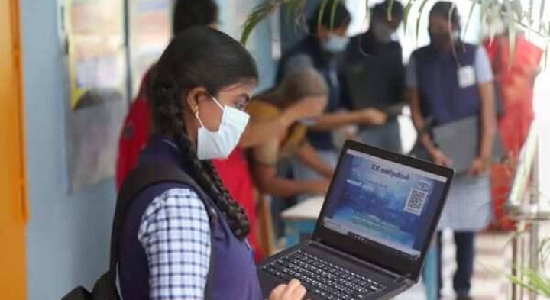
New Delhi, Jul 29: The new National Education Policy (NEP) approved by the Union Cabinet on Wednesday is set to usher in a slew of changes with the vision of creating an education system that contributes directly to transforming the country, providing high-quality education to all, and making India a global knowledge superpower.

The draft of the NEP by a panel headed by former Indian Space Research Organisation (ISRO) chief Kasturirangan and submitted to the Union Human Resource Development Minister Ramesh Pokhriyal when he took charge last year. The new NEP replaces the one formulated in 1986.

Some of the key highlights of the New Education Policy are:-

The policy aims to enable an individual to study one or more specialized areas of interest at a deep level, and also develop character, scientific temper, creativity, spirit of service, and 21st century capabilities across a range of disciplines including sciences, social sciences, arts, humanities, among others.

It identified the major problems facing the higher education system in the country and suggested changes such as moving towards multidisciplinary universities and colleges, with more institutions across India that offer medium of instruction in local/Indian languages, a more multidisciplinary undergraduate education, among others. 

The governance of such institutions by independent boards having academic and administrative autonomy has also been suggested.

Under the suggestions for institutional restructuring and consolidation, it has suggested that by 2040, all higher education institutions (HEIs) shall aim to become multidisciplinary institutions, each of which will aim to have 3,000 or more students, and by 2030 each or near every district in the country there will be at least one HEI.

The aim will be to increase the Gross Enrolment Ratio in HEIs including vocational education from 26.3 per cent (2018) to 50 per cent by 2035.

Single-stream HEIs will be phased out over time, and all will move towards becoming vibrant multidisciplinary institutions or parts of vibrant multidisciplinary HEI clusters.

It also pushes for more holistic and multidisciplinary education to be provided to the students.

Comments

Add new comment

  • Coastaldigest.com reserves the right to delete or block any comments.
  • Coastaldigset.com is not responsible for its readers’ comments.
  • Comments that are abusive, incendiary or irrelevant are strictly prohibited.
  • Please use a genuine email ID and provide your name to avoid reject.