Rahul Gandhi’s Congress prevents party MP Asrarul Haque from voicing against Talaq Bill

coastaldigest.com news network
December 31, 2017

Senior Congress leader and Member of Parliament Maulana Mohammad Asrarul Haque has obliquely criticised the party high command for not allowing him to voice against the controversial Talaq Bill, which was passed by the Lok Sabha earlier this week in spite of severe opposition from Muslim women across Indian.

Haque, who represents Bihar’s Kishanganj seat in the parliament, said in an interview that the so called Muslim Women (Protection of Rights on Marriage) Bill is not only against the Islamic Shariah but also against Indian constitution and Muslim women of the country. 

Muslim scholars across India including women have termed the Bill draconian which can snatch the fundamental rights of Muslim men and women if implemented. The Bill proposes three year jail term for a husband (only if he is a Muslim) if his wife accuses him of giving her instant triple talaq.

The Bill, a brainchild of BJP, was passed in Lok Sabha last Thursday with the support of Rahul Gandhi led Congress party. The Bill is likely to sail through the Rajya Sabha too if Congress continues to support it. 

75-year-old Haque, who is also the Bihar state president of Jamiat Ulema-e-Hind, said that he would never accept his party’s stance on the controversial Bill.  He also said that he wanted to vote against it but couldn’t reach the Parliament on time due to traffic jam. “I am sad that my party did not allow me to speak against the Bill in the parliament. I request my party to oppose the Bill at least in Rajya Sabha,” he said.

Comments

sumi
 - 
Sunday, 31 Dec 2017

if he is really interested to oppose then - he should have started early - it was very important issue for Muslims gith ??

Abdullah
 - 
Sunday, 31 Dec 2017

Till now Congress did not learned Lessons

Abdullah
 - 
Sunday, 31 Dec 2017

Congress Till not learned lessons.

Ganesh
 - 
Sunday, 31 Dec 2017

No never. These people spreading lies. Cant compare Modi with Rahul. Modi is just hitler version 2

Kumar
 - 
Sunday, 31 Dec 2017

If rahul becomes pm, then we may face worster than modi. Modi has no education even that he doing all gimmiks.. Rahul will be another big autocrat. coz he has brain and power (if he becomes pm)

Add new comment

  • Coastaldigest.com reserves the right to delete or block any comments.
  • Coastaldigset.com is not responsible for its readers’ comments.
  • Comments that are abusive, incendiary or irrelevant are strictly prohibited.
  • Please use a genuine email ID and provide your name to avoid reject.
News Network
July 16,2020

Bengaluru, Jul 16: Life is a journey that cannot be imagined without traveling but the prevailing COVID-19 situation has made the whole world come to a standstill.

This pandemic has not only limited the modes of transportation for people all across India but also forces them to look for safer, convenient, and comfortable travel options. Private charter services are thus seen as the best alternative.
This is the reason the demand for availing charter services has risen dramatically over the last couple of months and encouraged airlines to either start or expand their charter services business further.

Many airlines have revamped their business strategies keeping charter services in mind and entered into this optimist business segment recently.

Star Air, the aviation arm of Indian business conglomerate - Sanjay Ghodawat Group, has entered into the charter services business to fulfill private air travel requirements.

The group previously has an experience of over six years of running helicopter charter service operations successfully under Ghodawat Enterprises Pvt Ltd.

The airline, Star Air, with its world-class fleet of three Embraer ERJ-145 aircraft (50-seater), two helicopters - Airbus H130 (6-seater) and Airbus H135 (5-seater), has the capacity to fly one anywhere at any point in time as per one's convenience that too with great comfort, luxury and complete privacy.

Star Air is a known name in the Indian aviation industry that is recognized for its unmatched safety, comfort, and on-time performance records.

It was praised in the past for connecting the unconnected by commencing commercial flight services to many Tier-II and Tier-III cities in India that were not graced with airline services before.

And now, after gaining the trust of over 1,00,000 customers from all across India and serving countless prominent VIP's, it has launched its charter service business.

It holds a valid license for charter service business and operates as per the protocols defined by the DGCA. The company has a team of experienced pilots, technicians, and staff that assures one gets a best-in-class charter service with complete safety and without any hassles.

"We are delighted to expand our airline operations by opening this private charter services. Like our scheduled commercial airline services, we are offering a world-class charter service keeping your comfort, safety, and overall flying experience in mind, said Sanjay Ghodawat, Chairman - Star Air.

This company had started its operations in January 2019 to connect the unconnected by providing world-class flight services at an affordable cost.

Since then it is continuing on its endeavour and gaining immense trust nationwide. It provides services to many Indian cities like Bengaluru, Belagavi, Indore, Kalaburagi, Mumbai, Ahmedabad, and Ajmer (Kishangarh).

Comments

Add new comment

  • Coastaldigest.com reserves the right to delete or block any comments.
  • Coastaldigset.com is not responsible for its readers’ comments.
  • Comments that are abusive, incendiary or irrelevant are strictly prohibited.
  • Please use a genuine email ID and provide your name to avoid reject.
News Network
July 28,2020

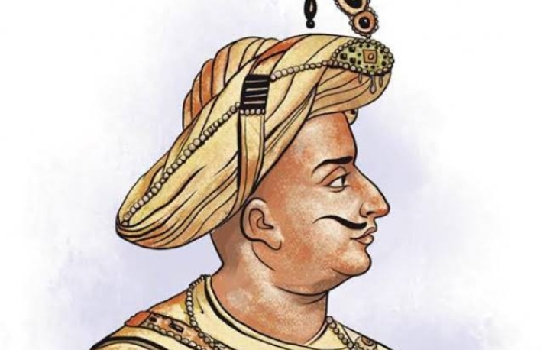
Bengaluru, Jul 28: After the Central Board of Secondary Education (CBSE) reduced the syllabi for Classes 9 to 12 due to COVID-19 pandemic, the Karnataka government has followed the suit. The Department of Public Instruction has omitted the chapters on legendary south Indian rulers Hyder Ali and Tipu Sultan from the textbooks of Class 7 in their attempt to reduce syllabus for state board schools by 30 per cent. 

The department, however, has decided to retain similar chapters on Tipu Sultan in 6th and 10th Classes, though the syllabus in text books for all classes from 1 to 10th has been trimmed. 

The trimmed textbooks uploaded on the website of the Department of State Education Research and Training (DSERT) by Karnataka state Textbook Society revealed removal of chapters on Tipu Sultan for the seventh grade.

Justifying the decision, officials said, "students study similar chapters in Class 6 and more in the 10th grade." Yet another senior official from the Text Book Society said, "Trimming does not mean we have removed half of the syllabus from textbooks. It is only keeping in mind the repetition we have condensed the chapters. In case students study about a particular dynasty in higher grades, then the same had been removed from lower grades."

A few months ago, there was an uproar over dropping of content on Tipu Sultan and MLAs from the ruling BJP also demanded the same and petitioned to the Chief Minister. Even an expert committee led by Prof Baraguru Ramachandrappa suggested to not drop any content on the historic figure. However, the department still decided to drop lessons from one of the classes while keeping the syllabus short for the next 120 active academic days.

Earlier this month, a controversy had erupted over the CBSE's decision to omit topics like federalism, secularism, citizenship, etc while reducing the syllabus for Classes 9 to 12. The education board had issued a detailed clarification later, stating that topics claimed to be dropped "are either being covered by the rationalised syllabus or in the Alternative Academic Calendar of NCERT".

"The rationalisation of syllabus up to 30 per cent has been undertaken by the Board for nearly 190 subjects of class 9 to 12 for the academic session 2020-21 as a one-time measure only. The objective is to reduce the exam stress of students due to the prevailing health emergency situation and prevent learning gaps," it said.

Last week, the Congress in Uttar Pradesh expressed its concern over 'deliberate and systematic' deletions of chapters related to the freedom struggle and the party's role in it from the Class 10-12 syllabi of the Secondary Education Board.

Comments

Add new comment

  • Coastaldigest.com reserves the right to delete or block any comments.
  • Coastaldigset.com is not responsible for its readers’ comments.
  • Comments that are abusive, incendiary or irrelevant are strictly prohibited.
  • Please use a genuine email ID and provide your name to avoid reject.
Agencies
July 5,2020

The deadly coronavirus that entered India while there was still nip in the air has beaten rising mercury, humid conditions, unique Indian genome and has entered monsoon season with more potency as fresh cases are only breaking all records in the country.

India recorded a single-day spike of record 24,850 new coronavirus cases on Sunday, taking its total tally to 6.73 lakh corona-positive cases.

Top Indian microbiologists were hopeful in March that after the 21-day lockdown, as summer approaches, the rise in temperature would play an important role in preventing the drastic spread of COVID-19 virus in India.

Several virologists hinted that by June this year, the impact of COVID-19 would be less than what it appeared in March-April.

The claims have fallen flat as the virus is mutating fast, becoming more potent than ever.

According to experts, the novel coronavirus is a new virus whose seasonality and response to hot humid weather was never fully understood.

"The theory was based on the fact that high temperatures can kill the virus as in sterilisation techniques used in healthcare. But these are controlled environment conditions. There are many other factors besides temperature, humidity which influence the transmission rate among humans," Dr Anu Gupta, Head, Microbiologist and Infection Control, Fortis Escorts Heart Institute, told IANS.

There is no built-up immunity to COVID-19 in humans.

"Also, asymptomatic people might be passing it to many others unknowingly. New viruses tend not to follow the seasonal trend in their first year," Gupta emphasized.

Globally, as several countries are now experiencing hot weather, the World Health Organization (WHO) reported a record hike in the number of coronavirus cases, with the total rising by 2,12,326 in 24 hours in the highest single-day increase since COVID-19 broke out.

So far over 11 million people worldwide have tested positive for the disease which has led to over 5,25,000 deaths, according to data from Johns Hopkins University. The US remained the worst-hit country with over 28 lakh cases, followed by Brazil with 15.8 lakh.

According to Sandeep Nayar, Senior Consultant and HOD, Respiratory Medicine, Allergy & Sleep Disorders, BLK Super Speciality Hospital in New Delhi, whether temperature plays a role in COVID-19 infection is highly debated.

One school of thought said in the tropical regions of South Asia, the virus might not thrive longer.

"On the other hand, another school of thought has found that novel Coronavirus can survive in a hot and humid environment and tropical climate does not make a difference to the virus. According to them, this is what distinguishes the novel coronavirus from other common viruses, which usually wane in hot weather," stressed Nayar.

Not much has been studied in the past and no definite treatment or vaccine is available to date.

"Every day, new properties and manifestation of the disease come up. As of now, the only way to prevent this monster is by taking appropriate precautions. Hand hygiene, social distancing, cough etiquette and face masks definitely reduce spread of COVID-19 infection," Nayar told IANS.

Not just top Indian health experts, even Indian-American scientists had this theory in mind that sunshine and summer may ebb the spread of the coronavirus.

Ravi Godse, Director of Discharge Planning, UPMC Shadyside Pennsylvania in the US told IANS in April: "In the summer, the humidity can go up as well, meaning more water drops in the air. If the air is saturated with water and somebody sneezes virus droplets into such air, it is likely that the droplets will fall to the ground quicker, making them less infectious. So the short answer is yes, summer/sunshine could be bettera.

According to Dr Puneet Khanna, Head of Respiratory Medicine and Pulmonology, Manipal Hospital, Delhi, COVID-19 death rates are not too different in tropical countries but since the disease affected them late it was yet to show its peak in these areas.

"The virus can survive well in hot and humid countries and this is proven now," he stressed.

Comments

Add new comment

  • Coastaldigest.com reserves the right to delete or block any comments.
  • Coastaldigset.com is not responsible for its readers’ comments.
  • Comments that are abusive, incendiary or irrelevant are strictly prohibited.
  • Please use a genuine email ID and provide your name to avoid reject.