



Rajya Sabha takes up Juvenile Justice bill for discussion

December 22, 2015

New Delhi, Dec 22: The Rajya Sabha on Tuesday took up for discussion the Juvenile Justice amendment bill, a day after members cutting across party lines agreed that the important legislation should be taken up immediately.BL2
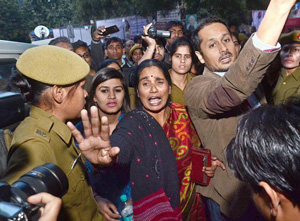
The Juvenile Justice (Care and Protection of Children) Bill, 2014, provides for the trial of those between 16-18 years as adults for heinous offences. Also, anyone between the age of 16-18 who commits a less serious offence may be tried as an adult if he is apprehended after he attains the age of 21.

Giving out the bill's details, Women and Child Development Minister Maneka Gandhi said borstals -- a custodial institution for young offenders -- would be set up under the proposed law to house juveniles accused of heinous crime.

"They (juvenile convicts) will not stay with adults in jails meant for adults... They will be kept in borstals. It does not exist at present... it will be created," the minister said.

The convicted juvenile will stay in borstals till they attain the age of 21, and will be evaluated to decide whether they should be released.

"There will be a review... if they still have a criminal bent of mind, they will serve the complete sentence," said the minister.

Maneka Gandhi said juvenile crime was being encouraged by the existing law.

"Juveniles' involvement in crime is increasing the fastest. Children walk into police stations and say we have murdered... send us to a juvenile home," the minister said.

Pointing out that even children committed crime against other children, she wondered: "Are we going to protect the victim or the criminal?"

"It (the bill) will stop a 16-year-old from saying 'I have burnt a jhuggi. Send me to juvenile justice (board)'. 'Or I have raped, murdered, send me to JJ...'," Maneka Gandhi said.

Comments

Add new comment

  • Coastaldigest.com reserves the right to delete or block any comments.
  • Coastaldigset.com is not responsible for its readers’ comments.
  • Comments that are abusive, incendiary or irrelevant are strictly prohibited.
  • Please use a genuine email ID and provide your name to avoid reject.
News Network
February 16,2020

Washington, Feb 16: India and the United States share "unshakeable" ties, said US Principal Deputy Assistant Secretary (PDAS), Alice Wells, on Sunday, adding that the upcoming visit of President Donald Trump will further strengthen the relationship between the two countries.

"The U.S. and #India enjoy a close partnership that grows stronger day by day. Together, we are breaking records. For example, we welcomed a record number of Indian exchange students to the US last year and hope to receive even more this year," said Bureau of South and Central Asian Affairs in a tweet attributed to Alice Wells.

"The ties between our countries are unshakeable, and we look forward to an even warmer relationship as @narendramodi hosts @POTUS later this month," it added.

Trump will pay a two-day state visit to India from February 24 at the invitation of Prime Minister Narendra Modi.

"India is at the heart of the Indo-Pacific region and plays an increasingly prominent role on the world's stage. The U.S. looks forward to partnering with #India at every step of the way, " Alice Wells further said.

According to the Ministry of External Affairs (MEA), Trump is expected to attend an event at the Motera Stadium in Ahmedabad on the lines of the ''Howdy Modi'' function that was addressed by the US President and PM Modi in Houston in September last year. Trump is slated to pay a two-day visit to India from February 24.

During the visit, Trump, who will be accompanied by First Lady Melania, will attend official engagements in New Delhi and Ahmedabad, and interact with a wide cross-section of the Indian society, the MEA said in a statement.

The announcement of Trump's first official visit to India was earlier made by the White House on Monday, which, in its statement, said that the US President and Modi had agreed during a recent phone conversation that the trip will "further strengthen the United States-India strategic partnership and highlight the strong and enduring bonds between the American and Indian people".

Comments

Add new comment

  • Coastaldigest.com reserves the right to delete or block any comments.
  • Coastaldigset.com is not responsible for its readers’ comments.
  • Comments that are abusive, incendiary or irrelevant are strictly prohibited.
  • Please use a genuine email ID and provide your name to avoid reject.
News Network
January 18,2020

Jammu, Jan 18: Prepaid mobile connections were restored in Jammu and Kashmir on Saturday and 2G services resumed in two districts of the valley after being disconnected on August 5 last year. Voice and SMS facilities were restored for all local prepaid mobile phones across the Union territory.

Rohit Kansal, the principal secretary to the administration of Jammu and Kashmir said the order will come into effect from Saturday.

In order to consider giving mobile Internet connectivity on such SIM cards, the telecom service providers will have to verify the credentials of the subscribers, he said.

Internet service providers have been asked to provide fixed line Internet connectivity in all the 10 districts of Jammu region and two districts, Kupwara and Bandipora, in North Kashmir.

Telecom services were shut in the entire Jammu and Kashmir on August 5 when the Centre abrogated special status to the erstwhile state and also bifurcated it into two Union Territories.

However, the Supreme Court came down heavily on the UT administration last week for arbitrarily shutting down the Internet, the facility described as the fundamental right by the apex court.

Comments

Add new comment

  • Coastaldigest.com reserves the right to delete or block any comments.
  • Coastaldigset.com is not responsible for its readers’ comments.
  • Comments that are abusive, incendiary or irrelevant are strictly prohibited.
  • Please use a genuine email ID and provide your name to avoid reject.
News Network
April 24,2020

New Delhi, Apr 24: The trajectory of COVID-19 cases could have plateaued and might even fall for some weeks after the lockdown is lifted but India is likely to see a second wave in late July or August with a surge in the number of cases during the monsoon, say scientists.

The timing of the peak will depend on how India is able to control physical distancing and on the level of infection spreads after restrictions are relaxed, they said.

It looks apparent that the trajectory of daily new cases has reached a plateau and eventually it will take a downward fall, maybe for some weeks or even months, Samit Bhattacharya, associate professor at the Department of Mathematics, Shiv Nadar University, said.

Still, we may get a surge of new cases of the same coronavirus and this will be considered a second wave, Bhattacharya explained.

The second epidemic may come back in late July or August in the monsoon, although the peak timing will depend on how we control social distancing during that time, he said.

Rajesh Sundaresan, professor at Bengaluru's Indian Institute of Science (IISc), agreed.

“Once we return to normal activity levels, there is a chance that infection may begin to rise again. China is seeing this to some extent post easing of some restrictions on travel,” Sundaresan, corresponding author of a working paper by researchers at IISc and the Tata Institute of Fundamental Research (TIFR) in Mumbai, said.

On March 25, when the number of coronavirus cases was 618 with 13 deaths, the government announced a nationwide lockdown that was later extended to May 3.

On Friday, the death toll due to COVID-19 rose to 718 and the number of cases to 23,077, according to the Union Health Ministry.

In good news, officials said this week that the doubling rate of cases has slowed down in the period, going from 3.4 days before lockdown to 7.5 days, with 18 states doing better than the national average. The recovery rate has also almost doubled in the last 10 days.

"Looking at the new cases in the past few days, it seems the growth of new daily infection is much slower than earlier. This apparently indicates that we might have reached at the plateau of the growth curve, Bhattacharya said.

He noted that recent studies in China and Europe observed that the infection might relapse in those people who have already recovered from earlier phases.

So, there is no evidence that the earlier infection may help acquire immunity against the second infection. And in that way, the entire population may be vulnerable to the second wave to some extent, said the scientist.

In their study unveiled this week, IISc and TIFR researchers analysed the impact of strategies such as case isolation, home quarantine, social distancing and various post-lockdown restrictions on COVID-19 that might remain in force for some time.

The study modelled on Bengaluru and Mumbai suggests the infection is likely to have a second wave and the public health threat will remain, unless steps are taken to aggressively trace, localise, isolate the cases, and prevent influx of new infections.

The new levels and the peaking times for healthcare demand depend on the levels of infection spreads in each city at the time of relaxation of restrictions, they said.

The lockdown is currently upon us. It has given us valuable time. Let us test, trace, quarantine, isolate, practice better hygiene, search for a vaccine, etc. We should do these anyway, and these are being done. When and how to lift the lockdown is going to be a difficult decision to make, said Sundaresan.

It's clear that it's going to be phased. What our team is focusing on is to come up with tools to help the decision makers assess the public health impact of various choices, he said.

According to the experts, infectious diseases spread via contact between infectious and susceptible people. In the absence of any control measures, an outbreak will grow as long as the average number of people infected by each infectious person is more than one.

Once enough people are immune there will be fewer people susceptible to the infection and the outbreak will die.

However, when an outbreak is brought under control by social distancing and other interventions, it is possible only a small proportion of the population will have been infected and gained immunity, they said.

This means enough susceptible people may remain to fuel a second wave if controls are relaxed and infection is reintroduced.

Until the vaccine comes on the market, we have to remain alert Once sporadic cases occur here and there in the country, we immediately need to implement quarantine or social distancing locally for the people in that region, and also need to perform tests to identify positive cases irrespective of showing symptoms, Bhattacharya explained.

Note that these monsoon months are also flu season in many places of India. So, we should not ignore the early signs of the flu symptoms. Irrespective of symptoms, we need to increase tests in the hotspots to identify people and contain the surge, he said.

Sundaresan added that the timeline for a second wave will depend on a lot of circumstances which may change as the time passes.

Significant testing may have been underway, there may be behavioural changes with people becoming more careful about their hygiene, wearing masks may become more common, etc. All these responses may help restrict the second wave, he said.

A study published in The Lancet journal earlier this month modelled the potential adverse consequences of premature relaxation of interventions, and found it might lead to a second wave of infections.

The finding is critical to governments globally, because it warns against premature relaxation of strict interventions, the researchers said.

While interventions to control the spread of SARS-CoV-2 are in place, countries will need to work toward returning to normalcy; thus, knowledge of the effect of each intervention is urgently required, they said in the study.

According to a recent analysis by the Harvard Chan School of Public Health, the best strategy to ease the critical care burden and loss of life from COVID-19 might be on-again, off-again social distancing.

In the absence of such interventions, surveillance and intermittent distancing may need to be maintained into 2022, which would present a substantial social and economic burden, the researchers wrote.p

Comments

Add new comment

  • Coastaldigest.com reserves the right to delete or block any comments.
  • Coastaldigset.com is not responsible for its readers’ comments.
  • Comments that are abusive, incendiary or irrelevant are strictly prohibited.
  • Please use a genuine email ID and provide your name to avoid reject.