Ramya bids goodbye to Mandya politics?

News Network
December 4, 2018

Mandya, Dec 4: Actress-turned-politician Ramya, who is one of the confidantes of Congress supremo Rahul Gandhi, seems to have bid a farewell to Mandya, from where she won the 2013 bypoll to the Lok Sabha.

The former MP, who currently heads the social media team of the All India Congress Committee (AICC), has vacated her rented house in Mandya for a second time, sparking speculations. Her mother Ranjitha is a native of Gopalpura, two km from Mandya city.

Ramya, a resident of Bengaluru, had rented a house on KR Road at Vidyanagar, during the 2013 Lok Sabha bypolls. Following criticism that Ramya was not accessible to people, she held a house-warming ceremony of the house, twice. However, she spent only a few days there. At present, she spends most of her time in Delhi or in foreign nations. On Sunday (Dec 2) night, Ramya had household items transported in two trucks under police protection.

Ramya had been trolled on social media for not voting in three elections since May last — Assembly elections, Municipal Council polls and bypoll to the Lok Sabha. Her name is in the voters’ list in Mandya city.

She became a victim of trolling again, following the death of 30 passengers in a mishap in which a bus plunged into a canal in Pandavapura taluk. On the same night, former minister Ambareesh passed away. The trolling continued as she could not attend the funeral.

She was elected to the Lok Sabha in the 2013 byelections, following the resignation of then Mandya MP N Chaluvarayaswamy. However, she lost the 2014 general election to the Lok Sabha, to present district incharge Minister C S Puttaraju.

There were rumours last year that she may be fielded as Congress candidate from Mandya Assembly constituency as the late Ambareesh had distanced himself from the people of the district. Even though Ambareesh declined to contest, Ramya was not considered.

According to sources close to her, she does not see a future in Mandya. “The JD(S) has become too strong for the Congress to handle in Mandya district. The Congress, which heavily depended on Ambareesh, has no bankable leader. Due to the coalition between the Congress and JD(S), chances of Congress contesting the Lok Sabha polls in 2019 are bleak,” said a source.

Comments

Vinod
 - 
Tuesday, 4 Dec 2018

She is nothing. She got by luck. 

Joseph Stalin
 - 
Tuesday, 4 Dec 2018

She is tricky woman. By her attitude she aiming to be next Sonia

Arif
 - 
Tuesday, 4 Dec 2018

Why she need MAndya. Now she became right hand of Rahul.

Add new comment

  • Coastaldigest.com reserves the right to delete or block any comments.
  • Coastaldigset.com is not responsible for its readers’ comments.
  • Comments that are abusive, incendiary or irrelevant are strictly prohibited.
  • Please use a genuine email ID and provide your name to avoid reject.
Media Release
July 27,2020

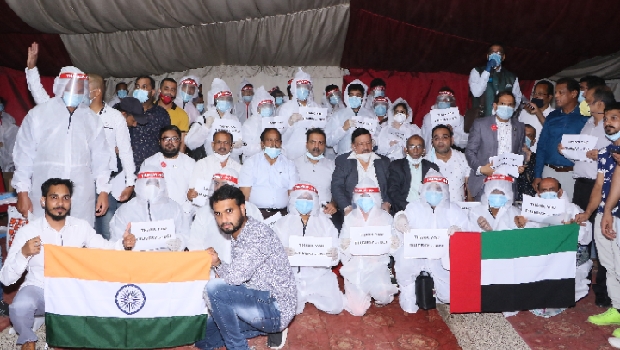
The second in the series of chartered flights arranged by Thumbay Group, UAE and the Bearys Cultural Forum (BCF) Trust, Mangalore to repatriate stranded Kannadigas in the UAE took off from Ras Al Khaimah International Airport on 25th July 2020. The flight was fully occupied with 178 passengers including the sick and elderly as well as those in need of urgent medical attention due to chronic illnesses, pregnant ladies and kids. Passengers also included those facing visa issues and job losses.

Implemented under the leadership of Dr. Thumbay Moideen - Founder President of Thumbay Group & Founder Patron of BCF and Dr. B K Yusuf - President of BCF, these repatriation flights are organized on a purely charitable basis, with all necessary steps and precautions in place to ensure the safety and comfort of passengers. 

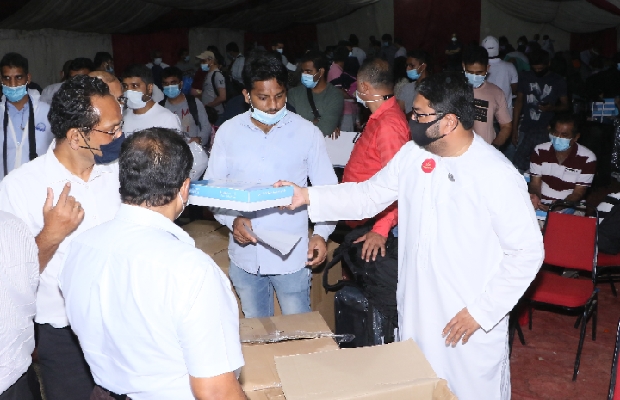
Thumbay Group assigned its fleet of buses to transport the passengers free of charge from their residences in Dubai, Sharjah and Ajman to the airport. The organizers also provided free meals and refreshments to the passengers, in addition to PPE kits and face-shields distributed free of charges. 

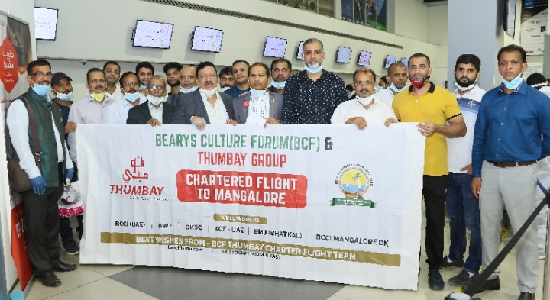
Dr. B K Yusuf – BCF President, Dr. Kaup Mohammed - BCF General Secretary, other office bearers of BCF, as well as Thumbay Group’s representatives Mr. Farhad C – Director of the 
Hospitality Division of Thumbay Group and Engr. Farwaz P. C. – COO of the Construction Division were present at the airport to see off the second group of passengers. 

ARISTOCRAT Travels supported the ticketing, boarding and related processes for the passengers. Support 
was also extended by social organizations including Bhatkal Jamath, Bhatkal association, BCCI, BWF, DKSC, KNRI, Kannadiga Help Line, KDKGS-UAE, Dubai Konkans, KSS and Dubai 
Kannadigas.

The passengers were received at Mangalore airport under the leadership of Mr. Mumtaz Ali - patron of BCF and other distinguished personalities of Mangalore including Mr. B. M. Farookh - Hon. MLC, Mr. Moidin Bava - former MLA, Mr. U. T. Ifthikhar, Mr. S. M. R. Rashid - President of 
BCCI central committee etc.The passengers were transferred to the hotels where they had registered for the mandatory quarantine.

The first flight in the series, with 186 passengers had taken off on 21st July 2020. The next flight under this joint initiative is scheduled to take-off from Ras Al Khaimah airport to Mangalore on 10th August 2020. A few more similar repatriation flights are to soon follow, in the coming weeks.


Comments

Add new comment

  • Coastaldigest.com reserves the right to delete or block any comments.
  • Coastaldigset.com is not responsible for its readers’ comments.
  • Comments that are abusive, incendiary or irrelevant are strictly prohibited.
  • Please use a genuine email ID and provide your name to avoid reject.
News Network
July 28,2020

Hounde, Jul 28: Coronavirus and its restrictions are pushing already hungry communities over the edge, killing an estimated 10,000 more young children a month as meager farms are cut off from markets and villages are isolated from food and medical aid, the United Nations warned Monday.

In the call to action shared with The Associated Press ahead of publication, four UN agencies warned that growing malnutrition would have long-term consequences, transforming individual tragedies into a generational catastrophe.

Hunger is already stalking Haboue Solange Boue, an infant from Burkina Faso who lost half her former body weight of 5.5 pounds (2.5 kilograms) in just a month. Coronavirus restrictions closed the markets, and her family sold fewer vegetables. Her mother was too malnourished to nurse.

“My child,” Danssanin Lanizou whispered, choking back tears as she unwrapped a blanket to reveal her baby's protruding ribs.

More than 550,000 additional children each month are being struck by what is called wasting, according to the UN — malnutrition that manifests in spindly limbs and distended bellies. Over a year, that's up 6.7 million from last year's total of 47 million. Wasting and stunting can permanently damage children physically and mentally.

“The food security effects of the COVID crisis are going to reflect many years from now,” said Dr. Francesco Branca, the WHO head of nutrition. “There is going to be a societal effect.”

From Latin America to South Asia to sub-Saharan Africa, more poor families than ever are staring down a future without enough food.

In April, World Food Program head David Beasley warned that the coronavirus economy would cause global famines “of biblical proportions” this year. There are different stages of what is known as food insecurity; famine is officially declared when, along with other measures, 30% of the population suffers from wasting.

The World Food Program estimated in February that one Venezuelan in three was already going hungry, as inflation rendered salaries nearly worthless and forced millions to flee abroad. Then the virus arrived.

“Every day we receive a malnourished child,” said Dr. Francisco Nieto, who works in a hospital in the border state of Tachira.

In May, Nieto recalled, after two months of quarantine, 18-month-old twins arrived with bodies bloated from malnutrition. The children's mother was jobless and living with her own mother. She told the doctor she fed them only a simple drink made with boiled bananas.

“Not even a cracker? Some chicken?” he asked.

“Nothing,” the children's grandmother responded. By the time the doctor saw them, it was too late: One boy died eight days later.

The leaders of four international agencies — the World Health Organization, UNICEF, the World Food Program and the Food and Agriculture Organization — have called for at least dollar 2.4 billion immediately to address global hunger.

But even more than lack of money, restrictions on movement have prevented families from seeking treatment, said Victor Aguayo, the head of UNICEF's nutrition program.

“By having schools closed, by having primary health care services disrupted, by having nutritional programs dysfunctional, we are also creating harm,” Aguayo said. He cited as an example the near-global suspension of Vitamin A supplements, which are a crucial way to bolster developing immune systems.

In Afghanistan, movement restrictions prevent families from bringing their malnourished children to hospitals for food and aid just when they need it most. The Indira Gandhi hospital in the capital, Kabul, has seen only three or four malnourished children, said specialist Nematullah Amiri. Last year, there were 10 times as many.

Because the children don't come in, there's no way to know for certain the scale of the problem, but a recent study by Johns Hopkins University indicated an additional 13,000 Afghans younger than 5 could die.

Afghanistan is now in a red zone of hunger, with severe childhood malnutrition spiking from 690,000 in January to 780,000 — a 13% increase, according to UNICEF.

In Yemen, restrictions on movement have blocked aid distribution, along with the stalling of salaries and price hikes. The Arab world's poorest country is suffering further from a fall in remittances and a drop in funding from humanitarian agencies.

Yemen is now on the brink of famine, according to the Famine Early Warning Systems Network, which uses surveys, satellite data and weather mapping to pinpoint places most in need.

Some of the worst hunger still occurs in sub-Saharan Africa. In Sudan, 9.6 million people live from one meal to the next — a 65% increase from the same time last year.

Lockdowns across Sudanese provinces, as around the world, have dried up work and incomes for millions. With inflation hitting 136%, prices for basic goods have more than tripled.

“It has never been easy but now we are starving, eating grass, weeds, just plants from the earth,” said Ibrahim Youssef, director of the Kalma camp for internally displaced people in war-ravaged south Darfur.

Adam Haroun, an official in the Krinding camp in west Darfur, recorded nine deaths linked with malnutrition, otherwise a rare occurrence, over the past two months — five newborns and four older adults, he said.

Before the pandemic and lockdown, the Abdullah family ate three meals a day, sometimes with bread, or they'd add butter to porridge. Now they are down to just one meal of “millet porridge” — water mixed with grain. Zakaria Yehia Abdullah, a farmer now at Krinding, said the hunger is showing “in my children's faces.”

“I don't have the basics I need to survive,” said the 67-year-old, who who hasn't worked the fields since April. “That means the 10 people counting on me can't survive either.”


Comments

Add new comment

  • Coastaldigest.com reserves the right to delete or block any comments.
  • Coastaldigset.com is not responsible for its readers’ comments.
  • Comments that are abusive, incendiary or irrelevant are strictly prohibited.
  • Please use a genuine email ID and provide your name to avoid reject.
News Network
June 20,2020

Bengaluru, Jun 20: The Karnataka Health Department has issued guidelines on the admission of COVID-19 patients in private hospitals after clinical assessment, mandating that the district surveillance officer (DSO) should be first informed to initiate further procedures, an official said on Friday.

"A health team sent by the DSO should visit the home or hospital where the patient is staying. The team should conduct a rapid assessment of his or her health condition," said Karnataka's Additional Chief Secretary Jawaid Akhtar.

In the rapid health condition assessment, the team should first check the patient's body temperature, followed by SpO2 (oxygen saturation) level and confirm if there are any comorbidities such as hypertension, diabetes, tuberculosis, HIV, cancer, stroke etc.

Depending on the health condition of patients, Akhtar said, two categories have been made.

"Those who have body temperature greater than 37.5 degrees Celsius, SpO2 level below 94 percent, elderly (above 60 years) and suffering from known comorbid conditions should be taken to a dedicated Covid hospital (DCH)," he said.

"All other patients, even if older but not suffering from co-morbidities, those below 60 and suffering from co-morbidities and asymptomatic cases should be taken to a dedicated Covid health centre (DCHC) or a private hospital as opted by the patient," he added.

Private hospitals have been asked to pitch in due to the rising number of cases in Karnataka. Currently, there are 2943 active cases in the state after 337 cases were reported on Friday.

"The patients are assessed clinically and evaluated at DCHCs or private hospitals with appropriate diagnostic tests. After evaluation, if the patients are asymptomatic, they are shifted to a COVID Care Centre (CCC) for further management," said Akhtar.

CCCs are expected to be equipped with ventilated rooms, pulse oximeters, handheld thermal scanners and blood pressure apparatus.

A nurse has to be present round the clock for every 50 patients and should visit each patient twice a day for assessment whereas the medical officer has to visit the CCC once a day. He should also be available on call in case of an emergency.

Staff serving food and others should wear personal protective equipment and an N-95 mask. Explaining the procedures at DCHCs, Akhtar said general examinations for medical conditions like body temperature, BP, pulse, oxygen saturation and urine output should be in place.

Investigations such as complete blood count, fasting blood sugar, random blood sugar, liver function tests, renal function tests, ECG and chest X-ray facilities should be available.

"DCHCs should ensure that above examinations are over in an orderly timeline of 24 hours and depending on the examination, the patient is continued to be lodged at the DCHC or sent to DCH or CCC," said the senior officer.

Likewise, the discharge policy should be done as per the protocols issued by the Health Department from time to time.

The Karnataka government is yet to fix an upper limit on the cost of treating COVID-19 patients in private hospitals. While reports indicated that this could be capped at Rs 5200 per day, health officials are yet to specify this is the case. Private hospitals in the state have asked the government to take a collaborative approach in deciding the fixed cap on treatment cost.

Comments

Add new comment

  • Coastaldigest.com reserves the right to delete or block any comments.
  • Coastaldigset.com is not responsible for its readers’ comments.
  • Comments that are abusive, incendiary or irrelevant are strictly prohibited.
  • Please use a genuine email ID and provide your name to avoid reject.