RBI gives a makeover to Rs 10 note with chocolate-brown shade

News Network
January 5, 2018

After the big Indian notes, now it's time for 10 rupee note to get a new makeover. According to reports, the Reserve Bank of India is all set to issue new Rs 10 notes under the Mahatma Gandhi series with chocolate brown colour as the base.

A picture of Konark Sun Temple will be a new addition to the Rs 10 note. As per various news reports, the central bank has already minted around 1 billion pieces of the new Rs 10 note.

The existing Rs 10 note had a design change in 2005. It currently has a picture of Mahatma Gandhi on the front side while a combo picture of an elephant, a tiger and a rhinoceros is printed on the backside.

The new note may also receive a makeover in its numbering pattern as seen in the new notes. In the new notes, ascending size of numerals can be seen from left to right.

In August last year, RBI had introduced the new Rs 200 and Rs 50 notes under the Mahatma Gandhi series. An RBI spokesperson declined to comment.

The move to reintroduce lower denomination notes in a new design comes after the government’s move to rework the currency mix in order to combat counterfeiting and promote a less-cash economy.

On 8 November 2016, the government announced demonetisation to withdraw Rs 1,000 and Rs 500 currency notes, amounting to around 86% of the currency in circulation of Rs 17.9 trillion. Since then, RBI has replaced these with the new Rs 2000 notes and redesigned Rs 500 notes.

RBI has printed 16.96 billion pieces of Rs 500 notes and 3.6 billion pieces of Rs 2000 notes as on 8 December, according to information given by the finance ministry in Lok Sabha. The total value of such notes translates into Rs 15.79 trillion.

Separately, the regulator had also reissued around 12 billion soiled banknotes of Rs 10, Rs 20 and Rs 50 denomination after the demonetisation resulted in a currency crunch. According to RBI, a soiled note is a currency note which has become dirty due to normal wear and tear.

RBI data show currency in circulation was Rs 16.71 trillion as on 22 December. This is about 94.4% of the Rs 17.7 trillion that was in circulation on 4 November 2016.

RBI’s annual report for fiscal 2016-17 also showed that the volume of banknotes increased by 11.1% mainly due to higher infusion of banknotes of lower denomination following demonetisation. The government’s rationale behind the move is to check fake notes which had seen a significant jump since 2008. From 195,000 pieces in fiscal year 2008, the number of counterfeit notes increased to 632,000 pieces in 2015-16.

“The idea is to increase supply of lower denomination to encourage day to day transactions and for larger transactions, people should move to digital mode of payment. Printing of lower denomination notes in new design will ensure soiled notes will be taken out from the system,” said Soumya Kanti Ghosh, group chief economic adviser at State Bank of India.

RBI has still not finished counting the old Rs 500 and Rs 1000 notes after demonetisation.

Comments

Danish
 - 
Friday, 5 Jan 2018

Modi trying to create more issues. He wont stop making problems to people

Suresh Kalladka
 - 
Friday, 5 Jan 2018

All because of feku ji.. 

Ganesh
 - 
Friday, 5 Jan 2018

Feku wants all notes in same color of his jackets..

Add new comment

  • Coastaldigest.com reserves the right to delete or block any comments.
  • Coastaldigset.com is not responsible for its readers’ comments.
  • Comments that are abusive, incendiary or irrelevant are strictly prohibited.
  • Please use a genuine email ID and provide your name to avoid reject.
News Network
March 25,2020

Bengaluru, Mar 25 : Karnataka recorded its highest single-day tally to date, as 10 people tested positive, taking the total number of cases to 51 in the state.

“Till date 51 COVID-19 positive cases have been confirmed in the state which includes one death and three discharged," the health department said in a statement on Wednesday.

The rise in cases adding to the growing national tally of people who have tested positive for COVID-19.

The daughter of a former union minister from the Bharatiya Janata Party (BJP) from Karnataka has also tested positive.

Bengaluru accounts for 32 of the total 51 cases recorded in the state so far,including three who have fully recovered and released.

Dakshina Kannada has five confirmed cases, Chikkaballapura and Kalaburagi has three cases each, Mysuru has and Uttara Kannada has two cases each and four other districts have one case each.

Prime Minister Narendra Modi has announced a 21-day lockdown of the country to keep people indoors and contain the spread of the virus in the community.

The government has also been trying to scale up testing.

Medical education minister K.Sudhakar on Wednesday told Mint that Karnataka will scale up testing by 10-fold with the help of government and private labs approved by the Indian Council of Medical Research (ICMR).

A total of 2,438 people have been tested in Karnataka and 2242 have tested negative, according to state health department. 214 people are lodged in medical hospitals.

Comments

Add new comment

  • Coastaldigest.com reserves the right to delete or block any comments.
  • Coastaldigset.com is not responsible for its readers’ comments.
  • Comments that are abusive, incendiary or irrelevant are strictly prohibited.
  • Please use a genuine email ID and provide your name to avoid reject.
News Network
July 28,2020

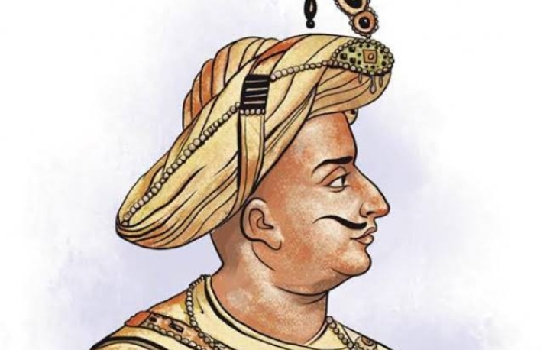
Bengaluru, Jul 28: After the Central Board of Secondary Education (CBSE) reduced the syllabi for Classes 9 to 12 due to COVID-19 pandemic, the Karnataka government has followed the suit. The Department of Public Instruction has omitted the chapters on legendary south Indian rulers Hyder Ali and Tipu Sultan from the textbooks of Class 7 in their attempt to reduce syllabus for state board schools by 30 per cent. 

The department, however, has decided to retain similar chapters on Tipu Sultan in 6th and 10th Classes, though the syllabus in text books for all classes from 1 to 10th has been trimmed. 

The trimmed textbooks uploaded on the website of the Department of State Education Research and Training (DSERT) by Karnataka state Textbook Society revealed removal of chapters on Tipu Sultan for the seventh grade.

Justifying the decision, officials said, "students study similar chapters in Class 6 and more in the 10th grade." Yet another senior official from the Text Book Society said, "Trimming does not mean we have removed half of the syllabus from textbooks. It is only keeping in mind the repetition we have condensed the chapters. In case students study about a particular dynasty in higher grades, then the same had been removed from lower grades."

A few months ago, there was an uproar over dropping of content on Tipu Sultan and MLAs from the ruling BJP also demanded the same and petitioned to the Chief Minister. Even an expert committee led by Prof Baraguru Ramachandrappa suggested to not drop any content on the historic figure. However, the department still decided to drop lessons from one of the classes while keeping the syllabus short for the next 120 active academic days.

Earlier this month, a controversy had erupted over the CBSE's decision to omit topics like federalism, secularism, citizenship, etc while reducing the syllabus for Classes 9 to 12. The education board had issued a detailed clarification later, stating that topics claimed to be dropped "are either being covered by the rationalised syllabus or in the Alternative Academic Calendar of NCERT".

"The rationalisation of syllabus up to 30 per cent has been undertaken by the Board for nearly 190 subjects of class 9 to 12 for the academic session 2020-21 as a one-time measure only. The objective is to reduce the exam stress of students due to the prevailing health emergency situation and prevent learning gaps," it said.

Last week, the Congress in Uttar Pradesh expressed its concern over 'deliberate and systematic' deletions of chapters related to the freedom struggle and the party's role in it from the Class 10-12 syllabi of the Secondary Education Board.

Comments

Add new comment

  • Coastaldigest.com reserves the right to delete or block any comments.
  • Coastaldigset.com is not responsible for its readers’ comments.
  • Comments that are abusive, incendiary or irrelevant are strictly prohibited.
  • Please use a genuine email ID and provide your name to avoid reject.
News Network
January 1,2020

Bengaluru, Jan 1: Karnatak Deputy Chief Minister Govind Karjol has said that the state government wrote to the Centre to fix the technical glitches in FASTag system.

"We have brought this issue to the notice of Union Minister Nitin Gadkari," he told reporters on Tuesday.

In response to the flood relief by the state government, Karjol said that the approximate cost of roads damaged in the floods was Rs 7000 crore and the government would take up the repair works soon.

Comments

Add new comment

  • Coastaldigest.com reserves the right to delete or block any comments.
  • Coastaldigset.com is not responsible for its readers’ comments.
  • Comments that are abusive, incendiary or irrelevant are strictly prohibited.
  • Please use a genuine email ID and provide your name to avoid reject.