Real Ayodhya is in Nepal, Lord Ram was Nepali, says Nepal PM

News Network
July 14, 2020

Kathmandu, Jul 14: After staking claim to Indian territories of Lipulekh-Kalapani in  a new controversial map,  Nepal Prime Minister KP Sharma Oli on Monday claimed that Ayodhya, the birthplace of Lord Rama, is in Nepal and Lord Rama was Nepali.

“Although real Ayodhya lies at Thori, city in the west of Birgunj, India has claimed that Lord Rama was born there. Due to these continuous claims, even we have believed that deity Sita got married to Prince Rama of India. However, in reality, Ayodhya is a village lying west of Birgunj,” Oli claimed at an event organised at Prime Minister's residence in Kathmandu.

The Prime Minister also blamed India of cultural encroachment by “creating a fake Ayodhya.”

“Balmiki Ashram is in Nepal and the holy place where King Dashrath had executed the rites to get the son is in Ridi. Dashrath’s son Ram was not an Indian and Ayodhya is also in Nepal,” he claimed.

In an attempt to save self from criticism, Oli questioned how Lord Rama could come to Janakpur to marry Sita when there were "no means" of communication. He further said that it to be impossible for Lord Rama to come to Janakpur from present Ayodhya that lies in India.

“Janakpur lies here and Ayodhya there and there is talk of marriage. There was neither telephone nor mobile then how could he know about Janakpur,” Oli said.

Comments

Ahmed Ali Kulai
 - 
Tuesday, 14 Jul 2020

New controversy

 
BJP got next election Muddah

Farhan
 - 
Tuesday, 14 Jul 2020

Ab Ram Mandir Kaha Banega???

Add new comment

  • Coastaldigest.com reserves the right to delete or block any comments.
  • Coastaldigset.com is not responsible for its readers’ comments.
  • Comments that are abusive, incendiary or irrelevant are strictly prohibited.
  • Please use a genuine email ID and provide your name to avoid reject.
News Network
January 1,2020

Jan 1: The ban on the practice of instant triple talaq, making it a penal offence and the increase in the strength of Supreme Court judges were two of the major achievements of the law ministry in 2019.

In July, Parliament gave its nod to The Muslim Women (Protection of Rights on Marriage) Bill, 2019. The new law makes talaq-e-biddat or any other similar form of talaq having the effect of instantaneous and irrevocable divorce pronounced by a Muslim husband void and illegal.

It makes it illegal to pronounce talaq three times in spoken, written or through SMS or WhatsApp or any other electronic chat in one sitting.

According to the new law, any Muslim who pronounces the illegal form of talaq upon his wife shall be punished with imprisonment for a term which may extend to three years, and shall also be liable to fine.

During the year, four new judges were appointed to the Supreme Court in September, taking its strength to 34, the highest-ever.

However, vacancies in high courts and lower courts are on the rise and convincing state governments and the 25 high courts to come on board to create an all-India judicial service to recruit judges for the subordinate courts tops the agenda of the Law Ministry in 2020.

Besides creating a consensus on setting up the All-India Judicial Services, the ministry will also have to focus on filling up vacancies in the high court. On an average, the vacancies stood at 400 throughout this year.

With more than 5,000 positions of judicial officers in district and subordinate courts lying vacant, the Law Ministry has pitched for setting up all-India judicial services.

The sanctioned strength of the judicial officers in district and subordinate courts was 22,644. The number of judicial officers in position and vacant posts is 17,509 and 5,135, respectively.

The government has proposed that while states and high courts can recruit judicial officers, the Union Public Service Commission (UPSC) can hold pan-India entrance tests.

The ministry has made it clear that such services would not encroach on the powers of the states.

As of now, the selection and appointment of judges in subordinate courts is the responsibility of the high courts and state governments concerned.

The Narendra Modi government has given a fresh push to the long-pending proposal to set up the new service to have a separate cadre for the lower judiciary in the country.

But there is a divergence of opinion among state governments and respective high courts on the constitution of the All India Judicial Service (AIJS).

One of the problems cited is that since several states have used powers under Code of Criminal Procedure (CrPC) and Code of Civil Procedure (CPC) to declare that the local language would be used in lower courts even for writing orders, a person say selected from Tamil Nadu may find it difficult to hold proceedings in states like Uttar Pradesh and Bihar.

The other point of opposition is that an all India service may hamper the career progression of state judicial services officers.

Another key issue the ministry has to handle in 2020 is vacancies in the 25 high courts.

Throughout 2019, on an average, the high courts faced a shortage of 400 judges.

According to Law Ministry data, as on September 1, the high courts had 414 vacant positions as compared to the sanctioned strength of 1,079 judges. The figure was 409 in August and 403 in July, as per the data.

A three-member Supreme Court collegium recommends the names of candidates for appointment as high court judges. In case of appointments to the Supreme Court, the collegium consists of five top judges of the top court.

High court collegiums shortlist candidates for their respective high courts and send the names to the law ministry.

The ministry, along with background check reports by the Intelligence Bureau, forwards it to the Supreme Court collegium for a final call.

The government has maintained that appointment of judges in the high courts is a "continuous collaborative process" between the Executive and the Judiciary, as it requires consultation and approval from various Constitutional authorities.

Vacancies keep arising on account of retirement, resignation or elevation of judges and increase in judges' strength. In June last year, the vacancy position stood at 399, while it was 396 in May.

In April, 399 posts of judges were vacant, while the figure was 394 in March. The vacancy position in February stood at 400 and in January, it was 392, according to the data collated by the Department of Justice.

Over 43 lakh cases are pending in the 25 high courts.

Another priority would be the finalisation of the memorandum of the procedure to guide the appointment and transfer of the Supreme Court and high court judges. The issue had now been pending for over two years now with the SC collegium and the government failing to reach a consensus.

Successive governments have also been working on making India a hub of international arbitration. It has taken several steps to change laws dealing with commercial disputes.


Comments

Add new comment

  • Coastaldigest.com reserves the right to delete or block any comments.
  • Coastaldigset.com is not responsible for its readers’ comments.
  • Comments that are abusive, incendiary or irrelevant are strictly prohibited.
  • Please use a genuine email ID and provide your name to avoid reject.
Agencies
August 2,2020

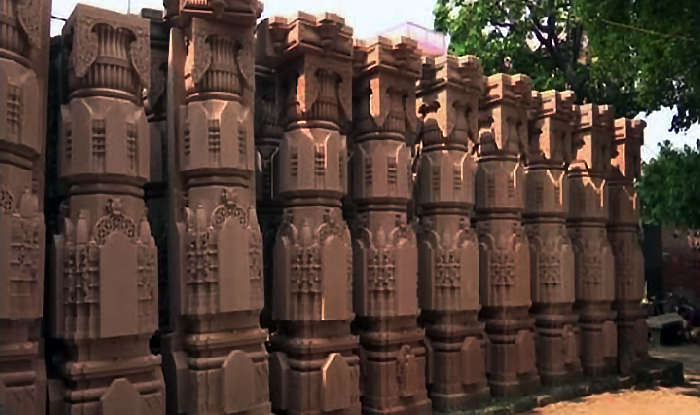
Ayodhya, Aug 2: With the foundation laying ceremony of the grand Ram temple around the corner, the work at the stone-carving workshop of Ram Janambhoomi in Ayodhya has reached its final stage.

Speaking to news agency, caretaker of Ram temple stone workshop Hanuman Yadav said, "Stonework is ready for the construction work till the first floor of the temple. Cleaning work is almost done but some work is still left which will be done soon after the trust's meeting."

Talking about the characteristics of the sandstone chosen work the construction, he said, "It was chosen for the construction as it can withstand rigours for thousands of years. These designated stones are minutely carved according to the need of the temple."

The stone-carving workshop for the Ram temple construction was established in Ayodhya by the Vishwa Hindu Parishad (VHP) in 1990.

On August 5 when Prime Minister Narendra Modi will visit Ayodhya for rituals that will mark the beginning of Ram temple construction, Hanumangarhi is the first stop he would be visiting.

The construction of Ram temple will begin in Ayodhya after the ceremony to lay the foundation stone in which various dignitaries from the political and religious fields are likely to participate apart from RSS chief Mohan Bhagwat. 

Comments

Add new comment

  • Coastaldigest.com reserves the right to delete or block any comments.
  • Coastaldigset.com is not responsible for its readers’ comments.
  • Comments that are abusive, incendiary or irrelevant are strictly prohibited.
  • Please use a genuine email ID and provide your name to avoid reject.
News Network
June 23,2020

Jun 23: The U.S. government on Monday restricted charter flights from India, accusing the nation of "unfair and discriminatory practices" by violating a treaty governing aviation between the two countries.

Air India Ltd. has been making flights to repatriate its citizens during the travel disruptions caused by the Covid-19 outbreak, but also has been selling tickets to the public, the Transportation Department alleged.

At the same time, U.S. airlines have been prohibited from flying to India by aviation regulators there, the DOT said in its order. The situation "creates a competitive disadvantage for U.S. carriers," the agency said in a press release.

Air India is advertising a schedule that is more than half of pre-virus operations, the department said. "The charters go beyond true repatriations, and it appears that Air India may be using repatriation charters as a way of circumventing" that nation's flight restrictions, the U.S. agency said.

The order becomes effective in 30 days, the department said.

Indian airlines must apply to the DOT for authorization before conducting charter flights so that it can scrutinize them more closely, it said. The department will reconsider the restrictions once India lifts restrictions on U.S. carriers.

The action against India follows weeks of DOT restrictions against Chinese airlines after the U.S. agency accused that nation of unfairly banning American carriers in the wake of the virus. On June 15, the U.S. announced it would agree to allow four flights a week from China after it allowed the same number by U.S. carriers.

Attempts to reach Air India and the Indian embassy in Washington after business hours were unsuccessful.

Comments

Add new comment

  • Coastaldigest.com reserves the right to delete or block any comments.
  • Coastaldigset.com is not responsible for its readers’ comments.
  • Comments that are abusive, incendiary or irrelevant are strictly prohibited.
  • Please use a genuine email ID and provide your name to avoid reject.