Real Ayodhya is in Nepal, Lord Ram was Nepali, says Nepal PM

News Network
July 14, 2020

Kathmandu, Jul 14: After staking claim to Indian territories of Lipulekh-Kalapani in  a new controversial map,  Nepal Prime Minister KP Sharma Oli on Monday claimed that Ayodhya, the birthplace of Lord Rama, is in Nepal and Lord Rama was Nepali.

“Although real Ayodhya lies at Thori, city in the west of Birgunj, India has claimed that Lord Rama was born there. Due to these continuous claims, even we have believed that deity Sita got married to Prince Rama of India. However, in reality, Ayodhya is a village lying west of Birgunj,” Oli claimed at an event organised at Prime Minister's residence in Kathmandu.

The Prime Minister also blamed India of cultural encroachment by “creating a fake Ayodhya.”

“Balmiki Ashram is in Nepal and the holy place where King Dashrath had executed the rites to get the son is in Ridi. Dashrath’s son Ram was not an Indian and Ayodhya is also in Nepal,” he claimed.

In an attempt to save self from criticism, Oli questioned how Lord Rama could come to Janakpur to marry Sita when there were "no means" of communication. He further said that it to be impossible for Lord Rama to come to Janakpur from present Ayodhya that lies in India.

“Janakpur lies here and Ayodhya there and there is talk of marriage. There was neither telephone nor mobile then how could he know about Janakpur,” Oli said.

Comments

Ahmed Ali Kulai
 - 
Tuesday, 14 Jul 2020

New controversy

 
BJP got next election Muddah

Farhan
 - 
Tuesday, 14 Jul 2020

Ab Ram Mandir Kaha Banega???

Add new comment

  • Coastaldigest.com reserves the right to delete or block any comments.
  • Coastaldigset.com is not responsible for its readers’ comments.
  • Comments that are abusive, incendiary or irrelevant are strictly prohibited.
  • Please use a genuine email ID and provide your name to avoid reject.
Agencies
July 29,2020

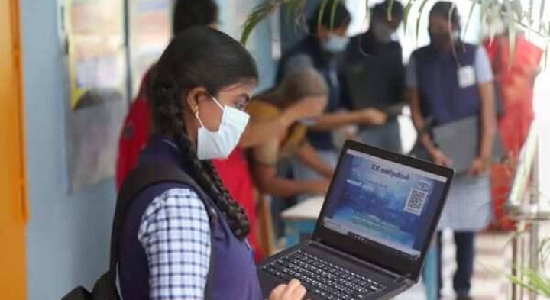
New Delhi, Jul 29: The new National Education Policy (NEP) approved by the Union Cabinet on Wednesday is set to usher in a slew of changes with the vision of creating an education system that contributes directly to transforming the country, providing high-quality education to all, and making India a global knowledge superpower.

The draft of the NEP by a panel headed by former Indian Space Research Organisation (ISRO) chief Kasturirangan and submitted to the Union Human Resource Development Minister Ramesh Pokhriyal when he took charge last year. The new NEP replaces the one formulated in 1986.

Some of the key highlights of the New Education Policy are:-

The policy aims to enable an individual to study one or more specialized areas of interest at a deep level, and also develop character, scientific temper, creativity, spirit of service, and 21st century capabilities across a range of disciplines including sciences, social sciences, arts, humanities, among others.

It identified the major problems facing the higher education system in the country and suggested changes such as moving towards multidisciplinary universities and colleges, with more institutions across India that offer medium of instruction in local/Indian languages, a more multidisciplinary undergraduate education, among others. 

The governance of such institutions by independent boards having academic and administrative autonomy has also been suggested.

Under the suggestions for institutional restructuring and consolidation, it has suggested that by 2040, all higher education institutions (HEIs) shall aim to become multidisciplinary institutions, each of which will aim to have 3,000 or more students, and by 2030 each or near every district in the country there will be at least one HEI.

The aim will be to increase the Gross Enrolment Ratio in HEIs including vocational education from 26.3 per cent (2018) to 50 per cent by 2035.

Single-stream HEIs will be phased out over time, and all will move towards becoming vibrant multidisciplinary institutions or parts of vibrant multidisciplinary HEI clusters.

It also pushes for more holistic and multidisciplinary education to be provided to the students.

Comments

Add new comment

  • Coastaldigest.com reserves the right to delete or block any comments.
  • Coastaldigset.com is not responsible for its readers’ comments.
  • Comments that are abusive, incendiary or irrelevant are strictly prohibited.
  • Please use a genuine email ID and provide your name to avoid reject.
News Network
May 20,2020

United Nations, May 20: Highlighting India's long-standing history of promoting inclusive and peaceful societies, a top UN official on Tuesday voiced concern over incidents of "increased hate speech and discrimination" against minority communities in the country following the adoption of the Citizenship Amendment Act.

Under-Secretary-General and UN Special Adviser on the Prevention of Genocide Adama Dieng, however, welcomed Prime Minister Narendra Modi’s call for unity and brotherhood in the wake of the COVID19 pandemic.

Dieng said in a note to the media on Tuesday that he is "concerned over reports of increased hate speech and discrimination against minority communities in India" since the adoption of the Citizenship Amendment Act (CAA) in December 2019.

The Indian government has maintained that the CAA is an internal matter of the country and stressed that the goal is to protect the oppressed minorities of neighbouring countries.

The CAA, which was notified on January 10, grants Indian citizenship to non-Muslim minorities migrated to India from Afghanistan, Pakistan and Bangladesh till December 31, 2014, following persecution over their faith.

"While the objective of the act, to provide protection to minority communities is commendable, it is concerning that this protection is not extended to all groups, including Muslims. This is contrary to India’s obligations under international human rights law, in particular on non-discrimination,” Dieng said.

The Special Adviser recognised "India’s long standing and well recognised history of promoting inclusive and peaceful societies, with respect for equality and principles of non-discrimination.”

He also welcomed recent statements by Prime Minister Modi that the COVID-19 pandemic “does not see race, religion, colour, caste, creed, language or border before striking and that our response and conduct...should attach primacy to unity and brotherhood.”

Dieng encouraged the Government of India to "continue to abide by this guidance by ensuring that national laws and policies follow international standards related to non-discrimination and to address and counter the rise of hate speech through messages of inclusion, respect for diversity and unity.”

He further reiterated that he would continue to follow developments and expressed his readiness to support initiatives to counter and address hate speech.

The hate speech and the dehumanisation of others goes against international human rights norms and values, he added.

“In these extraordinary times brought about by the COVID-19 crisis it is more important than ever that we stand united as one humanity, demonstrating unity and solidarity rather than division and hate,” he said.

Dieng also expressed concern over reports of violence during demonstrations against CAA in some regions of India.

Comments

Add new comment

  • Coastaldigest.com reserves the right to delete or block any comments.
  • Coastaldigset.com is not responsible for its readers’ comments.
  • Comments that are abusive, incendiary or irrelevant are strictly prohibited.
  • Please use a genuine email ID and provide your name to avoid reject.
Agencies
July 30,2020

Mumbai, Jul 30: Counterfeiting incidents have increased 24 per cent in the country in 2019 over the previous year, creating an over Rs 1 lakh crore hole in the economy, according to a report.

The report also said counterfeiters are having a free run due to the pandemic-driven disruptions to organised supply chains and the resultant spike in consumer demand.

According to the report by ASPA, a self-regulated industry body of anti-counterfeiting and traceability solutions providers, counterfeiting has risen steadily in the last few years, and exploiting the pandemic as a cover for their activities.

Between February and April 2020, over 150 incidents of counterfeiting cases were reported, mostly about fake PPE kits, sanitisers and masks taking advantage of the high demand for these products, it noted.

"There was a 24 per cent increase in counterfeiting in 2019 over 2018, leading to the loss of more than Rs 1 lakh crore to the overall economy," said Nakul Pasricha, president of Authentication Solution Providers Association.

The association works with global authorities like the International Hologram Manufacturers Association, Counterfeit Intelligence Bureau of the Interpol, and domestic industry lobbies like Ficci, he said.

Counterfeiting is a universal issue and is 3.3 per cent of global trade, according to the OECD data, impacting social and economic development across the world.

The report lists the currency, FMCG, alcohol, pharma, documents, agriculture, infrastructure, automotive, tobacco, lifestyle and apparel, as the 10 sectors impacted most by counterfeiting.

Among these, currency, alcohol and FMCG continue to be the top three sectors with the highest counterfeiting in the last two years. The FMCG sector is most vulnerable, as counterfeit incidents rose 63 per cent between 2018 (79) and 2019 when the reported cases jumped to 129.

Within the states, the fakers have a free run in Uttar Pradesh, Bihar, Rajasthan, Madhya Pradesh, Bengal, Punjab, Jharkhand, Delhi, Gujarat, and Uttarakhand, calling for urgent actions to frame anti-counterfeiting policy measures.

According to the report, UP continues to be on top followed by Bihar, Rajasthan, and together these three states represent almost 45 per cent of all counterfeiting reported in the last two years.

What is more alarming is that counterfeiting is not limited to high-end luxury items today, as common everyday items as fake cumin seeds, mustard cooking oil, ghee, hair oils, soaps, baby care vaccines and medicines are aplenty in the markets.

"There is an urgent need for building and nurturing authentication ecosystems in the country with the active involvement and active participation of all stakeholders," said Pasricha.


Comments

Add new comment

  • Coastaldigest.com reserves the right to delete or block any comments.
  • Coastaldigset.com is not responsible for its readers’ comments.
  • Comments that are abusive, incendiary or irrelevant are strictly prohibited.
  • Please use a genuine email ID and provide your name to avoid reject.