Remove mandatory retirement' age for medical teachers: Dr Edmond Fernandes

[email protected] (CD Network)
June 10, 2016

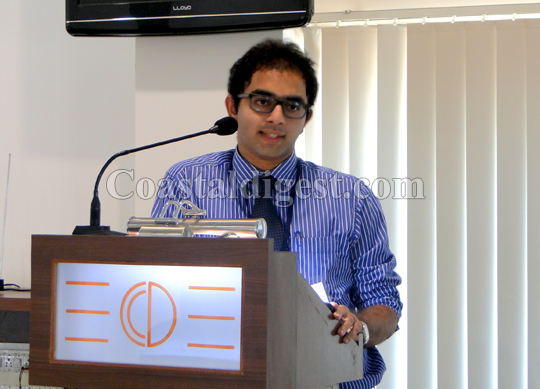
Mangaluru, Jun 10: Dr Edmond Fernandes, CEO, Center for Health and Development [CHD-India] has written to Bhanu Pratap Sharma, Secretary, Health and Family Welfare, Government of India urging to remove mandatory retirement' age for medical teachers in private and Government medical colleges and Universities.

edmond

Considering the acute shortage of doctors in the country, which is way below the WHO recommended doctor patient ratio, he said the senior doctors will be instrumental to guide quality control needed by accreditation councils like NAAC, NABH and improve the overall development of health sector and human resources etc.

In the letter, Dr Edmond mentioned that employment should be seen as a human right which ensures independence, social security and promotes a sense of dignity and self-worth.

Setting a time-line for retirement at 70 is obsolete and unfair. The medical teachers post 70 should not aspire for posts of Heading departments and moving as examiners to other institutes, that should be clearly declared of in an undertaking and they should be assigned other development roles, he wrote.

He pointed out that a few medical teachers have dual MD degrees and a few might have Dual PHD's and it is important to cultivate these teachers without letting them go. If the mental faculty of the teacher is sound with physical movement at ease, there should be no retirement as such. Ontario Human Rights Commission, advocated and came up with the enlightened decision to remove mandatory retirement on 12th December, 2006, many other countries have followed suit. He has appealed to the Secretary to table this for immediate solution.

The letter has been copied to Dr Jayshree Mehta, President, Medical Council of India and Dr Shalini Rajneesh, Principal Secretary, Health and Family Welfare, Government of Karnataka.

Comments

Althaf
 - 
Friday, 10 Jun 2016

good job, u may get help from UT Khader.

Add new comment

  • Coastaldigest.com reserves the right to delete or block any comments.
  • Coastaldigset.com is not responsible for its readers’ comments.
  • Comments that are abusive, incendiary or irrelevant are strictly prohibited.
  • Please use a genuine email ID and provide your name to avoid reject.
News Network
April 5,2020

Bengaluru, Apr 5: The COVID-19 related lockdown has substantially improved the air quality of Bengaluru, taking it from satisfactory level to good, a senior state pollution control board offcial said here on Sunday.

"During the course of the lockdown 19 problem, we reached good position from satisfactory.

It is between zero to 50 AQI (Air Quality Index) now. We have good quality air," the Karnataka State Pollution Control Board member secretary Basavaraj Patil told PTI.

He said the indicator for knowing the air quality in

"If the AQI is zero to 50 then it is good. If it is 50 to 100 then it is satisfactory. 101 to 150 is moderate and if it is 151 to 200, then it is poor, he explained.

Patil said as per available recrods, there has been a 60 to 65 per cent reduction in pollution during the lockdown.

The city railway station and Peenya industrial area, which used to be among the areas with highest AQI, has seen pollution levels come down significantly, he said.

Another major contributor of pollution was construction activities, which too had ground to a halt due to the lockdown, resulting in zero dust emission.

Patil opined that the improved air quality would boost the immune system of the people.

"It will improve the immune system of people, including those who have breathing problems like asthma," he said.

He asked the public to learn lessons from the lockdown and later switch to sustainable means of transport such as public transport, walking and cycling,.

"We can still reduce the pollution load even after the lockdown is over," Patil said.

Comments

Add new comment

  • Coastaldigest.com reserves the right to delete or block any comments.
  • Coastaldigset.com is not responsible for its readers’ comments.
  • Comments that are abusive, incendiary or irrelevant are strictly prohibited.
  • Please use a genuine email ID and provide your name to avoid reject.
News Network
July 23,2020

Bengaluru, Jul 23: The Siddi community in Karnataka got its first lawmaker as Governor Vajubhai Vala nominated five persons, including Shantharama Budna Siddi, to the Karnataka Legislative Council on Wednesday.

Shantharama Siddi had been working as a social worker and was a post holder at the Vanavasi Kalyan Prakalpa, a tribal welfare initiative of the Rashtriya Swayamsevak Sangh (RSS).

The Siddis, an ethnic group in India, are said to have descended from the people of the East African region. They are included in the list of Scheduled Tribes (ST) in Karnataka.

Apart from the Shantharama, the inclusion of CP Yogishwar, who had left Congress to join BJP in 2017 but failed to retain his seat in the 2018 Assembly polls, is also considered as a big decision.

Adagur H Vishwanath, another former JDS leader, who had quit his party and joined BJP but failed to retain his seat has also caught the attention of the people.

Further, Governor Vala has nominated Talwar Sabanna and Bharathi Shetty to the Upper House in the state.

Comments

Add new comment

  • Coastaldigest.com reserves the right to delete or block any comments.
  • Coastaldigset.com is not responsible for its readers’ comments.
  • Comments that are abusive, incendiary or irrelevant are strictly prohibited.
  • Please use a genuine email ID and provide your name to avoid reject.
News Network
February 6,2020

Kalaburagi, Feb 6: The State government will take steps to ensure that Kannada as a language is taught in all private schools, Chief Minister B.S. Yediyurappa announced today at the 85th Akhila Bharata Kannada Sahitya Sammelana in Kalaburagi.

This comes in the wake of the demand by some Kannada activists for making Kannada medium compulsory in all schools in the State. Sammelana president H.S. Venkatesh Murthy, who spoke after the Chief Minister, also made this demand.

The Chief Minister said “We are committed to putting in place a series of steps to see that Kannada is taught in all schools, aided and private, as a language. Kannada should be taught as the first or second language. We will also take steps to strengthen government schools. However, the government alone cannot do much. The community and parents should offer support to make sure that government schools provide quality education to all.”

To inculcate the spirit of scientific inquiry, the State government is setting up mobile planetariums. This will increase the interest of children in space technology and India’s efforts in space exploration.

The government is committed to protecting the interests of the State in Mahadayi and other river water disputes. It will take the border row issue, based on the Mahajan Commission report pending in the Supreme Court, to its logical end.

The government will also address backwardness and related issues. It will make sure that adequate funds are allocated to the development of Kalyana Karnataka. Among other things, it will establish a hostel for students from Kalaburagi region in Bengaluru. Land has been allotted in Nagarabavi for the hostel that can accommodate around 200 students. The government has decided to celebrate Kalyana Karnataka Utsav once every two years. This will showcase the culture of the region.

“We are working towards forging sentimental and emotional unity of the State other than unity based on language or administration. Our dream is to see that Karnataka remains a homogeneous unit with equality and equal opportunity for all,’’ the Chief Minister added.

Kambar bats for technology

Chandrashekar Kambar, Sahitya Akademi president and former president of the Akhila Bharata Kannada Sahitya Sammelana, favoured effective implementation of technology in administration and for universal use of Kannada in computing and e-governance.

Speaking at the Sammelana inauguration, he said “Several years ago, at the insistence of writer Poornachandra Tejaswi, I appealed to the State government to give a push to Kannada computing. We were convinced that no language can survive without the use of modern technology and use of the language in computers. The Department of Kannada and Culture, headed by then director Manu Baligar, released ₹2 crore for the project. The work began in earnest and teams of technologists came up with software and fonts. Some departments started using Kannada software. But this work has stopped or slowed down at some level. I appeal to Chief Minister B.S. Yediyurappa to continue the work and ensure that computerised Kannada is used at all levels of government and in e-governance.’’

Supports dubbing

Mr. Kambar batted for content dubbing of informative TV channels in Kannada. Channels such as Discovery and History produce good quality content that can be educative and informative. They are very useful for children. These channels are now available in Tamil, Telugu and Hindi and some other Indian languages. But they are not available in Kannada. That is because some people in the film industry are opposing dubbing. Such opposition is not good. Informative channels are our window to the world and allowing dubbing will enhance our knowledge base. There is no merit in not allowing dubbing. I appeal to C.T. Ravi, Minister for Kannada and Culture, to allow dubbing in Kannada, he said.

Mr. Kambar favoured primary education in the mother tongue of the child and urged the State government to introduce universal and compulsory education in Kannada medium in all schools. “This will help preserve our culture. Nothing else can,’’ he said.

He blamed the East India Company administration for inculcating a craze for English education among the people. “The introduction of English education by the British was strongly welcomed by the masses in India as they had been denied the opportunity for education for millenia. The deprived classes and Dalits who had not been exposed to education till then, were excited about the opportunity. However, along with English education, the British were successful in introducing inferiority in our minds. We are yet to escape from this inferiority complex.”

Quoting from Greek mythology, Mr. Kambar said that Hercules had killed his children and relatives in a fit of alcohol-induced rage. “We should not behave like that. We may be very strong, but we should not kill our mother tongue, in our power-induced rage,’’ he said.


Comments

Add new comment

  • Coastaldigest.com reserves the right to delete or block any comments.
  • Coastaldigset.com is not responsible for its readers’ comments.
  • Comments that are abusive, incendiary or irrelevant are strictly prohibited.
  • Please use a genuine email ID and provide your name to avoid reject.