



Rocky, The Karate Kid director John G Avildsen passes away aged 81, after battle with cancer

Agencies
June 17, 2017

Los Angeles, Jun 17: John G Avildsen, who directed Rocky and The Karate Kid — two dark-horse, underdog favorites that went on to become Hollywood franchises — died Friday at age 81.obit
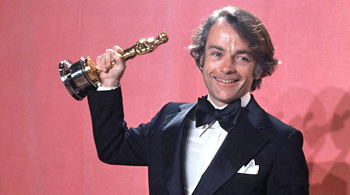
Anthony Avildsen said his father died Friday in Los Angeles from pancreatic cancer. "He was a pretty extraordinary man in my estimation. He was super talented and very driven and very stubborn and that was to his detriment but also often to his benefit," Anthony Avildsen said.

Rocky was a huge success. It won Oscars for best picture, director (Avildsen) and editing and was nominated for seven others. No less a Hollywood eminence than Frank Capra loved it, telling The New York Times in 1977, "When I saw it, I said, 'Boy, that's a picture I wish I had made.' " For his part, Avildsen said Capra — who also championed underdogs on film — was his favorite director.

Rocky was a chance venture for Avildsen. Sylvester Stallone, then unknown, had written the script and sought Avildsen to direct it, but Avildsen was already working on another film. Suddenly the production company ran out of money and that film was canceled.

A friend sent Avildsen the Rocky script. "On page 3, this guy (Rocky) is talking to his turtles, and I was hooked," Avildsen remarked. "It was a great character study." Avildsen agreed to direct Rocky even though he knew nothing about boxing.

The film was shot on a tight budget, less than $1 million, and it was completed in 28 days.

"The first time I showed it to 40 or 50 friends, they all freaked out, so that was encouraging," he recalled. "But I guess when I saw the lines around the block, it began to take on a reality."

Five sequels followed, but Avildsen turned them down, until the fourth, Rocky V, in 1990. He said he considered it a good script and liked that Rocky would die. During the shooting, the producers decided Rocky had to live. "You don't kill off your corporate assets," Avildsen commented. The fifth sequel, Rocky Balboa, came out in 2006.

The Karate Kid was another surprise hit. In it, a teenager, hounded by bullies played, by Ralph Macchio seeks help from a Japanese handyman (Noryuki "Pat" Morita) who teaches him about karate. At the climax, a newly self-confident Macchio takes on a bully in a karate contest — and wins.

Released in the summer of 1984, The Karate Kid attracted millions of youngsters and brought Morita, a veteran performer best known for his TV roles, an Oscar nomination as best supporting actor.

"As soon as the producers saw the business it was doing, they wanted to do it again," Avildsen said in a 1986 interview. "I was very apprehensive. I didn't want to do a sequel because this was a very tough act to follow."

He relented and directed both The Karate Kid, Part II in 1986 and The Karate Kid, Part III in 1989. (The franchise was revived in 2010 with a hit remake directed by Harald Zwart.)

Avildsen had come up the hard way in films. He started with a long apprenticeship as assistant director, then moved up to production manager, cinematographer and editor.

He directed a few small films and then broke through with Joe (1970). Peter Boyle portrayed a hardhat bigot at odds with the emerging hippie youth culture.

"My hope as a filmmaker is to make people feel a little differently about something when they leave the theater," Avildsen told the Los Angeles Times in 1971.

Avildsen liked working with unknowns like Boyle. "The problem with name actors is everyone knows them, no matter how (Dustin) Hoffman-y they look," he told the Times.

Boyle, whose career got a huge boost from Joe, told The New York Times that as a director, Avildsen was "on your side. He makes you feel good about what you're doing."

After Joe, Avildsen directed Save the Tiger (1973) starring Jack Lemmon as a burned-out dress manufacturer. Lemmon won the Oscar as best actor for Save the Tiger, while Jack Gilford got a supporting-actor nomination.

Among other Oscar nominations for Rocky were two for Stallone, best actor and best screenplay; plus best actress, Talia Shire; best supporting actor, Burgess Meredith and Burt Young; and best song, 'Gonna Fly Now.'

Avildsen directed other major stars: Burt Reynolds in WW and the Dixie Dancekings (1975); George C Scott and Marlon Brando in The Formula (1980); Dan Aykroyd and John Belushi in Neighbors (1981); and Morgan Freeman in Lean on Me (1989).

He had been hired to direct Saturday Night Fever after his success with Rocky, but was let go amid differences over his desire to make the story more upbeat than the producers had in mind. "It's better not to be doing something you don't want to do," Avildsen told the Los Angeles Times after he departed from the project.

"Throughout the decades, his rousing portrayals of victory, courage and emotion captured the hearts of generations of Americans," the Directors Guild of America wrote in a statement Friday.

John Guilbert Avildsen was born in 1935 in Oak Park, IllInois, the son of a tool manufacturer. He attended New York University, then worked as an advertising copywriter. He spent two years in the Army as a chaplain's assistant.

A documentary on Avildsen, John G Avildsen: King of the Underdogs, premiered earlier this year at the Santa Barbara International Film Festival. The film, which is to be released digitally in August, was shot by Anthony Avildsen.

In a 1992 interview, Avildsen outlined his view of filmmaking, "I don't see my films as following any strict formula — even if many of them do have a similar theme. I guess I just like to see underdogs winning against the odds. To me, that is good drama. And the opposite would be too depressing."

Avildsen is survived by his sons Jonathan, Ashley and Anthony, and daughter Bridget.

Comments

Add new comment

  • Coastaldigest.com reserves the right to delete or block any comments.
  • Coastaldigset.com is not responsible for its readers’ comments.
  • Comments that are abusive, incendiary or irrelevant are strictly prohibited.
  • Please use a genuine email ID and provide your name to avoid reject.
Agencies
July 11,2020

New Delhi, Jul 11: The COVID-19 triggered restrictions on cinema exhibition industry have not only disheartened movie goers, but axed several thousand jobs and costed the industry an estimated ₹ 5,000 crore in revenue.

The sector has been one of the hardest hit due to COVID-19 pandemic and the subsequent restrictions implemented to curb its spread.

Presently, cinemas and multiplexes continue to remain in the list of prohibited activities under the Centre's Unlock 2.0 Guidelines.

In an interview to media persons, movie exhibition major Inox Leisure's Chief Executive Alok Tandon said, "The industry on an average collects about ₹ 1,000 crore a month of 'Box Office' and on an average generates about ₹ 500 crore a month of ancillary revenues."

"Keeping in mind that the lockdown has been effective for more than 100 days now, which is about 3.5 months, the cinema exhibition industry would have accumulated losses worth ₹ 5,000 crore so far."

According to Tandon, associated businesses such as pre and post-production, make-up artistes, graphics, film set fabrication, film crew, events, marketing, F&B services have all been impacted due to the restrictions.

"With the production and exhibition of movies coming to a halt, the industry was bound to witness some job losses," he said without divulging any estimates.

As per industry data, the multiplex industry in India employs more than 200,000 people directly and accounts for nearly 60 % of revenues of the film business.

On the way forward, Tandon elaborated that the industry expects to regain business momentum and sentiment post resumption of operations.

"We believe it will be a matter of a couple of blockbusters, and we will be back to our usual operational numbers," he said.

"We are rightfully relying on the unshakeable passion of the Indian movie lovers, who are yearning to step out and spend time enjoying the giant screen experience."

Furthermore, he cited that industry has sent representation to the Centre for immediate re-commencement of operations and a support package.

"We have requested for financial support in the form of salary subsidies during the lockdown period, interest-free loans for three years, exemptions from various taxes and duties, like 'GST, Show tax, LBETs and Property taxes' for a period of one year from the date of operations, waiver on electricity minimum demand charges for one year and auto renewal of licenses and permits for the next one year," he said.

"We have been talking to our mall developer partners and are working together with them to see through this phase."

However, even after re-commencement, the industry anticipates at least 3-6 months before things return anywhere close to normal.

"The cinema ecosystem is such that we will need all the aspects of the business to swing into action and fire together for us to see a resurgence, and we are highly optimistic about the same," he said.

In terms of global experience, Tandon pointed out that cinemas have started operating in more than 25 major countries, and some of those markets are witnessing a healthy response.

"India is a massive movie market and we are confident that the passionate and responsible movie lovers will turn up in huge numbers to enjoy their favourite form of entertainment and also follow the prevention guidelines at the same time, ensuring a safe and steady revival of the cinema exhibition sector," Tandon said.

The film exhibition industry in India is mainly comprised of single screen and multiplexes.

At present there are around 9,527 cinemas across the country, including 6,327 single and 3,200 multiplex screens.

Comments

Add new comment

  • Coastaldigest.com reserves the right to delete or block any comments.
  • Coastaldigset.com is not responsible for its readers’ comments.
  • Comments that are abusive, incendiary or irrelevant are strictly prohibited.
  • Please use a genuine email ID and provide your name to avoid reject.
News Network
June 9,2020

Bengaluru, Jun 9: There’s no denying the fact that Sudeep is one of the most popular and sought-after names in Kannada cinema. The versatile actor has won the love of fans due to his ‘pan-India’ look and impressive selection of roles. A self-made star, he paid his dues before making it big in Sandalwood. The Bachchan actor had, some time ago, told Film Companion that his initial years in the industry were anything but easy.

 The mass hero revealed that his first two movies never saw the light of the day as they were abandoned midway. Following the setback, he finally made his Kannada debut with V Umakanth’s Thayavva and began a new chapter in life. Sadly, the film sank without a trace and was removed from theatres within three days of its release.

“My first two films did not see the light of the day while the third one did not see people,” he added.

Sudeep ultimately tasted success with the 2001 release Huchcha and the rest is history. Over the years, ‘Deepanna’ has starred in several commercially successful movies and proved that he is a certified ‘A-lister’. The star has also made an impact in non-Kannada movies like Rann and Eega, expanding his fanbase big time.

Coming to the present, Sudeep was last seen in the Bollywood biggie Dabangg 3 that did decent business at the box office. The actioner saw him share screen space with Salman Khan, giving fans a reason to rejoice. The cast included Arbaaz Khan and Sonakshi Sinha.

He will be turning his attention to the Kannada biggie Kotigobba 3, the third instalment of the Kotigobba series. The film, directed by Shiva Karthik, is one of the biggest movies of the year. It features Shraddha Das, Madonna Sabastian and Aftab Shivdasani in key roles.  He  will also be seen in the Anup Bhandari-directed Phantom.

Comments

Add new comment

  • Coastaldigest.com reserves the right to delete or block any comments.
  • Coastaldigset.com is not responsible for its readers’ comments.
  • Comments that are abusive, incendiary or irrelevant are strictly prohibited.
  • Please use a genuine email ID and provide your name to avoid reject.
News Network
March 26,2020

Washington, Mar 26: American media personality Kylie Jenner has donated 1 million USD to fight against the COVID-19 outbreak.
Dr Thais Aliabadi shared the same in an Instagram post on Wednesday, "One of my patients, a beautiful Living Angel just donated $1,000,000 to help us buy hundreds of thousands of masks, face shields, and other protective gear which we will have delivered directly to our first responders, as too many masks at hospitals are disappearing before making their way onto the faces of our front line heroes."

According to Page Six, a representative for Jenner confirmed that the 22-year-old star has made the contribution, and said, "I can confirm that she did make the donation."
Now, thanks to Jenner's generosity, Aliabadi will be able to disperse the hundreds of thousands of various necessary essentials needed to combat the dissemination of COVID-19.
The doctor issued huge gratitude and thanks to the Kylie Cosmetics founder and said that she has "never felt more blessed to be a doctor."
Dr Aliabadi was on-hand to deliver Jenner's daughter, Stormi, according to TMZ.
Kylie reciprocated the doctor's kind words by replying to Dr Aliabadi's thank-you post, she wrote, "I love you! and thank YOU for all the love and care you put into everything that you do! You're an angel on earth."
Last Week, Jenner pleaded in an Instagram post, "The coronavirus is a real thing, "I listened to the Surgeon General this morning... he definitely encouraged me to come on here and talk to you guys."

Comments

Add new comment

  • Coastaldigest.com reserves the right to delete or block any comments.
  • Coastaldigset.com is not responsible for its readers’ comments.
  • Comments that are abusive, incendiary or irrelevant are strictly prohibited.
  • Please use a genuine email ID and provide your name to avoid reject.