


Rouhani lauds India's diversity, peaceful co-existence of religions

Agencies
February 16, 2018

Hyderabad, Feb 16: Iranian president Hassan Rouhani on Thursday lauded India's cultural diversity, saying multiple faiths and schools of thought co-exist peacefully in the country.

Speaking at a meeting with Muslim intellectuals, scholars and clerics in Hyderabad on Thursday night, Rouhani, who arrived in Hyderabad on a three-day India visit, said Islam is not a religion of violence, but one of moderation.

"Iran wants unity, independence and support for the East. Iran wants fraternity with India. We do not want to have any differences with other countries as well," said Rouhani who is on his first India visit since assuming charge as president in 2013.

The Iranian president lauded India's culture and traditions, and said the country was a "living museum" of religions and schools of thought.

"We see a lot of temples, other places of worship, and they are living in peace. They are having peaceful co-existence," he said.

Muslims, non-Muslims, Hindus, Sikhs are coexisting in peace in India, he said.

However, the West has created fissures between nations, he said.

"The enemies of Islam want to represent Islam as a religion of violence. Islam is not a religion of violence. Islam is a religion of moderation, Islam is a religion of kindness," he said.

Iran believes that there is no military solution to problems which are diplomatic in nature, Rouhani said.

"When a war is imposed, people have no other option but to defend themselves, and those who defend are the true companions and true followers of the almighty God," he said.

"The Western world oppressed and exploited the Eastern world and its resources" and caused tensions and differences to arise between oriental countries, he said.

"When we Muslims (in the past centuries) possessed universities and technologies, and others did not possess (them), we...transferred our teachings and science to them."

"However, when they (West) reached the (same level of progress), they did not (give) the same treatment. They did not provide us with technology fairly and justly," he said.

Calling for unity among Muslims, Rouhani said his country wants to clear the "hurdles" faced by the people of war-torn countries such as Afghanistan, Syria, Iraq and Yemen are facing.

"We want to clear the hurdles for the people of Afghanistan, Syria, Iraq, Yemen. The solution is unity and brotherhood in joint effort," he said.

Despite tight security, Rouhani allowed some of those present to click selfies with him after the speech.

Iran Foreign Minister Mohammed Javad Zarif also spoke at the event.

The Iranian president is scheduled to visit the famous Mecca Masjid in Hyderabad and offer prayers on Friday. Later, he would be leaving for New Delhi.

Earlier, he arrived in Hyderabad on a special flight from Tehran and was received by Union Minister of State for Power RK Singh and Telangana and Andhra Pradesh Governor ESL Narasimhan along with senior officials of Telanaga government.

Comments

Rashid
 - 
Friday, 16 Feb 2018

It is well known fact , by western interference into Iraq,syria, Afghanistan , Iran is benefitted more than any country , Iranian influence either directly or indirectly involved on sectarian voilence in these countries , utilized yeman also to target KSA ... I don't think Iran is serious to solve problems of these regions...

Add new comment

  • Coastaldigest.com reserves the right to delete or block any comments.
  • Coastaldigset.com is not responsible for its readers’ comments.
  • Comments that are abusive, incendiary or irrelevant are strictly prohibited.
  • Please use a genuine email ID and provide your name to avoid reject.
Agencies
July 29,2020

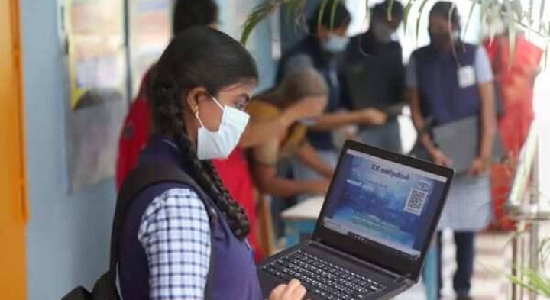
New Delhi, Jul 29: The new National Education Policy (NEP) approved by the Union Cabinet on Wednesday is set to usher in a slew of changes with the vision of creating an education system that contributes directly to transforming the country, providing high-quality education to all, and making India a global knowledge superpower.

The draft of the NEP by a panel headed by former Indian Space Research Organisation (ISRO) chief Kasturirangan and submitted to the Union Human Resource Development Minister Ramesh Pokhriyal when he took charge last year. The new NEP replaces the one formulated in 1986.

Some of the key highlights of the New Education Policy are:-

The policy aims to enable an individual to study one or more specialized areas of interest at a deep level, and also develop character, scientific temper, creativity, spirit of service, and 21st century capabilities across a range of disciplines including sciences, social sciences, arts, humanities, among others.

It identified the major problems facing the higher education system in the country and suggested changes such as moving towards multidisciplinary universities and colleges, with more institutions across India that offer medium of instruction in local/Indian languages, a more multidisciplinary undergraduate education, among others. 

The governance of such institutions by independent boards having academic and administrative autonomy has also been suggested.

Under the suggestions for institutional restructuring and consolidation, it has suggested that by 2040, all higher education institutions (HEIs) shall aim to become multidisciplinary institutions, each of which will aim to have 3,000 or more students, and by 2030 each or near every district in the country there will be at least one HEI.

The aim will be to increase the Gross Enrolment Ratio in HEIs including vocational education from 26.3 per cent (2018) to 50 per cent by 2035.

Single-stream HEIs will be phased out over time, and all will move towards becoming vibrant multidisciplinary institutions or parts of vibrant multidisciplinary HEI clusters.

It also pushes for more holistic and multidisciplinary education to be provided to the students.

Comments

Add new comment

  • Coastaldigest.com reserves the right to delete or block any comments.
  • Coastaldigset.com is not responsible for its readers’ comments.
  • Comments that are abusive, incendiary or irrelevant are strictly prohibited.
  • Please use a genuine email ID and provide your name to avoid reject.
Agencies
February 29,2020

New Delhi, Feb 29: Former RBI governor Raghuram Rajan has said slowdown in growth is due to the current government focussing more on meeting its political and social agenda rather than paying attention to the economy.

India can still reverse its slowing economic growth by paying attention to key issues, he said. "It's a sad story, I think most recently, it is politics," Rajan said in response to a question on what was stopping India's growth which remains below potential.

In an interview to Bloomberg TV, Rajan said unfortunately the current government after a massive election win has "focussed more on fulfilling its political and social agenda rather than paying attention to the economic growth".

"Unfortunately, this drift has continued a pace of slowing growth, which was precipitated initially by some actions the government took such as the demonetisation and a poorly rolled out Goods and Services Tax (GST) reform," Rajan said.

India's GDP growth hit nearly 7-year low of 4.7 per cent in the December quarter, as per official data released on Friday.

The GDP growth for the quarter is the lowest since January-March of 2012-13.

In the interview, which was telecast before the official numbers were released, Rajan said India has not paid sufficient attention to cleaning up the financial sector and unfortunately, that is leading to the slowing growth.

"These are things that they can change if attention is paid to them and appropriate actions are taken," Rajan, Professor of Finance at University of Chicago Booth School of Business, said.

On being asked about the spread of the coronavirus globally and its impact, he said there will certainly be some legacy issues in terms of business rethinking in the global supply chain.

"If it is disrupted anywhere, the entire supply chain is held ransom and companies are going to start rethinking that should we actually have these really spread out global supply chain or to bring them back closer home and how much diversification should we have. Should we have multiple production sites across the world rather than have it focussed primarily in Asia," he said.

Comments

Add new comment

  • Coastaldigest.com reserves the right to delete or block any comments.
  • Coastaldigset.com is not responsible for its readers’ comments.
  • Comments that are abusive, incendiary or irrelevant are strictly prohibited.
  • Please use a genuine email ID and provide your name to avoid reject.
News Network
January 20,2020

New Delhi, Jan 20: Surging inflation and slowing growth are raising serious concerns about the future growth prospects of the economy and as a remedial measure the government should resolve supply-side hurdles and ensure more stringent governance norms, a report said on Monday.

According to the Dun and Bradstreet Economy forecast, even though the Index of Industrial Production (IIP) turned positive in November 2019, it is likely to remain subdued.

"Slowdown in consumption and investment along with high inflationary pressures, geopolitical issues and uncertainty over the recovery of the economic growth are likely to keep IIP subdued," the report noted.

Dun and Bradstreet expect IIP to remain around 1.5-2.0 percent during December 2019.

As per government data, industrial output grew 1.8 percent in November, turning positive after three months of contraction, on account of growth in the manufacturing sector.

On the price front, uneven rainfall along with floods in many states and geopolitical issues have led to a surge in headline inflation even as demand remains muted.

The Consumer Price Index (CPI) in December rose to about five-and-half year high of 7.35 percent from 5.54 percent in November, mainly driven by high vegetable prices.

"The sharp rise in inflation has constrained monetary policy stimulus while revenue shortfall has placed limits on the government expenditure," Dun & Bradstreet India Chief Economist Arun Singh said.

According to Singh, growth-supporting measures and deceleration in growth are likely to cause slippage in fiscal deficit target by a wider margin.

"The government should focus on taking small steps to address the slowdown; in particular, resolve the supply-side hurdles and ensure more stringent governance norms," Singh said.

Unless these concerns are addressed through a comprehensive policy framework, it will not be easy for India to clock a sustainable growth rate to become a USD 5 trillion economy, he added.

Comments

Add new comment

  • Coastaldigest.com reserves the right to delete or block any comments.
  • Coastaldigset.com is not responsible for its readers’ comments.
  • Comments that are abusive, incendiary or irrelevant are strictly prohibited.
  • Please use a genuine email ID and provide your name to avoid reject.