


Rs 1000, Rs 500 currency notes to be out of circulation from midnight

November 8, 2016

New Delhi, Nov 8: Taking the nation by surprise, Prime Minister Narendra Modi tonight announced demonetisation of Rs 1000 and Rs 500 notes with effect from midnight, making these notes invalid in a major assault on black money, fake currency and corruption.
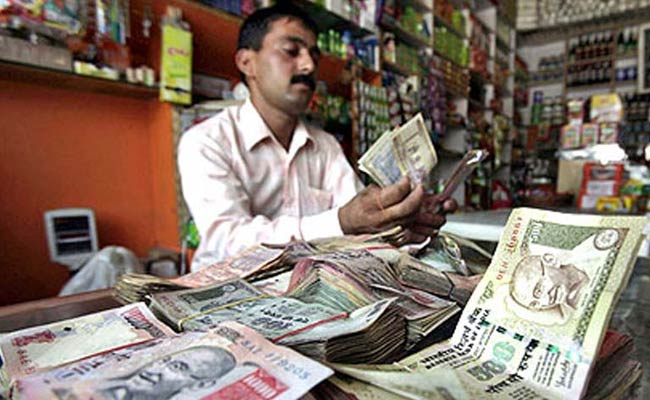
notes

In his first televised address to the nation, Modi said people holding notes of Rs 500 and Rs 1000 can deposit the same in their bank and post office accounts from November 10 till December 30.

In his 40-minute address, first in Hindi and later in English, the Prime Minister said the notes of Rs 500 and Rs 1000 "will not be legal tender from midnight tonight" and these will be "just worthless piece of paper."

However, he said that all notes in lower denomination of Rs 100, Rs 50, Rs 20, Rs 10, Rs 5, Rs 2 and Re 1 and all coins will continue to be valid.

He also announced that new notes of Rs 2000 and Rs 500 will be introduced.

ATM withdrawals will be restricted to Rs 2000 per day and withdrawals from bank accounts will be limited to Rs 10,000 a day and Rs 20,000 a week.

Banks will remain closed tomorrow and ATMs will also not function tomorrow and day after, Modi said.

He expressed confidence that the staff of banks and post offices will rise to the occasion to introduce the new order within the available time.

He also expressed confidence that political parties, workers, social organisations and the media will go further than the government in making it a success.

Besides depositing money in bank accounts, the Rs 500 and Rs 1000 notes can also be exchanged with lower denomination currency notes at designated banks and post offices on production of valid government identity cards like PAN, Aadhaar and Election Card from November 10 to November 24 with a daily limit of Rs 4000.

Those unable to deposit Rs 1000 and Rs 500 notes till December 30 this year can do so in designated RBI offices till March 31 next year after filling a declaration form along with proof and reasons, the Prime Minister said.

Rs 500 and Rs 1000 notes will be valid for transactions related to booking of air tickets, railway bookings, government bus ticket counters and hospitals till the midnight of November 11 and 12.

"Banks will be closed tomorrow. It will cause some hardship to you....Let us ignore these hardships... In country's history, there comes a moment when people will want to participate in the nation building and reconstruction. Very few such moments come in life," Modi said.

Comments

Skazi
 - 
Wednesday, 9 Nov 2016

Bupa, you lost the chance of stuffing pork
Now you can try this is on Sadvi, purohit, and other RSS terrorists

Bopanna
 - 
Wednesday, 9 Nov 2016

#4,Saleem, those who kill policewala deserve no mercy.
I would have stuffed pork in their mouths and shot them

naren kotian
 - 
Wednesday, 9 Nov 2016

hahaha saleem , they might be ur ummah , chummah ... who cares .,... they are terroroists ... we dont give damn ., pray for them yaar , 72 virgins jothe kabbadi aadli antha .... regarding najeeb , may be ask your isis leaders , he might be fighting in mosul :) haha ... bhagdhadi offer ge trap agi kabbaddi adbahudu antha hogirbeku ... ache din for natuonalkist indians who pay tax prompty ... hara hara modi .. jai jai modi ...

naren kotian
 - 
Wednesday, 9 Nov 2016

bhatkal ,ullal , kasargod , mallapuram , mulur hawala king pins will be crying .... ISI bosses will be struggling to send their counterparts required money to conduct jihad ... biryani boys of PFI are totally shocked ... faizhal bhai yelree ,,,, towel haakondu bundar nalli tootiddira .. hahaha ... banree ... papa ivattu bar ge hogodu faizhal bhai guarantee ...

Saleem
 - 
Wednesday, 9 Nov 2016

Good move by Modi to divert the attention from Bhopal Encounter and missing Najeeb.

Wa re wa ache din.....

Bopanna
 - 
Wednesday, 9 Nov 2016

Well said Naren, cannot see any of usual \truth seekers\" or \"anal ysts\" because they are trying to hide their ill gotten money. Those who were calling Modiji \"Feku\" look at this ! In one stroke he has nullified terrorists and black marketeers. No wonder Muslims hate him"

Althaf
 - 
Wednesday, 9 Nov 2016

Naren
I agree 100% with you. Jihadist Sanghis might have not slept last night. Poor guys.

Naren kotian
 - 
Tuesday, 8 Nov 2016

Wow ....hara hara modi ....jai jai modi ....jihsdist terrorism ...jihadist hawala network, jihadist chain snatchers and jihadists will not get sleep today .hahaha ....jihadist counterfeit kingpins and smugglers will be crying ....muah love u modi

Add new comment

  • Coastaldigest.com reserves the right to delete or block any comments.
  • Coastaldigset.com is not responsible for its readers’ comments.
  • Comments that are abusive, incendiary or irrelevant are strictly prohibited.
  • Please use a genuine email ID and provide your name to avoid reject.
News Network
March 28,2020

Bengaluru, Mar 28: Sun Tsu, in 'The Art of War' speaks of a skilful general who can subdue his enemy without any fighting. This constitutes the ultimate triumph which is referred to as stratagem. Today, we would need one such when we are faced with the '21-day corona challenge' for India.
Nearly four weeks back, Dr Jyothsna Rao, Dr Gururaj Rao and I sat across the OPD in the afternoon at HCG Bengaluru discussing our ongoing cancer immunology research. While on this topic, we drifted into the discussion on the coronavirus. During this engaging discussion, we wondered the similarity of the enigma between the virus and cancer. I paused to ask Dr Jyothsna and Dr Guru - how we wish we could do something against this virus.
Dr Jyothsna is a PhD from NCBS and had worked under Dr Ralph Steinman, physician and researcher from Rockefeller University, who won the Nobel Prize for his discovery of the dendritic cell and its role in adaptive immunity in 2011. Dr Gururaj is a molecular and cell biologist who did his PhD at the Chapel Hill, University of North Carolina and is the Director of iCrest.
Jyothsna while hearing our perplexing conversation on the covid intervened, "Yes, surely. I think we should take a break from cancer and focus on the innate and adaptive immunity role in COVID-19."
Thus began this sincere attempt to relook the human immune system from the eyes of the COVID-19.
We have 10 types of immune cells at the least which are widely dispersed in millions across the body. When our body is invaded by a foreign organism (bacteria, fungi or virus), these cells work with each other to destroy the invader.
Now, the question is - how do the immune cells talk to each other? They use small-molecule substances called cytokines (cyto means cells; kine means movement). There are many cytokines that are involved in work on the immune system. The most relevant for viruses are interferons.
Interferons (IFN) as the name reflects have an ability to interfere with the viral activity and stop their multiplication. These specialised signal proteins are released by our cells in response to a viral attack to forewarn other cells. They help build the antiviral proteins within the cells to kill the virus as it tries to invade the new cells.
Historically, interferons are a group of cytokines known to be potent antiviral agents against viruses and a hallmark cytokine induced by the host upon viral infections. Interferons possess unique immunoregulatory activities and are signature cytokines released by (TH1) T immune cells, which are crucial in viral infections.
As the outbreak of COVID-19 grapples us, an urgent need for finding strategies to combat the virus is growing. Coronaviruses (CoVs) are a group of RNA viruses. In patients infected with coronavirus, it was indicated that the activation of the IFN does not occur until 48 hours post-infection. Thus the delayed IFN-related antiviral response by the healthy cells leads to coronavirus evade the immune response.
Numerous studies have presented the success in defeating CoVs by the direct administration of IFNs. In a combination as a concoction, it was shown to synergistically inhibit the virus replication in vitro.
Moreover, it is understood that the earlier induction of IFNs in children although they have a less developed immune system could be the reason behind the children being least affected.
The key to success in reducing the disease fatality might be the stimulation of the immune responses to trigger IFN production at the very early stages of the disease, which might be done through the administration of IFN. Despite the evidence for the efficacy of IFNs in treating CoV-induced infections, the proper dosing and ideal timing for such interventions needs to be verified in clinical trials.
For the later stages of the diseases in advance stages where patients are on ventilator and have developed respiratory distress, we propose to utilise the mesenchymal cells derived from donor bone marrow that have been known to treat acute respiratory syndrome. Mesenchymal cells are known to possess anti-inflammatory activity and thus used often in autoimmune diseases.
With this scientific background, we have activated T cells from healthy donors, in a cGMP facility at iCrest - HCG hospital with an enriched cocktail of cytokines rich in Interferons. Injections of this cocktail we believe will result in a surge of cytokines in the body of the infected person and will boost his ability to fight the virus in the early phases. We are in the initial phases of this study and hope to be ready in the coming weeks with meaningful data on its potential utility.
Currently, it awaits government approvals (Union and state) and we have applied to central drugs authority for their initial evaluation and further directions.
As my Guru often expounded the philosophy of 'Seva' - the goal of education is knowledge, the end goal of knowledge is service. In this attempt to serve our fellow humans at this brink of unprecedented crisis, medical fraternity stands with you and promises to do our best for your safety.
We assure to exhaust every bit of our spirit in this fight against coronavirus. We have lost the sight of shores and travelled thus far, but that is the mandatory first step to cross the ocean. Are we going to succeed in this battle, is something only time will answer. 

Comments

Add new comment

  • Coastaldigest.com reserves the right to delete or block any comments.
  • Coastaldigset.com is not responsible for its readers’ comments.
  • Comments that are abusive, incendiary or irrelevant are strictly prohibited.
  • Please use a genuine email ID and provide your name to avoid reject.
News Network
June 20,2020

Bengaluru, Jun 20: The Karnataka Health Department has issued guidelines on the admission of COVID-19 patients in private hospitals after clinical assessment, mandating that the district surveillance officer (DSO) should be first informed to initiate further procedures, an official said on Friday.

"A health team sent by the DSO should visit the home or hospital where the patient is staying. The team should conduct a rapid assessment of his or her health condition," said Karnataka's Additional Chief Secretary Jawaid Akhtar.

In the rapid health condition assessment, the team should first check the patient's body temperature, followed by SpO2 (oxygen saturation) level and confirm if there are any comorbidities such as hypertension, diabetes, tuberculosis, HIV, cancer, stroke etc.

Depending on the health condition of patients, Akhtar said, two categories have been made.

"Those who have body temperature greater than 37.5 degrees Celsius, SpO2 level below 94 percent, elderly (above 60 years) and suffering from known comorbid conditions should be taken to a dedicated Covid hospital (DCH)," he said.

"All other patients, even if older but not suffering from co-morbidities, those below 60 and suffering from co-morbidities and asymptomatic cases should be taken to a dedicated Covid health centre (DCHC) or a private hospital as opted by the patient," he added.

Private hospitals have been asked to pitch in due to the rising number of cases in Karnataka. Currently, there are 2943 active cases in the state after 337 cases were reported on Friday.

"The patients are assessed clinically and evaluated at DCHCs or private hospitals with appropriate diagnostic tests. After evaluation, if the patients are asymptomatic, they are shifted to a COVID Care Centre (CCC) for further management," said Akhtar.

CCCs are expected to be equipped with ventilated rooms, pulse oximeters, handheld thermal scanners and blood pressure apparatus.

A nurse has to be present round the clock for every 50 patients and should visit each patient twice a day for assessment whereas the medical officer has to visit the CCC once a day. He should also be available on call in case of an emergency.

Staff serving food and others should wear personal protective equipment and an N-95 mask. Explaining the procedures at DCHCs, Akhtar said general examinations for medical conditions like body temperature, BP, pulse, oxygen saturation and urine output should be in place.

Investigations such as complete blood count, fasting blood sugar, random blood sugar, liver function tests, renal function tests, ECG and chest X-ray facilities should be available.

"DCHCs should ensure that above examinations are over in an orderly timeline of 24 hours and depending on the examination, the patient is continued to be lodged at the DCHC or sent to DCH or CCC," said the senior officer.

Likewise, the discharge policy should be done as per the protocols issued by the Health Department from time to time.

The Karnataka government is yet to fix an upper limit on the cost of treating COVID-19 patients in private hospitals. While reports indicated that this could be capped at Rs 5200 per day, health officials are yet to specify this is the case. Private hospitals in the state have asked the government to take a collaborative approach in deciding the fixed cap on treatment cost.

Comments

Add new comment

  • Coastaldigest.com reserves the right to delete or block any comments.
  • Coastaldigset.com is not responsible for its readers’ comments.
  • Comments that are abusive, incendiary or irrelevant are strictly prohibited.
  • Please use a genuine email ID and provide your name to avoid reject.
News Network
July 4,2020

Bengaluru, Jul 4: A case has been filed against a man who posed himself to be the PMO's National Security Council 'youth advisor' during his visit to Bengaluru.

According to the police, Ankit Dey (22 yrs) who had visited Bengaluru between 16 to 20 June and for his stay at ITC Gardenia, posed himself as a youth advisor to National Security Council at PMO.

As per the information given by the hotel staff, the police department had communicated with the PMO. They got clarification that there is no such person designated in the Prime minister's office. A complaint has been filed in Cubbon Park police station.

"The man found to be 22-year-old as per the identity shown in the hotel, left his visiting cards. Although he did not ask for any discount in the hotel," said Police.

A senior police officer said, "A criminal case has been filed against the accuse 'Ankit Dey' under the section IPC 420 (cheating and dishonesty), 465 (forgery), 468 (forgery for purpose of cheating), 471 (using as a genuine forged document), 417 (cheating).

Police have started its work to find him as per the clues we have got. At this point of time, we can not reveal more details," Officer said. 

Comments

Add new comment

  • Coastaldigest.com reserves the right to delete or block any comments.
  • Coastaldigset.com is not responsible for its readers’ comments.
  • Comments that are abusive, incendiary or irrelevant are strictly prohibited.
  • Please use a genuine email ID and provide your name to avoid reject.