



Rs 17 crore goes down the drain at Modi's washed out Varanasi event

July 16, 2015

Varanasi, July 16: As rains led to the cancellation of Prime Minister Narendra Modi's visit to his parliamentary constituency on Thursday, for the second time in the past one month, a staggering Rs.17 crore of the tax payer's money also has gone down the drain. Literally!
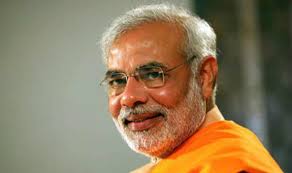
modiIf local district and protocol officials are to be believed, washed out trip has cost the exchequer more than Rs.17 crores. While VVIP visits do cost a fortune, the amount spent on Modi's now-cancelled visit is stunning for more than one reason.

First, while this is in stark contrast to the austerity Modi often speaks of, secondly, if one breaks down the expense of the visit, which was to last four hours and 35 minutes, the per-minute expense was to be Rs 6.18 lakh and the per-second averaging Rs 10,333.

With heavy rains ruining Modi's programme on June 28, the organizers this time had done their homework well and six special 'German Hanger' like marquees were erected for the public rally at Dereka grounds. These gigantic marquees were both fire and water proof and are estimated to have cost Rs 9 crore. Three air-conditioned mobile toilets were requisitioned from New Delhi for use of Modi and his entourage.

The organizers, on condition, of anonymity told IANS that air-conditioners totalling 100 tonnes were in place at Dereka, keeping in mind the humid and sultry weather. Ten special generators to provide 125 KVA electricity were also installed, adding a major expense to the budget. While the VVIP's were to be provided AC's to give them respite from the humid conditions, 100 coolers and 2,000 fans were in place for the public.

These generators, along with ten 6 KVA and two 5 KVA gensets would have produced 1.4 MW of electricity that, in ordinary conditions, could have powered more than 1,000 households, an official mused.

This apart, over Rs.4 crore rupees has been sent on boarding, lodging, transport and other expenses of the the prime minister's security and SPG detail.

A Wi-Fi enabled mini-PMO was also raised behind the hanger in which Modi was to be present during the launch of the developmental projects. Fifteen LED screens that would have telecast the prime minister's address live to almost 20,000 people amd a high- quality sound system at the rally venue also burnt a hole in the common man's pocket.

Comments

Add new comment

  • Coastaldigest.com reserves the right to delete or block any comments.
  • Coastaldigset.com is not responsible for its readers’ comments.
  • Comments that are abusive, incendiary or irrelevant are strictly prohibited.
  • Please use a genuine email ID and provide your name to avoid reject.
News Network
February 21,2020

Thiruvananthapuram, Feb 21: Hindu temples, dedicated to Lord Shiva, witnessed heavy rush on Friday as devotees celebrated Maha Shivratri festival with traditional zeal and religious fervour across Kerala.

Cutting across age barriers, devotees, including women and children, thronged small and big shrines since early morning to offer prayers and take part in special poojas and rituals on the occasion.

Devotees used to mark the auspicious occasion by observing 'orikkal' (fasting), dedicating the leaves of Koovalam plant, which is considered holy according to Hindu tradition, to the Lord and by abandoning their sleep chanting 'Om Nama Shivaya' mantras.

Ardent devotees even remain awake throughout the night and spend their whole day in temples.

The Sreekandeswaram Mahadeva Temple here, Vadakkunnathan temple in Thrissur and Maha Deva temple in Vaikom were among the major shrines which witnessed heavy rush since early morning.

Temple authorities, especially Devaswom Boards which manage many major shrines in the state, have made elaborate arrangements in Shiva temples to ensure smooth darshan for devotees.

All arrangements have been put in place on the banks of River Periyar in Aluva in Ernakulam for 'Balitharppanam', a ritual in which people pay obeisance to their ancestors.

Performing the ritual on the midnight of Shivratri is considered auspicious by devotees.

Hundreds of 'bali taras' (specially erected platforms) have been set up on the banks of the river to perform the ritual and a large number of priests have been deployed to assist devotees.

Thousands of police personnel were deployed in view of the large turnout of devotees.

Comments

Add new comment

  • Coastaldigest.com reserves the right to delete or block any comments.
  • Coastaldigset.com is not responsible for its readers’ comments.
  • Comments that are abusive, incendiary or irrelevant are strictly prohibited.
  • Please use a genuine email ID and provide your name to avoid reject.
Agencies
January 12,2020

Lucknow, Jan 12: The controversy over renowned Pakistani poet Faiz Ahmad Faiz's iconic poem 'Hum dekhenge' may have caused an upheaval in the literary world but it has also helped in resurrecting the famous poet for the young generations.

Students and young professionals are making a beeline for books on Faiz, his biography and his poems and book sellers are ordering supplies of Faiz books.

"Earlier, we sold hardly one book in a month or on Faiz but after the controversy, people are curious to know more about the poet and his poems. We have placed orders for the entire literary range on Faiz Ahmad Faiz," said a leading book seller in Hazratganj in Lucknow.

The bookseller said that the highest demand was for books written in Devnagri script.

"Not many in the young generation can read or write Urdu so they prefer Devnagri," the book seller said.

In Kanpur, most of the leading bookshops have already run out of stocks and book stalls in the ongoing Handloom Expo are drawing huge crowds for Faiz books.

Suchita Srivastava, B.Ed student in Kanpur said, "I have never been fond of Urdu poetry because I do not understand much of the language but after the controversy, I want to read poems of Faiz to understand what he wanted to say. I am taking help of Google to understand difficult words in Urdu."

Krishna Rao, another student at the Chandra Shekhar Azad University of Agriculture and Technology, said that since books on Faiz had been sold out, he had ordered a Kindle edition and was reading them.

"Reading his poems actually widens one's perspective of things and becomes even more precious if you take into account the time and context in which they were written," he said.

Comments

Add new comment

  • Coastaldigest.com reserves the right to delete or block any comments.
  • Coastaldigset.com is not responsible for its readers’ comments.
  • Comments that are abusive, incendiary or irrelevant are strictly prohibited.
  • Please use a genuine email ID and provide your name to avoid reject.
News Network
June 20,2020

New Delhi, Jun 20: A rare celestial event, annular solar eclipse, which is popularly known as the "ring of fire" eclipse, will be visible this Sunday in India.

It will be the first solar eclipse of this year takes place on the summer solstice, which is the longest day in the Northern Hemisphere.

While people living along the path annular eclipse passing through Anupgarh, Suratgarh, Sirsa, Jakhal, Kurukshetra, Yamunanagar, Dehradun, Tapowan and Joshimath will be able to see the annular phase, people in rest of India can witness a partial eclipse, said the Ministry of Science and Technology.

When Moon comes between the Sun and Earth, the shadow falls on the surface of the Earth. The Sun is entirely covered by the Moon for a brief period. Those places that are engulfed by the dark, dense umbral shadow of the Moon experience the total solar eclipse. In the regions that plunge into the soft diffused penumbral shadow of the Moon experience the partial eclipse.

"Annular solar eclipse is a particular case of the total solar eclipse. Like the total solar eclipse, the Moon is aligned with the Sun. However, on that day, the apparent size of the Moon happens to be a wee smaller than the Sun. Hence the Moon covers the central part of the Sun, and the rim of the Sun appear like a 'ring of fire' in the sky for a very brief moment" explains Samir Dhurde of The Inter-University Centre for Astronomy and Astrophysics, Pune.

During the solar eclipse, the apparent size of the Moon is smaller than that of the Sun by 1 per cent, the expert said.

Allying rumours that the eclipse will mark the end of coronavirus, Aniket Sule, Chairperson, Public Outreach and Education Committee of the Astronomical Society of India, said: "Solar eclipse is caused when the Moon comes in front of the Sun for a short time. As seen from Earth eclipses occur somewhere in the Earth 2 to 5 times a year. Eclipses do not impact microorganisms on Earth. Likewise there no danger in eating of stepping out during an eclipse. No mysterious rays come out of the Sun during an eclipse."

Comments

Add new comment

  • Coastaldigest.com reserves the right to delete or block any comments.
  • Coastaldigset.com is not responsible for its readers’ comments.
  • Comments that are abusive, incendiary or irrelevant are strictly prohibited.
  • Please use a genuine email ID and provide your name to avoid reject.