Kasaragod, Apr 19: Kasaragod, Kerala's COVID-19 hotspot, is the only district in the southern state lacking adequate health infrastructure.
In spite of treating the highest number of COVID-19 patients in the state with meagre infrastructural facilities and even without the support of a medical college in the north Kerala district, no deaths have been reported due to coronavirus.
The state health department views the performance of M Kunhiraman and his team, consisting of Janardhana Naik and Krishna Naik, at the General hospital in Kasaragod as a success story.
"Not only did they control the situation quickly with minimum infrastructure, they also started turning out a large number of negative cases within a few weeks and creditably ensured zero mortality.
This can be showcased as a best global model," Chairman of the Information Education and Communication (IEC) Committee and Project Director Kerala State Aids Control Society, R Ramesh said.
Recalling the ordeal, Janardhana Naik said his first major challenge was the physical examination of a patient with suspected COVID-19.
"Even with the PPE kit, nobody knew how effective they were and it took a whole 30 minutes to wear them properly.
But as time passed, we got accustomed to it," he said.
The traditional method of dealing with a patient involved knowing his or her history, observation and physical examination.
For hundreds of years, the hands-on body approach has been the soul of the doctor-patient relationship -- taking the pulse, tapping on and listening to the chest, feeling lumps.
With the onset of COVID-19 all that has changed.
"In fact, the whole exercise was fraught with grave risks because everything connected with COVID-19 was new.
Doctors have to keep a distance even though the physical examination wearing a Personal Protective Equipment (PPE) is difficult.
Sounds from the body are inaudible, vision is blurred through the smog-covered goggles and a stethoscope seldom has any use," Janardhana Naik said.
It was from March 15 that the hospital started receiving COVID-19 patients, primarily from Dubai.
By the time the first person came, the hospital was ready for him.
Soon, patient numbers began to swell and in a couple of weeks they reached about 91.
From then on, it was teamwork.
Committees were formed for each and every task, including the help desk, IT, treatment, medical board, training, food, waste disposal and data maintenance.
Initially, patients had many misgivings about the hospital.
"Some were disillusioned and even aggressive. Some were not happy with the facilities the hospital had to offer.
But gradually through good treatment and counselling by a psychiatrist, who visited the hospital on alternate days, the confidence and mood of the patients changed and they became friendly with the staff," Naik elaborated.
Counselling was also given to the concerned family members of the patients.
Besides treatment, the medical staff had to spend a considerable amount of time clearing the doubts of patients.
When they got discharged some patients insisted on seeing the faces of the medical staff, who till then were anonymous entities covered from head to toe.
Some even wanted to take selfies with them.
However, the medical team politely turned down their requests and preferred to remain hidden in their work attires.
The mood of the patients also rubbed off on the doctors and hospital staff.
All the physicians and hospital staff are now more confident of dealing with contagious diseases after treating COVID-19 patients.
"Our previous experience of treating H1N1, Chikungunya and Dengue cases helped us a lot.
Words of encouragement from the Health Minister K K Shailaja, Health Principal Secretary Dr Rajan N Khobragade and Health Services Director Dr Sarita R L gave us the impetus to build up confidence.
Moreover, the field health workers did a wonderful job in containing the viral spread," Naik added.
As the number of coronavirus cases rose, the state government on April 5 deputed a 26-member medical team from Thiruvananthapuram to set up a COVID-19 hospital in the district.
They turned a block of the under construction Government Medical College as a hospital-like facility, setting up a 200 bed facility to treat coronavirus patients.




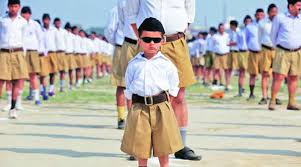 Nagpur, Apr 20: The Rashtriya Swayamsevak Sangh is planning to conduct cultural and moral science classes for kids every Sunday at 5,000 centres across the country.
Comments
Moral classes for Immoral activities
Oops..Producing some more minor terriorists,,, we have minor cell,,, No issue,, Upon blessing of Saffron Govt,,, documents missing.. as Malegaon blast.. Samajotha blast,,, Release BHAGYA,,,
70% is Hindu population of the nation and if at least 25% are illiterate, still they are more than peace loving community.
However they have at least other 25% educated in them.
The one and only the best solution is target these educated people in conveying the true religion. When they are with you, India will be peaceful country by force.
After sometime it will be peaceful country without force.
Pardon them Lord. These chaddies are ignorant goons. They do not know the fact that what they are doing is selling Bharat maatha to the West.
first of all who are they to teach (rss) ? are they govt? supreme court should stop this kind of nonsense.
INDIAN LAW AND ORDER MUST FOCUS ON THIS CLASSES AND NEED TO TAKE VIDEOS AND CLARIFY,
BEC WE DONT KNOW WHAT THEY ARE TRAINING TO YOUNG CHILDREN
BEC WE DONT WANT ANY TERROR GROUP HERE IN INDIA ...
Cheddis are controlling even our leaders ... We have recognized their cheddi trained MORALS after coming to POWER...
Please DEFINE what is MORALS to YOU>....
Brain washing classes.
RSS and Moral - you must be joking.....where was their moral when they killed Mahatma Gandhi???
Time has come to vanish this terrorist group from INDIA. Hope peace loving INDIANS will do the same very shortly.
Jai Hind
We are seeing what kind of products are coming out from RSS schools. Bajrangdal, VHP, SRS, all immoral rowdies.
Add new comment