Riyadh, Jun 17: Saudi Arabia is expected to scale back or call off this year's hajj pilgrimage for the first time in its modern history, observers say, a perilous decision as coronavirus cases spike.
Muslim nations are pressing Riyadh to give its much-delayed decision on whether the annual ritual will go ahead as scheduled in late July.
But as the kingdom negotiates a call fraught with political and economic risks in a tinderbox region, time is running out to organise logistics for one of the world's largest mass gatherings.
A full-scale hajj, which last year drew about 2.5 million pilgrims, appears increasingly unlikely after authorities advised Muslims in late March to defer preparations due to the fast-spreading disease.
"It's a toss-up between holding a nominal hajj and scrapping it entirely," a South Asian official in contact with Saudi hajj authorities said.
A Saudi official said: "The decision will soon be made and announced."
Indonesia, the world's most populous Muslim nation, withdrew from the pilgrimage this month after pressing Riyadh for clarity, with a minister calling it a "very bitter and difficult decision".
Malaysia, Senegal and Singapore followed suit with similar announcements.
Many other countries with Muslim populations -- from Egypt and Morocco to Turkey, Lebanon and Bulgaria -- have said they are still awaiting Riyadh's decision.
In countries like France, faith leaders have urged Muslims to "postpone" their pilgrimage plans until next year due to the prevailing risks.
The hajj, a must for able-bodied Muslims at least once in their lifetime, represents a major potential source of contagion as it packs millions of pilgrims into congested religious sites.
But any decision to limit or cancel the event risks annoying Muslim hardliners for whom religion trumps health concerns.
It could also trigger renewed scrutiny of the Saudi custodianship of Islam's holiest sites -- the kingdom's most powerful source of political legitimacy.
A series of deadly disasters over the years, including a 2015 stampede that killed up to 2,300 worshippers, has prompted criticism of the kingdom's management of the hajj.
"Saudi Arabia is caught between the devil and the deep blue sea," Umar Karim, a visiting fellow at the Royal United Services Institute in London, told AFP.
"The delay in announcing its decision shows it understands the political consequences of cancelling the hajj or reducing its scale."
"Buying time"
The kingdom is "buying time" as it treads cautiously, the South Asian official said.
"At the last minute if Saudi says 'we are ready to do a full hajj', (logistically) many countries will not be in a position" to participate, he said.
Amid an ongoing suspension of international flights, a reduced hajj with only local residents is a likely scenario, the official added.
A decision to cancel the hajj would be a first since the kingdom was founded in 1932.
Saudi Arabia managed to hold the pilgrimage during previous outbreaks of Ebola and MERS.
But it is struggling to contain the virus amid a serious spike in daily cases and deaths since authorities began easing a nationwide lockdown in late May.
In Saudi hospitals, sources say intensive care beds are fast filling up and a growing number of health workers are contracting the virus as the total number of cases has topped 130,000. Deaths surpassed 1,000 on Monday.
To counter the spike, authorities this month tightened lockdown restrictions in the city of Jeddah, gateway to the pilgrimage city of Mecca.
"Heartbroken"
"The hajj is the most important spiritual journey in the life of any Muslim, but if Saudi Arabia proceeds in this scenario it will not only exert pressure on its own health system," said Yasmine Farouk from the Carnegie Endowment for International Peace.
"It could also be widely held responsible for fanning the pandemic."
A cancelled or watered-down hajj would represent a major loss of revenue for the kingdom, which is already reeling from the twin shocks of the virus-induced slowdown and a plunge in oil prices.
The smaller year-round umrah pilgrimage was already suspended in March.
Together, they add $12 billion to the Saudi economy every year, according to government figures.
A negative decision would likely disappoint millions of Muslim pilgrims around the world who often invest their life savings and endure long waiting lists to make the trip.
"I can't help but be heartbroken -- I've been waiting for years," Indonesian civil servant Ria Taurisnawati, 37, told AFP as she sobbed.
"All my preparations were done, the clothes were ready and I got the necessary vaccination. But God has another plan."



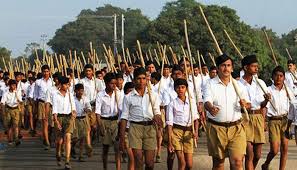 The proposal prepared by Vidya Bharati Akhil Bharatiya Shikshan Sansthan, the education wing of the RSS and submitted to the Human and Resource Development Ministry, also points out that co-education will have to be discontinued if working hours of schools are extended.

Comments
Bachelors club want to create rule for families.... First get married then U can follow this rules... and then dont stop modi to reunite his wife... U cheddis have ruined his family life...
It is RSS suggetion.. it means MAD
Learing sanskrit in schools and colleges....i dont think it is an issue at all....we learned kannada, hindi, english...sanskrit is also one of that kind....interesting...
Well, everyone understand the sanskrit, people read & understand the vedas, githas. May they turn real religion
Who are they to decide education strategy. It seems RSS is the supreme authority of governance than indian government. It shows RSS is the decision maker and indian government is simply implementing.
May Allah save our country.
Not all the suggestions are bad.
Support the idea:
- Banning co-education system.
- Relieving parents from Home works system.
- Learning Languages should be optional.
- Indianization of education is Ok, westernization has ruined the family values.
- Extra-curricular activity is good, to know the interest of children.
- Working parents can have option of having their children for long hours at schools where Hindus can study Sanskrit, Muslim can learn Arabic and Christians can have their preference.
Not supporting the idea:
- 12 hrs. is too much, most of the developed countries they limit the working hours of adults to 8 hrs. only.
- Forcing Sanskrit to all is too much.
Indian culture is good, family value is eroding which is bad for society as a whole. But forcing the ideas seems to be dangerous.
12Hrs, we don't want to tell even our enemy's children
Samskri : Nothing should be imposed. It is the people's choice.
We should see where the world is heading.
English : Now the important language is for this worldly life is English.
Arabic : Arabic is also big plus point for job seekers. 22 Countries have mother toungue as Arabic. This is the 2nd highest spoken language
DEAR FRIENDS ,
WHO COMMENTED ABOVE.. YOU PEOPLE FORGOT TO ASK WHO ARE THEY TO TELL TO GOV WHAT TO DO AND ALL..
WHAT THEY KNOW ABOUT SANSKRIT.. FIRST OF ALL THEY HAVE TO LEARN TO WEAR PROPER DRESS....NOT CHADIIES ...
RSS RSS RSS, in logo ko koi kaam nahin hain kya, indian citizens doesnt need your recommendations for education, go and teach your chaddis what to do and what not to do, hypocrites.
its a fact that children from India are spending 20~30% more time in Schools when compared to US/UK childrens..
For 8 Hours daily school times:
-> already they carry 5~6 kg school bags, this will raise to 8~9 kgs.
-> Children need to take healthy food, who will feed them during such a long period.
-> does all schools in states are eligible to keep the students for 12 hours with all such activities., if you survey our states may be hardly you can find 2~3% schools are fit with all activities...other 98% schools are hard to spend 8 hours.
-> why teachers must work for 12 hours daily (against labor law).
before, making any regulation gossips..pls just look for facts...
THE BACHELOR CLUB now wants to separate the FAMILIES ...
Wa re WA --- A clear Sign to those who think, the cheddis who are against women (Cheddis will never be successful with whatever they play with thier devilish agenda.)
Majority of their leaders arent married, hence any suggestion from them on how to raise children should be neglected!!!
None of the chaddis may know the sanskrit language before pushing others to learn
RSS is terrorising children, 12 hours schooling is too much for small children....and its inhuman....its okay if they go with discontinuing co-education....well and fine and its islamic way of thinking....However, at the end more expenses for developing country like India, will have to build more schools and colleges separately for both....
Add new comment