RSS worker’s murder: Saffron groups to hold hunger strike on Aug 8

News Network
August 5, 2017

Mangaluru, Aug 5: Sangh Parivar activists have threatened to launch a hunger strike in the city and taluk headquarters in Dakshina Kannada district on August 8 from 10 a.m. to 4 p.m. to press the government to arrest those behind the murder of RSS activist Sharath Madiwala in B.C. Road a month ago.

Activists of the Bharatiya Janata Party, the Vishwa Hindu Parishat, the Bajrang Dal, the Hindu Jagarana Vedike and other allied organisations will participate in it, according to K. Monappa Bhandary, former MLC. Talking to presspersons here on Saturday, Mr. Bhandary said despite setting up a special investigation team the district police have so far not arrested any person. 

While police arrested persons involved in the murder of Karopady Gram Panchayat Vice-President Zalil Karopady (in April) and Mohammed Ashraf or Ashraf Kalai (on June 26) quickly, Mr. Bhandary said that they were taking a long time to trace the accused in this case.

“Our police are competent and professional. There seems to be some pressure that’s preventing them from acting against the accused persons,” he alleged.

Vishwa Hindu Parishat Dakshina Kannada unit president Jagadish Shenva alleged that the frequent transfer of police officials in the district showed the lack of seriousness of the State government into the investigation of the murder.
 

Comments

Althaf
 - 
Monday, 7 Aug 2017

Day long hunger strick .. evening One peg with Beef sukka

Add new comment

  • Coastaldigest.com reserves the right to delete or block any comments.
  • Coastaldigset.com is not responsible for its readers’ comments.
  • Comments that are abusive, incendiary or irrelevant are strictly prohibited.
  • Please use a genuine email ID and provide your name to avoid reject.
News Network
August 6,2020

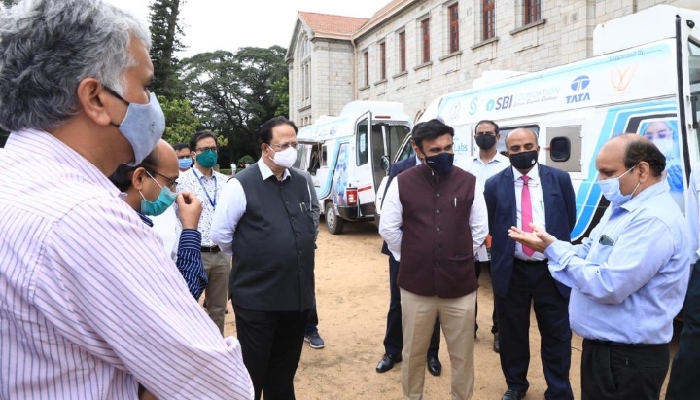
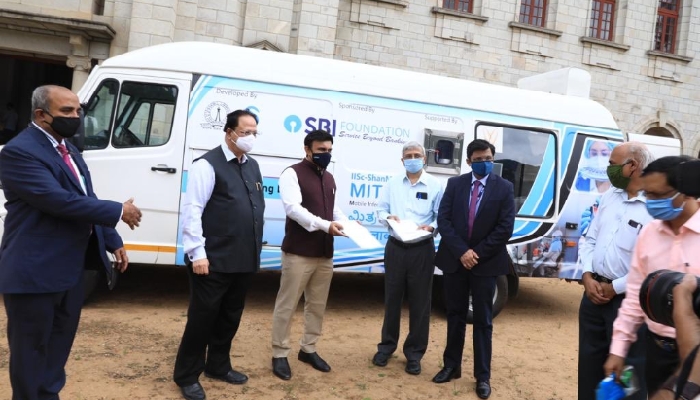
Bengaluru, Aug 5: Touted as a first of its kind in the nation, a mobile Covid-19 lab was inaugurated on Wednesday by the Karnataka Medical Education Minister Dr K Sudhakar.

The lab, approved by the Indian Council of Medical Research (ICMR) can do 9,000 RT-PCR (reverse transcription-polymerase chain reaction) tests per month, an official press release said here. "This is a unique lab having all safety features and capable of producing 100% accurate results within four hours," Dr Sudhakar was quoted as saying in the press release.

The Indian Institute of Science (IISC) had developed the lab and handed it over to the Rajiv Gandhi University of Health Sciences (RGUHS).

The mobile lab can also be used for molecular diagnostic-testing and can be deployed in coronavirus hot spots quickly, the release said adding, apart from Covid-19, the lab can be utilised for testing H1N1, HCV, TB, HPV and HIV among others.

Comments

Add new comment

  • Coastaldigest.com reserves the right to delete or block any comments.
  • Coastaldigset.com is not responsible for its readers’ comments.
  • Comments that are abusive, incendiary or irrelevant are strictly prohibited.
  • Please use a genuine email ID and provide your name to avoid reject.
News Network
July 14,2020

Bengaluru, Jul 14: The Karnataka government on Tuesday made changes to the Land Reforms Act 1961 through an ordinance to allow non-agriculturists to buy and own farmland for farming.

“The Land Reforms Act has been amended through an ordinance and notified after Governor Vajubhai R Vala gave his assent to it on Monday night,” a Revenue Department official told media persons.

It now permits non-farmers to buy farmland and grow food crops. But they can’t use it for other activities.

“Sections 79 A, B and C of the Act have been repealed, paving way for bona fide citizens to invest in farmland and take to farming as a hobby, passion or additional occupation, which is rewarding,” the official said.

The amended Act will enable the state to attract investment in the farm sector and boost food output. The farm sector’s contribution to the state’s gross domestic product (GDP) has been less than the manufacturing and services sectors over the last two decades.

Criticism by farmers, the Congress and the JD(S) since the cabinet approved changes on June 11 forced the state government to retain section 80 of the Act, with an amendment, to prevent sale of dam water irrigated farmland.

“The ordinance has also added a new section (80A), which says relaxations under the Act will not apply to land given to farmers under the Karnataka SC and ST (Scheduled Caste and Tribe) Act 1978,” the official said.

The changes permit mortgage of farmland only to the state-run institutions, firms and cooperative societies specified in the Act. The ordinance also makes legal cases pending in courts against the sections amended redundant as the new Act addresses the concerns raised in them.

“Besides generating substantial revenue for the state government, the Act will now allow farmers who find the occupation non-remunerative and risky due to droughts/floods and labour shortage to sell their surplus land to urban buyers,” the official said.

Ruling BJP Rajya Sabha member KC Ramamurthy from Bengaluru said the amended Act would allow any citizen to buy farmland.

“Though hundreds of people petitioned successive governments for the past 45 years to abolish the ‘draconian’ sections, they were ignored. I compliment Chief Minister BS Yediyurappa and Revenue Minister R Ashoka for the decision to allow everyone to buy farmland irrespective of their occupation or profession,” Ramamurthy told media persons.

Comments

Add new comment

  • Coastaldigest.com reserves the right to delete or block any comments.
  • Coastaldigset.com is not responsible for its readers’ comments.
  • Comments that are abusive, incendiary or irrelevant are strictly prohibited.
  • Please use a genuine email ID and provide your name to avoid reject.
News Network
June 26,2020

Bengaluru, Jun 26: The National Restaurant Association of India (NRAI) on Thursday came up with a Standard Operating Procedure (SOP) for restaurants whereby among other physical distancing norms, it has suggested a 2-metre gap between tables.

Formulated in partnership with Releski, a Bengaluru based skill-tech company, the SoP suggests that in case of back-to-back seating, people sitting with their backs towards each other will have their seats divided by 'Plexiglass' divider raised up to 2 meters from the ground.

"In a typical restaurant, the improvised seating plan should have a minimum distance of 2 metres between tables. The distance of 2 metres (6 feet) between tables should measure from one edge of the table to the other table's edge," it said.

In case of loose or free seating such as in banquet style or food court style seating, a minimum 2 meters of distance should be maintained between tables.

The guidelines noted that, to encourage physical distancing, restaurants have to sacrifice their seating capacity, to promote health and safety, and also to gain trust from their patrons.

"In order to perform this, divide your restaurants under different sectors. Pull out your restaurant's floor plan and colour code different sections red and yellow. Red sections are potential areas where maximum footfall or traffic is observed. Yellow sections are areas where the footfalls are average," it said.

All the red sections are encircled or bordered by placing barricades or Q manager and will open at specific points to access the yellow section and all the opening points will have hand sanitisers and sprays, and every guest who walks from red zones to yellow zones will sanitise himself/herself to reduce the chances of contamination.

For air conditioning, the guidelines of CPWD shall be followed which inter alia emphasises that the temperature setting of all air conditioning devices should be in the range of 24-30 degree Celsius, relative humidity should be in the range of 40- 65 per cent, intake of fresh air should be as much as possible and cross ventilation should be adequate, the guidelines suggested.

The industry body has also suggested appointment of a COVID-free Ambassador who would operate as the Chief Health Officer within the restaurant team, preferably from the management team in each shift.

The ambassador's would put the new daily work routines into practice, to monitor compliance with good practice and to lead the preventative measures, adapt to health & safety recommendations and requirements of the restaurant and oversee the implementation of the norms.

Anurag Katriar, President of NRAI and CEO & Executive Director of deGustibus Hospitality, said: "Every restaurant cutting across formats is facing the harsh reality of subdued to shut business volumes in the present and the uncertainty of business environment in the future. One thing is certain that hygiene and safety will be a key differentiator in the post-pandemic restaurant operations."


Comments

Add new comment

  • Coastaldigest.com reserves the right to delete or block any comments.
  • Coastaldigset.com is not responsible for its readers’ comments.
  • Comments that are abusive, incendiary or irrelevant are strictly prohibited.
  • Please use a genuine email ID and provide your name to avoid reject.