Saudi Arabia executes 47 terror convicts, including Shiite cleric

January 2, 2016

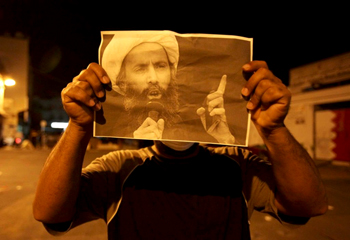
Riyadh, Jan 2: Saudi Arabia executed 47 prisoners convicted of terrorism charges today, including a Shiite cleric who was a central figure in 2011 Arab Spring-inspired protests in the kingdom.

terroristThe killing of Sheikh Nimr al-Nimr may spark new unrest among Saudi Arabia's Shiite minority, largely concentrated in the kingdom's east, and in Bahrain, which has seen low-level violence since 2011 protests by its Shiite majority demanding greater rights from its Sunni monarchy.

The cleric's name was on a list of the 47 carried by the state-run Saudi Press Agency. It cited the Interior Ministry for the information. Saudi state television also reported the executions.

Of those executed, Saudi Arabia said 45 were Saudi citizens, one was from Chad and another was from Egypt.

Saudi Arabia said a royal court order was issued to implement the sentences after all appeals had been exhausted. The executions were carried out today in the capital, Riyadh, and 12 other cities and towns, it said.

Al-Nimr had been a vocal critic of Bahrain's Sunni-led monarchy, which harshly suppressed the 2011 Shiite-led protests. Saudi Arabia sent troops to help Bahrain quash the uprising, fearing it would spread.

Amnesty International has called the verdict against the cleric, who was in his mid-50s, part of a campaign by Saudi authorities to "crush all dissent."

Before his arrest in 2012, al-Nimr had said the people do not want rulers who kill and carry out injustices against protesters. He was asked at his trial if he disapproves of the Al Saud ruling family.

"If injustice stops against Shiites in the east, then (at that point) I can have a different opinion," the cleric responded, according to his brother Mohammed, who attended court sessions and spoke to The Associated Press before the verdict.

Al-Nimr did not deny the political charges against him, but said he never carried weapons or called for violence.

In announcing the verdicts, Saudi state television showed mugshots of all those executed. Al-Nimr was No. 46, expressionless with a gray beard, his head covered with the red-and-white scarf traditionally worn by Saudi men.

After listing the names and images of those executed, Saudi state television showed black-and-white footage of previous terror attacks in the kingdom, one showing bodies in a mosque after an attack. Soft, traditional music played in the background.

Saudi Arabia carried out at least 157 executions in 2015, with beheadings reaching their highest level in the kingdom in two decades, according to several advocacy groups that monitor the death penalty worldwide.

Coinciding with the rise in executions is the number of people executed for non-lethal offenses that judges have wide discretion to rule on, particularly drug-related crimes.

Comments

CID
 - 
Monday, 4 Jan 2016

Killing of Shaik Al-Nimr is the Biggest mistake by Saudi. This will change whole political scenario of the Gulf.

Arvind
 - 
Monday, 4 Jan 2016

Another demonstration of the religion of Peace as practised by the people who invented it. Looked like pretty soon the KSA will be engulfed in terrorism. And innocent bystanders will be needlessly killed.

hamees
 - 
Monday, 4 Jan 2016

this incident was happened in 2011 it took 5 years to take final decision . if it is in India it would take more than 10 years, and one thing you have to remember is terrorist doesnt have a religion...

Rumi ahmed
 - 
Saturday, 2 Jan 2016

We should be thankful that we are in India and have a democratic set up,unlike most of the middle east kingdoms where at the behest of the ruling family any body can be executed fearing rebellion.

Add new comment

  • Coastaldigest.com reserves the right to delete or block any comments.
  • Coastaldigset.com is not responsible for its readers’ comments.
  • Comments that are abusive, incendiary or irrelevant are strictly prohibited.
  • Please use a genuine email ID and provide your name to avoid reject.
coastaldigest.com news network
July 31,2020

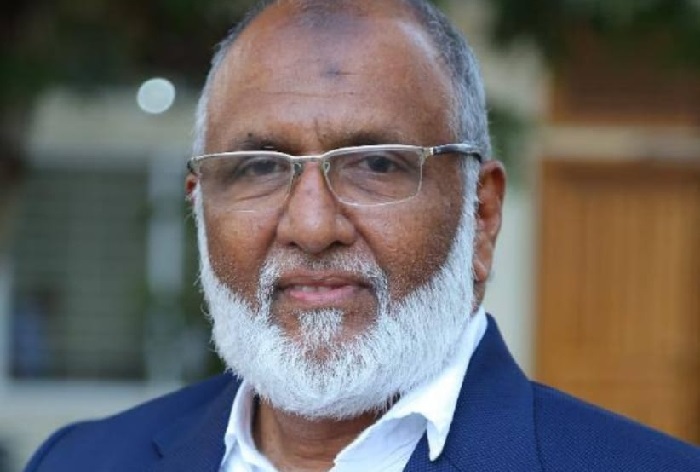
Mangaluru, July 31: Extending Eid al-Adha greetings to the people, S M Rashid Haji, president of the Bearys chamber of commerce & industry has termed the festival as a symbol of sacrifice and patience. 

“Eid al-Adha commemorates the Prophet Ibraheem’s (a) test of faith and sacrifices. It symbolizes sacrifice and endurance,” he said.

“Every human being during his lifetime faces one or the other test from the Almighty… Now we are collectively facing the hardship... May this festival bring goodness and peace, and herald the end of pandemic,” he said.

Comments

Add new comment

  • Coastaldigest.com reserves the right to delete or block any comments.
  • Coastaldigset.com is not responsible for its readers’ comments.
  • Comments that are abusive, incendiary or irrelevant are strictly prohibited.
  • Please use a genuine email ID and provide your name to avoid reject.
News Network
July 28,2020

Hounde, Jul 28: Coronavirus and its restrictions are pushing already hungry communities over the edge, killing an estimated 10,000 more young children a month as meager farms are cut off from markets and villages are isolated from food and medical aid, the United Nations warned Monday.

In the call to action shared with The Associated Press ahead of publication, four UN agencies warned that growing malnutrition would have long-term consequences, transforming individual tragedies into a generational catastrophe.

Hunger is already stalking Haboue Solange Boue, an infant from Burkina Faso who lost half her former body weight of 5.5 pounds (2.5 kilograms) in just a month. Coronavirus restrictions closed the markets, and her family sold fewer vegetables. Her mother was too malnourished to nurse.

“My child,” Danssanin Lanizou whispered, choking back tears as she unwrapped a blanket to reveal her baby's protruding ribs.

More than 550,000 additional children each month are being struck by what is called wasting, according to the UN — malnutrition that manifests in spindly limbs and distended bellies. Over a year, that's up 6.7 million from last year's total of 47 million. Wasting and stunting can permanently damage children physically and mentally.

“The food security effects of the COVID crisis are going to reflect many years from now,” said Dr. Francesco Branca, the WHO head of nutrition. “There is going to be a societal effect.”

From Latin America to South Asia to sub-Saharan Africa, more poor families than ever are staring down a future without enough food.

In April, World Food Program head David Beasley warned that the coronavirus economy would cause global famines “of biblical proportions” this year. There are different stages of what is known as food insecurity; famine is officially declared when, along with other measures, 30% of the population suffers from wasting.

The World Food Program estimated in February that one Venezuelan in three was already going hungry, as inflation rendered salaries nearly worthless and forced millions to flee abroad. Then the virus arrived.

“Every day we receive a malnourished child,” said Dr. Francisco Nieto, who works in a hospital in the border state of Tachira.

In May, Nieto recalled, after two months of quarantine, 18-month-old twins arrived with bodies bloated from malnutrition. The children's mother was jobless and living with her own mother. She told the doctor she fed them only a simple drink made with boiled bananas.

“Not even a cracker? Some chicken?” he asked.

“Nothing,” the children's grandmother responded. By the time the doctor saw them, it was too late: One boy died eight days later.

The leaders of four international agencies — the World Health Organization, UNICEF, the World Food Program and the Food and Agriculture Organization — have called for at least dollar 2.4 billion immediately to address global hunger.

But even more than lack of money, restrictions on movement have prevented families from seeking treatment, said Victor Aguayo, the head of UNICEF's nutrition program.

“By having schools closed, by having primary health care services disrupted, by having nutritional programs dysfunctional, we are also creating harm,” Aguayo said. He cited as an example the near-global suspension of Vitamin A supplements, which are a crucial way to bolster developing immune systems.

In Afghanistan, movement restrictions prevent families from bringing their malnourished children to hospitals for food and aid just when they need it most. The Indira Gandhi hospital in the capital, Kabul, has seen only three or four malnourished children, said specialist Nematullah Amiri. Last year, there were 10 times as many.

Because the children don't come in, there's no way to know for certain the scale of the problem, but a recent study by Johns Hopkins University indicated an additional 13,000 Afghans younger than 5 could die.

Afghanistan is now in a red zone of hunger, with severe childhood malnutrition spiking from 690,000 in January to 780,000 — a 13% increase, according to UNICEF.

In Yemen, restrictions on movement have blocked aid distribution, along with the stalling of salaries and price hikes. The Arab world's poorest country is suffering further from a fall in remittances and a drop in funding from humanitarian agencies.

Yemen is now on the brink of famine, according to the Famine Early Warning Systems Network, which uses surveys, satellite data and weather mapping to pinpoint places most in need.

Some of the worst hunger still occurs in sub-Saharan Africa. In Sudan, 9.6 million people live from one meal to the next — a 65% increase from the same time last year.

Lockdowns across Sudanese provinces, as around the world, have dried up work and incomes for millions. With inflation hitting 136%, prices for basic goods have more than tripled.

“It has never been easy but now we are starving, eating grass, weeds, just plants from the earth,” said Ibrahim Youssef, director of the Kalma camp for internally displaced people in war-ravaged south Darfur.

Adam Haroun, an official in the Krinding camp in west Darfur, recorded nine deaths linked with malnutrition, otherwise a rare occurrence, over the past two months — five newborns and four older adults, he said.

Before the pandemic and lockdown, the Abdullah family ate three meals a day, sometimes with bread, or they'd add butter to porridge. Now they are down to just one meal of “millet porridge” — water mixed with grain. Zakaria Yehia Abdullah, a farmer now at Krinding, said the hunger is showing “in my children's faces.”

“I don't have the basics I need to survive,” said the 67-year-old, who who hasn't worked the fields since April. “That means the 10 people counting on me can't survive either.”


Comments

Add new comment

  • Coastaldigest.com reserves the right to delete or block any comments.
  • Coastaldigset.com is not responsible for its readers’ comments.
  • Comments that are abusive, incendiary or irrelevant are strictly prohibited.
  • Please use a genuine email ID and provide your name to avoid reject.
Media Release
March 12,2020

Manipal, Mar 12: Team WGSHA is proud to announce that the culinary museum in WGSHA has been listed in Limca Book of Records as India's First Living Culinary Arts Museum.

Limca Book of Records (LBR) is a catalogue of achievements made by Indians, at home and abroad in diverse fields of human endeavour. LBR is a celebration of exemplary exploits and recognizes accomplishments such as firsts, inventions, discoveries, honours, awards and the truly extraordinary.

Chef Thirugnanasambantham, Principal of WGSHA, while thanking MAHE and ITC Leadership for extending all support towards instituting this museum in Manipal and WGSHA, also appreciated and thanked all those who have directly or indirectly helped towards setting up this museum in Manipal.

"The process for WGSHA's culinary museum to make an entry into the popular Limca Book of Records started almost six months back and after validation by LBR recently, has been listed in the book of records. We are glad that we could be the first of its kind in such endeavour and we also hope to be in Guinness World Records soon", said Chef Thiru.

"We are indeed grateful to Michelin-starred Indian celebrity Chef Vikas Khanna, the founder and curator of this museum, who had this idea of establishing a culinary museum and donated thousands of kitchen tools and equipment worth millions of dollars to this museum for preserving the history of India's rich tradition of culinary arts and to educate the future generations. Chef Vikas Khanna, 'Distinguished Alumnus' of WGSHA, being very desirous of making such a museum in India, what better place it would be than in his own Alma Mater!", he said on the background of having the museum.

Chef Thiru mentioned that Udupi, popular for the famous 'Udupi Cuisine', and being a temple town, is adjacent to International University Town of Manipal Academy of Higher Education (MAHE).

MAHE is home to thousands of international students and visitors. With a great heritage of Udupi, combined with the large number of Indian and International students residing in and around Manipal, it was very apt for the college to create a museum for today's Indian youth and the International visitors to understand the rich culinary heritage of India, through the priceless kitchen tools and equipment donated by Chef Vikas Khanna.

"Has placed WGSHA in the global culinary map and we are proud to have joined all such efforts to preserve the history of cuisines and cultures across the world", said Chef Thiru.

The culinary art academic block housing the museum was opened in April 2018, spread approximately over 25,000 sq ft and is shaped in the form of a giant pot very similar to the ones found in Harappa.

There are historical as well as regular household items such as plates made by the Portuguese in India, a 100-year-old ladle used to dole out food at temples and bowls dating to the Harappan era, an old seed sprinkler, an ancient Kashmiri tea brewer known as 'samovar', vessels from the Konkan, Udupi and Chettinad regions, apart from a large collection of rolling pins, utensils of all shapes and sizes, tea strainers of different types etc.

Comments

Add new comment

  • Coastaldigest.com reserves the right to delete or block any comments.
  • Coastaldigset.com is not responsible for its readers’ comments.
  • Comments that are abusive, incendiary or irrelevant are strictly prohibited.
  • Please use a genuine email ID and provide your name to avoid reject.