


Saudi Arabia executes 47 terror convicts, including Shiite cleric

January 2, 2016

Riyadh, Jan 2: Saudi Arabia executed 47 prisoners convicted of terrorism charges today, including a Shiite cleric who was a central figure in 2011 Arab Spring-inspired protests in the kingdom.
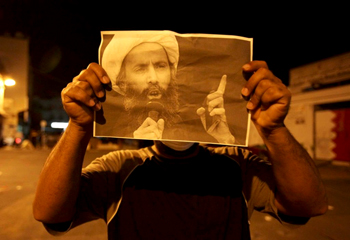
terroristThe killing of Sheikh Nimr al-Nimr may spark new unrest among Saudi Arabia's Shiite minority, largely concentrated in the kingdom's east, and in Bahrain, which has seen low-level violence since 2011 protests by its Shiite majority demanding greater rights from its Sunni monarchy.

The cleric's name was on a list of the 47 carried by the state-run Saudi Press Agency. It cited the Interior Ministry for the information. Saudi state television also reported the executions.

Of those executed, Saudi Arabia said 45 were Saudi citizens, one was from Chad and another was from Egypt.

Saudi Arabia said a royal court order was issued to implement the sentences after all appeals had been exhausted. The executions were carried out today in the capital, Riyadh, and 12 other cities and towns, it said.

Al-Nimr had been a vocal critic of Bahrain's Sunni-led monarchy, which harshly suppressed the 2011 Shiite-led protests. Saudi Arabia sent troops to help Bahrain quash the uprising, fearing it would spread.

Amnesty International has called the verdict against the cleric, who was in his mid-50s, part of a campaign by Saudi authorities to "crush all dissent."

Before his arrest in 2012, al-Nimr had said the people do not want rulers who kill and carry out injustices against protesters. He was asked at his trial if he disapproves of the Al Saud ruling family.

"If injustice stops against Shiites in the east, then (at that point) I can have a different opinion," the cleric responded, according to his brother Mohammed, who attended court sessions and spoke to The Associated Press before the verdict.

Al-Nimr did not deny the political charges against him, but said he never carried weapons or called for violence.

In announcing the verdicts, Saudi state television showed mugshots of all those executed. Al-Nimr was No. 46, expressionless with a gray beard, his head covered with the red-and-white scarf traditionally worn by Saudi men.

After listing the names and images of those executed, Saudi state television showed black-and-white footage of previous terror attacks in the kingdom, one showing bodies in a mosque after an attack. Soft, traditional music played in the background.

Saudi Arabia carried out at least 157 executions in 2015, with beheadings reaching their highest level in the kingdom in two decades, according to several advocacy groups that monitor the death penalty worldwide.

Coinciding with the rise in executions is the number of people executed for non-lethal offenses that judges have wide discretion to rule on, particularly drug-related crimes.

Comments

CID
 - 
Monday, 4 Jan 2016

Killing of Shaik Al-Nimr is the Biggest mistake by Saudi. This will change whole political scenario of the Gulf.

Arvind
 - 
Monday, 4 Jan 2016

Another demonstration of the religion of Peace as practised by the people who invented it. Looked like pretty soon the KSA will be engulfed in terrorism. And innocent bystanders will be needlessly killed.

hamees
 - 
Monday, 4 Jan 2016

this incident was happened in 2011 it took 5 years to take final decision . if it is in India it would take more than 10 years, and one thing you have to remember is terrorist doesnt have a religion...

Rumi ahmed
 - 
Saturday, 2 Jan 2016

We should be thankful that we are in India and have a democratic set up,unlike most of the middle east kingdoms where at the behest of the ruling family any body can be executed fearing rebellion.

Add new comment

  • Coastaldigest.com reserves the right to delete or block any comments.
  • Coastaldigset.com is not responsible for its readers’ comments.
  • Comments that are abusive, incendiary or irrelevant are strictly prohibited.
  • Please use a genuine email ID and provide your name to avoid reject.
News Network
April 15,2020

Bengaluru, Apr 15: With the reporting of the death of an 80-yr-old female from Hirebagewadi taluk in Belagavi district, the number of persons, who were died due to COVID-19 related disease, increased to 12, in Karnataka on Wednesday.

According to official sources, the deceased was a relative of another COVID-19 infected person, was succumbed to death this morning at a designated Hospital in Belagavi district.

Comments

Add new comment

  • Coastaldigest.com reserves the right to delete or block any comments.
  • Coastaldigset.com is not responsible for its readers’ comments.
  • Comments that are abusive, incendiary or irrelevant are strictly prohibited.
  • Please use a genuine email ID and provide your name to avoid reject.
Agencies
March 1,2020

Kochi, Mar 1:Adheringto a policy of "zero tolerance" towards clergy who sexually exploit minors, Pope Francis has expelled a Kerala priestconvicted of rape from all priestly duties and rights, according to church officials.

Syro-Malabar Church priest Robin Vadakkumchery is currently serving a jail term for impregnating a 16-year-old girl in Mananthavady diocese.

"Vadakkumchery has been dispensed from the exercise of priestly duties and rights. That means he has been reduced to the state of a layman", a Church official told PTI.

He was suspended from priestly duties soon after the news about his crime was reported in early 2017.

A POCSO court in Thalassery last year had sentenced Vadakkumchery to 20 years of Rigorous Imprisonment and slapped a fine of Rs three lakh on him.

The priest, 50, was the vicar of the local church in Kottiyur in Kannur district and manager at the school where the victim was studying.

He was arrested two years ago while trying to flee to Canada.

The Vatican's action came two years after Pope Francis made it clear that all bishops should adhere to a policy of "zero tolerance" for clergy who sexually exploit children.

Comments

Add new comment

  • Coastaldigest.com reserves the right to delete or block any comments.
  • Coastaldigset.com is not responsible for its readers’ comments.
  • Comments that are abusive, incendiary or irrelevant are strictly prohibited.
  • Please use a genuine email ID and provide your name to avoid reject.
News Network
April 19,2020

Kasaragod, Apr 19: Kasaragod, Kerala's COVID-19 hotspot, is the only district in the southern state lacking adequate health infrastructure.

In spite of treating the highest number of COVID-19 patients in the state with meagre infrastructural facilities and even without the support of a medical college in the north Kerala district, no deaths have been reported due to coronavirus.

The state health department views the performance of M Kunhiraman and his team, consisting of Janardhana Naik and Krishna Naik, at the General hospital in Kasaragod as a success story.

"Not only did they control the situation quickly with minimum infrastructure, they also started turning out a large number of negative cases within a few weeks and creditably ensured zero mortality.

This can be showcased as a best global model," Chairman of the Information Education and Communication (IEC) Committee and Project Director Kerala State Aids Control Society, R Ramesh said.

Recalling the ordeal, Janardhana Naik said his first major challenge was the physical examination of a patient with suspected COVID-19.

"Even with the PPE kit, nobody knew how effective they were and it took a whole 30 minutes to wear them properly.

But as time passed, we got accustomed to it," he said.

The traditional method of dealing with a patient involved knowing his or her history, observation and physical examination.

For hundreds of years, the hands-on body approach has been the soul of the doctor-patient relationship -- taking the pulse, tapping on and listening to the chest, feeling lumps.

With the onset of COVID-19 all that has changed.

"In fact, the whole exercise was fraught with grave risks because everything connected with COVID-19 was new.

Doctors have to keep a distance even though the physical examination wearing a Personal Protective Equipment (PPE) is difficult.

Sounds from the body are inaudible, vision is blurred through the smog-covered goggles and a stethoscope seldom has any use," Janardhana Naik said.

It was from March 15 that the hospital started receiving COVID-19 patients, primarily from Dubai.

By the time the first person came, the hospital was ready for him.

Soon, patient numbers began to swell and in a couple of weeks they reached about 91.

From then on, it was teamwork.

Committees were formed for each and every task, including the help desk, IT, treatment, medical board, training, food, waste disposal and data maintenance.

Initially, patients had many misgivings about the hospital.

"Some were disillusioned and even aggressive. Some were not happy with the facilities the hospital had to offer.

But gradually through good treatment and counselling by a psychiatrist, who visited the hospital on alternate days, the confidence and mood of the patients changed and they became friendly with the staff," Naik elaborated.

Counselling was also given to the concerned family members of the patients.

Besides treatment, the medical staff had to spend a considerable amount of time clearing the doubts of patients.

When they got discharged some patients insisted on seeing the faces of the medical staff, who till then were anonymous entities covered from head to toe.

Some even wanted to take selfies with them.

However, the medical team politely turned down their requests and preferred to remain hidden in their work attires.

The mood of the patients also rubbed off on the doctors and hospital staff.

All the physicians and hospital staff are now more confident of dealing with contagious diseases after treating COVID-19 patients.

"Our previous experience of treating H1N1, Chikungunya and Dengue cases helped us a lot.

Words of encouragement from the Health Minister K K Shailaja, Health Principal Secretary Dr Rajan N Khobragade and Health Services Director Dr Sarita R L gave us the impetus to build up confidence.

Moreover, the field health workers did a wonderful job in containing the viral spread," Naik added.

As the number of coronavirus cases rose, the state government on April 5 deputed a 26-member medical team from Thiruvananthapuram to set up a COVID-19 hospital in the district.

They turned a block of the under construction Government Medical College as a hospital-like facility, setting up a 200 bed facility to treat coronavirus patients.

Comments

Add new comment

  • Coastaldigest.com reserves the right to delete or block any comments.
  • Coastaldigset.com is not responsible for its readers’ comments.
  • Comments that are abusive, incendiary or irrelevant are strictly prohibited.
  • Please use a genuine email ID and provide your name to avoid reject.