


Saudi Arabia executes 47 terror convicts, including Shiite cleric

January 2, 2016

Riyadh, Jan 2: Saudi Arabia executed 47 prisoners convicted of terrorism charges today, including a Shiite cleric who was a central figure in 2011 Arab Spring-inspired protests in the kingdom.
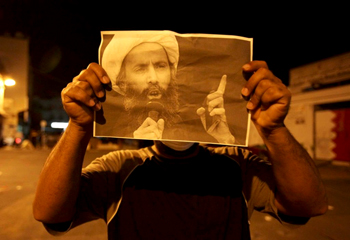
terroristThe killing of Sheikh Nimr al-Nimr may spark new unrest among Saudi Arabia's Shiite minority, largely concentrated in the kingdom's east, and in Bahrain, which has seen low-level violence since 2011 protests by its Shiite majority demanding greater rights from its Sunni monarchy.

The cleric's name was on a list of the 47 carried by the state-run Saudi Press Agency. It cited the Interior Ministry for the information. Saudi state television also reported the executions.

Of those executed, Saudi Arabia said 45 were Saudi citizens, one was from Chad and another was from Egypt.

Saudi Arabia said a royal court order was issued to implement the sentences after all appeals had been exhausted. The executions were carried out today in the capital, Riyadh, and 12 other cities and towns, it said.

Al-Nimr had been a vocal critic of Bahrain's Sunni-led monarchy, which harshly suppressed the 2011 Shiite-led protests. Saudi Arabia sent troops to help Bahrain quash the uprising, fearing it would spread.

Amnesty International has called the verdict against the cleric, who was in his mid-50s, part of a campaign by Saudi authorities to "crush all dissent."

Before his arrest in 2012, al-Nimr had said the people do not want rulers who kill and carry out injustices against protesters. He was asked at his trial if he disapproves of the Al Saud ruling family.

"If injustice stops against Shiites in the east, then (at that point) I can have a different opinion," the cleric responded, according to his brother Mohammed, who attended court sessions and spoke to The Associated Press before the verdict.

Al-Nimr did not deny the political charges against him, but said he never carried weapons or called for violence.

In announcing the verdicts, Saudi state television showed mugshots of all those executed. Al-Nimr was No. 46, expressionless with a gray beard, his head covered with the red-and-white scarf traditionally worn by Saudi men.

After listing the names and images of those executed, Saudi state television showed black-and-white footage of previous terror attacks in the kingdom, one showing bodies in a mosque after an attack. Soft, traditional music played in the background.

Saudi Arabia carried out at least 157 executions in 2015, with beheadings reaching their highest level in the kingdom in two decades, according to several advocacy groups that monitor the death penalty worldwide.

Coinciding with the rise in executions is the number of people executed for non-lethal offenses that judges have wide discretion to rule on, particularly drug-related crimes.

Comments

CID
 - 
Monday, 4 Jan 2016

Killing of Shaik Al-Nimr is the Biggest mistake by Saudi. This will change whole political scenario of the Gulf.

Arvind
 - 
Monday, 4 Jan 2016

Another demonstration of the religion of Peace as practised by the people who invented it. Looked like pretty soon the KSA will be engulfed in terrorism. And innocent bystanders will be needlessly killed.

hamees
 - 
Monday, 4 Jan 2016

this incident was happened in 2011 it took 5 years to take final decision . if it is in India it would take more than 10 years, and one thing you have to remember is terrorist doesnt have a religion...

Rumi ahmed
 - 
Saturday, 2 Jan 2016

We should be thankful that we are in India and have a democratic set up,unlike most of the middle east kingdoms where at the behest of the ruling family any body can be executed fearing rebellion.

Add new comment

  • Coastaldigest.com reserves the right to delete or block any comments.
  • Coastaldigset.com is not responsible for its readers’ comments.
  • Comments that are abusive, incendiary or irrelevant are strictly prohibited.
  • Please use a genuine email ID and provide your name to avoid reject.
News Network
April 15,2020

Bengaluru, Apr 15: Police on Wednesday conducted surprise raids at nearly 120 shops in Bengaluru following complaints of black marketing and sale of foodgrains above the MRP rate.

Sandip Patil, Joint Commissioner of Police, Crime, Bengaluru in a tweet said that action has been initiated against these shopkeepers.

Though the government has maintained the supply chain of essential items, few shopkeepers have used the lockdown opportunity to charge higher prices for essential items.

Comments

Sharief
 - 
Thursday, 16 Apr 2020

Need tough punishment.

Instead of helping with lesser price, troubling the people. These are cruels.

Add new comment

  • Coastaldigest.com reserves the right to delete or block any comments.
  • Coastaldigset.com is not responsible for its readers’ comments.
  • Comments that are abusive, incendiary or irrelevant are strictly prohibited.
  • Please use a genuine email ID and provide your name to avoid reject.
News Network
January 27,2020

Bengaluru, Jan 27: Leaders cutting across political parties in Karnataka condoled the demise of former minister Amarnath Shetty, who passed away on Monday after a prolonged illness.

Chief Minister B S Yediyurappa expressed “shock” over the death of the former minister. “May his soul rest in peace. My deepest condolences to his family members,” tweeted CM’s official Twitter handle.

Comments

Add new comment

  • Coastaldigest.com reserves the right to delete or block any comments.
  • Coastaldigset.com is not responsible for its readers’ comments.
  • Comments that are abusive, incendiary or irrelevant are strictly prohibited.
  • Please use a genuine email ID and provide your name to avoid reject.
Agencies
May 8,2020

Washington D.C., May 8: The prime time for brain development in a child's life is the first year, where the infant spends most of the time asleep. It is the time when neural connections form and sensory memories are encoded.

However, when sleep is disrupted, as occurs more often among children with autism, brain development may be affected, too.

New research led by the University of Washington finds that sleep problems in a baby's first 12 months may not only precede an autism diagnosis but also may be associated with altered growth trajectory in a key part of the brain, the hippocampus.

The study, which was published in the American Journal of Psychiatry, researchers report that in a sample of more than 400 taken of 6- to 12-month-old infants, those who were later diagnosed with autism were more likely to have had difficulty falling asleep.

It also states that this sleep difficulty was associated with altered growth trajectories in the hippocampus.

"The hippocampus is critical for learning and memory, and changes in the size of the hippocampus have been associated with poor sleep in adults and older children.

As many as 80 per cent of the children with autism spectrum disorder have sleep problems," said Annette Estes, director of the UW Autism Center and senior author of the study.

"In our clinical experience, parents have a lot of concerns about their children's sleep, and in our work on early autism intervention, we observed that sleep problems were holding children and families back," added Estes, who is also a UW professor of speech and hearing sciences.

"It could be that altered sleep is part-and-parcel of autism for some children. One clue is that behavioural interventions to improve sleep don't work for all children with autism, even when their parents are doing everything just right. This suggests that there may be a biological component to sleep problems for some children with autism," said Estes.

To consider links among sleep, brain development, and autism, researchers at the IBIS Network looked at MRI scans of 432 infants, surveyed parents about sleep patterns, and measured cognitive functioning using a standardized assessment.

At the outset of the study, infants were classified according to their risk for developing autism: Those who were at higher risk of developing autism -- about two-thirds of the study sample -- had an older sibling who had already been diagnosed.

Infant siblings of children with autism have a 20 per cent chance of developing autism spectrum disorder -- a much higher risk than children in the general population.

In the current study, 127 of the 432 infants were identified as "low risk" at the time the MRI scans were taken because they had no family history of autism.

They later evaluated all the participants at 24 months of age to determine whether they had developed autism. Of the roughly 300 children originally considered "high familial risk," 71 were diagnosed with autism spectrum disorder at that age.

Problems with sleep were more common among the infants later diagnosed with an autism spectrum disorder, as were larger hippocampi. No other subcortical brain structures were affected, including the amygdala, which is responsible for certain emotions and aspects of memory, or the thalamus, a signal transmitter from the spinal cord to the cerebral cortex.

The authors note that while parents reported more sleep difficulties among infants who developed autism compared to those who did not, the differences were very subtle and only observed when looking at group averages across hundreds of infants.

Sleep patterns in the first years of life change rapidly as infants transition from sleeping around the clock to a more adult-like sleep/wake cycle. Until further research is completed, Estes said, it is not possible to interpret challenges with sleep as an early sign of increased risk for autism.

Comments

Add new comment

  • Coastaldigest.com reserves the right to delete or block any comments.
  • Coastaldigset.com is not responsible for its readers’ comments.
  • Comments that are abusive, incendiary or irrelevant are strictly prohibited.
  • Please use a genuine email ID and provide your name to avoid reject.