


Saudi Arabia executes 47 terror convicts, including Shiite cleric

January 2, 2016

Riyadh, Jan 2: Saudi Arabia executed 47 prisoners convicted of terrorism charges today, including a Shiite cleric who was a central figure in 2011 Arab Spring-inspired protests in the kingdom.
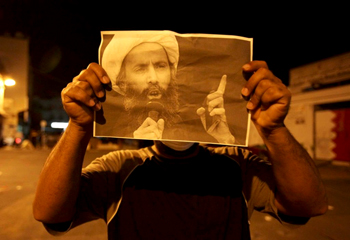
terroristThe killing of Sheikh Nimr al-Nimr may spark new unrest among Saudi Arabia's Shiite minority, largely concentrated in the kingdom's east, and in Bahrain, which has seen low-level violence since 2011 protests by its Shiite majority demanding greater rights from its Sunni monarchy.

The cleric's name was on a list of the 47 carried by the state-run Saudi Press Agency. It cited the Interior Ministry for the information. Saudi state television also reported the executions.

Of those executed, Saudi Arabia said 45 were Saudi citizens, one was from Chad and another was from Egypt.

Saudi Arabia said a royal court order was issued to implement the sentences after all appeals had been exhausted. The executions were carried out today in the capital, Riyadh, and 12 other cities and towns, it said.

Al-Nimr had been a vocal critic of Bahrain's Sunni-led monarchy, which harshly suppressed the 2011 Shiite-led protests. Saudi Arabia sent troops to help Bahrain quash the uprising, fearing it would spread.

Amnesty International has called the verdict against the cleric, who was in his mid-50s, part of a campaign by Saudi authorities to "crush all dissent."

Before his arrest in 2012, al-Nimr had said the people do not want rulers who kill and carry out injustices against protesters. He was asked at his trial if he disapproves of the Al Saud ruling family.

"If injustice stops against Shiites in the east, then (at that point) I can have a different opinion," the cleric responded, according to his brother Mohammed, who attended court sessions and spoke to The Associated Press before the verdict.

Al-Nimr did not deny the political charges against him, but said he never carried weapons or called for violence.

In announcing the verdicts, Saudi state television showed mugshots of all those executed. Al-Nimr was No. 46, expressionless with a gray beard, his head covered with the red-and-white scarf traditionally worn by Saudi men.

After listing the names and images of those executed, Saudi state television showed black-and-white footage of previous terror attacks in the kingdom, one showing bodies in a mosque after an attack. Soft, traditional music played in the background.

Saudi Arabia carried out at least 157 executions in 2015, with beheadings reaching their highest level in the kingdom in two decades, according to several advocacy groups that monitor the death penalty worldwide.

Coinciding with the rise in executions is the number of people executed for non-lethal offenses that judges have wide discretion to rule on, particularly drug-related crimes.

Comments

CID
 - 
Monday, 4 Jan 2016

Killing of Shaik Al-Nimr is the Biggest mistake by Saudi. This will change whole political scenario of the Gulf.

Arvind
 - 
Monday, 4 Jan 2016

Another demonstration of the religion of Peace as practised by the people who invented it. Looked like pretty soon the KSA will be engulfed in terrorism. And innocent bystanders will be needlessly killed.

hamees
 - 
Monday, 4 Jan 2016

this incident was happened in 2011 it took 5 years to take final decision . if it is in India it would take more than 10 years, and one thing you have to remember is terrorist doesnt have a religion...

Rumi ahmed
 - 
Saturday, 2 Jan 2016

We should be thankful that we are in India and have a democratic set up,unlike most of the middle east kingdoms where at the behest of the ruling family any body can be executed fearing rebellion.

Add new comment

  • Coastaldigest.com reserves the right to delete or block any comments.
  • Coastaldigset.com is not responsible for its readers’ comments.
  • Comments that are abusive, incendiary or irrelevant are strictly prohibited.
  • Please use a genuine email ID and provide your name to avoid reject.
News Network
January 29,2020

Bengaluru, Jan 29: Ramesh Jarkiholi on Tuesday demanded that he and all the newly elected MLAs, who won the bypolls after defecting from the Congress and JD(S), be inducted into the cabinet — likely on January 31 — as promised by chief minister BS Yediyurappa.

"We are hoping all 11 MLAs will be made ministers," Jarkiholi said. "That is what the BJP and the CM promised us and we hope they will keep their promise." This is the first time Jarkiholi has spoken in public on cabinet berths, ever since reports surfaced of the party high command not being in favour of inducting all the turncoats into the council of ministers.

Jarkiholi also said fellow rebel AH Vishwanath should be given a ministerial berth.

Vishwanath, formerly of the JD(S), had lost the bypolls. Jarkiholi said the rebellion would not have succeeded had it not been for Vishwanath.

"Those of us who rebelled against the JD(S)-Congress coalition government got a shot in the arm when Vishwanath supported us," Jarkiholi said. "It is imperative that we support him," he said, even as he sought to distance himself from comments made by newly-elected MLAs ST Somashekar and D Sudhakar, who said Vishwanath cannot demand a ministerial post.

Meanwhile, the BJP issued another deadline — January 31 — to expand the cabinet. "In all likelihood, cabinet expansion will take place on Friday," said an aspirant for a berth. But several BJP functionaries are skeptical of meeting the new deadline.

"Till now, the CM has not been given the green signal by the high command. This is all I can say," said a senior minister in Yediyurappa’s cabinet, while insisting he wouldn’t be surprised if the exercise was postponed till the Delhi elections are over.

Former minister and independent R Shankar, who along with Mahesh Kumatalli and Shrimant Patil accompanied Jarkiholi to a trip to Nanjangud, Mysuru district, has upped the pressure on Yediyurappa to field him in the bypoll to the lone vacant council seat. "I am confident the CM and the BJP will honour promises made to me," Shankar said.

The former minister had joined the BJP during the rebellion, but was not given a ticket to contest the bypolls.

In Chikkamagaluru, deputy chief minister Govind M Karjol insisted he is prepared to step down if needed to enable new entrants into the cabinet. "I’m a disciplined solider of the party. If the BJP directs me to submit my resignation, I will do so and return my official car and take a bus to Bengaluru," Karjol said. He said anyone who doesn’t respect the party line will not grow. "It is imperative to toe the party line," he said.

Comments

Add new comment

  • Coastaldigest.com reserves the right to delete or block any comments.
  • Coastaldigset.com is not responsible for its readers’ comments.
  • Comments that are abusive, incendiary or irrelevant are strictly prohibited.
  • Please use a genuine email ID and provide your name to avoid reject.
News Network
January 14,2020

Bengaluru, Jan 14: A woman has sustained burns on the left hand and the left chest in a vicious acid attack that occurred as she walked home in Mallappa Layout, Seegehalli, near KR Puram in Bengaluru.

Prabhavathi, the victim, and her husband, Radhakrishna Reddy, own an acre and six guntas of land in Seegehalli. They had constructed 20 houses on the parcel and rented them while keeping the rest of the land empty and building a boundary wall around it, according to a senior police officer. 

Four men named Ravi, Kumar, Ashirvadam and Shekar laid claim to the land and demolished the boundary wall two years ago. When the couple approached the cops, Manjunath, a sub-inspector from KR Puram police station, visited the spot along with other officers and allegedly abused Reddy and his family. 

Reddy then approached a senior police officer who suggested that he file a complaint against the sub-inspector as well as his rivals for threatening the family. The case is pending in a case. 

On January 7, Ravi, along with four others — Raghu, Kabalan, Ashrivadam and Munireddy — mocked Prabhavathi as she walked home. They asked her to withdraw the complaint. When she ignored them, one of the men motioned to another person. In a flash, a man in the group threw acid on Prabhavathi. The liquid fell on her left hand and left chest, gashing them. Her screams drew her family who rushed her to a hospital. 

Reddy said the suspects had been intimidating them to sell the remaining land. He accused the KR Puram sub-inspector of “threatening” the family.

According to Reddy, following their complaint, a departmental enquiry was launched against the sub-inspector and his promotion was stalled. He suggested that the suspects had used the acid attack as a weapon to “silence” and force them into withdrawing the complaints. 

Following the acid attack, KR Puram police booked eight people — Ravi, Raghu, Kabalan, Ashirvadam, Munireddy, Sachin, Rahul, and Kumareshan — under IPC sections 326 (a) (acid attack) and 506 (criminal intimidation). Efforts are on to track them down. 

Comments

Add new comment

  • Coastaldigest.com reserves the right to delete or block any comments.
  • Coastaldigset.com is not responsible for its readers’ comments.
  • Comments that are abusive, incendiary or irrelevant are strictly prohibited.
  • Please use a genuine email ID and provide your name to avoid reject.
News Network
April 29,2020

Washington, Apr 29: A US government panel on Tuesday called for India to be put on a religious freedom blacklist over a "drastic" downturn under Prime Minister Narendra Modi, triggering a sharp rebuttal from New Delhi.

The US Commission on International Religious Freedom recommends but does not set policy, and there is virtually no chance the State Department will follow its lead on India, an increasingly close US ally.

In an annual report, the bipartisan panel narrowly agreed that India should join the ranks of "countries of particular concern" that would be subject to sanctions if they do not improve their records.

"In 2019, religious freedom conditions in India experienced a drastic turn downward, with religious minorities under increasing assault," the report said.

It called on the United States to impose punitive measures, including visa bans, on Indian officials believed responsible and grant funding to civil society groups that monitor hate speech.

The commission said that Modi's Hindu nationalist government, which won a convincing election victory last year, "allowed violence against minorities and their houses of worship to continue with impunity, and also engaged in and tolerated hate speech and incitement to violence."

It pointed to comments by Home Minister Amit Shah, who notoriously referred to mostly Muslim migrants as "termites," and to a citizenship law that has triggered nationwide protests.

It also highlighted the revocation of the autonomy of Kashmir, which was India's only Muslim-majority state, and allegations that Delhi police turned a blind eye to mobs who attacked Muslim neighborhoods in February this year.

Coronavirus state-wise India update: Total number of confirmed cases, deaths on April 29

The Indian government, long irritated by the commission's comments, quickly rejected the report.

"Its biased and tendentious comments against India are not new. But on this occasion, its misrepresentation has reached new levels," foreign ministry spokesman Anurag Srivastava said.

"We regard it as an organization of particular concern and will treat it accordingly," he said in a statement.

The State Department designates nine "countries of particular concern" on religious freedom -- China, Eritrea, Iran, Myanmar, North Korea, Pakistan, Saudi Arabia, Tajikistan and Turkmenistan.

The commission asked that all nine countries remain on the list. In addition to India, it sought the inclusion of four more -- Nigeria, Russia, Syria and Vietnam.

Pakistan, India's historic rival, was added by the State Department in 2018 after years of appeals by the commission.

In its latest report, the commission said that Pakistan "continued to trend negatively," voicing alarm at forced conversions of Hindus and other minorities, abuse of blasphemy prosecutions and a ban on the Ahmadi sect calling itself Muslim.

India's citizenship law fast-tracks naturalization for minorities from neighbouring countries -- but not if they are Muslim.

Modi's government says it is not targeting Muslims but rather providing refuge to persecuted people and should be commended.

But critics consider it a watershed move by Modi to define the world's largest democracy as a Hindu nation and chip away at independent India's founding principle of secularism.

Tony Perkins, the commission's chair, called the law a "tipping point" and voiced concern about a registry in the northeastern state of Assam, under which 1.9 million people failed to produce documentation to prove that they were Indian citizens before 1971 when mostly Muslim migrants flowed in during Bangladesh's bloody war of independence.

"The intentions of the national leaders are to bring this about throughout the entire country," Perkins told an online news conference.

"You could potentially have 100 million people, mostly Muslims, left stateless because of their religion. That would be, obviously, an international issue," said Perkins, a Christian activist known for his opposition to gay rights who is close to President Donald Trump's administration.

Three of the nine commissioners dissented -- including another prominent Christian conservative, Gary Bauer, who voiced alarm about India's direction but said the ally could not be likened to non-democracies such as China.

"I am deeply concerned that this public denunciation risks exactly the opposite outcome than the one we all desire," Bauer said.

Trump, who called for a ban on Muslim immigration to the US when he ran for president, hailed Modi on a February visit to New Delhi.

Comments

Add new comment

  • Coastaldigest.com reserves the right to delete or block any comments.
  • Coastaldigset.com is not responsible for its readers’ comments.
  • Comments that are abusive, incendiary or irrelevant are strictly prohibited.
  • Please use a genuine email ID and provide your name to avoid reject.