


Saudi Arabia executes 47 terror convicts, including Shiite cleric

January 2, 2016

Riyadh, Jan 2: Saudi Arabia executed 47 prisoners convicted of terrorism charges today, including a Shiite cleric who was a central figure in 2011 Arab Spring-inspired protests in the kingdom.
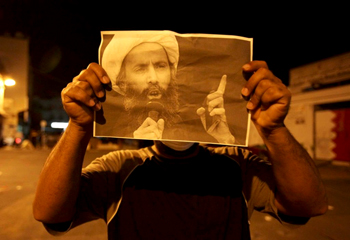
terroristThe killing of Sheikh Nimr al-Nimr may spark new unrest among Saudi Arabia's Shiite minority, largely concentrated in the kingdom's east, and in Bahrain, which has seen low-level violence since 2011 protests by its Shiite majority demanding greater rights from its Sunni monarchy.

The cleric's name was on a list of the 47 carried by the state-run Saudi Press Agency. It cited the Interior Ministry for the information. Saudi state television also reported the executions.

Of those executed, Saudi Arabia said 45 were Saudi citizens, one was from Chad and another was from Egypt.

Saudi Arabia said a royal court order was issued to implement the sentences after all appeals had been exhausted. The executions were carried out today in the capital, Riyadh, and 12 other cities and towns, it said.

Al-Nimr had been a vocal critic of Bahrain's Sunni-led monarchy, which harshly suppressed the 2011 Shiite-led protests. Saudi Arabia sent troops to help Bahrain quash the uprising, fearing it would spread.

Amnesty International has called the verdict against the cleric, who was in his mid-50s, part of a campaign by Saudi authorities to "crush all dissent."

Before his arrest in 2012, al-Nimr had said the people do not want rulers who kill and carry out injustices against protesters. He was asked at his trial if he disapproves of the Al Saud ruling family.

"If injustice stops against Shiites in the east, then (at that point) I can have a different opinion," the cleric responded, according to his brother Mohammed, who attended court sessions and spoke to The Associated Press before the verdict.

Al-Nimr did not deny the political charges against him, but said he never carried weapons or called for violence.

In announcing the verdicts, Saudi state television showed mugshots of all those executed. Al-Nimr was No. 46, expressionless with a gray beard, his head covered with the red-and-white scarf traditionally worn by Saudi men.

After listing the names and images of those executed, Saudi state television showed black-and-white footage of previous terror attacks in the kingdom, one showing bodies in a mosque after an attack. Soft, traditional music played in the background.

Saudi Arabia carried out at least 157 executions in 2015, with beheadings reaching their highest level in the kingdom in two decades, according to several advocacy groups that monitor the death penalty worldwide.

Coinciding with the rise in executions is the number of people executed for non-lethal offenses that judges have wide discretion to rule on, particularly drug-related crimes.

Comments

CID
 - 
Monday, 4 Jan 2016

Killing of Shaik Al-Nimr is the Biggest mistake by Saudi. This will change whole political scenario of the Gulf.

Arvind
 - 
Monday, 4 Jan 2016

Another demonstration of the religion of Peace as practised by the people who invented it. Looked like pretty soon the KSA will be engulfed in terrorism. And innocent bystanders will be needlessly killed.

hamees
 - 
Monday, 4 Jan 2016

this incident was happened in 2011 it took 5 years to take final decision . if it is in India it would take more than 10 years, and one thing you have to remember is terrorist doesnt have a religion...

Rumi ahmed
 - 
Saturday, 2 Jan 2016

We should be thankful that we are in India and have a democratic set up,unlike most of the middle east kingdoms where at the behest of the ruling family any body can be executed fearing rebellion.

Add new comment

  • Coastaldigest.com reserves the right to delete or block any comments.
  • Coastaldigset.com is not responsible for its readers’ comments.
  • Comments that are abusive, incendiary or irrelevant are strictly prohibited.
  • Please use a genuine email ID and provide your name to avoid reject.
News Network
April 26,2020

Bengaluru, Apr 26: Two businessmen brothers, Tajammul Pasha and Muzammil Pasha, in Karnataka's Kolar district have set out to help people in need amid the lockdown over the COVID-19 pandemic by selling their land for Rs 25 lakh.

On seeing daily wage labourers and their families in Kolar suffer during the lockdown, the brothers said they decided to sell their land and use the money to buy essentials and food grain for a large number of poor people.

The brothers also bought oil and cereals with the money. Then they set up a tent next to their house and started a community kitchen to make food for labourers and homeless people.

"Our parents died early. When we shifted to our maternal grandmother's place at  Kolar, people from communities, Hindus, Sikhs, Muslims helped us survive without any religious bias," said Tajammul Pasha, visibly emotional.

The Pasha brothers are into banana cultivation and real estate. Tajammul was five and his sibling Muzammil was three when they lost their parents. They had to move from Chickbalapor to Kollar, where their grandmother lived.

"We were brought up in poverty. We survived because of the support of people of all communities and religions. We have signed the society agreement bond and handed it over to our friend who purchased our site and gave the money," the brothers said.

Once the lockdown ends and the land registrar's office opens, the remaining steps to transfer the land will be completed, they said.

So far the two brothers have supplied food grain, oil, sugar and other essentials to over 3,000 families. They have also given hand sanitizers and masks to the poor.

The Kolar administration has issued passes to their volunteers so that they can help in this difficult time.

The number of coronavirus cases in India has increased to 24,506, including 775 deaths, the Home Ministry said today, adding that 1,429 cases and 57 deaths were reported in the last 24 hours.

Amid a countrywide lockdown to check the spread of the highly contagious illness, which began on March 25, the government last night issued an order to allow neighbourhood shops to remain open with conditions; malls across India continue to remain shut.

Comments

Add new comment

  • Coastaldigest.com reserves the right to delete or block any comments.
  • Coastaldigset.com is not responsible for its readers’ comments.
  • Comments that are abusive, incendiary or irrelevant are strictly prohibited.
  • Please use a genuine email ID and provide your name to avoid reject.
News Network
May 29,2020

Bengaluru, May 29: Chief Minister B S Yediyurappa and BJP State President Nalin Kumar Kateel will resolve any differences of opinion among party leaders in Karnataka, according to Minister of State for Railways Suresh Angadi

If anybody has any issues, they should get them resolved by talking with Yediyurappa and Kateel. Internal matters, if any, should not be discussed in public, he said.

Angadi told reporters here on Friday that differences of opinion among party leaders have not come to his notice. A section of party leaders assembling for dinner should not be constituted as a meeting of dissidents. BJP has internal democracy and any differences of opinion if exist will be resolved at the party forum.

He added that if MLA Umesh Katti has any issues regarding cabinet berth or regarding assurances given to him by Yediyurappa during the Lok Sabha elections, he should talk with the chief minister.

Everyone in politics has aspirations and it's natural. Those aspiring for the upcoming Rajya Sabha elections should talk with the chief minister or the state president, he said.

Ramesh Katti was former MP and there was nothing wrong in him being aspirant for Rajya Sabha elections, he said.

Angadi said, "Party is supreme. We shall work for the victory of party candidates irrespective of who they were".

A state cabinet meeting was held on Thursday. Many of the MLAs too had been to Bengaluru for constituency-related works. As they had been meeting after a long time, all gathered for dinner, he expressed.

Comments

Add new comment

  • Coastaldigest.com reserves the right to delete or block any comments.
  • Coastaldigset.com is not responsible for its readers’ comments.
  • Comments that are abusive, incendiary or irrelevant are strictly prohibited.
  • Please use a genuine email ID and provide your name to avoid reject.
News Network
May 30,2020

Istanbul: Mosques in Turkey reopened on Friday for mass prayers after more than two months as the government further eased strict restrictions to stop the spread of the new coronavirus.

Turkey has been shifting since May to a "new normal" by easing lockdown measures and opening shopping malls, barbershops and hair salons.

President Recep Tayyip Erdogan has said many other sites -- restaurants and cafes as well as libraries, parks and beaches -- will reopen from Monday.

Hundreds of worshippers wearing protective masks performed mass prayers outside Istanbul's historic Blue Mosque for the first time since mosques were shut down in March.

In the Ottoman-era Fatih mosque, worshippers prayed both inside and outside, with the municipality handing out disinfectants and disposable carpets.

"I have waited a lot for this, I have prayed a lot. I can say it's like a new birth, thanks to God, he has brought us back here," he said.

Another worshipper, Asum Tekif, 50, said: "It has a been a long time... we missed the mosques."

Turkey, a country of 83 million, has so far recorded 4,489 coronavirus-related deaths and 162,120 confirmed cases.

Prayers in Hagia Sophia

Muslim clerics on Friday recited prayers in the Hagia Sophia, the world famous Istanbul landmark which is now a museum after serving as a church and a mosque.

The prayers were held to celebrate the anniversary of the conquest of Constantinople, today's Istanbul, by the Ottomans in 1453.

"It is very important to commemorate the 567th anniversary of the conquest ... through prayers in the Hagia Sophia," said President Recep Tayyip Erdogan, who attended the ceremony via videoconference.

The stunning edifice was first built as a church in the sixth century under the Byzantine Empire as the centrepiece of its capital Constantinople.

After the Ottoman conquest, it was converted into a mosque before being turned into a museum during the rule of Mustafa Kemal Ataturk, the founder of modern Turkey, in the 1930s.

But there have been hints about reconverting the Hagia Sophia into a mosque. Last year, Erdogan himself mooted the possibility of turning Hagia Sofia museum into a mosque.

Such calls have sparked anger among Christians and raised tensions with neighbouring Greece.

In 2015, a Muslim cleric recited the Koran in the Hagia Sophia for the first time in 85 years to mark the opening of an exhibition.

After Friday prayers at the Blue Mosque, a small group of Muslim worshippers shouted: "Let the chains break and let the Hagia Sophia open".

The group was later dispersed by the police who stopped them from protesting near Hagia Sophia that sits immediately opposite the Blue Mosque.

Comments

Add new comment

  • Coastaldigest.com reserves the right to delete or block any comments.
  • Coastaldigset.com is not responsible for its readers’ comments.
  • Comments that are abusive, incendiary or irrelevant are strictly prohibited.
  • Please use a genuine email ID and provide your name to avoid reject.