Saudi Arabia eyes tourism growth; to begin issuing tourist visas soon

coastaldigest.com news network
November 1, 2017

Riyadh, Nov 1: Saudi Arabia plans to start issuing tourist visas "soon", authorities said Tuesday, as the generous kingdom seeks to attract international visitors in a radical overhaul of its oil-dependent economy.

Tourism is seen as a major driver of growth as the kingdom attempts to wean itself off its dependence on petrodollars amid a protracted oil slump.

"Tourist visas will be introduced soon," Prince Sultan bin Salman bin Abdul Aziz, head of the Saudi tourism authority, was quoted as saying in a statement. He did not specify a time frame.

Aside from millions of Muslims who travel to Saudi Arabia for the annual hajj pilgrimage, most visitors currently face a tedious visa process and exorbitant fees to enter the kingdom.

Prince Sultan's comment comes ahead of Saudi Arabia's first archaeology convention in Riyadh next week as the government seeks to showcase some of its historic sites.

Crown Prince Mohammed bin Salman in August announced a massive tourism project to turn 50 islands and a string of sites on the Red Sea into luxury resorts.

Although richly endowed with natural beauty, the kingdom is hardly seen as a tourism hotspot.

Alcohol, cinemas and theatres are still banned in the kingdom, an absolute monarchy and one of the world's most conservative countries.

But authorities in recent months have sought to project a moderate image with a string of reforms, including the decision allowing women to drive from next June.

The kingdom is also expected to lift a public ban on cinemas and has encouraged mixed-gender celebrations -- something seldom seen before.

The moves appear designed to project the kingdom in a favourable light as it seeks to attract badly needed foreign investment.

Comments

Fairman
 - 
Wednesday, 1 Nov 2017

May Allah preserve the islamic values.

Add new comment

  • Coastaldigest.com reserves the right to delete or block any comments.
  • Coastaldigset.com is not responsible for its readers’ comments.
  • Comments that are abusive, incendiary or irrelevant are strictly prohibited.
  • Please use a genuine email ID and provide your name to avoid reject.
News Network
March 24,2020

Riyadh, Mar 24: General Directorate of Passports (Jawazat) on Tuesday asked all expatriates in the Kingdom, who have a final exit visa or an exit and reentry visa, to quickly cancel them before their expiry. This is to avoid the prescribed fines for not availing of these visas before their expiry date, the Saudi Press Agency reported.

The new measure was taken following the Saudi government’s suspension of international flights as part of the preventive and precautionary measures to stem the spread of new coronavirus. The Jawazat asked expatriates to verify the validity of such visas and cancel them through Ministry of Interior’s electronic service portals of Absher or Muqeem.

It underlined the need to adhere to the regulations and instructions in order to avoid fines prescribed by law against the violators.

Comments

KAJOOR MOHAMME…
 - 
Tuesday, 24 Mar 2020

My reentry expair date 26-03-2020 plz help me

Add new comment

  • Coastaldigest.com reserves the right to delete or block any comments.
  • Coastaldigset.com is not responsible for its readers’ comments.
  • Comments that are abusive, incendiary or irrelevant are strictly prohibited.
  • Please use a genuine email ID and provide your name to avoid reject.
Agencies
August 2,2020

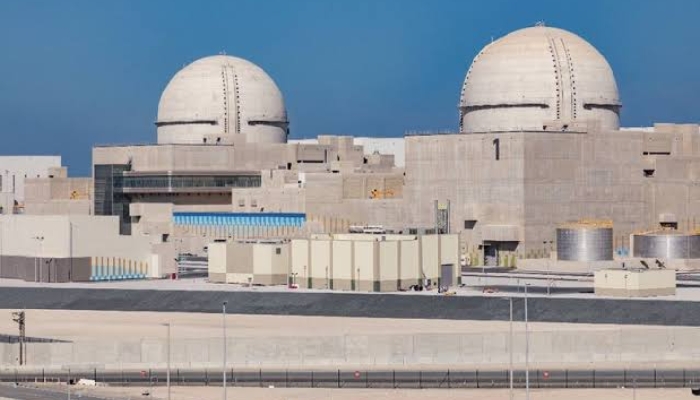
Dubai, Aug 2: The United Arab Emirates (UAE) announced on Saturday that it has started operations in the first of four reactors at the Barakah nuclear power station - the first nuclear power plant in the Arab world.

Emirates Nuclear Energy Corporation (ENEC), which is building and operating the plant with Korea Electric Power Corporation (KEPCO) said in a press release that its subsidiary Nawah Energy Company "has successfully started up Unit 1 of the Barakah Nuclear Energy Plant, located in the Al Dhafrah Region of Abu Dhabi".

That signals that Unit 1, which had fuel rods loaded in March, has achieved "criticality" - a sustained fission chain reaction.

"The start-up of Unit 1 marks the first time that the reactor safely produces heat, which is used to create steam, turning a turbine to generate electricity," said ENEC.

Barakah, which was originally scheduled to open in 2017, has been dogged by delays and is billions of dollars over budget. It has also raised myriad concerns among nuclear energy veterans who are concerned about the potential risks Barakah could visit upon the Arabian Peninsula, from an environmental catastrophe to a nuclear arms race.

Paul Dorfman, an honorary senior research fellow at the Energy Institute, University College London and founder and chair of the Nuclear Consulting Group, has criticised the Barakah reactors' "cheap and cheerful" design that he says cuts corners on safety.

Dorfman authored a report (PDF) last year detailing key safety features Barakah's reactors lack, such as a "core catcher" to literally stop the core of a reactor from breaching the containment building in the event of a meltdown. The reactors are also missing so-called Generation III Defence-In-Depth reinforcements to the containment building to shield against a radiological release resulting from a missile or fighter jet attack.

Both of these engineering features are standard on new reactors built in Europe, says Dorfman.

There have been at least 13 aerial attacks on nuclear facilities in the Middle East - more than any other region on earth.

The vulnerability of critical infrastructure in the Arabian Peninsula was further laid bare last year after Saudi Arabia's oil facilities at Abqaiq and Khurais were attacked by 18 drones and seven cruise missiles - an assault that temporarily knocked out more than half of the kingdom's oil production.

On Saturday, Dorfman reiterated his concern that there is no regional protocol in place to determine liability should an accident or incident at Barakah result in radioactive contamination spreading from the UAE to its neighbours. 

"Given Barakah has started up, because of all the well-rehearsed nuclear safety and security problems, it may be critically important that the Gulf states collectively evolve a Nuclear Accident Liability Convention, so that if anything does go wrong, victim states may have some sort of redress," Dorfman told Al Jazeera. 

The UAE has substantial oil and gas reserves, but it has made huge investments in developing alternative energy sources, including nuclear and solar.

Experts though have questioned why the UAE - which is bathed in sunlight and wind - has pushed ahead with nuclear energy - a far more expensive and riskier option than renewable energy sources.

When the UAE first announced Barakah in 2009, nuclear power was cheaper than solar and wind. But by 2012 - when the Emirates started breaking ground to build the reactors - solar and wind costs had plummeted dramatically.

Between 2009 and 2019, utility-scale average solar photovoltaic costs fell 89 percent and wind fell 43 percent, while nuclear jumped 26 percent, according to an analysis by the financial advisory and asset manager Lazard.

There are also concerns about the potential for Barakah to foment nuclear proliferation in the Middle East - a region rife with geopolitical fault lines and well-documented history of nuclear secrecy.

The UAE has sought to distance itself from the region's bad behaviour by agreeing not to enrich its own uranium or reprocess spent fuel. It has also signed up to the United Nation's nuclear watchdog's Additional Protocol, significantly enhancing inspection capabilities, and secured a 123 Agreement with the United States that allows bilateral civilian nuclear cooperation.


Comments

Add new comment

  • Coastaldigest.com reserves the right to delete or block any comments.
  • Coastaldigset.com is not responsible for its readers’ comments.
  • Comments that are abusive, incendiary or irrelevant are strictly prohibited.
  • Please use a genuine email ID and provide your name to avoid reject.
News Network
June 2,2020

New Delhi, Jun 2: Congress leader Rahul Gandhi on Monday took a jibe at Prime Minister Narendra Modi over Moody's Investors Service downgrading India's sovereign rating to the lowest investment rate and said that the global rating agency has rated his handling of the country's economy "a step above junk".

"Moody's has rated Modi's handling of India's economy a step above JUNK. Lack of support to the poor and the MSME sector means the worst is yet to come," the Congress leader tweeted citing a media report on Moody's downgrading the nation.

On Monday, Moody's downgraded the country's rating to "Baa3" from "Baa2". This comes at a time when the government is facing criticism from the Opposition over its handling of the COVID-19 situation and measures to boost the economy.

The government has already announced a stimulus package of Rs 20 lakh crore to deal with the situation.

Comments

Add new comment

  • Coastaldigest.com reserves the right to delete or block any comments.
  • Coastaldigset.com is not responsible for its readers’ comments.
  • Comments that are abusive, incendiary or irrelevant are strictly prohibited.
  • Please use a genuine email ID and provide your name to avoid reject.

