


Saudi Arabia mulls permanent residency for expatriates

April 6, 2016

Manama, Apr 6: Saudi Arabia could introduce a system for its millions of expatriates that would be similar to the Green Card system in the US.
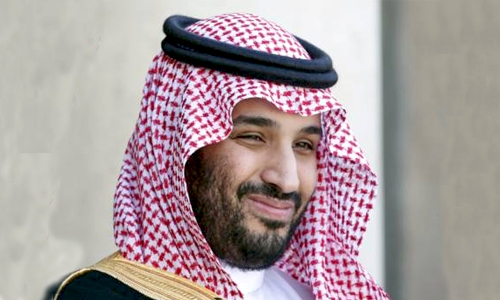
expatriatesThe inclination, announced by Deputy Crown Prince Mohammad Bin Salman Al Saud in an interview with Bloomberg, would help the kingdom generate new revenues for the national economy.

No details were given by Prince Mohammad, but with around nine million foreigners living in the vast kingdom, making up one third of the total population, the system would be a source for the country as it seeks to implement an ambitious package of new reforms and measures that will considerably improve its non-oil revenues and “raise at least an extra $100 billion a year by 2020, more than tripling non-oil income and balancing the budget.”

“It's a large package of programmes that aims to restructure some revenue-generating sectors,” Prince Mohammad told Bloomberg.

The emulation of the American Green Card system would be alongside more steps to restructure subsidies and the imposition of a value-added tax and a levy on energy and sugary drinks as well as luxury items, the deputy crown prince reportedly said.

Most of the foreigners in Saudi Arabia and fellow Gulf Cooperation Council (GCC) countries – Bahrain, Kuwait, Qatar, Oman and the United Arab Emirate – are Asians, mainly unskilled workers in the booming building and service sectors.

In his interview, Prince Mohammad expressed optimism the new measures would reinforce the government's drive to reduce reliance on oil and to boost non-oil revenues.

“We did a quick fix in 2015 which increased our non-oil revenue by 35 per cent,” he said. “This year, we are trying to target over $25 billion. I believe we will succeed in achieving more than $10 billion in non-oil revenue in 2016.”

With the dramatic slump of oil prices, the GCC countries have been looking at viable options to generate non-oil sources and reduce threats to fiscal stability and sustainability.

Experts believe that hydrocarbon exports represent more than 80 per cent of the total revenue in the GCC countries where taxation is almost absent.

The main non-oil revenue base in the GCC states currently includes customs duties and fees and charges.

Bahrain, the first GCC country to discover oil in 1932, has been leading the way in the diversification of non-oil resources.

Comments

Naren kotian
 - 
Thursday, 7 Apr 2016

Hahaha viren ..namge beda aa wahabi rashtra ..muzzies here in this column please note yelli yenne sigalvo ..yelli dance bars or disco theck ilvo ...antha rashtra kke banni makla full citizenship kodthivi andru ..beda milk shake mama neene itko beda andu bidteevi ...we are well aware soon saud family will collapse ...Isis is already making deep inroads into Saudi ...they have the weakest army in the world .this program will encourage Indo pakis who are in very large No's in India .no non Muslims will take PR for sure .as per IMF due to decline in oil revenues for the first time they are reeling into debt. Haha..soon it will create more problem as they don't have alternate non oil source ..milk shakes ge bere field nalli ashtu talent saha illa. ..

KhasaiKhaane
 - 
Thursday, 7 Apr 2016

Hahahahah... So Non-Muslims also want green card in Saudi? Check if you can avail one, but make sure you don't worship Camel Maatha,..!
There are other disadvantages though;
- No Riots
- No Photoshop
- No Love Jihad issue.
- No Moral policing
- No Lynching
- No Alchohol/Drugs
- No Pornography
- No Rapes
Are you sure you chaddis will be able to survive without all this?

DEAR VIREN
 - 
Thursday, 7 Apr 2016

Just study QURAN, YOU will understand Y u feel grudge against MUSLIMS...
Our CREATOR speaks about the CREATION & also he Warns us about Y grudge, Jealousy, Sin, hate, crime, DECEPTION & other Evils come from... and ROOT it comes from.
Animals live their way and Man was created by ALLAH with intelligence... Sometimes Use your intelligence to know what our CREATOR speaks... and dont live like the animals.

mohammad.n
 - 
Wednesday, 6 Apr 2016

Viren why do u need now muslim country green card?

Satyameva jayate
 - 
Wednesday, 6 Apr 2016

Viren...say Bharat Mata ki jai n enjoy your stay here..why worried about green card

Owaisi
 - 
Wednesday, 6 Apr 2016

@ Viren Kotian 100% only for Muslims and should accept Saudi Arabia Islamic Rules with respect

Riyaz
 - 
Wednesday, 6 Apr 2016

Viren Kotiyaaan
Why are you intrested in the permanent residence of KSA. you should be happy in india with the chaddies ruling you. And by the way not everyone in the world is like you and your chadii rulers. there are people who look for the Human attributes in human beings not only religion . thats why there are many RSS chaddies who earn in saudi and send the money to their families in india.

mangalorean
 - 
Wednesday, 6 Apr 2016

I think for you spcially we will recommend govt to get red card to ban saudi arabia

Viren Kotian
 - 
Wednesday, 6 Apr 2016

Only for muslims or non muslims also will get green card?

Add new comment

  • Coastaldigest.com reserves the right to delete or block any comments.
  • Coastaldigset.com is not responsible for its readers’ comments.
  • Comments that are abusive, incendiary or irrelevant are strictly prohibited.
  • Please use a genuine email ID and provide your name to avoid reject.
News Network
June 20,2020

Bengaluru, Jun 20: The Karnataka Health Department has issued guidelines on the admission of COVID-19 patients in private hospitals after clinical assessment, mandating that the district surveillance officer (DSO) should be first informed to initiate further procedures, an official said on Friday.

"A health team sent by the DSO should visit the home or hospital where the patient is staying. The team should conduct a rapid assessment of his or her health condition," said Karnataka's Additional Chief Secretary Jawaid Akhtar.

In the rapid health condition assessment, the team should first check the patient's body temperature, followed by SpO2 (oxygen saturation) level and confirm if there are any comorbidities such as hypertension, diabetes, tuberculosis, HIV, cancer, stroke etc.

Depending on the health condition of patients, Akhtar said, two categories have been made.

"Those who have body temperature greater than 37.5 degrees Celsius, SpO2 level below 94 percent, elderly (above 60 years) and suffering from known comorbid conditions should be taken to a dedicated Covid hospital (DCH)," he said.

"All other patients, even if older but not suffering from co-morbidities, those below 60 and suffering from co-morbidities and asymptomatic cases should be taken to a dedicated Covid health centre (DCHC) or a private hospital as opted by the patient," he added.

Private hospitals have been asked to pitch in due to the rising number of cases in Karnataka. Currently, there are 2943 active cases in the state after 337 cases were reported on Friday.

"The patients are assessed clinically and evaluated at DCHCs or private hospitals with appropriate diagnostic tests. After evaluation, if the patients are asymptomatic, they are shifted to a COVID Care Centre (CCC) for further management," said Akhtar.

CCCs are expected to be equipped with ventilated rooms, pulse oximeters, handheld thermal scanners and blood pressure apparatus.

A nurse has to be present round the clock for every 50 patients and should visit each patient twice a day for assessment whereas the medical officer has to visit the CCC once a day. He should also be available on call in case of an emergency.

Staff serving food and others should wear personal protective equipment and an N-95 mask. Explaining the procedures at DCHCs, Akhtar said general examinations for medical conditions like body temperature, BP, pulse, oxygen saturation and urine output should be in place.

Investigations such as complete blood count, fasting blood sugar, random blood sugar, liver function tests, renal function tests, ECG and chest X-ray facilities should be available.

"DCHCs should ensure that above examinations are over in an orderly timeline of 24 hours and depending on the examination, the patient is continued to be lodged at the DCHC or sent to DCH or CCC," said the senior officer.

Likewise, the discharge policy should be done as per the protocols issued by the Health Department from time to time.

The Karnataka government is yet to fix an upper limit on the cost of treating COVID-19 patients in private hospitals. While reports indicated that this could be capped at Rs 5200 per day, health officials are yet to specify this is the case. Private hospitals in the state have asked the government to take a collaborative approach in deciding the fixed cap on treatment cost.

Comments

Add new comment

  • Coastaldigest.com reserves the right to delete or block any comments.
  • Coastaldigset.com is not responsible for its readers’ comments.
  • Comments that are abusive, incendiary or irrelevant are strictly prohibited.
  • Please use a genuine email ID and provide your name to avoid reject.
coastaldigest.com news network
March 2,2020

Kundapur, Mar 2: A 43-year-old man was arrested by the local police in Udupi district after he allegedly raised pro-Pakistan at Mini Vidhana Soudha in Kundapur today morning.

The man has been identified as Raghavendra Ganiga (43), a resident of Kody in Kundapur. He was working as a Hindi teacher in a private school in the town a few years ago.

According to sources, Ganiga arrived at the Mini Vidhana Soudha at around 10 am and scaled the steps to the building raising 'Pakistan Zindabad' slogans repeatedly.

He continued to raise slogans on the corridor and after entering a hall.  A few people recorded this drama on their mobile phones and informed the police.

Later, Kundapur tahisldar filed a written complaint against with the local police, who took Ganiga into custody.

According to police, Ganiga was under depression after his wife deserted him and left him with their only child.

Comments

Add new comment

  • Coastaldigest.com reserves the right to delete or block any comments.
  • Coastaldigset.com is not responsible for its readers’ comments.
  • Comments that are abusive, incendiary or irrelevant are strictly prohibited.
  • Please use a genuine email ID and provide your name to avoid reject.
News Network
April 29,2020

Bengaluru, Apr 29: Indian women have always been the epitome of beauty, strength, and intelligence. Today, the success of Indian women across various walks of life has proven that they have earned this reputation.

One such dedicated social worker is Dr Sunitha Manjunath, the Founder of 'Sumanaa Foundation' of Sanjay Nagar in Bengaluru.

Sumanaa Foundation, based out of Sanjay Nagar in Bengaluru has been on the forefront to support people in distress due to COVID-19. 

The foundation under the leadership of its founder Dr Sunitha Manjunath procured a total of 20000 kgs of farm-fresh produce in four phases from farmers who are unable to sell it due to the COVID Lockdown and have distributed it across 6000 families across Bengaluru city.

"We have procured these vegetables after identifying farmers who are unable to sell their produce due to the challenges of lockdown.

This initiative not only supports the farmers by helping them get the right price for their produce, but also gives us an opportunity to get vegetables at a reasonable price by escaping all middlemen and commissions. We have identified 6000 poor families mainly around Bengaluru city who have not been able to earn their daily wages and given them coupons.

The foundation members identify genuine cases and give them coupons which can be redeemed in exchange of an essential vegetables kit," said Dr Sunitha Manjunath, the founder of Sumanaa Foundation.

These vegetables have been procured from Chikkaballapura, Doddaballapura, and surrounding villages and included vegetables like onions, tomatoes, capsicum, green chillies, beans, carrots, brinjal, potatoes, beetroots etc. These farmers got a fair price for their produce and were overjoyed to know that their harvest is being distributed free of cost to needy and deserving families.

Sumanaa Foundation has been actively supporting the city administration in fighting COVID-19 pandemic. In the recent weeks the foundation has distributed sanitisers and masks to BBMP Pourakarmikas.

The foundation also cooked food for over 400 people each day. This food was handed over to the city administration, which further distributed this to the police department and other staff working across government departments during these testing times.

Dr Sunitha, an engineer by qualification, had enjoyed a high-flying corporate career with BOSCH. She was offered a global role, which she turned down to setup her NGO, 'Sumanaa Foundation' and to serve the needy in and around her locality. Over the past seven years, the NGO with 70 members has done a wide range of activities to support the poor and needy in Bengaluru.

The core team of Sumanaa Foundation works under the leadership of its president Dr Sunitha Manjunath and includes young and energetic individuals like Manjunath K, Prakash K, Vidya Prakash, Sindu Gowda, Byregowda, Nishita Arjun, Arjun Varadaraj and Manoj Kumar
'Meal of Humanity' is a notable initiative of Dr Sunitha Manjunath and her team. Under this program, over 300 poor people are served mid-day meals every day. 

This is currently a self-sustained program with no external funding. Dr Sunitha Manjunath, her family members, and friends contribute their hard-earned money to bring smiles to hundreds of migrant workers and daily wage laborers.

'Wall of Humanity' is another unique concept implemented by Sumanaa Foundation. People can leave used or unnecessary daily use products like clothes, toys, groceries, etc at a designated area. This can be picked by anyone in need of these items. This self-helping model has touched the lives of hundreds of people in and around the area of Sanjay Nagar.

Regular blood donation camps, eye checkups, scholarship for students, tailoring machine distribution, environmental initiatives, Swacch Bharath programs, wall painting across the roadside are just a few among the hundreds of activities undertaken by Sumanaa Foundation regularly under the leadership of Dr Sunitha Manjunath and her team of friends.

"A life without an aim is worthless and so is a death without achievement. The aim of my life is to touch the lives of the hundreds of people who are not as privileged as you and me. I'd like to thank my husband Manjunath, my In-Laws and my friends from Sumanaa Foundation who work tirelessly alongside me across all our initiatives," said an elated Dr Sunitha Manjuanth on receiving the 'ET Power Icons' award for Excellence in Social Service and Public Initiatives.

Dr Sunitha Manjunath has also been awarded the prestigious 'Kempegowda Award' and many more such awards for her contribution to the society.

Comments

Add new comment

  • Coastaldigest.com reserves the right to delete or block any comments.
  • Coastaldigset.com is not responsible for its readers’ comments.
  • Comments that are abusive, incendiary or irrelevant are strictly prohibited.
  • Please use a genuine email ID and provide your name to avoid reject.