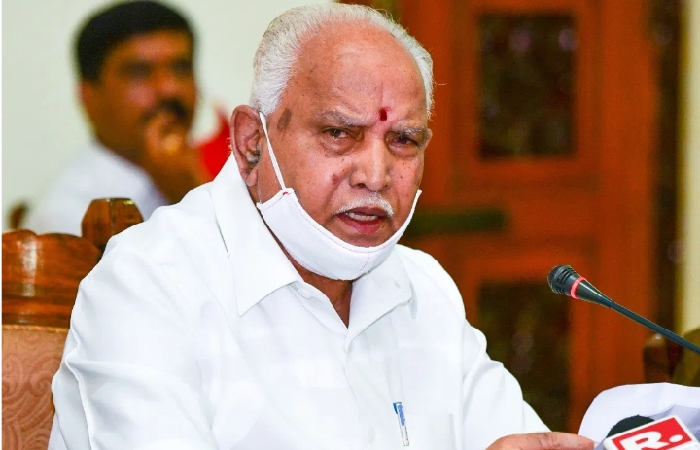
Bengaluru, Aug 2: Within a year of returning to power for the fourth time as Chief Minister in Karnataka, septuagenarian B.S. Yediyurappa has consolidated his position in the ruling BJP to stay the course till the next Assembly elections in mid-2023.
"A combination of factors helped Yediyurappa to consolidate and stay the course for the remaining term of his office to ensure the saffron party retains power in the state though he is unlikely to stake claim for the chief minister's post again as he would be 80 years old by 2023," a party source told news agency here.
Since the 77-year-old seasoned politician assumed office on July 26, 2019, the first year has been tumultuous for him, as he had go through a "trial by fire" what with the party's mighty high command and detractors testing his patience in the face of natural calamities like drought, floods and the Covid pandemic.
The first 7-8 months of the term were spent in tackling drought and floods, winning 12 of the 15 by-elections in December to secure a majority for the ruling party in the lower house and expanding the cabinet in February.
Even as Yediyurappa was settling down to seriously govern after presenting the state budget for fiscal 2020-21 in early March, the coronavirus outbreak overwhelmed him, as the pandemic spread and wreaked havoc, disrupting life, livelihood, economic growth and development.
"While the emphatic victory in the by-elections ensured the government's stability till the assembly term up to mid-2023, the second cabinet expansion on February 6 posed a challenge to Yediyurappa, as he could induct only 10 of the 12 MLAs who defected from the Congress and the Janata Dal-Secular (JD-S) and won the by-elections, triggering a revolt in the party by the loyalists left out of the ministry," the source recalled.
Though Yeddiyurappa has been leading the battle against the virus from day 1 and initially succeeded in controlling it from spreading during the extended lockdown till May 31, reopening the state under Unlock since June has undone the gains, as positive cases shot up to 1,29,287 so far, including 73,219 in Bengaluru after 53,648 recovered from across the state till date, while 2,412 succumbed to the deadly disease since March 9.
"For a state of 7 crore population, the data reveals that the pandemic has been fought on war-footing to contain it from spreading in all the 30 districts, although there are no signs of it going away till a vaccine is found. The chief minister has been trying to balance unlocking the state and containing the infection," a member of the health task force told IANS.
With six cabinet posts in the 34-member ministry being vacant, filling them will be a daunting task for Yediyurappa, as at least 20 legislators, including 5-6 newly elected turncoats and party's veterans are lobbying to become ministers at any cost.
By appointing 20 party legislators as heads of state-run board and corporations, nominating 5 as members of the state legislative council, including JD-S defector A.H. Vishwanath in July and getting 2 Congress defectors R. Shankar and M.T.B. Nagaraj elected as MLCs in June with 2 others, Yediyurappa ensured that these lawmakers would not be in the reckoning for the 6 cabinet posts, as dozen MLAs are already pitching for them.
Nagaraj and Vishwanath lost in the December 5 by-elections, while Shankar was not given a ticket to contest in the by-poll but was assured of making him an MLC with another disgruntled member C.P. Yogeshwar, who lost in the 2018 May assembly polls to JD-S leader and former chief minister H.D. Kumaraswamy of the 14-month-old JD-S and Congress coalition government from May 23, 2018 to July 23, 2019.
Resignations of 17 rebels, including 14 from the Congress and 3 from the JD-S led to the fall of the coalition government, as Kumaraswamy lost the majority in the 225-member assembly on July 23, 2019 in their absence.
Though Yediyurappa led the party to win 105 seats in the 2018 assembly elections and formed a government on May 17, 2018, he resigned 3 days later on May 19, 2018, as he fell 8-9 seats short of the halfway mark (113) for a simple majority in the lower house.
In a post-poll alliance, the JD-S and the Congress formed the coalition government to keep the BJP out of power in May 2018, after the assembly elections gave split verdict and the Congress lost power then.
"The record victory of the ruling party in the May 2019 general elections, when 25 of its 27 contestants won out of 28 Lok Sabha seats from the state, reinforced the popular belief that Yediyurappa is the party's mascot in winning elections and an unquestionable leader of the politically dominant Lingayats in the state," the source pointed out.
When Yediyurappa left the BJP and floated a regional outfit (Karnataka Janata Party) in January 2013, he delivered a body blow to the BJP in the May 2013 state assembly polls, as the votes got split and was defeated by then Congress.
"Besides the party's high command, everyone in the party's state unit, including leaders and cadres are aware of Yediyurappa's popularity across the state, as has the wherewithal to connect with masses and win elections," the source added.



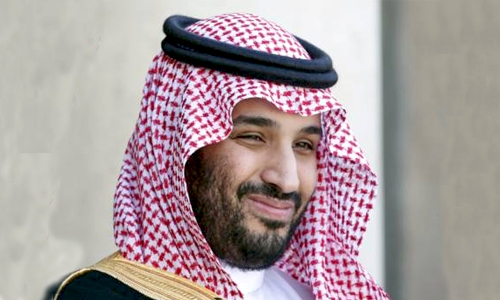 The inclination, announced by Deputy Crown Prince Mohammad Bin Salman Al Saud in an interview with Bloomberg, would help the kingdom generate new revenues for the national economy.
Comments
Hahaha viren ..namge beda aa wahabi rashtra ..muzzies here in this column please note yelli yenne sigalvo ..yelli dance bars or disco theck ilvo ...antha rashtra kke banni makla full citizenship kodthivi andru ..beda milk shake mama neene itko beda andu bidteevi ...we are well aware soon saud family will collapse ...Isis is already making deep inroads into Saudi ...they have the weakest army in the world .this program will encourage Indo pakis who are in very large No's in India .no non Muslims will take PR for sure .as per IMF due to decline in oil revenues for the first time they are reeling into debt. Haha..soon it will create more problem as they don't have alternate non oil source ..milk shakes ge bere field nalli ashtu talent saha illa. ..
Hahahahah... So Non-Muslims also want green card in Saudi? Check if you can avail one, but make sure you don't worship Camel Maatha,..!
There are other disadvantages though;
- No Riots
- No Photoshop
- No Love Jihad issue.
- No Moral policing
- No Lynching
- No Alchohol/Drugs
- No Pornography
- No Rapes
Are you sure you chaddis will be able to survive without all this?
Just study QURAN, YOU will understand Y u feel grudge against MUSLIMS...
Our CREATOR speaks about the CREATION & also he Warns us about Y grudge, Jealousy, Sin, hate, crime, DECEPTION & other Evils come from... and ROOT it comes from.
Animals live their way and Man was created by ALLAH with intelligence... Sometimes Use your intelligence to know what our CREATOR speaks... and dont live like the animals.
Viren why do u need now muslim country green card?
Viren...say Bharat Mata ki jai n enjoy your stay here..why worried about green card
@ Viren Kotian 100% only for Muslims and should accept Saudi Arabia Islamic Rules with respect
Viren Kotiyaaan
Why are you intrested in the permanent residence of KSA. you should be happy in india with the chaddies ruling you. And by the way not everyone in the world is like you and your chadii rulers. there are people who look for the Human attributes in human beings not only religion . thats why there are many RSS chaddies who earn in saudi and send the money to their families in india.
I think for you spcially we will recommend govt to get red card to ban saudi arabia
Only for muslims or non muslims also will get green card?
Add new comment