


Saudi Arabia mulls permanent residency for expatriates

April 6, 2016

Manama, Apr 6: Saudi Arabia could introduce a system for its millions of expatriates that would be similar to the Green Card system in the US.
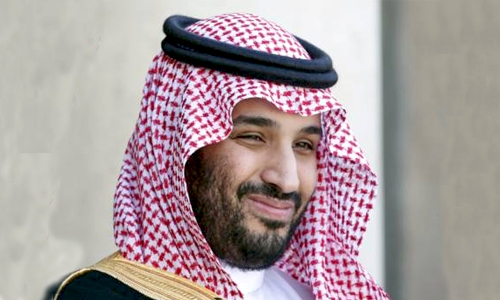
expatriatesThe inclination, announced by Deputy Crown Prince Mohammad Bin Salman Al Saud in an interview with Bloomberg, would help the kingdom generate new revenues for the national economy.

No details were given by Prince Mohammad, but with around nine million foreigners living in the vast kingdom, making up one third of the total population, the system would be a source for the country as it seeks to implement an ambitious package of new reforms and measures that will considerably improve its non-oil revenues and “raise at least an extra $100 billion a year by 2020, more than tripling non-oil income and balancing the budget.”

“It's a large package of programmes that aims to restructure some revenue-generating sectors,” Prince Mohammad told Bloomberg.

The emulation of the American Green Card system would be alongside more steps to restructure subsidies and the imposition of a value-added tax and a levy on energy and sugary drinks as well as luxury items, the deputy crown prince reportedly said.

Most of the foreigners in Saudi Arabia and fellow Gulf Cooperation Council (GCC) countries – Bahrain, Kuwait, Qatar, Oman and the United Arab Emirate – are Asians, mainly unskilled workers in the booming building and service sectors.

In his interview, Prince Mohammad expressed optimism the new measures would reinforce the government's drive to reduce reliance on oil and to boost non-oil revenues.

“We did a quick fix in 2015 which increased our non-oil revenue by 35 per cent,” he said. “This year, we are trying to target over $25 billion. I believe we will succeed in achieving more than $10 billion in non-oil revenue in 2016.”

With the dramatic slump of oil prices, the GCC countries have been looking at viable options to generate non-oil sources and reduce threats to fiscal stability and sustainability.

Experts believe that hydrocarbon exports represent more than 80 per cent of the total revenue in the GCC countries where taxation is almost absent.

The main non-oil revenue base in the GCC states currently includes customs duties and fees and charges.

Bahrain, the first GCC country to discover oil in 1932, has been leading the way in the diversification of non-oil resources.

Comments

Naren kotian
 - 
Thursday, 7 Apr 2016

Hahaha viren ..namge beda aa wahabi rashtra ..muzzies here in this column please note yelli yenne sigalvo ..yelli dance bars or disco theck ilvo ...antha rashtra kke banni makla full citizenship kodthivi andru ..beda milk shake mama neene itko beda andu bidteevi ...we are well aware soon saud family will collapse ...Isis is already making deep inroads into Saudi ...they have the weakest army in the world .this program will encourage Indo pakis who are in very large No's in India .no non Muslims will take PR for sure .as per IMF due to decline in oil revenues for the first time they are reeling into debt. Haha..soon it will create more problem as they don't have alternate non oil source ..milk shakes ge bere field nalli ashtu talent saha illa. ..

KhasaiKhaane
 - 
Thursday, 7 Apr 2016

Hahahahah... So Non-Muslims also want green card in Saudi? Check if you can avail one, but make sure you don't worship Camel Maatha,..!
There are other disadvantages though;
- No Riots
- No Photoshop
- No Love Jihad issue.
- No Moral policing
- No Lynching
- No Alchohol/Drugs
- No Pornography
- No Rapes
Are you sure you chaddis will be able to survive without all this?

DEAR VIREN
 - 
Thursday, 7 Apr 2016

Just study QURAN, YOU will understand Y u feel grudge against MUSLIMS...
Our CREATOR speaks about the CREATION & also he Warns us about Y grudge, Jealousy, Sin, hate, crime, DECEPTION & other Evils come from... and ROOT it comes from.
Animals live their way and Man was created by ALLAH with intelligence... Sometimes Use your intelligence to know what our CREATOR speaks... and dont live like the animals.

mohammad.n
 - 
Wednesday, 6 Apr 2016

Viren why do u need now muslim country green card?

Satyameva jayate
 - 
Wednesday, 6 Apr 2016

Viren...say Bharat Mata ki jai n enjoy your stay here..why worried about green card

Owaisi
 - 
Wednesday, 6 Apr 2016

@ Viren Kotian 100% only for Muslims and should accept Saudi Arabia Islamic Rules with respect

Riyaz
 - 
Wednesday, 6 Apr 2016

Viren Kotiyaaan
Why are you intrested in the permanent residence of KSA. you should be happy in india with the chaddies ruling you. And by the way not everyone in the world is like you and your chadii rulers. there are people who look for the Human attributes in human beings not only religion . thats why there are many RSS chaddies who earn in saudi and send the money to their families in india.

mangalorean
 - 
Wednesday, 6 Apr 2016

I think for you spcially we will recommend govt to get red card to ban saudi arabia

Viren Kotian
 - 
Wednesday, 6 Apr 2016

Only for muslims or non muslims also will get green card?

Add new comment

  • Coastaldigest.com reserves the right to delete or block any comments.
  • Coastaldigset.com is not responsible for its readers’ comments.
  • Comments that are abusive, incendiary or irrelevant are strictly prohibited.
  • Please use a genuine email ID and provide your name to avoid reject.
News Network
April 15,2020

Bengaluru, Apr 15: The Karnataka government on Wednesday opened a critical care support unit to monitor the progress of Coronavirus patients in Intensive Care Units (ICUs) of various designated COVID hospitals across the State.

Karnataka is the first state in the country to establish a dedicated unit for critical care support, by linking ICUs of COVID hospitals onto a single platform, Medical Education Minister Sudhakar K, who inaugurated it, was quoted as saying in a statement on Wednesday.

Its objective is to monitor COVID-19 patients in ICUs across Karnataka state so that the hospitals are prepared for the potential onslaught of the virus and thereby to achieve zero COVID mortality in Karnataka, he said, adding, it would enable capturing details of ICU COVID-19 patients in real-time

Comments

Add new comment

  • Coastaldigest.com reserves the right to delete or block any comments.
  • Coastaldigset.com is not responsible for its readers’ comments.
  • Comments that are abusive, incendiary or irrelevant are strictly prohibited.
  • Please use a genuine email ID and provide your name to avoid reject.
News Network
July 4,2020

Bengaluru, Jul 4: Amid the rising COVID-19 cases in the state, the Karnataka COVID-19 Task Force has decided to set up booth-level committees across the state including 8,800 here for effective monitoring and surveillance.

The task force also released detailed guidelines for home isolation for asymptomatic cases including 17 days ''home isolation'' for patients below 50 years of age. It also warned of legal action against those health workers for disrespect to the bodies.

Briefing reporters after the meeting on Friday, Medical Education Minister Dr K Sudhakar said the local management will be strengthened for effective monitoring and surveillance of COVID-19 cases. "There will be booth-level task force committees throughout the state right from the village to Bengaluru.

These task force committees will act at the ultra local level. The task force will act as a structural and functional unit of COVID-19 dealing with monitoring, surveillance, checking of all the ILI cases, ambulances and hospitals," he added.

He also said the committees will comprise one member each from the Health department, police department, municipalities or Panchayat, volunteers, valveman. The committee will have five to six members.

The principal secretary in the Village Development and Panchayat Raj department L K Ateeq has been appointed as the nodal officer to manage the task force in the rural areas whereas in the urban areas, the Urban Development secretary, the municipal administration directors and the municipal commissioner will form the local task force.

"In Bengaluru alone 8,800 teams will be formed, which will be coterminous with the 8,800 booths in the city. They will provide the real-time data. They will be imparted training," the minister added. Noting that there were about 8,800 electoral booths in Bengaluru city and each booth will have a task force committee, he said a nodal officer has been appointed to oversee this.

The state level task force also came out with a slew of conditions. As far as home isolation is concerned, it would apply for patients who are below 50 years and have no symptoms of any other disease, and their homes should have a toilet and have an attendant.

He also said home isolation duration has been increased from 14 to 17 days. "People should not get fever in the next three days after completing 14 days, else they will be quarantined for another seven days. If they don''t get fever then they will be freed to perform their personal activities," Sudhakar said.

Those who are above 50 years and have comorbidities, will be treated at the COVID care centres only and they will be under medical supervision and be subjected to regular tests. The state is also making arrangements for telecommunication for those who are asymptomatic but wish to speak to a doctor.

It was also decided to have at least two ambulances in each of the 198 wards of Bengaluru. The minister said the additional commissioner of police (traffic) will be the nodal officer to coordinate the movement of ambulances. The task force has also appointed a nodal officer to manage the hospitals based on the availability of beds and ventilators. The officer will provide real time information about beds.

"We want to make sure that no one has to run from one hospital to another," Sudhakar said. On the cremation of the bodies, Sudhakar said guidelines have been issued on how to handle bodies at mortuaries, taking them in the ambulances, human treatment to the deceased while performing the last rites and fumigation of the bed. "Legal action will be taken against those who treat bodies in an inhuman way," Sudhakar said.

The state-level task force has also decided to arrange for test reports within 24 hours. It has also been decided to increase the testing capacity from the existing 15,000 a day to 25,000. In view of the spurt in COVID-19 cases, the task force also recommended antigen tests in crowded areas to check whether there was community spread.

To a question on closing down the border, the minister said there is no question of lockdown. "We cannot hide from this disease. It is not a solution. We have to live with it now, yet maintain a distance from it," he added. Sudhakar, who is a doctor himself, said COVID-19 is not as deadly a virus as those he had seen in the past and asked people not to be scared of it.

Comments

Add new comment

  • Coastaldigest.com reserves the right to delete or block any comments.
  • Coastaldigset.com is not responsible for its readers’ comments.
  • Comments that are abusive, incendiary or irrelevant are strictly prohibited.
  • Please use a genuine email ID and provide your name to avoid reject.
News Network
June 9,2020

Thiruvananthapuram, Jun 9: Malls, restaurants and places of worship opened in Kerala on Tuesday morning after over two-and half months of Coronavirus induced lockdown. There were very few visitors in the malls and restaurants in the early hours and people preferred takeaways in eateries.

Various temples, including the famous Lord Krishna temple at Guruvayoor, a few churches and mosques opened in the state for the devotees. The Guruvayur shrine opened at 9.30 am and around 150 people, who had booked through virtual queue system, offered prayers.

Devotees wearing masks were seen standing adhering to the social distance norm. A faithful at the guruvayur temple said he had booked for darshan on Sunday and was happy to be offering worship after a long gap. "This is a realisation of a dream", he said.

In the state capital while the famed Lord Padmanabha swamy, Pazhavanangadi Ganapathy and Attukal Bhagavathy temples remained shut, the SreekanteshwaraShiva shrine and Lord Hanuman temple near the state assembly were among those which opened for darshan. The names, age and other details of the worshippers are also being collected by the temple authorities before letting people in. Another devotee said it was very painful not to go to the temple and expressed happiness over reopening of the shrines.

The virtual queue booking for devotees to offer worship at the hill shrine of Lord Ayyappa temple at Sabarimala would commence from Wednesday. Devotees from other states have to produce a Covid-19 negative certificate while booking,sources in the Travancore Devaswom Board (TDB), administers the temple, said.

The Ayyappa shrine would open from June 14 to 28 for the five day monthly pooja and temple festival and only 10 people would be allowed inside the shrine at a time, sources said.

Most of the over 1,200 temples under the TDB, have opened while those under the Nair Service Society (NSS), an organisation of the Nair community and few other shrines were shut. The state government, which had come under attack from the BJP and Hindu Aikya vedi for opening the temples in a "hasty manner" has maintained that the decision was taken in line with the Centre's Unlock-1 guidelines and said those opposing the move had earlier wanted devotees to be allowed into the shrines.

As per the centre's Standard Operating Procedures, social distancing should be followed in all the places of worship and devotees should wear face mask are among other precautions in view of the COVID-19 pandemic.

Those above 65 and children below 10 years would not be allowed in places of worship, distribution of food, refreshments and offertory blessings (prasadams), sandalwood paste or ashes should be avoided. Thermal scanners to check body temperatures, sanitiisers, arrangements for washing hands, were all provided in the temples and other places of worship which opened this morning, In churches in the state capital, Kochi and Kozhikode, allowedthe faithful inside after disinfecting the place.

The orthodox church synod is being held on Tuesday which will take a decision on whether or not to open their places of worship. Few mosques were also open in some places.

Comments

Add new comment

  • Coastaldigest.com reserves the right to delete or block any comments.
  • Coastaldigset.com is not responsible for its readers’ comments.
  • Comments that are abusive, incendiary or irrelevant are strictly prohibited.
  • Please use a genuine email ID and provide your name to avoid reject.