


Saudi Arabia suspends entry for pilgrims over coronavirus

News Network
February 28, 2020

Riyadh, Feb 28: Saudi Arabia on Thursday (Feb 27) suspended visas for visits to Islam's holiest sites for the "umrah" pilgrimage, an unprecedented move triggered by coronavirus fears that raises questions over the annual hajj.

The kingdom, which hosts millions of pilgrims every year in the cities of Mecca and Medina, also suspended visas for tourists from countries with reported infections as fears of a pandemic deepen.

Saudi Arabia, which so far has reported no cases of the virus but has expressed alarm over its spread in neighbouring countries, said the suspensions were temporary. It provided no timeframe for when they will be lifted.

"The kingdom's government has decided to take the following precautions: suspending entry to the kingdom for the purpose of umrah and visit to the Prophet's mosque temporarily," the foreign ministry said in a statement.

"Suspending entry into the kingdom with tourist visas for those coming from countries, in which the spread of the new coronavirus (COVID-19) is a danger."

The move comes as Gulf countries implement a raft of measures, including flight suspensions and school closures, to curb the spread of the disease from people returning from pilgrimages to Iran.

Even as the number of fresh coronavirus cases declines at the epicentre of the disease in China, there has been a sudden increase across the Middle East.

Since its outbreak, the United Arab Emirates has reported 13 coronavirus cases, Kuwait has recorded 43, Bahrain has 33 and Oman is at four cases.

Iran has emerged as a major hotspot in the region, with 19 fatalities from 139 infections - the highest death toll outside China, where COVID-19 originated.

While no cases have been reported in Saudi Arabia, one citizen is reported to be infected in Kuwait along with four Saudi women in Bahrain - all of whom had returned from Iran.

'UNPRECEDENTED' MOVE

The umrah, which refers to the Islamic pilgrimage to Mecca that can be undertaken at any time of year, attracts millions of devout Muslims from all over the globe each year.

There was no clarity over how the move would affect the annual hajj pilgrimage due to start in late July.

Some 2.5 million faithful travelled to Saudi Arabia from across the world to take part in last year's hajj - one of the five pillars of Islam.

The event is a key rite of passage for Muslims and a massive logistical challenge for Saudi authorities, with colossal crowds cramming into relatively small holy sites.

"This move by Saudi Arabia is unprecedented," Ghanem Nuseibeh, founder of London-based risk consultancy Cornerstone Global Associates, told news agency.

"The concern for Saudi authorities would be Ramadan, which starts at the end of April, and hajj afterwards, should the coronavirus become a pandemic."

The holy fasting month of Ramadan is considered a favourable period by Muslim pilgrims to perform the umrah.

Saudi Arabia's custodianship of Mecca and Medina - Islam's two holiest sites - is seen as the kingdom's most powerful source of political legitimacy.

But a series of deadly disasters over the years has prompted criticism of the Sunni kingdom's management of the pilgrimage.

In September 2015, a stampede killed up to 2,300 worshippers - including hundreds of Iranians - in the worst disaster ever to strike the pilgrimage.

The pilgrimage forms a crucial source of revenue for the government, which hopes to welcome 30 million pilgrims annually to the kingdom by 2030.

De facto ruler Crown Prince Mohammed bin Salman's Vision 2030 reform plan seeks to shift the economy of Saudi Arabia - the world's top crude exporter - away from oil dependency towards other sources of revenue, including religious tourism.

Comments

Whether this virus is also created by Allah the powerful? If yes then Muslims need not fear, they should continue to go the Mecca, on the Non-muslims should fear because allah hates them. &


And if the Virus not created by Allah, then Who created it?  Is there anyone else other than Allah?


You Fool Go-vind...there is no logic in your statement.

will you touch burning fire for 2 min if you are fearless...foolish right


GOD is not magic...its logical


God never helped any Human beigh with magic to conver to his religion,

he would have done then all will be worshipping him alone..


this is test for all human being


he created all human beign and he loves every human being but he loves only those who good to another human.


screem how ever you want..but muslim population will increase 100%.

please check your health before cursing other.


So-called powerfull GOD saved all human beign when they sincierly prayed also you.


the more you hate ISLAM the more it become powerful.


HINUD is not religion but it is geographical name

RAM is not god but he is king of ayodya same human beign

Phophet Mohammed Pbuh is not GOD but he is messanger of GOD

Veda says na thasya parathima asti- there is no image of GOD but you make some photo and worship.

the biggest sin in front of GOD which will never be forgiven is  worshipping Idol.

God is one not multi...if god is mutli then there is no meaning in justics


Love human being automatically God loves you


Govind
 - 
Friday, 6 Mar 2020

Fools.. Why they fear virus. If somebody ask them, they say we have fear only on Allah. They should go there.. they should be infected and population should decease. Let their so-called powerful god save them

Logical Indian
 - 
Friday, 6 Mar 2020

Muslims fear only Allah and no body else. then why this fear for the virus. They should trust allah fully and allow pilgirms. "Allah o akbar"

Abdul Rahman
 - 
Friday, 28 Feb 2020

Mecca to b spelled Makkah.

Makkah is the correct spelling

Add new comment

  • Coastaldigest.com reserves the right to delete or block any comments.
  • Coastaldigset.com is not responsible for its readers’ comments.
  • Comments that are abusive, incendiary or irrelevant are strictly prohibited.
  • Please use a genuine email ID and provide your name to avoid reject.
Agencies
July 22,2020

Riyadh, Jul 22: Saudi King Salman held a cabinet meeting via video call from hospital in the capital Riyadh on Tuesday, a day after the 84-year-old monarch was admitted with inflammation of the gall bladder.

Three Saudi sources said the king was in stable condition.

A video of the king chairing the meeting was broadcast on Saudi state TV on Tuesday evening. In the video, which has no sound, King Salman can be seen behind a desk, wordlessly reading and leafing through documents.

The king, who has ruled the world’s largest oil exporter and close US ally since 2015, was undergoing medical checks, state media on Monday cited a Royal Court statement as saying.

Three well-connnected Saudi sources who declined to be identified, two of whom were speaking late on Monday and one on Tuesday, said the king was “fine”.

An official in the region, who requested anonymity, said he spoke to one of King Salman’s sons on Monday who seemed “calm” and that there was no sense of panic about the monarch’s health.

Comments

Add new comment

  • Coastaldigest.com reserves the right to delete or block any comments.
  • Coastaldigset.com is not responsible for its readers’ comments.
  • Comments that are abusive, incendiary or irrelevant are strictly prohibited.
  • Please use a genuine email ID and provide your name to avoid reject.
coastaldigest.com news network
June 29,2020

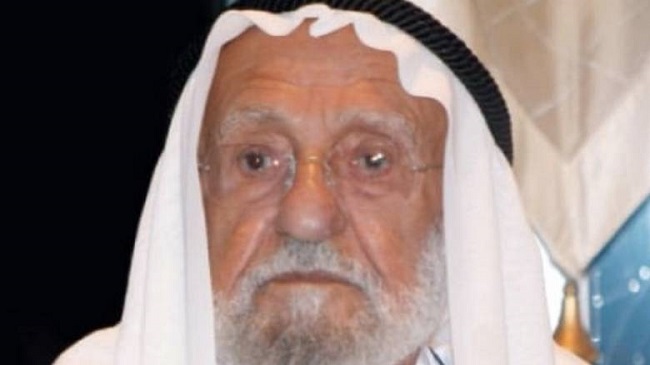
Dubai, Jun 29: Saeed bin Ahmed Al Lootah, a pioneering Emirati businessman and the founder of the world's first Islamic bank, is no more. He breathed his last on June 28.

Born in 1923, Saeed was instrumental in setting up the Dubai Islamic Bank (DIB) in 1975 to provide the community with a Sharia-compliant alternative to conventional banking.

He established several companies, organisations and societies, including the Dubai Consumer Cooperative. He also established the Islamic Education School in 1983 and the Dubai Medical College for Girls in 1986.

In 1992, Haj Saeed established the first College of Pharmacology in Dubai. Later he launched the Dubai Centre for Environmental Research, the Dubai Specialised Medical Centre, and the Medical Research Labs for health control and research into medicinal herbs and Islamic (Nabawi) medicine. He also set up an orphanage.

Saeed bin Ahmed Al Lootah was a self-made businessman who progressed from being a seafarer and trader to an accomplished tutor, author, economist, banker, entrepreneur, businessman and visionary community leader.

According to details available on the S.S. Lootah Group website, his "fervent adherence to the core values of education, cooperation and economy" helped empower "people to excel at everything they do".

"He realised the need to build permanent houses and ventured into construction. His 'capital' at that time were his skills, knowledge and hard work," the website said.

He laid the foundation of S.S.Lootah Contracting Company as a joint venture with his brother Sultan in 1956. "With the enduring values of education, cooperation and economy set as the foundations of his work, Haj Saeed started a number of businesses as well as not-for-profit education and research ventures, with an aim to serve the people of the UAE.

"Thanks to his vision and leadership, our home grown ventures continue to demonstrate unique values that extend well beyond its functional benefits - creating greater economic, social and environmental benefits for people in UAE and beyond."

Sheikh Mohammed bin Rashid Al Maktoum, Vice-President and Prime Minister of the UAE and Ruler of Dubai, took to Twitter on Sunday to offer his respects.

Sheikh Mohammed said: "He was a trader who started with nothing. His touch is visible in several aspects of the Dubai economy."

Calling the deceased a "wise and smart man", Sheikh Mohammed said: "May Allah bless his soul and grant his family the strength to endure and persevere."

Sheikh Hamdan bin Mohammed bin Rashid Al Maktoum, Crown Prince of Dubai, also paid his respects. "He combined economic leadership with charitable work. He launched charitable educational institutions and sponsored many orphans. His memory will live on. May Allah have mercy on him and grant his family patience."

Comments

Add new comment

  • Coastaldigest.com reserves the right to delete or block any comments.
  • Coastaldigset.com is not responsible for its readers’ comments.
  • Comments that are abusive, incendiary or irrelevant are strictly prohibited.
  • Please use a genuine email ID and provide your name to avoid reject.
News Network
May 7,2020

United Nations, May 7: An average of 80,000 COVID-19 cases were reported each day in April to the World Health Organization, the top UN health agency has said, noting that South Asian nations like India and Bangladesh are seeing a spike in the infections while the numbers are declining in regions such as Western Europe.

WHO Director-General Tedros Adhanom Ghebreyesus said on Wednesday that countries must also be able to manage any risk of the disease being imported into their territories, and communities should be fully educated to adjust to what will be a "new norm".

He said as the countries press forward in the common fight against COVID-19, they should also lay the groundwork for resilient health systems globally.

"More than 3.5 million cases of COVID-19 and almost 250,000 deaths have now been reported to the WHO. Since the beginning of April, an average of around 80,000 new cases have been reported to the WHO every day," Ghebreyesus said in Geneva yesterday.

Asserting that the virus cases were not just numbers, he said: "every single case is a mother, a father, a son, a daughter, a brother, sister or friend".

He said while the numbers are declining in Western Europe, more cases are being reported every day from Eastern Europe, Africa, South-East Asia, the Eastern Mediterranean and the Americas. Even within regions and within countries, there are divergent trends, the agency added.

While some countries are reporting an increase in COVID-19 cases over time, many have seen caseloads rise because they have ramped up testing, the WHO official said.

"We've also seen in Europe and Western Europe a fundamental decrease in the number of cases, but we have seen an associated increase in the number of cases reported in places like the Russian Federation. Southeast, the Western Pacific areas are relatively on the downward trend like Korea and others, but then we do see in South Asia, in places like Bangladesh, in India, some trends towards increase.

"So it's very difficult to say that any particular region is improving or (not improving). There are individual countries within each region that are having difficulties getting on top of this disease and I am particularly concerned about those countries that have (an) ongoing humanitarian crisis," WHO's Executive Director Michael Ryan said.

The death toll due to COVID-19 in India rose to 1,783 while the number of cases climbed to 52,952 on Thursday, registering an increase of 89 deaths and 3,561 cases in the last 24 hours, the Union Health Ministry said.

The number of active COVID-19 cases stood at 35,902 while 15,266 people have recovered, it said.

Noting that while seeing an increase in the number of cases is not good in terms of transmission, WHO's Emerging Diseases and Zoonoses Unit head Maria Van Kerkhove said: "but I don't want to equate that with something (being) wrong".

"I want to equate that with countries are working very hard to increase their ability to find the virus, to find people with the virus, to have testing in place to identify who has COVID-19, and putting into place what they need to do to care for those patients," Kerkhove said.

With more countries considering easing restrictions implemented to curb the spread of the coronavirus, the WHO has again reminded the authorities of the need to maintain vigilance.

"The risk of returning to lockdown remains very real if countries do not manage the transition extremely carefully, and in a phased approach," Ghebreyesus said.

He urged countries to consider the UN agency's six criteria for lifting stay-at-home measures.

That advice includes ensuring surveillance is strong, cases are declining and transmission is controlled. Health systems also must be able to detect, isolate, test and treat cases, and to trace all contacts.

Additionally, the risk of outbreak in settings such as health facilities and nursing homes needs to be minimised, while schools, workplaces and other public locations should have preventive measures in place.

"The COVID-19 pandemic will eventually recede, but there can be no going back to business as usual. We cannot continue to rush to fund panic but let preparedness go by the wayside," he said.

He said the crisis has highlighted the importance of strong national health systems as the foundation of global health security: not only against pandemics but also against the multitude of health threats that people across the world face every day.

"If we learn anything from COVID-19, it must be that investing in health now will save lives later," Ghebreyesus said.

While the world currently spends around USD 7.5 trillion on health annually, the WHO believes the best investments are in promoting health and preventing disease.

"Prevention is not only better than cure, it's cheaper, and the smartest thing to do," he said.

The deadly coronavirus, which originated from the Chinese city of Wuhan in December last year, has infected over 3.7 million people and killed 263,831 people globally, according to a tally by Johns Hopkins University.

Comments

Add new comment

  • Coastaldigest.com reserves the right to delete or block any comments.
  • Coastaldigset.com is not responsible for its readers’ comments.
  • Comments that are abusive, incendiary or irrelevant are strictly prohibited.
  • Please use a genuine email ID and provide your name to avoid reject.