


Saudi Arabia third happiest country in the world: Survey

January 10, 2016

Jeddah, Jan 10: Saudi Arabia has come third in a poll for the world’s happiest countries – in a list which features almost no European. The research was carried out by WIN/Gallup International, a polling association which interviewed 66,040 people from 68 countries.

The kingdom has only been pipped to top position by Fiji and Colombia.
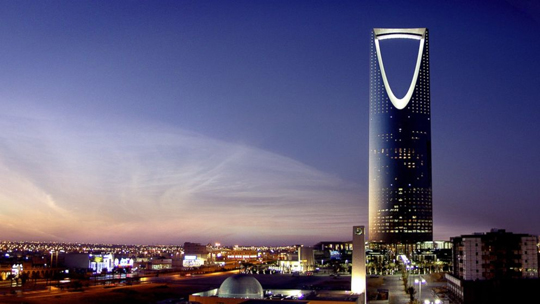
saudi

At an average temperature of about 26C in January, the beautiful Fiji islands have an evident advantage.

Fiji has an average all-year round temperature of 26 C and apparently happy citizens.

Indeed, nearby Mexico ranked as the world’s eighth happiest country.

The findings suggest that either people have different perceptions of what “happiness” means, or that material wealth, ideological freedom and civil stability do not necessarily translate into personal contentedness.

China and Fiji are also two of the most hopeful nations, with China also the third most optimistic about economic prosperity. Nigerians are the most optimistic about their economy.

Europe, meanwhile, barely made it into the top 10 countries for happiness.

Iceland, which has one of the highest percentage of women working outside the home, was the only European country to make the top 10, sharing joint tenth position with China.

Italy is the least hopeful nation out of their 68 nations surveyed, while Greece is the third most unhappy country – and France and Italy tie as the 10th most unhappy.

As 2015 came to an end, 66% of respondents to the WIN/Gallup International survey said that they are happy, down slightly from 70% in 2014. Of the 66040 people surveyed, 10% said that they were unhappy, up 4% from 2014. Overall, that means that the world is 56% net happy (happiness minus unhappiness). In 2015 the net happiest country in the world is Colombia (85%), in stark contrast the world’s unhappiest country is Iraq at -12% net happiness.

The study showed that 45% of the world is optimistic for the economic outlook in 2016 over double (22%) of those who are pessimistic. It’s perhaps unsurprising that Greece is the most pessimistic (-65% net optimistic) country given their current perilous financial position. The most optimistic nation when it comes to the economy is Nigeria (61% net optimism). When it comes to a demographic breakdown young people prove to be considerably more optimistic than older generations with 31% net optimistic for the under 34s compared to just 13% for the over 55s.

As part of their analysis WIN/Gallup International has grouped the world into three tiers: Prosperous (the G7); Emerging (G20 excluding the original G7) and Aspiring (all others) nations. Whilst there is huge disparity in income levels across these three tiers, the level of net happiness across all three (Prosperous 42%, Emerging 59% and Aspiring 54%) is notably high. However the findings on hope and economic optimism vary markedly across the tiers. According to the global poll, Prosperous nations display the least hope and economic optimism with 6% and -16% respectively; to the contrary Emerging nations are very hopeful about the future and far more optimistic about the economic outlook at 50% and 36% meanwhile the Aspiring nations sit between the two on hope (29%) and economic optimism (16%).

Jean-Marc Leger, President of the Association, said: “2015 has been a tumultuous year for many across the globe, despite that the world remains largely a happy place. 45% of the world is optimistic regarding the economic outlook for 2016, up by 3 percent compared to last year.”

Comments

Add new comment

  • Coastaldigest.com reserves the right to delete or block any comments.
  • Coastaldigset.com is not responsible for its readers’ comments.
  • Comments that are abusive, incendiary or irrelevant are strictly prohibited.
  • Please use a genuine email ID and provide your name to avoid reject.
Agencies
January 4,2020

Dubai, Jan 4: Three UAE airlines have made it to lists of the safest carriers in 2020, reinforcing the value these companies provide passengers in the increasingly competitive aviation scene.

Abu Dhabi's Etihad Airways and Dubai's Emirates are in the list of the top 20 safest airlines, while Sharjah-based Air Arabia is in the list of the top 10 low-cost carriers, safety and product rating website AirlineRatings.com reported on Thursday.

It named Qantas as the safest airline for 2020 out of the 405 carriers it monitors.

The top 20, in order, are Qantas, Air New Zealand, EVA Air, Etihad Airways, Singapore Airlines, Emirates, Alaska Airlines, Qatar Airways, Cathay Pacific Airways, Virgin Australia, Hawaiian Airlines, Virgin Atlantic Airlines, TAP Portugal, SAS, Royal Jordanian, Swiss, Finnair, Lufthansa, Aer Lingus and KLM.

"These airlines are clear standouts in the airline industry and are at the forefront of safety," said AirlineRatings.com editor-in-chief Geoffrey Thomas.

"For instance, Australia's Qantas has been recognised by the British Advertising Standards Association in a test case in 2008 as the world's most experienced airline."

"Qantas has been the lead airline in virtually every major operational safety advancement over the past 60 years and has not had a fatality in the pure-jet era," said Thomas.

AirlineRatings.com editors also identified their top 10 safest low-cost airlines; they are, in alphabetical order, Air Arabia, Flybe, Frontier, HK Express, IndiGo, Jetblue, Volaris, Vueling, Westjet and Wizz.

Saj Ahmad, chief analyst at StrategicAero Research in London, says that it isn't a surprise that UAE carriers are on those lists.

"UAE airlines almost always feature in the top rankings for safety because they value the equipment that they fly their passengers on each and every day," he told Khaleej Times on Thursday.

"All airlines do; but for the UAE, where airlines have expanded rapidly in the last couple of decades, it's an amazing feat that they rank so highly while inducting so many new aeroplanes."

There's little benefit to adding luxurious cabins if maintenance, security and safety protocols as well as routine engineering schedules are not adhered to, he stressed.

"And with the UAE itself sporting MRO activities as well as through companies like Strata, which supply components to Airbus and Boeing directly, airlines here have harnessed that tech-change to ensure that their fleets have the highest redundancy and safety checks at every possible chance," Ahmad added. "That translates into passenger confidence - and we can see the brand and loyalty strength across Emirates, flydubai, Air Arabia and Etihad; it's no surprise that each year, they all fly more and more passengers across their network."

In making its selections, AirlineRatings.com editors and its industry advisors take into account numerous critical factors that include: Audits from aviation's governing bodies and lead associations, government audits, airline's crash and serious incident record, fleet age, financial position and pilot training and culture.

"All airlines have incidents every day and many are aircraft or engine manufacture issues instead of airline operational problems. And it is the way the flight crew handles incidents that determines a good airline from an unsafe one. So just lumping all incidents together is very misleading," said Thomas.

Comments

Add new comment

  • Coastaldigest.com reserves the right to delete or block any comments.
  • Coastaldigset.com is not responsible for its readers’ comments.
  • Comments that are abusive, incendiary or irrelevant are strictly prohibited.
  • Please use a genuine email ID and provide your name to avoid reject.
Agencies
August 2,2020

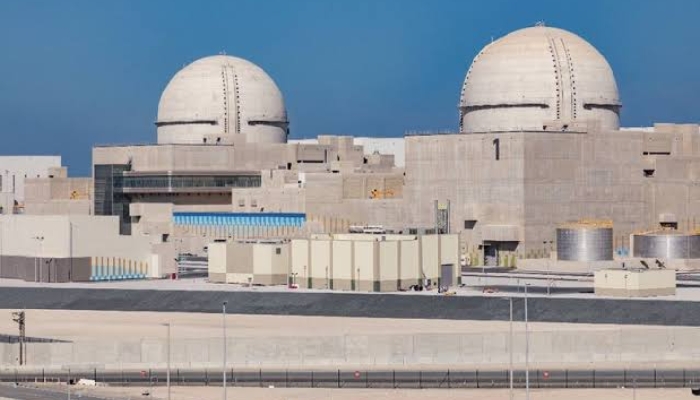
Dubai, Aug 2: The United Arab Emirates (UAE) announced on Saturday that it has started operations in the first of four reactors at the Barakah nuclear power station - the first nuclear power plant in the Arab world.

Emirates Nuclear Energy Corporation (ENEC), which is building and operating the plant with Korea Electric Power Corporation (KEPCO) said in a press release that its subsidiary Nawah Energy Company "has successfully started up Unit 1 of the Barakah Nuclear Energy Plant, located in the Al Dhafrah Region of Abu Dhabi".

That signals that Unit 1, which had fuel rods loaded in March, has achieved "criticality" - a sustained fission chain reaction.

"The start-up of Unit 1 marks the first time that the reactor safely produces heat, which is used to create steam, turning a turbine to generate electricity," said ENEC.

Barakah, which was originally scheduled to open in 2017, has been dogged by delays and is billions of dollars over budget. It has also raised myriad concerns among nuclear energy veterans who are concerned about the potential risks Barakah could visit upon the Arabian Peninsula, from an environmental catastrophe to a nuclear arms race.

Paul Dorfman, an honorary senior research fellow at the Energy Institute, University College London and founder and chair of the Nuclear Consulting Group, has criticised the Barakah reactors' "cheap and cheerful" design that he says cuts corners on safety.

Dorfman authored a report (PDF) last year detailing key safety features Barakah's reactors lack, such as a "core catcher" to literally stop the core of a reactor from breaching the containment building in the event of a meltdown. The reactors are also missing so-called Generation III Defence-In-Depth reinforcements to the containment building to shield against a radiological release resulting from a missile or fighter jet attack.

Both of these engineering features are standard on new reactors built in Europe, says Dorfman.

There have been at least 13 aerial attacks on nuclear facilities in the Middle East - more than any other region on earth.

The vulnerability of critical infrastructure in the Arabian Peninsula was further laid bare last year after Saudi Arabia's oil facilities at Abqaiq and Khurais were attacked by 18 drones and seven cruise missiles - an assault that temporarily knocked out more than half of the kingdom's oil production.

On Saturday, Dorfman reiterated his concern that there is no regional protocol in place to determine liability should an accident or incident at Barakah result in radioactive contamination spreading from the UAE to its neighbours. 

"Given Barakah has started up, because of all the well-rehearsed nuclear safety and security problems, it may be critically important that the Gulf states collectively evolve a Nuclear Accident Liability Convention, so that if anything does go wrong, victim states may have some sort of redress," Dorfman told Al Jazeera. 

The UAE has substantial oil and gas reserves, but it has made huge investments in developing alternative energy sources, including nuclear and solar.

Experts though have questioned why the UAE - which is bathed in sunlight and wind - has pushed ahead with nuclear energy - a far more expensive and riskier option than renewable energy sources.

When the UAE first announced Barakah in 2009, nuclear power was cheaper than solar and wind. But by 2012 - when the Emirates started breaking ground to build the reactors - solar and wind costs had plummeted dramatically.

Between 2009 and 2019, utility-scale average solar photovoltaic costs fell 89 percent and wind fell 43 percent, while nuclear jumped 26 percent, according to an analysis by the financial advisory and asset manager Lazard.

There are also concerns about the potential for Barakah to foment nuclear proliferation in the Middle East - a region rife with geopolitical fault lines and well-documented history of nuclear secrecy.

The UAE has sought to distance itself from the region's bad behaviour by agreeing not to enrich its own uranium or reprocess spent fuel. It has also signed up to the United Nation's nuclear watchdog's Additional Protocol, significantly enhancing inspection capabilities, and secured a 123 Agreement with the United States that allows bilateral civilian nuclear cooperation.

Comments

Add new comment

  • Coastaldigest.com reserves the right to delete or block any comments.
  • Coastaldigset.com is not responsible for its readers’ comments.
  • Comments that are abusive, incendiary or irrelevant are strictly prohibited.
  • Please use a genuine email ID and provide your name to avoid reject.
News Network
April 18,2020

Dubai, Apr 18: Saudi Arabia has reported 1,132 new coronavirus cases, taking the total number of confirmed COVID-19 patients to 8,274, the Ministry of Health revealed on Saturday.

The ministry has also announced five more deaths from the virus, taking to 92 the Kingdom’s death toll.

Recoveries
As for recoveries, 280 new recoveries were reported, pushing the total number of patients recovered to 1,329.

The ministry revealed that 79 per cent of today’s cases are expatriates and that 65 per cent of the cases were detected through intensified and active COVID-19 screening in densely-populated areas.

A total of 201 patients of Saturday’s cases have contracted the disease due to being in contact with existing cases, the ministry added.

The new infected cases have been placed under complete isolation and they are receiving necessary medical care, an official from the ministry said.

He affirmed that medical teams are intensifying efforts and screening tests in workers' neighbourhoods and accommodations in order to limit the spread of the disease.

Comments

Add new comment

  • Coastaldigest.com reserves the right to delete or block any comments.
  • Coastaldigset.com is not responsible for its readers’ comments.
  • Comments that are abusive, incendiary or irrelevant are strictly prohibited.
  • Please use a genuine email ID and provide your name to avoid reject.