


Saudi Arabia third happiest country in the world: Survey

January 10, 2016

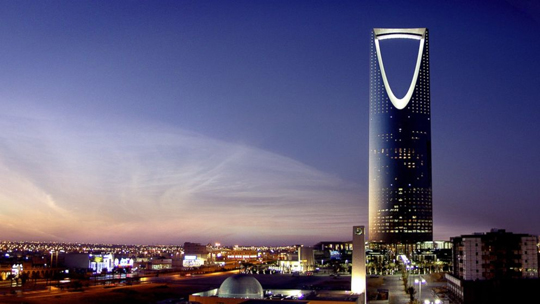
Jeddah, Jan 10: Saudi Arabia has come third in a poll for the world’s happiest countries – in a list which features almost no European. The research was carried out by WIN/Gallup International, a polling association which interviewed 66,040 people from 68 countries.

The kingdom has only been pipped to top position by Fiji and Colombia.
saudi

At an average temperature of about 26C in January, the beautiful Fiji islands have an evident advantage.

Fiji has an average all-year round temperature of 26 C and apparently happy citizens.

Indeed, nearby Mexico ranked as the world’s eighth happiest country.

The findings suggest that either people have different perceptions of what “happiness” means, or that material wealth, ideological freedom and civil stability do not necessarily translate into personal contentedness.

China and Fiji are also two of the most hopeful nations, with China also the third most optimistic about economic prosperity. Nigerians are the most optimistic about their economy.

Europe, meanwhile, barely made it into the top 10 countries for happiness.

Iceland, which has one of the highest percentage of women working outside the home, was the only European country to make the top 10, sharing joint tenth position with China.

Italy is the least hopeful nation out of their 68 nations surveyed, while Greece is the third most unhappy country – and France and Italy tie as the 10th most unhappy.

As 2015 came to an end, 66% of respondents to the WIN/Gallup International survey said that they are happy, down slightly from 70% in 2014. Of the 66040 people surveyed, 10% said that they were unhappy, up 4% from 2014. Overall, that means that the world is 56% net happy (happiness minus unhappiness). In 2015 the net happiest country in the world is Colombia (85%), in stark contrast the world’s unhappiest country is Iraq at -12% net happiness.

The study showed that 45% of the world is optimistic for the economic outlook in 2016 over double (22%) of those who are pessimistic. It’s perhaps unsurprising that Greece is the most pessimistic (-65% net optimistic) country given their current perilous financial position. The most optimistic nation when it comes to the economy is Nigeria (61% net optimism). When it comes to a demographic breakdown young people prove to be considerably more optimistic than older generations with 31% net optimistic for the under 34s compared to just 13% for the over 55s.

As part of their analysis WIN/Gallup International has grouped the world into three tiers: Prosperous (the G7); Emerging (G20 excluding the original G7) and Aspiring (all others) nations. Whilst there is huge disparity in income levels across these three tiers, the level of net happiness across all three (Prosperous 42%, Emerging 59% and Aspiring 54%) is notably high. However the findings on hope and economic optimism vary markedly across the tiers. According to the global poll, Prosperous nations display the least hope and economic optimism with 6% and -16% respectively; to the contrary Emerging nations are very hopeful about the future and far more optimistic about the economic outlook at 50% and 36% meanwhile the Aspiring nations sit between the two on hope (29%) and economic optimism (16%).

Jean-Marc Leger, President of the Association, said: “2015 has been a tumultuous year for many across the globe, despite that the world remains largely a happy place. 45% of the world is optimistic regarding the economic outlook for 2016, up by 3 percent compared to last year.”

Comments

Add new comment

  • Coastaldigest.com reserves the right to delete or block any comments.
  • Coastaldigset.com is not responsible for its readers’ comments.
  • Comments that are abusive, incendiary or irrelevant are strictly prohibited.
  • Please use a genuine email ID and provide your name to avoid reject.
Agencies
July 31,2020

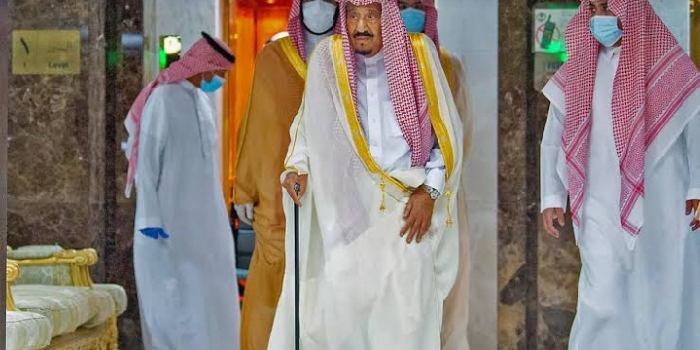
Makkah, Jul 31: Organising this year's scaled-down hajj required "double efforts" by Saudi authorities amid the coronavirus pandemic, King Salman said Friday after being discharged from hospital following gall bladder surgery.

Only up to 10,000 people already residing in the kingdom are participating in this year's pilgrimage, compared with 2019's gathering of some 2.5 million from around the world.

"Holding the ritual in the shadow of this pandemic... required reducing the numbers of pilgrims, but it obliged various official agencies to put in double efforts," 84-year-old King Salman said in a speech read out on state television by acting media minister Majid Al-Qasabi.

"The hajj this year was restricted to a very limited number of people from multiple nationalities, ensuring the ritual was completed despite the difficult circumstances," he said.

The speech came on the occasion of Eid al-Adha, the Muslim festival of sacrifice, a day after the king left hospital following a 10-day stay for surgery to remove his gall bladder.

The hajj, which began on Wednesday, is one of the five pillars of Islam and a must for able-bodied Muslims at least once in their lifetime.

Authorities implemented the "highest health precautions" during the rituals, the king said.

Pilgrims, who were all tested for the virus, are required to wear masks and observe social distancing.

For Friday's "stoning of the devil", the last major ritual of the hajj, Saudi authorities offered the pilgrims pebbles that were sanitised to protect against the pandemic.

In a sign that its strict measures were working, the health ministry reported no coronavirus cases in the holy sites on Wednesday or Thursday.

Comments

Add new comment

  • Coastaldigest.com reserves the right to delete or block any comments.
  • Coastaldigset.com is not responsible for its readers’ comments.
  • Comments that are abusive, incendiary or irrelevant are strictly prohibited.
  • Please use a genuine email ID and provide your name to avoid reject.
Khaleej Times
May 27,2020

Dubai, May 27: As the authorities have taken steps to ease the Covid-19 restrictions to allow the people of Dubai to resume sporting activities from Wednesday, May 27, the Dubai Sports Council has answered your key questions.

Q&A

What are the age groups allowed to practice sports during this period?

From 12 years old to 60 years old.

Is it required to do the Coronavirus (Covid 19) medical test certificate before resuming physical activity?

Returning to the activity does not require a Coronavirus (Covid 19) test certificate.

Is it allowed for the elderly with chronic diseases to return to sports activities in fitness and yoga centers?

No, it is not allowed.

Is it allowed to use the shower cabins and bathrooms in fitness and yoga centers?

Shower cabins, saunas and jacuzzis are not allowed, while bathrooms are allowed, with sterilisation being emphasised after each use.

What sports can resume its activities?

All sports except water sports/swimming and that are practiced indoors and swimming pools.

What is the approved operational percentage within the sports facility?

A maximum 50% capacity

Comments

Add new comment

  • Coastaldigest.com reserves the right to delete or block any comments.
  • Coastaldigset.com is not responsible for its readers’ comments.
  • Comments that are abusive, incendiary or irrelevant are strictly prohibited.
  • Please use a genuine email ID and provide your name to avoid reject.
News Network
July 23,2020

Beirut, Jul 23: The pandemic will exact a heavy toll on Arab countries, causing an economic contraction of 5.7% this year, pushing millions into poverty and compounding the suffering of those affected by armed conflict, a U.N. report said Thursday.

The U.N.'s Economic and Social Commission for Western Asia expects some Arab economies to shrink by up to 13%, amounting to an overall loss for the region of $152 billion.

Another 14.3 million people are expected to be pushed into poverty, raising the total number to 115 million — a quarter of the total Arab population, it said. More than 55 million people in the region relied on humanitarian aid before the COVID-19 crisis, including 26 million who were forcibly displaced.

Arab countries moved quickly to contain the virus in March by imposing stay-at-home orders, restricting travel and banning large gatherings, including religious pilgrimages.

Arab countries as a whole have reported more than 830,000 cases and at least 14,717 deaths. That equates to an infection rate of 1.9 per 1,000 people and 17.6 deaths per 1,000 cases, less than half the global average of 42.6 deaths, according to the U.N.

But the restrictions exacted a heavy economic toll, and authorities have been forced to ease them in recent weeks. That has led to a surge in cases in some countries, including Lebanon, Iraq and the Palestinian territories.

Wealthy Gulf countries were hit by the pandemic at a time of low oil prices, putting added strain on already overstretched budgets. Middle-income countries like Jordan and Egypt have seen tourism vanish overnight and a drop in remittances from citizens working abroad.

War-torn Libya and Syria have thus far reported relatively small outbreaks. But in Yemen, where five years of civil war had already generated the world's worst humanitarian crisis, the virus is running rampant in the government-controlled south while rebels in the north conceal its toll.

Rola Dashti, the head of the U.N. commission, said Arab countries need to “turn this crisis into an opportunity” and address longstanding issues, including weak public institutions, economic inequality and over-reliance on fossil fuels.

“We need to invest in survival, survival of people and survival of businesses,” she said.

Comments

Add new comment

  • Coastaldigest.com reserves the right to delete or block any comments.
  • Coastaldigset.com is not responsible for its readers’ comments.
  • Comments that are abusive, incendiary or irrelevant are strictly prohibited.
  • Please use a genuine email ID and provide your name to avoid reject.