


Saudi Arabia third happiest country in the world: Survey

January 10, 2016

Jeddah, Jan 10: Saudi Arabia has come third in a poll for the world’s happiest countries – in a list which features almost no European. The research was carried out by WIN/Gallup International, a polling association which interviewed 66,040 people from 68 countries.

The kingdom has only been pipped to top position by Fiji and Colombia.
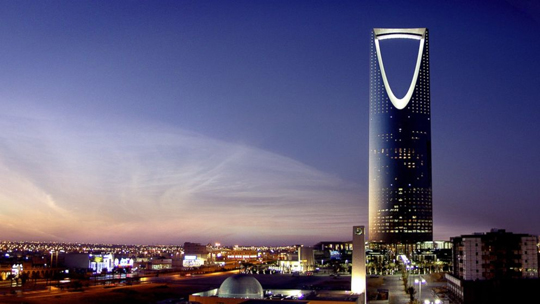
saudi

At an average temperature of about 26C in January, the beautiful Fiji islands have an evident advantage.

Fiji has an average all-year round temperature of 26 C and apparently happy citizens.

Indeed, nearby Mexico ranked as the world’s eighth happiest country.

The findings suggest that either people have different perceptions of what “happiness” means, or that material wealth, ideological freedom and civil stability do not necessarily translate into personal contentedness.

China and Fiji are also two of the most hopeful nations, with China also the third most optimistic about economic prosperity. Nigerians are the most optimistic about their economy.

Europe, meanwhile, barely made it into the top 10 countries for happiness.

Iceland, which has one of the highest percentage of women working outside the home, was the only European country to make the top 10, sharing joint tenth position with China.

Italy is the least hopeful nation out of their 68 nations surveyed, while Greece is the third most unhappy country – and France and Italy tie as the 10th most unhappy.

As 2015 came to an end, 66% of respondents to the WIN/Gallup International survey said that they are happy, down slightly from 70% in 2014. Of the 66040 people surveyed, 10% said that they were unhappy, up 4% from 2014. Overall, that means that the world is 56% net happy (happiness minus unhappiness). In 2015 the net happiest country in the world is Colombia (85%), in stark contrast the world’s unhappiest country is Iraq at -12% net happiness.

The study showed that 45% of the world is optimistic for the economic outlook in 2016 over double (22%) of those who are pessimistic. It’s perhaps unsurprising that Greece is the most pessimistic (-65% net optimistic) country given their current perilous financial position. The most optimistic nation when it comes to the economy is Nigeria (61% net optimism). When it comes to a demographic breakdown young people prove to be considerably more optimistic than older generations with 31% net optimistic for the under 34s compared to just 13% for the over 55s.

As part of their analysis WIN/Gallup International has grouped the world into three tiers: Prosperous (the G7); Emerging (G20 excluding the original G7) and Aspiring (all others) nations. Whilst there is huge disparity in income levels across these three tiers, the level of net happiness across all three (Prosperous 42%, Emerging 59% and Aspiring 54%) is notably high. However the findings on hope and economic optimism vary markedly across the tiers. According to the global poll, Prosperous nations display the least hope and economic optimism with 6% and -16% respectively; to the contrary Emerging nations are very hopeful about the future and far more optimistic about the economic outlook at 50% and 36% meanwhile the Aspiring nations sit between the two on hope (29%) and economic optimism (16%).

Jean-Marc Leger, President of the Association, said: “2015 has been a tumultuous year for many across the globe, despite that the world remains largely a happy place. 45% of the world is optimistic regarding the economic outlook for 2016, up by 3 percent compared to last year.”

Comments

Add new comment

  • Coastaldigest.com reserves the right to delete or block any comments.
  • Coastaldigset.com is not responsible for its readers’ comments.
  • Comments that are abusive, incendiary or irrelevant are strictly prohibited.
  • Please use a genuine email ID and provide your name to avoid reject.
News Network
July 1,2020

Riyadh, Jul 1: Saudis braced Wednesday for a tripling in value added tax, another unpopular austerity measure after the twin shocks of coronavirus and an oil price slump triggered the kingdom's worst economic decline in decades.

Retailers in the country reported a sharp uptick in sales this week of everything from gold and electronics to cars and building materials, as shoppers sought to stock up before VAT is raised to 15 percent.

The hike could stir public resentment as it weighs on household incomes, pushing up inflation and depressing consumer spending as the kingdom emerges from a three-month coronavirus lockdown.

"Cuts, cuts, cuts everywhere," a Saudi teacher in Riyadh told AFP, bemoaning vanishing subsidies as salaries remain stagnant.

"Air conditioner, television, electronic items," he said, rattling off a list of items he bought last week ahead of the VAT hike.

"I can't afford these things from Wednesday."

With its vast oil wealth funding the Arab world's biggest economy, the kingdom had for decades been able to fund massive spending with no taxes at all.

It only introduced VAT in 2018, as part of a push to reduce its dependence on crude revenues.

Then, seeking to shore up state finances battered by sliding oil prices and the coronavirus crisis, it announced in May that it would triple VAT and halt a cost-of-living monthly allowance to citizens.

The austerity push underscores how Saudi Arabia's once-lavish spending is becoming a thing of the past, with the erosion of the welfare system leaving a mostly young population to cope with reduced incomes and a lifestyle downgrade.

That could pile strain on a decades-old social contract whereby citizens were given generous subsidies and handouts in exchange for loyalty to the absolute monarchy.

The rising cost of living may prompt many to ask why state funds are being lavished on multi-billion-dollar projects and overseas assets, including the proposed purchase of English football club Newcastle United.

Shopping malls in the kingdom have drawn large crowds in recent days as retailers offered "pre-VAT sales" and discounts before the hike kicks in.

A gold shop in Riyadh told AFP it saw a 70 percent jump in sales in recent weeks, while a car dealership saw them tick up by 15 percent.

Once the new rate is in place, businesses are predicting depressed sales of everything from cars to cosmetics and home appliances.

Capital Economics forecast inflation will jump up to six percent year-on-year in July, from 1.1 percent in May, as a result.

"The government ended the country's lockdown (in June) and there are signs that economic activity has started to recover," Capital Economics said in a report.

"Nonetheless, we expect the recovery to be slow-going as fiscal austerity measures bite."

The kingdom also risks losing its edge against other Gulf states, including its principal ally the United Arab Emirates, which introduced VAT at the same time but has so far refrained from raising it beyond five percent.

"Saudi Arabia is taking massive risks with contractionary fiscal policies," said Tarek Fadlallah, chief executive officer of the Middle East unit of Nomura Asset Management.

But the kingdom has few choices as oil revenue declines.

Its finances have taken another blow as authorities massively scaled back this year's hajj pilgrimage, from 2.5 million pilgrims last year to around a thousand already inside the country, and suspended the lesser umrah because of coronavirus.

Together the rites rake in some $12 billion annually.

The International Monetary Fund warned the kingdom's GDP will shrink by 6.8 percent this year -- its worst performance since the 1980s oil glut.

The austerity drive would boost state coffers by 100 billion riyals ($26.6 billion), according to state media.

But the measures are unlikely to plug the kingdom's huge budget deficit.

The Saudi Jadwa Investment group forecasts the shortfall will rise to a record $112 billion this year.

Comments

Add new comment

  • Coastaldigest.com reserves the right to delete or block any comments.
  • Coastaldigset.com is not responsible for its readers’ comments.
  • Comments that are abusive, incendiary or irrelevant are strictly prohibited.
  • Please use a genuine email ID and provide your name to avoid reject.
News Network
July 6,2020

Dubai, July 6: Even as the world’s one of the most sought after tourist destinations is gearing up to welcome foreign tourists from July 7, the authorities have taken necessary measures to prevent the spread of covid-19.

If the foreign tourists want to avoid self-isolation after landing in Dubai International Airport, they have to fetch covid-negative certificates from their home country. The certificate ought to have been issued up to 96 hours prior to the travel.

Those without a cvid-negative certificate, however, will need to undergo a PCR test on arrival at the Dubai airports and self-isolate until they receive their negative results.

"If passengers opt to take the PCR test on arrival in Dubai, they must self-isolate until test results are received. If the test result is negative, passengers can leave the hotel and enjoy the trip as normal. However, if the test result is positive, passengers are asked to follow the advice of the Dubai Health Authority and self-isolate," Emirates said in a statement.

Budget carrier flydubai said if a passenger tests positive for Covid-19, he/she would need to observe a 14-day quarantine. The airline also advised passengers to comply with all the precautionary Covid-19 measures in place in Dubai "including wearing a mask, observing social distancing and washing your hands regularly".

Tourists with Covid-19 symptoms

* If a traveller is suspected to have Covid-19 symptoms, Dubai Airports has the right to re-test to ensure the tourist is free of the virus

*It is mandatory for Covid-positive tourists to isolate themselves at an institutional facility provided by the government for 14 days at their own expense.

Other requirements

*Travel insurance: Tourists must have a travel insurance with Covid-19 cover or declare that they would bear the costs for treatment and isolation if required. "Bring an insurance certificate stating Covid-19 coverage to present at check-in," Emirates said.

*Visa: Referring to visa requirements, Emirates said: "Depending on your nationality you can get a visa on arrival, or you can apply for your visit visa from Dubai Immigration before you travel."

*Health Declaration Form: Tourists need to complete the form that states they are free from Covid-19 symptoms. This must be done before embarking.

*Tracing app: Tourists must download the Covid-19 DXB app and register details. "This is critically important since it facilitates easy coordination and communication with the health authorities if tourists experience Covid-19 symptoms," Dubai authorities had said earlier.

Comments

Add new comment

  • Coastaldigest.com reserves the right to delete or block any comments.
  • Coastaldigset.com is not responsible for its readers’ comments.
  • Comments that are abusive, incendiary or irrelevant are strictly prohibited.
  • Please use a genuine email ID and provide your name to avoid reject.
coastaldigest.com news network
May 24,2020

Abu Dhabi: A senior Hindi teacher at Sunrise School in Abu Dhabi has died of coronavirus, it has been confirmed. Anil Kumar, 50, passed away on Sunday morning, May 24.

The sad and shocking demise of Mr Kumar, a senior Hindi teacher of Sunrise School on May 24, has left the entire Sunrise family in a pall of gloom, read a statement.

“The management, administrators, other faculty members, students and the school as a whole is struck with intense sorrow and is speechless.

“The bond that he had developed over the years, just as how we have with each faculty, makes the loss unbearable. The entire SEPS family is shaken and finds it hard to come to terms with this most saddening news.

“Anil Kumar was a very inspiring teacher. He always brought a creative aspect to the classes he handled and would make it an enjoyable class to attend to. Mr. Anil Kumar had a great way of motivating his students to do their best, and pushed them to be the best they could be. He was a great strength and support to the Department of Hindi, always willing to scaffold and mentor students and teachers. He was a very approachable man, warm and friendly at heart and that is something I will truly miss about Mr. Anil.

“Mr Anil Kumar has left behind his wife and two children. Mrs. Rajini, his wife is also a member of the school family. She is a faculty of the maths department. Our prayers and sincere condolences to each and every one of the family. May God give the strength to endure and face this most challenging phase of their life.”

It is learnt Mr Kumar fell ill with COVID-19 and had been in hospital since May 7.

Comments

Add new comment

  • Coastaldigest.com reserves the right to delete or block any comments.
  • Coastaldigset.com is not responsible for its readers’ comments.
  • Comments that are abusive, incendiary or irrelevant are strictly prohibited.
  • Please use a genuine email ID and provide your name to avoid reject.