


Saudi Arabia third happiest country in the world: Survey

January 10, 2016

Jeddah, Jan 10: Saudi Arabia has come third in a poll for the world’s happiest countries – in a list which features almost no European. The research was carried out by WIN/Gallup International, a polling association which interviewed 66,040 people from 68 countries.

The kingdom has only been pipped to top position by Fiji and Colombia.
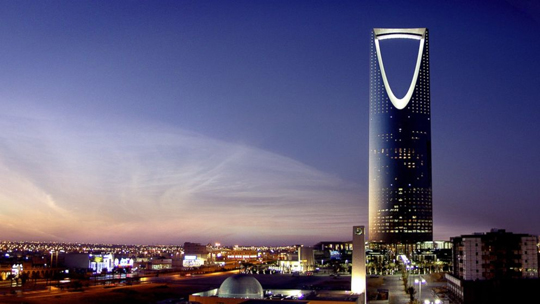
saudi

At an average temperature of about 26C in January, the beautiful Fiji islands have an evident advantage.

Fiji has an average all-year round temperature of 26 C and apparently happy citizens.

Indeed, nearby Mexico ranked as the world’s eighth happiest country.

The findings suggest that either people have different perceptions of what “happiness” means, or that material wealth, ideological freedom and civil stability do not necessarily translate into personal contentedness.

China and Fiji are also two of the most hopeful nations, with China also the third most optimistic about economic prosperity. Nigerians are the most optimistic about their economy.

Europe, meanwhile, barely made it into the top 10 countries for happiness.

Iceland, which has one of the highest percentage of women working outside the home, was the only European country to make the top 10, sharing joint tenth position with China.

Italy is the least hopeful nation out of their 68 nations surveyed, while Greece is the third most unhappy country – and France and Italy tie as the 10th most unhappy.

As 2015 came to an end, 66% of respondents to the WIN/Gallup International survey said that they are happy, down slightly from 70% in 2014. Of the 66040 people surveyed, 10% said that they were unhappy, up 4% from 2014. Overall, that means that the world is 56% net happy (happiness minus unhappiness). In 2015 the net happiest country in the world is Colombia (85%), in stark contrast the world’s unhappiest country is Iraq at -12% net happiness.

The study showed that 45% of the world is optimistic for the economic outlook in 2016 over double (22%) of those who are pessimistic. It’s perhaps unsurprising that Greece is the most pessimistic (-65% net optimistic) country given their current perilous financial position. The most optimistic nation when it comes to the economy is Nigeria (61% net optimism). When it comes to a demographic breakdown young people prove to be considerably more optimistic than older generations with 31% net optimistic for the under 34s compared to just 13% for the over 55s.

As part of their analysis WIN/Gallup International has grouped the world into three tiers: Prosperous (the G7); Emerging (G20 excluding the original G7) and Aspiring (all others) nations. Whilst there is huge disparity in income levels across these three tiers, the level of net happiness across all three (Prosperous 42%, Emerging 59% and Aspiring 54%) is notably high. However the findings on hope and economic optimism vary markedly across the tiers. According to the global poll, Prosperous nations display the least hope and economic optimism with 6% and -16% respectively; to the contrary Emerging nations are very hopeful about the future and far more optimistic about the economic outlook at 50% and 36% meanwhile the Aspiring nations sit between the two on hope (29%) and economic optimism (16%).

Jean-Marc Leger, President of the Association, said: “2015 has been a tumultuous year for many across the globe, despite that the world remains largely a happy place. 45% of the world is optimistic regarding the economic outlook for 2016, up by 3 percent compared to last year.”

Comments

Add new comment

  • Coastaldigest.com reserves the right to delete or block any comments.
  • Coastaldigset.com is not responsible for its readers’ comments.
  • Comments that are abusive, incendiary or irrelevant are strictly prohibited.
  • Please use a genuine email ID and provide your name to avoid reject.
Agencies
August 8,2020

Beirut, Aug 7: A devastating explosion that destroyed much of Beirut might have been the result of a missile attack or bomb, Lebanese President Michel Aoun said, as the death toll from the blast rose to 154.

More than 2,700 tons of ammonium nitrate had been sitting in a port warehouse for six years, but there have been conflicting accounts about why Lebanese authorities decided to empty the shipment of explosive material. The vessel carrying the flammable cargo was heading from Georgia to Mozambique when it stopped in the Lebanese port to load up on iron, according to the ship’s captain.

By Friday, 19 suspects had been arrested and Lebanon’s former director general of customs Chafic Merhy had been questioned by military police.

Comments

Add new comment

  • Coastaldigest.com reserves the right to delete or block any comments.
  • Coastaldigset.com is not responsible for its readers’ comments.
  • Comments that are abusive, incendiary or irrelevant are strictly prohibited.
  • Please use a genuine email ID and provide your name to avoid reject.
News Network
June 12,2020

Beirut, Jun 12: Angry Lebanese protesters blocked roads across the country with burning tyres, debris and their vehicles, incensed over the local currency's depreciation by more than 25 percent in just two days.

The demonstrations from northern Akkar and Tripoli to central Zouk, the eastern Bekaa Valley, Beirut and southern Tyre and Nabatieh on Thursday were some of the most widespread in months of upheaval over a calamitous economic and financial crisis.

Protesters set ablaze a branch of the Central Bank, vandalised several private banks and clashed with security forces in several areas. At least 41 people were injured in Tripoli alone, according to the Lebanese Red Cross.

"I'm really pissed off, that's all. If politicians think they can burn our hearts like this the fire is going to reach them too," unemployed computer engineer Ali Qassem, 26, told Al Jazeera after pouring fuel onto smouldering tyres on a main Beirut thoroughfare.

Tens of thousands of Lebanese have lost jobs in the past six months and hundreds of businesses have shuttered as a dollar shortage led the Lebanese pound to slide from 1,500 to $1 last summer - where it was pegged for 23 years - to roughly 4,000 for each US dollar last month.

But the slide turned into a freefall between Wednesday and Thursday when the pound plummeted to roughly 5,000 to $1 on black markets, which have become a main source of hard currency. There was widespread speculation the rate hit 6,000 or even 7,000 pounds to the dollar, though most markets stopped trading.

Protesters began amassing on streets across the country before sunset and increased into the thousands across the country as the night fell.

Prime Minister Hassan Diab cancelled all meetings scheduled for Friday to hold an emergency cabinet session at 9:30am and another at 3pm at the presidential palace to be headed by President Michel Aoun.

The pound's collapse is the perhaps the biggest challenge yet for Diab's young cabinet, which gained confidence in February after former prime minister Saad Hariri's government was toppled by an unprecedented October uprising that had the country's economic crisis at its core.

Economy Minister Raoul Nehme told Al Jazeera that there was "disinformation" being circulated about the exchange rate on social media and said he was investigating possible currency manipulation.

"I don't understand how the exchange rate increased by so much in two days," he said.

Many protesters have pitted blame on Central Bank governor Riad Salameh, nominally in charge of  keeping the currency stable. But they have also called on the government to resign.

"If people want reform between dawn and dusk, that's not going to work, and if someone thinks they can do a better job then please come forward," Nehme said.

"But what we can't have is a power vacuum - then the exchange rate won't be 5000, it'll be a catastrophe."

'Everyone paying the price'

When protesters set a large fire in Beirut's Riad al-Solh Square, which lies at the foot of a grand Ottoman-era building that serves as the seat of government, firefighters did not intervene to extinguish it.

It later became clear why: Civil Defence told local news channel LBCI they had run out of diesel to fuel their firetrucks.

Basic imports such as fuel have been hit hard by the currency crisis, making already-weak state services increasingly feeble.

A half-dozen or so police officers with Lebanon's Internal Security Forces observed the scene unfolding in front of them in the square.

"Why do you destroy shops and things and attack us security forces - do you think we're happy? Go and f****** break that wall or go to the politicians' houses," one police officer told Al Jazeera, referring to a large concrete barrier separating protesters from the seat of government.

"In the end we are with you and we want the country to change. Don't you dare think we're happy. My salary is now worth $130," the officer said.

The currency's spectacular fall seems to have pushed many Lebanese to put common interests above their differences.

Large convoys of men on motorbikes from Shia-majority areas of southern Beirut joined the demonstrations on Thursday, though they have clashed with protesters many times before - including at a protest on Saturday.

Some chanted sectarian insults, leading to brief clashes in areas that were formerly front lines during the country's devastating 15-year civil war.

Instead, the motorbike-riding demonstrators on Thursday chanted: "Shia, Sunni, F*ck sectarianism."

"We are Shia, and Sunnis and Christian are our brothers," Hisham Houri, 39, told Al Jazeera, perched on a moped with his fiancee behind him just a few metres from a pile of burning tyres.

The blaze sent thick black smoke into the sky towards an iconic blue-domed mosque and church in downtown Beirut.

"Politicians play on these sectarian issues and sometimes succeed, but in the end, they'll fail because all the people have been hurt," he said. "The dollar isn't just worth 6,000 for Shias or for Sunnis, everyone is paying that price."

Comments

Add new comment

  • Coastaldigest.com reserves the right to delete or block any comments.
  • Coastaldigset.com is not responsible for its readers’ comments.
  • Comments that are abusive, incendiary or irrelevant are strictly prohibited.
  • Please use a genuine email ID and provide your name to avoid reject.
News Network
April 13,2020

Dubai, Apr 13: The UAE plans to impose "strict restrictions" on countries reluctant to take back their nationals working in the Gulf country in the wake of the coronavirus outbreak and restructure its cooperation and labour relations with them, a state-run media report said on Sunday.

Indian expatriate community of nearly 33 lakh is the largest ethnic community in UAE constituting roughly about 30 per cent of the country’s population. Among the Indian states, Kerala is the most represented followed by Tamil Nadu and Andhra Pradesh.

The options being considered by the Ministry of Human Resources and Emiratisation include "imposing strict future restrictions on the recruitment" of workers from these countries and activating the "quota" system in recruitment operations, state-run WAM news agency reported, citing an official.

It said the options also include suspending memoranda of understanding signed between the ministry and concerned authorities in these countries.

Citing the unnamed official, it said these options are being considered after many countries did not respond to requests by their nationals to return home following the coronavirus outbreak.

The official made it clear that all countries of foreign workers in the UAE should be responsible for their nationals wishing to return to their countries as part of the humanitarian initiative launched recently by the ministry.

Earlier this month, the ministry launched the initiative to enable residents who work in the UAE and wish to return to their countries to do so during the period of precautionary measures undertaken in the UAE to contain the spread of the coronavirus.

Employees will be asked to submit their annual leave dates or agree with their employers on unpaid leave.

UAE's Ambassador to India Ahmed Abdul Rahman Al Banna has said that the Ministry of Foreign Affairs and International Cooperation (MOFAIC) had sent out a “note verbale” to all the embassies in the UAE, including the Indian mission, during the past couple of weeks on the issue.

“We have sent the note verbale and all the embassies have been informed including the Indian embassy in the UAE and even the Ministry of External Affairs in India,” Al Banna told Gulf News over phone on Saturday.

He said the UAE has offered to test those who want to be evacuated.

“We are assuring everybody that we have the best of the facilities, the best of the testing centres and we have tested more than 500,000 people,” he said.

“We are assuring them also of our cooperation to fly those who got stranded in the UAE for some reasons. Some got stuck because of the lockdown and closure of airports in India. Some were visiting the UAE.”

“We are offering our system and making sure that they are good (to fly) by doing all the tests and transport them according to the request of their own government,” he said.

The envoy said those who test positive for COVID-19 will remain in the UAE. “They will be treated in our home facilities,” he added.

The Kerala High Court on Saturday sought the central government's response to a petition seeking a direction to bring back Indians stranded in the UAE in view of the coronavirus outbreak in the gulf nation.

Considering the plea by Kerala Muslim Cultural Centre (KMCC) in Dubai, the court directed the Centre to file an affidavit on the steps taken by it to ensure the safety of Indians living there and bring back those stuck in the Gulf countries.

In its plea, KMCC, the organisation for non-resident Indians from Kerala, sought directions to the Ministries of External Affairs and Civil Aviation to provide exemptions in the international air travel ban to bring back those Indians stranded in the UAE.

Comments

Add new comment

  • Coastaldigest.com reserves the right to delete or block any comments.
  • Coastaldigset.com is not responsible for its readers’ comments.
  • Comments that are abusive, incendiary or irrelevant are strictly prohibited.
  • Please use a genuine email ID and provide your name to avoid reject.