


Saudi Aramco has emerged from attacks ‘stronger than ever’: CEO

Agencies
September 22, 2019

Riyadh, Sept 22: Saudi Aramco has emerged from attacks on its oil facilities “stronger than ever,” Chief Executive Amin Nasser told employees in a message, adding that full oil production would resume by the end of this month.

The Sept. 14 attacks on the Abqaiq and Khurais plants, some of the kingdom’s biggest, caused raging fires and significant damage that halved the crude output of the world’s top oil exporter, by shutting down 5.7 million barrels per day of production.

“The fires that were intended to destroy Saudi Aramco had an unintended consequence: they galvanized 70,000 of us around a mission to rebound quickly and confidently, and Saudi Aramco has come out of this incident stronger than ever,” Nasser said in the internal message, on the occasion of the Saudi national day, to be celebrated on Sept. 23.

“Every second counts in moments like these, and had we not acted quickly to contain the fires and undertake rapid restoration efforts, the impact on the oil market and the global economy would have been far more devastating.”

Six days after the assault, which hit at the heart of the Saudi energy industry and intensified a decades-long struggle with arch-rival Iran, the state oil giant Aramco invited reporters on Friday to observe the damage and the repair efforts.

Thousands of employees and contractors have been pulled from other projects to work around the clock to bring production back. Aramco is shipping equipment from the United States and Europe to rebuild the damaged facilities, Aramco officials told reporters.

Aramco already brought back part of the lost production and will return to pre-attacks level end of September, Nasser said.

“Not a single shipment to our international customers has been missed or canceled as a result of the attacks, and we will continue to fulfil our mission of providing the energy the world needs,” he said in the message, seen by Reuters.

Energy Minister Prince Abdulaziz bin Salman said on Tuesday that Saudi Arabia had used its reserves to maintain oil supply flows to customers abroad and inside the kingdom.

Yemen’s Houthi group claimed responsibility for the attacks but a US official said they originated from southwestern Iran. Tehran, which support the Houthis, has denied any involvement in the attacks.

Saudi Arabia says 18 drones and three missiles were fired at Abqaiq, the world’s largest oil processing facility, while the Khurais facility was hit by four missiles.

No casualties were reported at either site even though thousands of workers and contractors work and live in the area.

Comments

Add new comment

  • Coastaldigest.com reserves the right to delete or block any comments.
  • Coastaldigset.com is not responsible for its readers’ comments.
  • Comments that are abusive, incendiary or irrelevant are strictly prohibited.
  • Please use a genuine email ID and provide your name to avoid reject.
News Network
April 9,2020

Apr 9: The UAE Cabinet, chaired by His Highness Sheikh Mohammed bin Rashid Al Maktoum, Vice President and Prime Minister of the UAE and Ruler of Dubai, adopted a resolution to grant paid leave to select categories of employees at the federal government.

This move is part of a series of precautionary measures and procedures taken by the UAE government to bring the Covid-19 pandemic under control.

The resolution stipulates that married employees of the federal government may take fully paid leave to take care of their children below the age of 16. The age condition shall not apply to people of determination, as well as in cases where a spouse is subject to self-isolation or quarantine that requires no contact with family members, upon a decision from the Ministry of Health and Prevention.

The resolution also applies to employees whose spouses work in vital health-related occupations, such as doctors, nurses, paramedics and other medical jobs that require exposure to infected people, as well as employees of quarantine centres, throughout the emergency period witnessed by the country.

Pursuant to the resolution, the relevant ministry or federal authority may ask employees holding essential technical occupations to work remotely instead of taking leave.

The resolution was issued in line with the UAE government's keenness to support employees and provide them with a safe and healthy working environment, as well as to protect the health and safety of government employees and their families, during the current crisis that requires greater efforts, additional working hours, and in some cases, exposure to infected people.

Comments

Add new comment

  • Coastaldigest.com reserves the right to delete or block any comments.
  • Coastaldigset.com is not responsible for its readers’ comments.
  • Comments that are abusive, incendiary or irrelevant are strictly prohibited.
  • Please use a genuine email ID and provide your name to avoid reject.
Agencies
July 31,2020

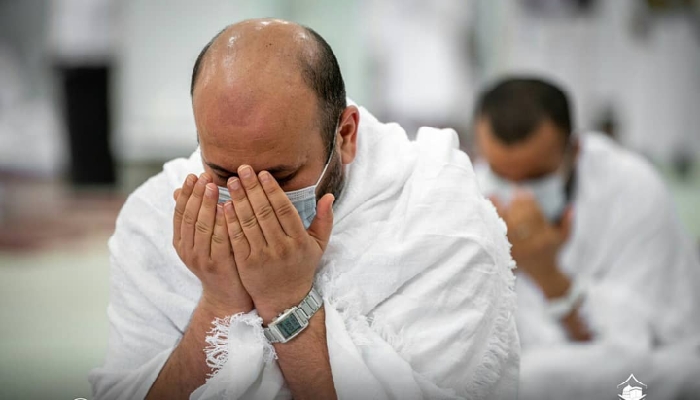
Mount Arafat, July 30: Muslim pilgrims converged Thursday on Saudi Arabia's Mount Arafat for the climax of this year's hajj, the smallest in modern times and a sharp contrast to the massive crowds of previous years.

A tight security cordon has been erected all around the foot of the rocky hill outside Mecca, also known as Jabal al-Rahma or Mount of Mercy.

Pilgrims, donning masks and observing social distancing, were brought in buses from neighbouring Mina, state television showed, as Saudi authorities impose measures to prevent a coronavirus outbreak.

They were subject to temperature checks and attended a sermon -- which state media said was translated into 10 languages -- before they set off on the climb to the summit for hours of Koran recitals and prayers to atone for their sins.

The scene was strikingly different to last year's ritual when a sea of pilgrims ascended Mount Arafat, marshalled by tens of thousands of stewards in a bid to prevent any crushes.

After sunset prayers, pilgrims will make their way down Mount Arafat to Muzdalifah, another holy site where they will sleep under the stars to prepare for the final stage of hajj, the symbolic "stoning of the devil".

It takes place on Friday and also marks the beginning of Eid al-Adha, the festival of sacrifice.

The hajj, one of the five pillars of Islam and a must for able-bodied Muslims at least once in their lifetime, is usually one of the world's largest religious gatherings.

But only up to 10,000 people already residing in the kingdom will participate in this year's ritual, compared with 2019's gathering of some 2.5 million from around the world.

"You are not our guests but those of God, the custodian of the two holy mosques (Saudi Arabia's King Salman) and the nation," Hajj Minister Mohammad Benten said in a video released by the media ministry on Wednesday.

Security cordon

A security cordon has been thrown around the holy sites to prevent any security breaches, an interior ministry spokesman said.

Riyadh faced strong criticism in 2015 when some 2,300 worshippers were killed in the deadliest stampede in the gathering's history.

But this year, those risks are greatly reduced by the much smaller crowd.

The pilgrims have all been tested for the virus, and foreign journalists were barred from this year's hajj, usually a huge global media event.

As part of the rites completed over five days in the holy city of Mecca and its surroundings, the pilgrims converged on Mount Arafat after spending the night in Mina.

A district of Mecca, Mina sits in a narrow valley surrounded by rocky mountains, and is transformed each year into a vast encampment for pilgrims.

They began the hajj on Wednesday with their first "tawaf", the circumambulation of the Kaaba, a large structure in Mecca’s Grand Mosque towards which Muslims around the world pray.

The Kaaba is draped in a black cloth embroidered in gold with Koranic verses and known as the kiswa, which is changed each year during the pilgrimage.

Pilgrims were brought inside the mosque in small batches, walking along paths marked on the floor, in sharp contrast to the normal sea of humanity that swirls around the Kaaba during hajj.

Comments

Add new comment

  • Coastaldigest.com reserves the right to delete or block any comments.
  • Coastaldigset.com is not responsible for its readers’ comments.
  • Comments that are abusive, incendiary or irrelevant are strictly prohibited.
  • Please use a genuine email ID and provide your name to avoid reject.
News Network
April 28,2020

Dubai, Apr 28: Riyadh municipality has announced 13 requirements to restore commercial activity in malls starting Wednesday (April 29), in accordance with the government’s coronavirus precautionary measures.

The requirements include: the continued closure of all entertainment and playing areas inside malls, and not allowing the entry of children under the age of 15.

The municipality requires all malls to ensure the availability of medical examination and sterilization teams to measure the temperature of all individuals entering the mall at all entrances throughout opening hours, prevent any person with a temperature exceeding 38 degrees Celsius from entering, remove all chairs and benches in the corridors, and provide masks and gloves for visitors at the entrances.

All malls are to have security personnel stationed at all entrances to ensure that visitors are wearing masks.

The municipality also requires all malls to sterilize the entire facility every 24 hours, allocate rooms for medical isolation when there is any suspicion of an individual being infected with COVID-19, ensure the presence of a sufficient number of security personnel, and carry out regular rounds to verify full compliance, and suspend the valet service.

It also called for malls to put up explanatory signs of the guidelines to ensure that everyone understands the precautionary measures.

Malls should rely on the use of escalators and stairs for movement between floors, and in the event they are not available, only two people are allowed to ride the elevator at a time.

Revised curfew

Saudi Arabia had revised on April 21 its coronavirus curfew timings for the holy month of Ramadan, allowing residents in all areas and cities not currently under a 24-horu lockdown to go out between 9 a.m. and 5 p.m.

However, areas under a complete lockdown will only be allowed to go out for essential needs, such as grocery shopping or medical visits, between the hours of 9 a.m. and 5 p.m. Residents in these areas must stay within their neighborhoods

A 24-hour lockdown was previously imposed on the cities of Riyadh, Tabuk, Dammam, Dhahran, and Hofuf and throughout the governorates of Jeddah, Taif, Qatif, and Khobar.

The government had imposed a full lockdown on the holy cities of Makkah and Madinah as well. Other cities and governorates had a curfew implemented from 3 p.m. to 6 a.m. daily.

Comments

Add new comment

  • Coastaldigest.com reserves the right to delete or block any comments.
  • Coastaldigset.com is not responsible for its readers’ comments.
  • Comments that are abusive, incendiary or irrelevant are strictly prohibited.
  • Please use a genuine email ID and provide your name to avoid reject.