


Saudi based Islamic bank enters India, first branch in Gujarat

[email protected] (CD Network)
June 1, 2016

Ahmedabad, Jun 1: The Saudi Arabia-based Islamic Development Bank (IDB) is set to start its India operations from Gujarat. The international financial institution which has its headquarters in Jeddah has chosen the home state of Prime Minister Narendra Modi to set up its first branch in India. The state will also get 30 medical vans as part of IDB's social sector initiatives.
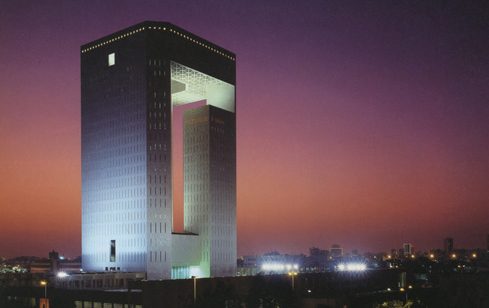
jeddah

Islamic Development Bank headquarters located in Saudi Arabia's Jeddah.

IDB's main objective is to foster the economic development and social progress of member countries as well as the Muslim community in accordance with principles of Shariah (Islamic law). The bank has 56 Islamic countries as its members.

The developments follow an agreement between India's state-owned Exim Bank and the Islamic Corporation for the Development of the Private Sector (ICD), a private-sector arm of the IDB group, as part of deals signed during Modi's trip to Saudi Arabia in April.

The IDB, a multilateral lender with an authorised capital of $100 billion, counts 56 Muslim nations as its members. Most of these countries belong to the Organisation of Islamic Cooperation.

ISLAMIC BANKING: SOME FACTS 

  • It is a finance system based on the principle of not charging interest, which is prohibited under Islam. Now, it goes by a more formal moniker – participatory banking.
  • Instead of charging interest, the lender shares a part of the profit – or loss – with the borrower
  • It is open to non-Muslims as well
  • By 2020, the global Islamic banking industry profit pool is expected to reach $30.3 billion.

Its India operations will be led by Zafar Sareshwala, a prominent Muslim businessman from Gujarat whom the Modi government appointed chancellor of the Maulana Azad National Urdu University soon after assuming office.

The agreement in Jeddah was signed by Exim Bank regional head Tarun Sharma and ICD CEO Khaled Al Aboodi in the presence of Ahmad Javed, India's ambassador to Saudi Arabia.

To be based in Ahmedabad, the bank will offer interest-free capital to business startups, including small and medium enterprises within India, marking the entry of the Islamic banking – also known as participatory banking – into the country.

According to an Exim Bank statement, the IDB's bigger role will be in the $100 million (about Rs 670 crore) credit line it has pledged “with the aim of facilitating the export of goods and services from India to ICD's member countries”.

“The ICD will be open for business to all Indians, regardless of religious background. In Malaysia, the KFC chain runs on ICD finance although it is owned by a Chinese firm. Some people have this unnecessary issue with Islamic banking, which is actually known as participatory banking across the globe now,” said Sareshwala, who has been named as a director for the bank's India operations.

The IDB has also promised $55m (about Rs 380 crore) for a state-of-the-art rural mobile medical network – the first leg of which will be launched in Gujarat.

The IDB, which complies with global Islamic finance norms, does not charge interest on loans because the religion prohibits it. Instead, it charges a part of the profit and also shares any losses with the borrower.

According to the EY's World Islamic Banking Competitiveness Report 2016, Global Islamic banking assets would have reached US$1 trillion by 2015-end.

Comments

Ahmed
 - 
Thursday, 2 Jun 2016

Poorna Prakash, Mangalore
We have since long following banks
Catholic Syrian Bank
Nakodar Hindu Bank
The Hindu Co-Operative Bank Ltd.

But, you have a problem as soon as we get a Islamic bank.
This is nothing else but, intolerance.

Don't forget another bank: The Hindu Vote Bank.

Rikaz
 - 
Wednesday, 1 Jun 2016

Why feku's state is getting all of those facilities? why don't they bring it to Karnataka....

suresh
 - 
Wednesday, 1 Jun 2016

All the investment only to gujarat? Why? This investment will be mis used by Gujju's as it says if the business in loss it will be shared by both. gujju's are well known how to make them fool. This will create more mallya;s in Gujarat.

moshu
 - 
Wednesday, 1 Jun 2016

Hope one day rss will understand islam well and will follow the rule of Allah

moshu
 - 
Wednesday, 1 Jun 2016

Siddarth mumbai openly backing his hawala racket crooks operating by his modi govt

Naren kotian
 - 
Wednesday, 1 Jun 2016

It is done to curb India's black money outflow and inflow by hawala means ..since 90% of hawala transactions are mostly encouraged by just particular section ...anyways since they have given 100 million credit line ..so we have ample opportunity to export pig related products to 56 Islamic countries ..hahaha ...nia monitoring is must as terrorists are most likely to use this bank ...

muhammed rafique
 - 
Wednesday, 1 Jun 2016

Appreciate Modi's wisdom in realising the importance of Islamic banking

Rizwan
 - 
Wednesday, 1 Jun 2016

Good initiative by P.M , i appreciate his move. Both india and KSA will be benifited by this.

Asif
 - 
Wednesday, 1 Jun 2016

Al Hamdlillah... itrs great news... waiting from a long time... hope it soon opens its branches all over India.

Add new comment

  • Coastaldigest.com reserves the right to delete or block any comments.
  • Coastaldigset.com is not responsible for its readers’ comments.
  • Comments that are abusive, incendiary or irrelevant are strictly prohibited.
  • Please use a genuine email ID and provide your name to avoid reject.
coastaldigest.com news network
July 8,2020

Mangaluru, July 8: Dakshina Kannada on Wednesday recorded its highest single-day spike in Covid-19 cases with 183 cases reported in the district, while Udupi reported 31 new cases.

DK also recorded two more fatalities – both patients with co-morbid conditions — taking the total death toll in the district to 28. Udupi has recorded three Covid-19 deaths.

The fresh spike saw total positive cases in DK shoot up to 1,542 and active cases to 819. As many as 12 patients were discharged from hospital on Wednesday. The positivity rate in the district now stands at 0.07 %. Health authorities as on date have received 22,181 samples and 20,153 out of 21,695 samples tested have turned out negative.

MLA’s gunman tests positive

The gunman assigned to former minister U T Khader tested positive on Wednesday and three others who were with him in the escort vehicle have been quarantined, said city police commissioner Vikash Kumar Vikash. A section of police commissioner’s office was shut for sanitisation as per protocol after staff working there were treated as primary contacts. The office per se has not been sealed contrary to ‘reports’ doing rounds in social media, he said.

Deputy commissioner Sindhu B Rupesh said the district reported two deaths — one late on Tuesday and the other during the day. The victims are a 57-year-old man and 32-year-old youth. Two of the 183 cases were secondary contacts, 25 were cases of influenza like illness, four cases of SARI, one a case of inter district travel, two with interstate travel, five with international travel history, 22 random samples and five pre-surgery samples.

Udupi district recorded 31 new cases taking the total positive cases recorded as on date to 1,421. Discharge of 1,189 patients meant that Udupi has 229 active cases.

Meanwhile, Kota Shrinivas Poojari, minister for fisheries on Wednesday inaugurated the Covid-19 lab at district hospital in Udupi. Karkala MLA Sunil Kumar inaugurated ambulance monitoring system to ensure expeditious transfer of infected patients to designated treatment centres.

Comments

Add new comment

  • Coastaldigest.com reserves the right to delete or block any comments.
  • Coastaldigset.com is not responsible for its readers’ comments.
  • Comments that are abusive, incendiary or irrelevant are strictly prohibited.
  • Please use a genuine email ID and provide your name to avoid reject.
News Network
March 27,2020

Bengaluru, Mar 27: In a preparatory measure to tackle any exigency in the backdrop of spread of coronavirus, the Karnataka government has asked district administrations to use as quarantine centres the residential schools and hostels that come the under Social Welfare department.

"Wherever necessary, these residential schools and hostels can be converted as quarantine facility without any extra cost by the district administrations," Deputy Chief Minister Govind Karjol said in a statement.

The total number of COVID-19 cases in Karnataka stood at 55, including two deaths and three discharged persons, as on Thursday.

Karjol, who is also the Minister in-charge of Social Welfare department said, in view of holidays for educational institutions, there were no students staying in the residential schools and hostels and hence they can be used for quarantine purpose.

All the residential schools at hostels in districts and taluks are spacious and have all required facilities like rooms, kitchen, toilets, bathrooms, libraries among others, the Minister said adding most of them were located away from densely populated areas.

Comments

Add new comment

  • Coastaldigest.com reserves the right to delete or block any comments.
  • Coastaldigset.com is not responsible for its readers’ comments.
  • Comments that are abusive, incendiary or irrelevant are strictly prohibited.
  • Please use a genuine email ID and provide your name to avoid reject.
Ram Puniyani
January 14,2020

In the beginning of January 2020 two very disturbing events were reported from Pakistan. One was the attack on Nankana Sahib, the holy shrine where Sant Guru Nanak was born. While one report said that the place has been desecrated, the other stated that it was a fight between two Muslim groups. Prime Minister of Pakistan Imran Khan condemned the incident and the main accused Imran Chisti was arrested. The matter related to abduction and conversion of a Sikh girl Jagjit Kaur, daughter of Pathi (One who reads Holy Guru Granth Sahib in Gurudwara) of the Gurudwara. In another incident one Sikh youth Ravinder Singh, who was out on shopping for his marriage, was shot dead in Peshawar.

While these condemnable attacks took place on the Sikh minority in Pakistan, BJP was quick enough to jump to state that it is events like this which justify the Citizenship Amendment Act (CAA). Incidentally CAA is the Act which is discriminatory and relates to citizenship with Religion, which is not as per the norms of Indian constitution. There are constant debates and propaganda that population of Hindus has come down drastically in Pakistan and Bangla Desh. Amit Shah, the Home minister stated that in Pakistan the population of Hindus has come down from 23% at the time of partition to 3.7% at present. And in Bangla Desh it has come down from 22% to present 8%.

While not denying the fact that the religious minorities are getting a rough deal in both these countries, the figures which are presented are totally off the mark. These figures don’t take into consideration the painful migrations, which took place at the time of partition and formation of Bangla Desh later. Pakistan census figures tell a different tale. Their first census was held in 1951. As per this census the overall percentage of Non Muslim in Pakistan (East and West together) was 14.2%, of this in West Pakistan (Now Pakistan) it was 3.44 and in Eat Pakistan it was 23.2. In the census held in Pakistan 1998 it became 3.72%. As far as Bangla Desh is concerned the share of Non Muslims has gone down from 23.2 (1951) to 9.6% in 2011.

The largest minority of Pakistan is Ahmadis, (https://minorityrights.org/country/pakistan/) who are close to 4 Million and are not recognised as Muslims in Pakistan. In Bangla Desh the major migrations of Hindus from Bangla Desh took place in the backdrop of Pakistan army’s atrocities in the then East Pakistan.

As far as UN data on refugees in India it went up by 17% between 2016-2019 and largest numbers were from Tibet and Sri Lanka.  (https://www.un.org/en/development/desa/population/migration/publication…)

The state of minorities is in a way the index of strength of democracy. Most South Asian Countries have not been able to sustain democratic values properly. In Pakistan, the Republic began with Jinnah’s classic speech where secularism was to be central credo of Pakistan. This 11th August speech was in a way what the state policy should be, as per which people of all faiths are free to practice their religion. Soon enough the logic of ‘Two Nation theory” and formation of Pakistan, a separate state for Muslim took over. Army stepped in and dictatorship was to reign there intermittently. Democratic elements were suppressed and the worst came when Zia Ul Haq Islamized the state in collusion with Maulanas. The army was already a strong presence in Pakistan. The popular formulation for Pakistan was that it is ruled by three A’s, Army, America and Allah (Mullah).

Bangla Desh had a different trajectory. Its very formation was a nail in the coffin of ‘two nation theory’; that religion can be the basis of a state. Bangla Desh did begin as a secular republic but communal forces and secular forces kept struggling for their dominance and in 1988 it also became Islamic republic. At another level Myanmar, in the grip of military dictatorship, with democratic elements trying to retain their presence is also seeing a hard battle. Democracy or not, the army and Sanghas (Buddhist Sang has) are strong, in Myanmar as well. The most visible result is persecution of Rohingya Muslims.

Similar phenomenon is dominating in Sri Lanka also where Budhhist Sanghas and army have strong say in the political affairs, irrespective of which Government is ruling. Muslim and Christian minorities are a big victim there, while Tamils (Hindus, Christians etc.) suffered the biggest damage as ethnic and religious minorities. India had the best prospect of democracy, pluralism and secularism flourishing here. The secular constitution, the outcome of India’s freedom struggle, the leadership of Gandhi and Nehru did ensure the rooting of democracy and secularism in a strong way.

India so far had best democratic credentials amongst all the south Asian countries. Despite that though the population of minorities rose mainly due to poverty and illiteracy, their overall marginalisation was order of the day, it went on worsening with the rise of communal forces, with communal forces resorting to identity issues, and indulging in propaganda against minorities.

While other South Asian countries should had followed India to focus more on infrastructure and political culture of liberalism, today India is following the footsteps of Pakistan. The retrograde march of India is most visible in the issues which have dominated the political space during last few years. Issues like Ram Temple, Ghar Wapasi, Love Jihad, Beef-Cow are now finding their peak in CAA.

India’s reversal towards a polity with religion’s identity dominating the political scene was nicely presented by the late Pakistani poetess Fahmida Riaz in her poem, Tum bhi Hum Jaise Nikle (You also turned out to be like us). While trying to resist communal forces has been an arduous task, it is becoming more difficult by the day. This phenomenon has been variously called, Fundamentalism, Communalism or religious nationalism among others. Surely it has nothing to do with the religion as practiced by the great Saint and Sufi traditions of India; it resorts mainly to political mobilization by using religion as a tool.

Comments

Ashi
 - 
Tuesday, 14 Jan 2020

If Malaysia implement similar NRC/CAA, India and China are the loser.

Add new comment

  • Coastaldigest.com reserves the right to delete or block any comments.
  • Coastaldigset.com is not responsible for its readers’ comments.
  • Comments that are abusive, incendiary or irrelevant are strictly prohibited.
  • Please use a genuine email ID and provide your name to avoid reject.