


Saudi based Islamic bank enters India, first branch in Gujarat

[email protected] (CD Network)
June 1, 2016

Ahmedabad, Jun 1: The Saudi Arabia-based Islamic Development Bank (IDB) is set to start its India operations from Gujarat. The international financial institution which has its headquarters in Jeddah has chosen the home state of Prime Minister Narendra Modi to set up its first branch in India. The state will also get 30 medical vans as part of IDB's social sector initiatives.
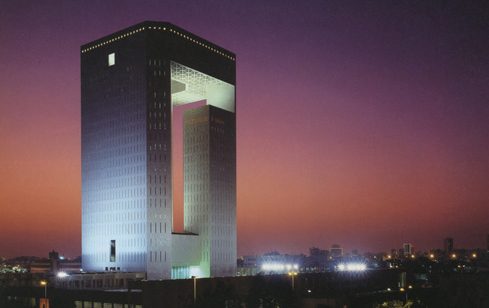
jeddah

Islamic Development Bank headquarters located in Saudi Arabia's Jeddah.

IDB's main objective is to foster the economic development and social progress of member countries as well as the Muslim community in accordance with principles of Shariah (Islamic law). The bank has 56 Islamic countries as its members.

The developments follow an agreement between India's state-owned Exim Bank and the Islamic Corporation for the Development of the Private Sector (ICD), a private-sector arm of the IDB group, as part of deals signed during Modi's trip to Saudi Arabia in April.

The IDB, a multilateral lender with an authorised capital of $100 billion, counts 56 Muslim nations as its members. Most of these countries belong to the Organisation of Islamic Cooperation.

ISLAMIC BANKING: SOME FACTS 

  • It is a finance system based on the principle of not charging interest, which is prohibited under Islam. Now, it goes by a more formal moniker – participatory banking.
  • Instead of charging interest, the lender shares a part of the profit – or loss – with the borrower
  • It is open to non-Muslims as well
  • By 2020, the global Islamic banking industry profit pool is expected to reach $30.3 billion.

Its India operations will be led by Zafar Sareshwala, a prominent Muslim businessman from Gujarat whom the Modi government appointed chancellor of the Maulana Azad National Urdu University soon after assuming office.

The agreement in Jeddah was signed by Exim Bank regional head Tarun Sharma and ICD CEO Khaled Al Aboodi in the presence of Ahmad Javed, India's ambassador to Saudi Arabia.

To be based in Ahmedabad, the bank will offer interest-free capital to business startups, including small and medium enterprises within India, marking the entry of the Islamic banking – also known as participatory banking – into the country.

According to an Exim Bank statement, the IDB's bigger role will be in the $100 million (about Rs 670 crore) credit line it has pledged “with the aim of facilitating the export of goods and services from India to ICD's member countries”.

“The ICD will be open for business to all Indians, regardless of religious background. In Malaysia, the KFC chain runs on ICD finance although it is owned by a Chinese firm. Some people have this unnecessary issue with Islamic banking, which is actually known as participatory banking across the globe now,” said Sareshwala, who has been named as a director for the bank's India operations.

The IDB has also promised $55m (about Rs 380 crore) for a state-of-the-art rural mobile medical network – the first leg of which will be launched in Gujarat.

The IDB, which complies with global Islamic finance norms, does not charge interest on loans because the religion prohibits it. Instead, it charges a part of the profit and also shares any losses with the borrower.

According to the EY's World Islamic Banking Competitiveness Report 2016, Global Islamic banking assets would have reached US$1 trillion by 2015-end.

Comments

Ahmed
 - 
Thursday, 2 Jun 2016

Poorna Prakash, Mangalore
We have since long following banks
Catholic Syrian Bank
Nakodar Hindu Bank
The Hindu Co-Operative Bank Ltd.

But, you have a problem as soon as we get a Islamic bank.
This is nothing else but, intolerance.

Don't forget another bank: The Hindu Vote Bank.

Rikaz
 - 
Wednesday, 1 Jun 2016

Why feku's state is getting all of those facilities? why don't they bring it to Karnataka....

suresh
 - 
Wednesday, 1 Jun 2016

All the investment only to gujarat? Why? This investment will be mis used by Gujju's as it says if the business in loss it will be shared by both. gujju's are well known how to make them fool. This will create more mallya;s in Gujarat.

moshu
 - 
Wednesday, 1 Jun 2016

Hope one day rss will understand islam well and will follow the rule of Allah

moshu
 - 
Wednesday, 1 Jun 2016

Siddarth mumbai openly backing his hawala racket crooks operating by his modi govt

Naren kotian
 - 
Wednesday, 1 Jun 2016

It is done to curb India's black money outflow and inflow by hawala means ..since 90% of hawala transactions are mostly encouraged by just particular section ...anyways since they have given 100 million credit line ..so we have ample opportunity to export pig related products to 56 Islamic countries ..hahaha ...nia monitoring is must as terrorists are most likely to use this bank ...

muhammed rafique
 - 
Wednesday, 1 Jun 2016

Appreciate Modi's wisdom in realising the importance of Islamic banking

Rizwan
 - 
Wednesday, 1 Jun 2016

Good initiative by P.M , i appreciate his move. Both india and KSA will be benifited by this.

Asif
 - 
Wednesday, 1 Jun 2016

Al Hamdlillah... itrs great news... waiting from a long time... hope it soon opens its branches all over India.

Add new comment

  • Coastaldigest.com reserves the right to delete or block any comments.
  • Coastaldigset.com is not responsible for its readers’ comments.
  • Comments that are abusive, incendiary or irrelevant are strictly prohibited.
  • Please use a genuine email ID and provide your name to avoid reject.
News Network
June 10,2020

Puttur, June 10: Passengers of a KSRTC bus had a miraculous escape while driver and conductor suffered minor injuries after it fell on a house below 25ft.

Police said that except for some minor injuries to the driver and conductor none of the 21 passengers were hurt.

The bus was bound for Ishwaramangala from Puttur when the mishap took place as the driver lost control over the steering.

The roof and walls of the house on which the bus fell was partially damaged.

Comments

Add new comment

  • Coastaldigest.com reserves the right to delete or block any comments.
  • Coastaldigset.com is not responsible for its readers’ comments.
  • Comments that are abusive, incendiary or irrelevant are strictly prohibited.
  • Please use a genuine email ID and provide your name to avoid reject.
News Network
April 19,2020

Kasaragod, Apr 19: Kasaragod, Kerala's COVID-19 hotspot, is the only district in the southern state lacking adequate health infrastructure.

In spite of treating the highest number of COVID-19 patients in the state with meagre infrastructural facilities and even without the support of a medical college in the north Kerala district, no deaths have been reported due to coronavirus.

The state health department views the performance of M Kunhiraman and his team, consisting of Janardhana Naik and Krishna Naik, at the General hospital in Kasaragod as a success story.

"Not only did they control the situation quickly with minimum infrastructure, they also started turning out a large number of negative cases within a few weeks and creditably ensured zero mortality.

This can be showcased as a best global model," Chairman of the Information Education and Communication (IEC) Committee and Project Director Kerala State Aids Control Society, R Ramesh said.

Recalling the ordeal, Janardhana Naik said his first major challenge was the physical examination of a patient with suspected COVID-19.

"Even with the PPE kit, nobody knew how effective they were and it took a whole 30 minutes to wear them properly.

But as time passed, we got accustomed to it," he said.

The traditional method of dealing with a patient involved knowing his or her history, observation and physical examination.

For hundreds of years, the hands-on body approach has been the soul of the doctor-patient relationship -- taking the pulse, tapping on and listening to the chest, feeling lumps.

With the onset of COVID-19 all that has changed.

"In fact, the whole exercise was fraught with grave risks because everything connected with COVID-19 was new.

Doctors have to keep a distance even though the physical examination wearing a Personal Protective Equipment (PPE) is difficult.

Sounds from the body are inaudible, vision is blurred through the smog-covered goggles and a stethoscope seldom has any use," Janardhana Naik said.

It was from March 15 that the hospital started receiving COVID-19 patients, primarily from Dubai.

By the time the first person came, the hospital was ready for him.

Soon, patient numbers began to swell and in a couple of weeks they reached about 91.

From then on, it was teamwork.

Committees were formed for each and every task, including the help desk, IT, treatment, medical board, training, food, waste disposal and data maintenance.

Initially, patients had many misgivings about the hospital.

"Some were disillusioned and even aggressive. Some were not happy with the facilities the hospital had to offer.

But gradually through good treatment and counselling by a psychiatrist, who visited the hospital on alternate days, the confidence and mood of the patients changed and they became friendly with the staff," Naik elaborated.

Counselling was also given to the concerned family members of the patients.

Besides treatment, the medical staff had to spend a considerable amount of time clearing the doubts of patients.

When they got discharged some patients insisted on seeing the faces of the medical staff, who till then were anonymous entities covered from head to toe.

Some even wanted to take selfies with them.

However, the medical team politely turned down their requests and preferred to remain hidden in their work attires.

The mood of the patients also rubbed off on the doctors and hospital staff.

All the physicians and hospital staff are now more confident of dealing with contagious diseases after treating COVID-19 patients.

"Our previous experience of treating H1N1, Chikungunya and Dengue cases helped us a lot.

Words of encouragement from the Health Minister K K Shailaja, Health Principal Secretary Dr Rajan N Khobragade and Health Services Director Dr Sarita R L gave us the impetus to build up confidence.

Moreover, the field health workers did a wonderful job in containing the viral spread," Naik added.

As the number of coronavirus cases rose, the state government on April 5 deputed a 26-member medical team from Thiruvananthapuram to set up a COVID-19 hospital in the district.

They turned a block of the under construction Government Medical College as a hospital-like facility, setting up a 200 bed facility to treat coronavirus patients.

Comments

Add new comment

  • Coastaldigest.com reserves the right to delete or block any comments.
  • Coastaldigset.com is not responsible for its readers’ comments.
  • Comments that are abusive, incendiary or irrelevant are strictly prohibited.
  • Please use a genuine email ID and provide your name to avoid reject.
News Network
May 22,2020

Bengaluru, May 22: Uber said on Friday it has resumed its operations in Bengaluru, Mysuru, Mangaluru, and Hubballi, in compliance with Lockdown 4.0 guidelines issued by the Government.

Riders in Bengaluru can book UberAuto, UberGO, Premier, Intercity, Hourly Rental, UberXL, Access, and Assist on their Uber App.

UberAuto, UberGO, Premier, and Intercity are available in Mysuru, UberGO and Intercity services in Mangaluru, and UberAuto services in Hubballi.

Uber Intercity operations will be limited to travel with necessary authorisation and within state boundaries and permissible zones only, the company said in a statement.

Uber said it has launched comprehensive measures such as the distribution of PPE kits, including masks, sanitisers and disinfectants to drivers and the introduction of mandatory educational video courses for them.

Comments

Add new comment

  • Coastaldigest.com reserves the right to delete or block any comments.
  • Coastaldigset.com is not responsible for its readers’ comments.
  • Comments that are abusive, incendiary or irrelevant are strictly prohibited.
  • Please use a genuine email ID and provide your name to avoid reject.