


Saudi based Islamic bank enters India, first branch in Gujarat

[email protected] (CD Network)
June 1, 2016

Ahmedabad, Jun 1: The Saudi Arabia-based Islamic Development Bank (IDB) is set to start its India operations from Gujarat. The international financial institution which has its headquarters in Jeddah has chosen the home state of Prime Minister Narendra Modi to set up its first branch in India. The state will also get 30 medical vans as part of IDB's social sector initiatives.
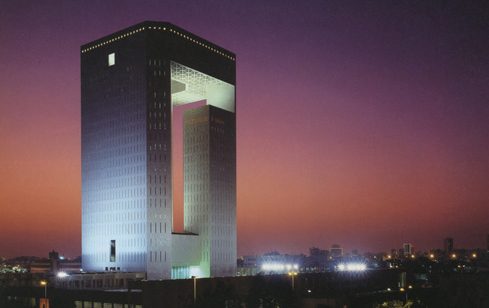
jeddah

Islamic Development Bank headquarters located in Saudi Arabia's Jeddah.

IDB's main objective is to foster the economic development and social progress of member countries as well as the Muslim community in accordance with principles of Shariah (Islamic law). The bank has 56 Islamic countries as its members.

The developments follow an agreement between India's state-owned Exim Bank and the Islamic Corporation for the Development of the Private Sector (ICD), a private-sector arm of the IDB group, as part of deals signed during Modi's trip to Saudi Arabia in April.

The IDB, a multilateral lender with an authorised capital of $100 billion, counts 56 Muslim nations as its members. Most of these countries belong to the Organisation of Islamic Cooperation.

ISLAMIC BANKING: SOME FACTS 

  • It is a finance system based on the principle of not charging interest, which is prohibited under Islam. Now, it goes by a more formal moniker – participatory banking.
  • Instead of charging interest, the lender shares a part of the profit – or loss – with the borrower
  • It is open to non-Muslims as well
  • By 2020, the global Islamic banking industry profit pool is expected to reach $30.3 billion.

Its India operations will be led by Zafar Sareshwala, a prominent Muslim businessman from Gujarat whom the Modi government appointed chancellor of the Maulana Azad National Urdu University soon after assuming office.

The agreement in Jeddah was signed by Exim Bank regional head Tarun Sharma and ICD CEO Khaled Al Aboodi in the presence of Ahmad Javed, India's ambassador to Saudi Arabia.

To be based in Ahmedabad, the bank will offer interest-free capital to business startups, including small and medium enterprises within India, marking the entry of the Islamic banking – also known as participatory banking – into the country.

According to an Exim Bank statement, the IDB's bigger role will be in the $100 million (about Rs 670 crore) credit line it has pledged “with the aim of facilitating the export of goods and services from India to ICD's member countries”.

“The ICD will be open for business to all Indians, regardless of religious background. In Malaysia, the KFC chain runs on ICD finance although it is owned by a Chinese firm. Some people have this unnecessary issue with Islamic banking, which is actually known as participatory banking across the globe now,” said Sareshwala, who has been named as a director for the bank's India operations.

The IDB has also promised $55m (about Rs 380 crore) for a state-of-the-art rural mobile medical network – the first leg of which will be launched in Gujarat.

The IDB, which complies with global Islamic finance norms, does not charge interest on loans because the religion prohibits it. Instead, it charges a part of the profit and also shares any losses with the borrower.

According to the EY's World Islamic Banking Competitiveness Report 2016, Global Islamic banking assets would have reached US$1 trillion by 2015-end.

Comments

Ahmed
 - 
Thursday, 2 Jun 2016

Poorna Prakash, Mangalore
We have since long following banks
Catholic Syrian Bank
Nakodar Hindu Bank
The Hindu Co-Operative Bank Ltd.

But, you have a problem as soon as we get a Islamic bank.
This is nothing else but, intolerance.

Don't forget another bank: The Hindu Vote Bank.

Rikaz
 - 
Wednesday, 1 Jun 2016

Why feku's state is getting all of those facilities? why don't they bring it to Karnataka....

suresh
 - 
Wednesday, 1 Jun 2016

All the investment only to gujarat? Why? This investment will be mis used by Gujju's as it says if the business in loss it will be shared by both. gujju's are well known how to make them fool. This will create more mallya;s in Gujarat.

moshu
 - 
Wednesday, 1 Jun 2016

Hope one day rss will understand islam well and will follow the rule of Allah

moshu
 - 
Wednesday, 1 Jun 2016

Siddarth mumbai openly backing his hawala racket crooks operating by his modi govt

Naren kotian
 - 
Wednesday, 1 Jun 2016

It is done to curb India's black money outflow and inflow by hawala means ..since 90% of hawala transactions are mostly encouraged by just particular section ...anyways since they have given 100 million credit line ..so we have ample opportunity to export pig related products to 56 Islamic countries ..hahaha ...nia monitoring is must as terrorists are most likely to use this bank ...

muhammed rafique
 - 
Wednesday, 1 Jun 2016

Appreciate Modi's wisdom in realising the importance of Islamic banking

Rizwan
 - 
Wednesday, 1 Jun 2016

Good initiative by P.M , i appreciate his move. Both india and KSA will be benifited by this.

Asif
 - 
Wednesday, 1 Jun 2016

Al Hamdlillah... itrs great news... waiting from a long time... hope it soon opens its branches all over India.

Add new comment

  • Coastaldigest.com reserves the right to delete or block any comments.
  • Coastaldigset.com is not responsible for its readers’ comments.
  • Comments that are abusive, incendiary or irrelevant are strictly prohibited.
  • Please use a genuine email ID and provide your name to avoid reject.
News Network
May 5,2020

Dubai, May 5: Tickets on repatriation flights from UAE to India, which start on May 7, could be costlier than regular airfare, and adding to the financial woes of those flying back. Nearly 200,000 Indians in the UAE have registered on the website seeking to return home.

“A one-way repatriation ticket to Delhi will cost approximately Dh1,400-Dh1,650 - this would earlier have cost between Dh600-Dh700 [during these months],” said Jamal Abdulnazar, CEO of Cozmo Travel. “A one-way repatriation flight ticket to Kerala would cost approximately Dh1,900-Dh2,300.”

This can be quite a burden, as a majority of those taking these flights have either lost their jobs or are sending back their families because of uncertainty on the work front. To now have to pay airfare that is nearly on par with those during peak summer months is quite a blow.

Sources said that officials in Indian diplomatic missions have already initiated calls to some expats, telling them about likely ticket fares and enquiring about their willingness to travel.

Although many believed repatriation would be government-sponsored, Indian authorities have clarified that customers would have to pay for the tickets themselves. Those who thought they were entitled to free repatriation might back out of travel plans for now.

Fact of life

But aviation and travel industry sources say higher rates cannot be escaped since social distancing norms have to be strictly enforced at all times. That would limit the number of passengers on each of these flights.

“One airline can carry only limited passengers - therefore, multiple airlines are likely to get the approval to operate repatriation flights,” said Abdulnazar. “Also, airports will have to maintain safe distance for passengers to queue up at immigration and security counters.

“Therefore, it is recommended that multiple carriers fly into multiple Indian airports for repatriation to be expedited.”

The Indian authorities, so far, have not taken the easy decision to get its private domestic airlines into the rescue act. Gulf News tried speaking to the leading players, but they declined to provide any official statements. So far, only Air India, the national airline, has been commissioned to operate the flights.

Air India finds itself in the driver's seat when it comes to operating India's repatriation flights. To date, there is no confirmation India's private airlines will be allowed to join in.

UAE carriers ready to help out

UAE’s Emirates airline, Etihad, flydubai and Air Arabia are likely to also operate repatriation flights to India after Air India implements the first phase of services.

“We are fully supporting governments and authorities across the flydubai network with their repatriation efforts, helping them to make arrangements for their citizens to return home,” said a flydubai spokesperson.

“We will announce repatriation flights as and when they are confirmed, recognising this is an evolving situation whilst the flight restrictions remain in place.”

An AirArabia spokesperson said the airline is ready to operate repatriation flights when the government tells them to.

Travel agencies likely to benefit

Apart from operating non-scheduled commercial flights, the Indian government is also deploying naval ships to bring expat Indians back. Sources claim the ships are to ferry passengers who cannot afford the repatriation airfares.

Even then, considering the sheer numbers who will want to get on the flights, travel agencies are likely to see a surge in bookings since airline websites alone may not cope with the demand set off in such a short span.

Learn from Gulf governments

In instances when they carried out their own repatriation flights, some GCC governments paid the ticket fares to fly in their citizens. Those citizens who did not have the ready funds could approach their diplomatic mission and aid would be given on a case-to-case basis.

Should Indians wait for normal services to resume?

Industry sources say that those Indians wanting to fly back and cannot afford the repatriation flights should wait for full services to resume once the COVID-19 pandemic settles.

But can those who lost their jobs or seen steep salary cuts stay on without adding to their costs? And is there any guarantee that when flight services resume, ticket rates would be lower than on the repatriation trips.

As such, normal travel is expected to pick up only after the repatriation exercise to several countries is completed. UAE-based travel agencies are not seeing any bookings for summer, which is traditionally the peak holiday season.

“Majority want to stay put unless full confidence is restored,” said Abdulnazar. “I expect full normalcy to be restored not until March 2021.

“People have also taken a hit to their income. Without disposable income, you will curtail your travel.”

What constitutes normalcy?

Airfares are expected to remain high, given the need to keep the middle seats empty to practise safe distance onboard.

“We expect holiday travel to resume by October or November - but, the travel sentiment will not go back to pre-COVID-19 levels anytime soon,” said Manvendra Roy, Vice-President – Commercial at holidayme, an online travel agency. “The need to keep the middle seat vacant will add 30-40 per cent pricing pressure per seat from an airline perspective.

“This will make holidays more expensive.”

As for business travel, it will take some time to recover. Corporate staff are now used to getting work done via conference calls. “Companies will also curtail their travel expenditure since their income has taken a hit,” said Abdulnazar.

Comments

Add new comment

  • Coastaldigest.com reserves the right to delete or block any comments.
  • Coastaldigset.com is not responsible for its readers’ comments.
  • Comments that are abusive, incendiary or irrelevant are strictly prohibited.
  • Please use a genuine email ID and provide your name to avoid reject.
News Network
July 6,2020

Bengaluru, Jul 6: As COVID-19 cases continue to surge in Karnataka, more than 20 police stations were sealed in Bengaluru after many policemen tested positive for novel coronavirus.

"Since the last few weeks, the number of COVID-19 cases in the police department has increased as many of the policemen have tested positive, so that's the reason why the police have taken a decision to close police stations," Bengaluru Commissioner of police Bhaskar Rao said.

He added, "However, people can lodge their complaints and other issues can be solved in help desks launched outside premises of the police station. Most of the areas where positive cases found in the police station are been sealed down for the safety of the people and sanitised them."

However, some of the police stations would be functional from outside the premises.

Commercial Street, Cottonpete, Chickepete, KG Halli traffic police station are among the few stations closed due to scare of the coronavirus spread after some policemen tested positive in particular stations.

Rao further said that the traffic police, civil police along with home guards have been given safety gloves, face masks, and sanitizers along with face covers by the department of police.

According to the Union Health Ministry, 23,474 COVID-19 cases have been reported in the state, as of Monday.

Comments

Add new comment

  • Coastaldigest.com reserves the right to delete or block any comments.
  • Coastaldigset.com is not responsible for its readers’ comments.
  • Comments that are abusive, incendiary or irrelevant are strictly prohibited.
  • Please use a genuine email ID and provide your name to avoid reject.
coastaldigest.com news network
August 6,2020

Karwar, Aug 6: In a shocking incident, a 40-day-old girl child was murdered by her own parents in Sirsi town in Karnataka’s Uttara Kannada district.

The accused are Priyanka (21) and her husband Chandrashekhar Bhat (42), residents of Ramanakoppa in Sahasrahalli in Yellapur.

According to police, the couple did not want a girl child and hence threw it into a well. The couple was arrested by the police the very next day.

The incident came to light after the child’s maternal uncle, Abhishek Jagadeesh Singh Choudhari, a resident of Rajeev Nagar in Sirsi, lodge a complaint with Yellapur police station. 

He had claimed that his sister Priyanka’s baby had been kidnapped and subsequently killed. 

Priyanka had claimed that she woke up around 2.30am on August 2 to find that her baby, Tanushri, was not in her cradle. Her husband’s family subsequently started searching for the baby, which they found dead inside a well. 

Choudhari suspected that Tanushri had been kidnapped, and had been killed by her abductors to erase any evidence of their crime.

Uttara Kannada superintendent of police Shivaprakash Devaraju constituted a team to crack the crime, and the cops, who subjected the parents to an interrogation, found that they were the culprits.

Comments

Add new comment

  • Coastaldigest.com reserves the right to delete or block any comments.
  • Coastaldigset.com is not responsible for its readers’ comments.
  • Comments that are abusive, incendiary or irrelevant are strictly prohibited.
  • Please use a genuine email ID and provide your name to avoid reject.