


Saudi based Islamic bank enters India, first branch in Gujarat

[email protected] (CD Network)
June 1, 2016

Ahmedabad, Jun 1: The Saudi Arabia-based Islamic Development Bank (IDB) is set to start its India operations from Gujarat. The international financial institution which has its headquarters in Jeddah has chosen the home state of Prime Minister Narendra Modi to set up its first branch in India. The state will also get 30 medical vans as part of IDB's social sector initiatives.
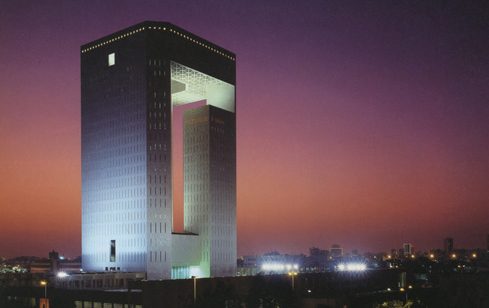
jeddah

Islamic Development Bank headquarters located in Saudi Arabia's Jeddah.

IDB's main objective is to foster the economic development and social progress of member countries as well as the Muslim community in accordance with principles of Shariah (Islamic law). The bank has 56 Islamic countries as its members.

The developments follow an agreement between India's state-owned Exim Bank and the Islamic Corporation for the Development of the Private Sector (ICD), a private-sector arm of the IDB group, as part of deals signed during Modi's trip to Saudi Arabia in April.

The IDB, a multilateral lender with an authorised capital of $100 billion, counts 56 Muslim nations as its members. Most of these countries belong to the Organisation of Islamic Cooperation.

ISLAMIC BANKING: SOME FACTS 

  • It is a finance system based on the principle of not charging interest, which is prohibited under Islam. Now, it goes by a more formal moniker – participatory banking.
  • Instead of charging interest, the lender shares a part of the profit – or loss – with the borrower
  • It is open to non-Muslims as well
  • By 2020, the global Islamic banking industry profit pool is expected to reach $30.3 billion.

Its India operations will be led by Zafar Sareshwala, a prominent Muslim businessman from Gujarat whom the Modi government appointed chancellor of the Maulana Azad National Urdu University soon after assuming office.

The agreement in Jeddah was signed by Exim Bank regional head Tarun Sharma and ICD CEO Khaled Al Aboodi in the presence of Ahmad Javed, India's ambassador to Saudi Arabia.

To be based in Ahmedabad, the bank will offer interest-free capital to business startups, including small and medium enterprises within India, marking the entry of the Islamic banking – also known as participatory banking – into the country.

According to an Exim Bank statement, the IDB's bigger role will be in the $100 million (about Rs 670 crore) credit line it has pledged “with the aim of facilitating the export of goods and services from India to ICD's member countries”.

“The ICD will be open for business to all Indians, regardless of religious background. In Malaysia, the KFC chain runs on ICD finance although it is owned by a Chinese firm. Some people have this unnecessary issue with Islamic banking, which is actually known as participatory banking across the globe now,” said Sareshwala, who has been named as a director for the bank's India operations.

The IDB has also promised $55m (about Rs 380 crore) for a state-of-the-art rural mobile medical network – the first leg of which will be launched in Gujarat.

The IDB, which complies with global Islamic finance norms, does not charge interest on loans because the religion prohibits it. Instead, it charges a part of the profit and also shares any losses with the borrower.

According to the EY's World Islamic Banking Competitiveness Report 2016, Global Islamic banking assets would have reached US$1 trillion by 2015-end.

Comments

Ahmed
 - 
Thursday, 2 Jun 2016

Poorna Prakash, Mangalore
We have since long following banks
Catholic Syrian Bank
Nakodar Hindu Bank
The Hindu Co-Operative Bank Ltd.

But, you have a problem as soon as we get a Islamic bank.
This is nothing else but, intolerance.

Don't forget another bank: The Hindu Vote Bank.

Rikaz
 - 
Wednesday, 1 Jun 2016

Why feku's state is getting all of those facilities? why don't they bring it to Karnataka....

suresh
 - 
Wednesday, 1 Jun 2016

All the investment only to gujarat? Why? This investment will be mis used by Gujju's as it says if the business in loss it will be shared by both. gujju's are well known how to make them fool. This will create more mallya;s in Gujarat.

moshu
 - 
Wednesday, 1 Jun 2016

Hope one day rss will understand islam well and will follow the rule of Allah

moshu
 - 
Wednesday, 1 Jun 2016

Siddarth mumbai openly backing his hawala racket crooks operating by his modi govt

Naren kotian
 - 
Wednesday, 1 Jun 2016

It is done to curb India's black money outflow and inflow by hawala means ..since 90% of hawala transactions are mostly encouraged by just particular section ...anyways since they have given 100 million credit line ..so we have ample opportunity to export pig related products to 56 Islamic countries ..hahaha ...nia monitoring is must as terrorists are most likely to use this bank ...

muhammed rafique
 - 
Wednesday, 1 Jun 2016

Appreciate Modi's wisdom in realising the importance of Islamic banking

Rizwan
 - 
Wednesday, 1 Jun 2016

Good initiative by P.M , i appreciate his move. Both india and KSA will be benifited by this.

Asif
 - 
Wednesday, 1 Jun 2016

Al Hamdlillah... itrs great news... waiting from a long time... hope it soon opens its branches all over India.

Add new comment

  • Coastaldigest.com reserves the right to delete or block any comments.
  • Coastaldigset.com is not responsible for its readers’ comments.
  • Comments that are abusive, incendiary or irrelevant are strictly prohibited.
  • Please use a genuine email ID and provide your name to avoid reject.
News Network
May 3,2020

Bengaluru, May 3: The Commissioner of Health and Family Welfare Services in the government of Karnataka KA Dayanand issued an order approving quarantine of asymptomatic COVID-19 infected international passengers on payment basis at star hotels.

The international passengers in the state have been categorised into A, B and C groups depending on their symptoms and co-morbid conditions. Category A passengers are symptomatic and are being sent to isolation hospitals which may be COVID care centres.

Category B and C passengers are asymptomatic and are being sent to institutional facilities like hostels, guest houses, hotels, etc.

"On the basis of demands by category B and C passengers to provide them star hotel accommodation on a self-payment basis, they have been granted the choice of staying in those hotels at their own cost. The BBMP Special Commissioner/Deputy Commissioner can have a meeting with such hotels and finalise the negotiated rate," Commissioner Dayanand said in the order.

"The hotels for category B passengers should have round the clock presence of health personnel while hotels for category C passengers should be visited by health staff once a day," he added.

Comments

Add new comment

  • Coastaldigest.com reserves the right to delete or block any comments.
  • Coastaldigset.com is not responsible for its readers’ comments.
  • Comments that are abusive, incendiary or irrelevant are strictly prohibited.
  • Please use a genuine email ID and provide your name to avoid reject.
News Network
February 16,2020

Mangaluru, Feb 16: An elderly woman from Tamil Nadu was on Saturday reunited with her daughter and son after 14 years at the Mangaluru's White Doves destitute home.

"Mary only knew her name when she came here 10 years ago. Recently, she told us about her home town," Corrine Rusquinha, founder of White Doves told media.
Mary had gone missing 14 years ago from her hometown Kortampet in Tamil Nadu.

"Ten years ago, she was spotted by Mangaluru police who brought her to White Doves home late one evening. Initially, she could only speak Tamil, so it was presumed she was from Tamil Nadu. She was on psychiatric treatment," Rusquinha said.

A few days back, a visiting priest at the White Doves home spoke to Mary in Tamil and asked about her hometown.

"Surprisingly, she could recall the name of her hometown, following which the visiting priest contacted the pastor at Kortampet. Mary's family, including her daughter Gnana Anthony, who is a paramedic student in Coimbatore, was informed about Mary," she said.

Soon after, Gnana and her elder brother came to Mangaluru to take their mother back to their home.

Mary's husband Jhonson, who worked as a cook, had died within a year of losing his wife.

Comments

Add new comment

  • Coastaldigest.com reserves the right to delete or block any comments.
  • Coastaldigset.com is not responsible for its readers’ comments.
  • Comments that are abusive, incendiary or irrelevant are strictly prohibited.
  • Please use a genuine email ID and provide your name to avoid reject.
News Network
July 17,2020

Bengaluru, Jul 17: The Doctors at Fortis Hospital, here on Friday, successfully treated a 97-year-old patient who suffered an embolic stroke due to calcified stenosis (narrowing of an artery resulting in restriction of blood flow).

In a release, the Hospital authorities stated that the team of doctors led by Dr Rajpal Singh, Director and Interventional Cardiologist, Fortis Hospital, Bangalore successfully conducted Carotid Artery Stenting (CAS) to increase the blood flow in the blocked areas which had resulted in stroke following stringent safety protocols and ensuring proper segregation of COVID and Non-COVID patients at the hospital.

Carotid arteries serve as the main channels which supply the blood flow to the brain and facial structures. Any significant narrowing in these arteries can cause a brain stroke, a mini-stroke, headache, and neurological symptoms.

Comments

Add new comment

  • Coastaldigest.com reserves the right to delete or block any comments.
  • Coastaldigset.com is not responsible for its readers’ comments.
  • Comments that are abusive, incendiary or irrelevant are strictly prohibited.
  • Please use a genuine email ID and provide your name to avoid reject.