


Saudi based Islamic bank enters India, first branch in Gujarat

[email protected] (CD Network)
June 1, 2016

Ahmedabad, Jun 1: The Saudi Arabia-based Islamic Development Bank (IDB) is set to start its India operations from Gujarat. The international financial institution which has its headquarters in Jeddah has chosen the home state of Prime Minister Narendra Modi to set up its first branch in India. The state will also get 30 medical vans as part of IDB's social sector initiatives.
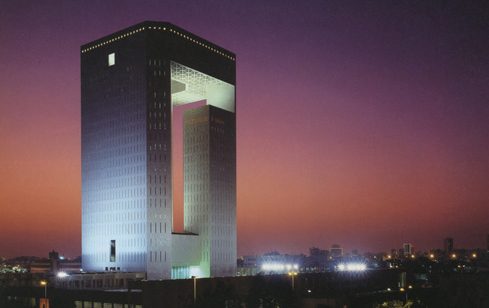
jeddah

Islamic Development Bank headquarters located in Saudi Arabia's Jeddah.

IDB's main objective is to foster the economic development and social progress of member countries as well as the Muslim community in accordance with principles of Shariah (Islamic law). The bank has 56 Islamic countries as its members.

The developments follow an agreement between India's state-owned Exim Bank and the Islamic Corporation for the Development of the Private Sector (ICD), a private-sector arm of the IDB group, as part of deals signed during Modi's trip to Saudi Arabia in April.

The IDB, a multilateral lender with an authorised capital of $100 billion, counts 56 Muslim nations as its members. Most of these countries belong to the Organisation of Islamic Cooperation.

ISLAMIC BANKING: SOME FACTS 

  • It is a finance system based on the principle of not charging interest, which is prohibited under Islam. Now, it goes by a more formal moniker – participatory banking.
  • Instead of charging interest, the lender shares a part of the profit – or loss – with the borrower
  • It is open to non-Muslims as well
  • By 2020, the global Islamic banking industry profit pool is expected to reach $30.3 billion.

Its India operations will be led by Zafar Sareshwala, a prominent Muslim businessman from Gujarat whom the Modi government appointed chancellor of the Maulana Azad National Urdu University soon after assuming office.

The agreement in Jeddah was signed by Exim Bank regional head Tarun Sharma and ICD CEO Khaled Al Aboodi in the presence of Ahmad Javed, India's ambassador to Saudi Arabia.

To be based in Ahmedabad, the bank will offer interest-free capital to business startups, including small and medium enterprises within India, marking the entry of the Islamic banking – also known as participatory banking – into the country.

According to an Exim Bank statement, the IDB's bigger role will be in the $100 million (about Rs 670 crore) credit line it has pledged “with the aim of facilitating the export of goods and services from India to ICD's member countries”.

“The ICD will be open for business to all Indians, regardless of religious background. In Malaysia, the KFC chain runs on ICD finance although it is owned by a Chinese firm. Some people have this unnecessary issue with Islamic banking, which is actually known as participatory banking across the globe now,” said Sareshwala, who has been named as a director for the bank's India operations.

The IDB has also promised $55m (about Rs 380 crore) for a state-of-the-art rural mobile medical network – the first leg of which will be launched in Gujarat.

The IDB, which complies with global Islamic finance norms, does not charge interest on loans because the religion prohibits it. Instead, it charges a part of the profit and also shares any losses with the borrower.

According to the EY's World Islamic Banking Competitiveness Report 2016, Global Islamic banking assets would have reached US$1 trillion by 2015-end.

Comments

Ahmed
 - 
Thursday, 2 Jun 2016

Poorna Prakash, Mangalore
We have since long following banks
Catholic Syrian Bank
Nakodar Hindu Bank
The Hindu Co-Operative Bank Ltd.

But, you have a problem as soon as we get a Islamic bank.
This is nothing else but, intolerance.

Don't forget another bank: The Hindu Vote Bank.

Rikaz
 - 
Wednesday, 1 Jun 2016

Why feku's state is getting all of those facilities? why don't they bring it to Karnataka....

suresh
 - 
Wednesday, 1 Jun 2016

All the investment only to gujarat? Why? This investment will be mis used by Gujju's as it says if the business in loss it will be shared by both. gujju's are well known how to make them fool. This will create more mallya;s in Gujarat.

moshu
 - 
Wednesday, 1 Jun 2016

Hope one day rss will understand islam well and will follow the rule of Allah

moshu
 - 
Wednesday, 1 Jun 2016

Siddarth mumbai openly backing his hawala racket crooks operating by his modi govt

Naren kotian
 - 
Wednesday, 1 Jun 2016

It is done to curb India's black money outflow and inflow by hawala means ..since 90% of hawala transactions are mostly encouraged by just particular section ...anyways since they have given 100 million credit line ..so we have ample opportunity to export pig related products to 56 Islamic countries ..hahaha ...nia monitoring is must as terrorists are most likely to use this bank ...

muhammed rafique
 - 
Wednesday, 1 Jun 2016

Appreciate Modi's wisdom in realising the importance of Islamic banking

Rizwan
 - 
Wednesday, 1 Jun 2016

Good initiative by P.M , i appreciate his move. Both india and KSA will be benifited by this.

Asif
 - 
Wednesday, 1 Jun 2016

Al Hamdlillah... itrs great news... waiting from a long time... hope it soon opens its branches all over India.

Add new comment

  • Coastaldigest.com reserves the right to delete or block any comments.
  • Coastaldigset.com is not responsible for its readers’ comments.
  • Comments that are abusive, incendiary or irrelevant are strictly prohibited.
  • Please use a genuine email ID and provide your name to avoid reject.
Agencies
February 20,2020

New Delhi, Feb 20: Microsoft has begun testing its free open-source software called "ElectionGuard" in a small Wisconsin town in the US that aims to make voting more secure, verifiable and efficient.

"ElectionGuard" will enable end-to-end verification of elections, open results to third-party organisations for secure validation, and allow individual voters to confirm their votes were correctly counted.

It enables government entities, news outlets, human rights organisations or anyone else to build additional verifiers that independently can certify election results have been accurately counted and have not been altered, according to the company.

The software would create a paper trail and assure voters their votes were properly tallied.

"On Tuesday, Fulton residents are using the technology while choosing who will join the local school board and hold a seat on Wisconsin's state Supreme Court," reports CNBC.

With the test, the company aims to see if voters like the experience and make sure everything works fine.

In May last year, Microsoft CEO Satya Nadella announced "ElectionGuard".

According to Tom Burt, Corporate Vice President, Customer Security and Trust, voting system manufacturers will be free to build ElectionGuard into their systems in a variety of ways.

"These are exciting steps that enable individual voters to confirm their vote was properly counted, and assures those voters using an ElectionGuard system of the most secure and trustworthy vote in the history of the US," Burt said in a recent blog post.

"ElectionGuard" is not intended to replace paper ballots but rather to supplement and improve systems that rely on them, and it is not designed to support internet voting.

The software provides each voter a tracker with a unique code that can be used to follow an encrypted version of the vote through the entire election process via a web portal provided by election authorities.

During the process of vote-casting, voters have an optional step that allows them to confirm that their trackers and encrypted votes accurately reflect their selections.

But once a vote is cast, neither the tracker nor any data provided through the web portal can be used to reveal the contents of the vote.

After the election is complete, the tracker codes can be used by voters to confirm that their votes were not altered or tampered with and that they were properly counted, said Microsoft.

On the security front, "ElectionGuard" uses something called homomorphic encryption - which enables mathematical procedures "like counting - to be done with fully encrypted data".

Comments

Add new comment

  • Coastaldigest.com reserves the right to delete or block any comments.
  • Coastaldigset.com is not responsible for its readers’ comments.
  • Comments that are abusive, incendiary or irrelevant are strictly prohibited.
  • Please use a genuine email ID and provide your name to avoid reject.
News Network
April 7,2020

Bengaluru, April 7: Karnataka government on Monday allowed bakeries and related product food units in the state to open and function with minimum staff amid a coronavirus nation-wide lockdown.

A circular issued by Rajendar Kumar Kataria, Secretary to the government said, "The Central government has permitted the functioning of food units engaged in bakery and biscuit, condiments, confectionery and sweet for manufacturing, supply and operating retail outlets with minimum staff/labour."

The circular said these units shall strictly follow the guidelines issued by the Ministry of Health and Family Welfare and Department of Health and Family Welfare, Karnataka government with regard to the preventive measures to be ensured for combating COVID-19.

"It is stated that all employers shall ensure that these units maintain high standard of health, hygiene, sanitation and social distancing. The units shall not permit serving/dining in the premises and only parcel/takeaways are permitted," the circular added.

Comments

Add new comment

  • Coastaldigest.com reserves the right to delete or block any comments.
  • Coastaldigset.com is not responsible for its readers’ comments.
  • Comments that are abusive, incendiary or irrelevant are strictly prohibited.
  • Please use a genuine email ID and provide your name to avoid reject.
News Network
February 6,2020

Kalaburagi, Feb 6: The State government will take steps to ensure that Kannada as a language is taught in all private schools, Chief Minister B.S. Yediyurappa announced today at the 85th Akhila Bharata Kannada Sahitya Sammelana in Kalaburagi.

This comes in the wake of the demand by some Kannada activists for making Kannada medium compulsory in all schools in the State. Sammelana president H.S. Venkatesh Murthy, who spoke after the Chief Minister, also made this demand.

The Chief Minister said “We are committed to putting in place a series of steps to see that Kannada is taught in all schools, aided and private, as a language. Kannada should be taught as the first or second language. We will also take steps to strengthen government schools. However, the government alone cannot do much. The community and parents should offer support to make sure that government schools provide quality education to all.”

To inculcate the spirit of scientific inquiry, the State government is setting up mobile planetariums. This will increase the interest of children in space technology and India’s efforts in space exploration.

The government is committed to protecting the interests of the State in Mahadayi and other river water disputes. It will take the border row issue, based on the Mahajan Commission report pending in the Supreme Court, to its logical end.

The government will also address backwardness and related issues. It will make sure that adequate funds are allocated to the development of Kalyana Karnataka. Among other things, it will establish a hostel for students from Kalaburagi region in Bengaluru. Land has been allotted in Nagarabavi for the hostel that can accommodate around 200 students. The government has decided to celebrate Kalyana Karnataka Utsav once every two years. This will showcase the culture of the region.

“We are working towards forging sentimental and emotional unity of the State other than unity based on language or administration. Our dream is to see that Karnataka remains a homogeneous unit with equality and equal opportunity for all,’’ the Chief Minister added.

Kambar bats for technology

Chandrashekar Kambar, Sahitya Akademi president and former president of the Akhila Bharata Kannada Sahitya Sammelana, favoured effective implementation of technology in administration and for universal use of Kannada in computing and e-governance.

Speaking at the Sammelana inauguration, he said “Several years ago, at the insistence of writer Poornachandra Tejaswi, I appealed to the State government to give a push to Kannada computing. We were convinced that no language can survive without the use of modern technology and use of the language in computers. The Department of Kannada and Culture, headed by then director Manu Baligar, released ₹2 crore for the project. The work began in earnest and teams of technologists came up with software and fonts. Some departments started using Kannada software. But this work has stopped or slowed down at some level. I appeal to Chief Minister B.S. Yediyurappa to continue the work and ensure that computerised Kannada is used at all levels of government and in e-governance.’’

Supports dubbing

Mr. Kambar batted for content dubbing of informative TV channels in Kannada. Channels such as Discovery and History produce good quality content that can be educative and informative. They are very useful for children. These channels are now available in Tamil, Telugu and Hindi and some other Indian languages. But they are not available in Kannada. That is because some people in the film industry are opposing dubbing. Such opposition is not good. Informative channels are our window to the world and allowing dubbing will enhance our knowledge base. There is no merit in not allowing dubbing. I appeal to C.T. Ravi, Minister for Kannada and Culture, to allow dubbing in Kannada, he said.

Mr. Kambar favoured primary education in the mother tongue of the child and urged the State government to introduce universal and compulsory education in Kannada medium in all schools. “This will help preserve our culture. Nothing else can,’’ he said.

He blamed the East India Company administration for inculcating a craze for English education among the people. “The introduction of English education by the British was strongly welcomed by the masses in India as they had been denied the opportunity for education for millenia. The deprived classes and Dalits who had not been exposed to education till then, were excited about the opportunity. However, along with English education, the British were successful in introducing inferiority in our minds. We are yet to escape from this inferiority complex.”

Quoting from Greek mythology, Mr. Kambar said that Hercules had killed his children and relatives in a fit of alcohol-induced rage. “We should not behave like that. We may be very strong, but we should not kill our mother tongue, in our power-induced rage,’’ he said.

Comments

Add new comment

  • Coastaldigest.com reserves the right to delete or block any comments.
  • Coastaldigset.com is not responsible for its readers’ comments.
  • Comments that are abusive, incendiary or irrelevant are strictly prohibited.
  • Please use a genuine email ID and provide your name to avoid reject.