


Saudi based Islamic bank enters India, first branch in Gujarat

[email protected] (CD Network)
June 1, 2016

Ahmedabad, Jun 1: The Saudi Arabia-based Islamic Development Bank (IDB) is set to start its India operations from Gujarat. The international financial institution which has its headquarters in Jeddah has chosen the home state of Prime Minister Narendra Modi to set up its first branch in India. The state will also get 30 medical vans as part of IDB's social sector initiatives.
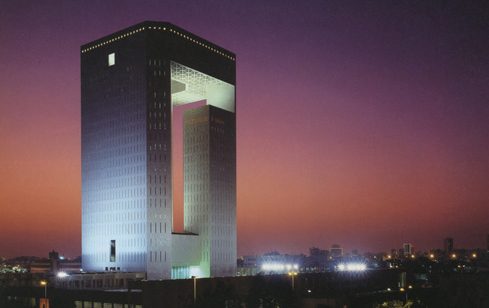
jeddah

Islamic Development Bank headquarters located in Saudi Arabia's Jeddah.

IDB's main objective is to foster the economic development and social progress of member countries as well as the Muslim community in accordance with principles of Shariah (Islamic law). The bank has 56 Islamic countries as its members.

The developments follow an agreement between India's state-owned Exim Bank and the Islamic Corporation for the Development of the Private Sector (ICD), a private-sector arm of the IDB group, as part of deals signed during Modi's trip to Saudi Arabia in April.

The IDB, a multilateral lender with an authorised capital of $100 billion, counts 56 Muslim nations as its members. Most of these countries belong to the Organisation of Islamic Cooperation.

ISLAMIC BANKING: SOME FACTS 

  • It is a finance system based on the principle of not charging interest, which is prohibited under Islam. Now, it goes by a more formal moniker – participatory banking.
  • Instead of charging interest, the lender shares a part of the profit – or loss – with the borrower
  • It is open to non-Muslims as well
  • By 2020, the global Islamic banking industry profit pool is expected to reach $30.3 billion.

Its India operations will be led by Zafar Sareshwala, a prominent Muslim businessman from Gujarat whom the Modi government appointed chancellor of the Maulana Azad National Urdu University soon after assuming office.

The agreement in Jeddah was signed by Exim Bank regional head Tarun Sharma and ICD CEO Khaled Al Aboodi in the presence of Ahmad Javed, India's ambassador to Saudi Arabia.

To be based in Ahmedabad, the bank will offer interest-free capital to business startups, including small and medium enterprises within India, marking the entry of the Islamic banking – also known as participatory banking – into the country.

According to an Exim Bank statement, the IDB's bigger role will be in the $100 million (about Rs 670 crore) credit line it has pledged “with the aim of facilitating the export of goods and services from India to ICD's member countries”.

“The ICD will be open for business to all Indians, regardless of religious background. In Malaysia, the KFC chain runs on ICD finance although it is owned by a Chinese firm. Some people have this unnecessary issue with Islamic banking, which is actually known as participatory banking across the globe now,” said Sareshwala, who has been named as a director for the bank's India operations.

The IDB has also promised $55m (about Rs 380 crore) for a state-of-the-art rural mobile medical network – the first leg of which will be launched in Gujarat.

The IDB, which complies with global Islamic finance norms, does not charge interest on loans because the religion prohibits it. Instead, it charges a part of the profit and also shares any losses with the borrower.

According to the EY's World Islamic Banking Competitiveness Report 2016, Global Islamic banking assets would have reached US$1 trillion by 2015-end.

Comments

Ahmed
 - 
Thursday, 2 Jun 2016

Poorna Prakash, Mangalore
We have since long following banks
Catholic Syrian Bank
Nakodar Hindu Bank
The Hindu Co-Operative Bank Ltd.

But, you have a problem as soon as we get a Islamic bank.
This is nothing else but, intolerance.

Don't forget another bank: The Hindu Vote Bank.

Rikaz
 - 
Wednesday, 1 Jun 2016

Why feku's state is getting all of those facilities? why don't they bring it to Karnataka....

suresh
 - 
Wednesday, 1 Jun 2016

All the investment only to gujarat? Why? This investment will be mis used by Gujju's as it says if the business in loss it will be shared by both. gujju's are well known how to make them fool. This will create more mallya;s in Gujarat.

moshu
 - 
Wednesday, 1 Jun 2016

Hope one day rss will understand islam well and will follow the rule of Allah

moshu
 - 
Wednesday, 1 Jun 2016

Siddarth mumbai openly backing his hawala racket crooks operating by his modi govt

Naren kotian
 - 
Wednesday, 1 Jun 2016

It is done to curb India's black money outflow and inflow by hawala means ..since 90% of hawala transactions are mostly encouraged by just particular section ...anyways since they have given 100 million credit line ..so we have ample opportunity to export pig related products to 56 Islamic countries ..hahaha ...nia monitoring is must as terrorists are most likely to use this bank ...

muhammed rafique
 - 
Wednesday, 1 Jun 2016

Appreciate Modi's wisdom in realising the importance of Islamic banking

Rizwan
 - 
Wednesday, 1 Jun 2016

Good initiative by P.M , i appreciate his move. Both india and KSA will be benifited by this.

Asif
 - 
Wednesday, 1 Jun 2016

Al Hamdlillah... itrs great news... waiting from a long time... hope it soon opens its branches all over India.

Add new comment

  • Coastaldigest.com reserves the right to delete or block any comments.
  • Coastaldigset.com is not responsible for its readers’ comments.
  • Comments that are abusive, incendiary or irrelevant are strictly prohibited.
  • Please use a genuine email ID and provide your name to avoid reject.
News Network
May 29,2020

New Delhi, May 29: Opining that there is no harm in importing ideas from abroad Swadeshi Jagran Manch, an affiliate of Rashtriya Swayamsevak Sangh, has suggested that India should take a cue from Pakistan and turn the “locust threat” into “chicken feed.

In an interview, Ashwani Mahajan, national co-convener of Swadeshi Jagran Manch (SJM) said: “I saw an article which shows that Pakistan has turned the locust threat into an opportunity by converting it into chicken feed”

“If there is a good idea originating from anywhere, we should be open to exploring such ideas. We should adopt good ideas. There is no harm in that,” he added.

He also shared the article on Twitter and wrote: “Pakistan turns locust threat into chicken feed. Need to understand the idea and replicate it in India.”

The article stated “an innovative pilot project in Pakistan’s Okara district offers a sustainable solution in which farmers earn money by trapping locusts that are turned into high-protein chicken feed by animal feed mills”.

“It was the brainchild of Muhammad Khurshid, a civil servant in the Ministry of National Food Security and Research, and Johar Ali, a bio-technologist from the Pakistan Agricultural Research Council,” according to the article.

Both Pakistan and India have been hit by locust attacks. These are desert locusts, which is one of the 12 species of short-horned grasshoppers. Swarms can comprise billions and travel up to 130 km in a day.

India has been battling the locust attacks with moderate success since December. However, the onset of monsoon could bring more trouble.

Comments

Add new comment

  • Coastaldigest.com reserves the right to delete or block any comments.
  • Coastaldigset.com is not responsible for its readers’ comments.
  • Comments that are abusive, incendiary or irrelevant are strictly prohibited.
  • Please use a genuine email ID and provide your name to avoid reject.
Agencies
June 26,2020

New Delhi, Jun 26: With looming uncertainty and no likelihood of an early economic recovery in sight, the bull run in gold prices is here to stay. Analysts expect domestic futures to touch ₹ 52,000 per 10 grams in the next few months, till Diwali.

Experts also predict that with the current trend, gold may reach historic levels around ₹ 65,000 per 10 grams in two years time.

Futures of the yellow metal have touched new highs in India off late. On Wednesday, the August contract of gold futures on the Multi-Commodity Exchange (MCX) touched an all-time high of Rs 48,589 per 10 grams.

It has, however corrected since and is currently trading at ₹ 48,057 on the MCX, higher by ₹ 116 or 0.24 per cent from its previous close.

Market experts are of the view that both domestic and international gold prices are yet not done breaching records and will touch new highs in days to come.

The resurgence in the number of new cases of coronavirus infection across the globe has added to the uncertainty and fears.

Speaking to media persons, Anuj Gupta, DVP for Commodities and Currencies Research at Angel Broking, noted: "In short term we are expecting it to reach ₹ 48,800-49,000 and for long term, we are expecting ₹ 51,000-Rs 52,000 till Diwali."

On the prices in the international market, he said that it may reach around $1,790 per ounce in the near term from the current levels of $1,762 and the long term, it is likely to be around $1,820-1,850 per ounce.

Gupta noted that with International Monetary Fund's (IMF) latest downward revision of economic outlook, both global and of India, and the rising number of cases and high demand by gold exchange traded funds (ETF) have led to this record breaking rise in gold prices.

Covid-19 battered India's economy is projected to contract by 4.5 per cent this fiscal, according to the IMF and the global output is projected to decline by 4.9 per cent in 2020, 1.9 percentage points below the IMF's April forecast.

Hareesh V, Head of Commodity Research at Geojit Financial Services, said that gold's safe haven appeal will remain on the higher side as there is little hope of a quick global economic recovery amid rising virus cases across the world.

"Increased geopolitical instability and an under-performing dollar also lift the metal's sentiments," he added.

According to Prathamesh Mallya, AVP Research, Non-Agro Commodities & Currencies at Angel Broking, said that with the global output to contract and the economies in a deeper recession than most anticipate, gold as an asset class is a safe bet for investors across the globe.

"Although, the physical demand has declined drastically due to the restrictions and lockdowns, the activity of global central banks and their net purchases of gold signal that uncertainty will continue for most of 2020," he said.

He was also of the view that in the international market price of the metal may move towards $1,850 per ounce and in the domestic market it is likely to move higher towards Rs 50,000 per 10 grams.

"The investment demand as seen in the net additions of ETF holdings also signals that gold will shine for a much longer time even if the pandemic is under control. Till then, keep buying gold, if not in physical form, but in digital form," Mallya added.

Industry insiders like Aditya Pethe, Director, WHP Jewellers said: "I basically feel that the current trend for the gold is bullish and for the coming next 2 years, it is likely to move upwards. No one can predict the exact price as currently the trend is on rise but it might change after 6 months. In general for the coming 6 months to one year, the gold prices are likely to cross $2,000 which comes to roughly Rs 55,000. For a temporary moment it may reduce, basically fluctuate as well but overall trend of gold is going to be bullish."

On his part, Ishu Datwani, Founder, Anmol Jewellers said: "Yes - it's very likely that the gold price could easily go up to Rs 60,000-Rs 65,000 in the next two years. There is also a possibility of it going up even more."

"A lot of banks have been buying gold and there is also a possibility that the Indian rupee will depreciate against the dollar. This and geopolitical reasons will cause bullishness in gold."

Comments

Add new comment

  • Coastaldigest.com reserves the right to delete or block any comments.
  • Coastaldigset.com is not responsible for its readers’ comments.
  • Comments that are abusive, incendiary or irrelevant are strictly prohibited.
  • Please use a genuine email ID and provide your name to avoid reject.
News Network
March 6,2020

Mysuru, Mar 6: A woman was murdered by her husband in front of her father in the wee hours of Friday at her home in Hosakamanakoppal, Yelwal hobli here, police said on Friday.

The police said the deceased is Mamatha, a native of Periyapatna who was married to Nagesh of Hosakamanakoppal about seven years ago. The couple has a six-year-old son. Mamatha was Nagesh’s second wife as his first wife had allegedly committed suicide.

It is said that Nagesh was addicted to liquor and gambling and used to fight with Mamatha over petty reasons. 

Yesterday night too, there was a fight between the couple and Mamatha’s father pacified both of them and all of them went to sleep later.

Comments

Add new comment

  • Coastaldigest.com reserves the right to delete or block any comments.
  • Coastaldigset.com is not responsible for its readers’ comments.
  • Comments that are abusive, incendiary or irrelevant are strictly prohibited.
  • Please use a genuine email ID and provide your name to avoid reject.