Saudi govt imposes 5% VAT on money transfer fee

Saudi Gazette
November 9, 2017

Riyadh, Nov 9: Money transfer charges will increase from Jan. 1 as 5% Value Added Tax (VAT) will be levied on money transfer fees, according to the General Authority of Zakat and Tax (GAZT), which is responsible for managing the implementation, administration and enforcement of VAT in Saudi Arabia in close coordination with other relevant entities.

The 5% VAT will be on the money transfer fee and not on the transfer amount, GAZT clarified, adding that VAT will be paid by the person sending money.

However, many financial services will be exempt from VAT. These include several transactions and services such as interest on loans, lending fees charged with an implicit margin such as loans and credit cards, mortgages, financial leasing, transactions involving money and securities, as well as current, deposit and savings accounts.

Other exempted services include life insurance policies.

Registered businesses conducting economic activities are subject to VAT, but registered businesses conducting VAT-exempted economic activities are not entitled to deduct VAT.

The nature of economic activities will determine whether VAT should be levied on these or not.

House rent and medicines are among some of the facilities and commodities exempted from Value Added Tax (VAT).

VAT will be implemented in the Kingdom from Jan. 1 2018.

No VAT will be levied on passport and driving license issuance and renewal fees.

No VAT will apply on exports to countries outside the Gulf Cooperation Council, services given to non-residents of GCC countries, international transport services for goods and passengers, import of spare parts of qualified means of international transport and their maintenance, repair and modifications.

Comments

Add new comment

  • Coastaldigest.com reserves the right to delete or block any comments.
  • Coastaldigset.com is not responsible for its readers’ comments.
  • Comments that are abusive, incendiary or irrelevant are strictly prohibited.
  • Please use a genuine email ID and provide your name to avoid reject.
Agencies
August 2,2020

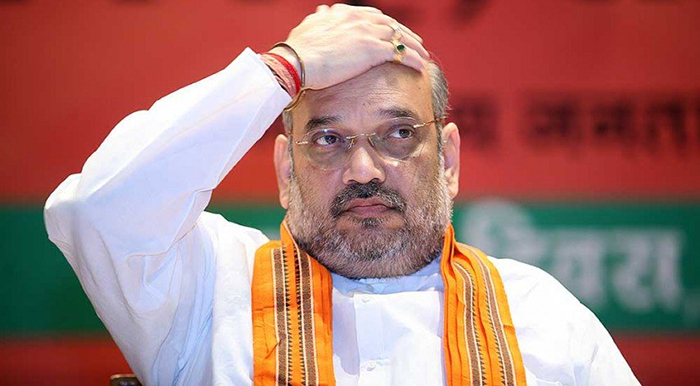
New Delhi, Aug 2: Union Home Minister Amit Shah today tested positive for COVID-19 coronavirus infection and has been admitted to a hospital. 

Shah took to social media today to inform about his infection. “I have tested positive but my health is fine," he said, adding that he has been hospitalised on the assistance of doctors. 

The Union Home Minister also appealed to those who came into close contact with him in the last few days to get themselves tested for COVID-19.

Comments

Add new comment

  • Coastaldigest.com reserves the right to delete or block any comments.
  • Coastaldigset.com is not responsible for its readers’ comments.
  • Comments that are abusive, incendiary or irrelevant are strictly prohibited.
  • Please use a genuine email ID and provide your name to avoid reject.
coastaldigest.com web desk
June 27,2020

New Delhi, June 27: The Prime Minister Narendra Modi-led union government of India is not ready to stop all imports from aggressive China in spite of mount calls to boycott Chinese products in India.

The Centre is reportedly considering to stop only non-essential imports from the neighbouring country.

However, the Inward shipment in sectors such as automobiles, pharmaceuticals, certain electronics and others will continue until a domestic alternative is found.

“India will gradually move towards import substitution. It will not happen overnight. In the meantime, attention has to be paid on production and job creation. We cannot throttle our industry. There are certain absolutely essential imports. Needless to say, those will keep going,” official sources said.

Sources said that both the government and the industry are in the process of identifying products that can be domestically manufactured in the medium term. There are certain chemicals, automotive components, handicrafts, cosmetics, agriculture items and certain consumer electronics, which can be manufactured domestically in the short to medium term. The government is doing all it can to raise the capacity of domestic industries.

However, there are certain other imports in the automobile and the pharmaceutical sectors which cannot be done away within the short to medium term. Their domestic production at the moment may not be that cost-effective.

The six-crore strong traders’ body CAIT has been at the forefront of such a demand and has launched a campaign to celebrate Indian Diwali this year with a total absence of Chinese goods.

“Ease of doing business, capital availability at lower rates and globally competitive logistics and energy costs are some of the prerequisites that the government should look into to ensure the growth of the domestic auto component industry,” according to Automotive Component Manufacturers Association of India (ACMA) Director General Vinnie Mehta.

Maruti Suzuki Chairman R C Bhargava said, “People who are boycotting Chinese goods have to remember that in some cases it may lead to their being asked to pay more for the same product."

Meanwhile, domestic rating agency Acuite Ratings & Research has analysed the current import portfolio from China and found 40 sub-sectors have the potential to lower their import dependency on China. These sectors contribute to $33.6 billion worth of imports from China and about 25% of these imports can be substituted by local manufacturing without any significant additional investments.

Comments

Add new comment

  • Coastaldigest.com reserves the right to delete or block any comments.
  • Coastaldigset.com is not responsible for its readers’ comments.
  • Comments that are abusive, incendiary or irrelevant are strictly prohibited.
  • Please use a genuine email ID and provide your name to avoid reject.
News Network
March 3,2020

Mar 3: Just hours after the ending of a week-long “reduction” in violence that was crucial for Donald Trump’s peace deal in Afghanistan, the Taliban struck again: On Monday, they killed three people and injured about a dozen at a football match in Khost province. This resumption of violence will not surprise anyone actually invested in peace for that troubled country. The point of the U.S.-Taliban deal was never peace. It was to try and cover up an ignominious exit for the U.S., driven by an election-bound president who feels no responsibility toward that country or to the broader region.

Seen from South Asia, every point we know about in the agreement is a concession by Trump to the Taliban. Most importantly, it completes a long-term effort by the U.S. to delegitimize the elected government in Kabul — and, by extension, Afghanistan’s constitution. Afghanistan’s president is already balking at releasing 5,000 Taliban prisoners before intra-Afghan talks can begin — a provision that his government did not approve.

One particularly cringe-worthy aspect: The agreement refers to the Taliban throughout  as “the Islamic Emirate of Afghanistan that is not recognized by the United States as a state and is known as the Taliban.” This unwieldy nomenclature validates the Taliban’s claim to be a government equivalent to the one in Kabul, just not the one recognised at the moment by the U.S. When read together with the second part of the agreement, which binds the U.S. to not “intervene in [Afghanistan’s] domestic affairs,” the point is obvious: The Taliban is not interested in peace, but in ensuring that support for its rivals is forbidden, and its path to Kabul is cleared.

All that the U.S. has effectively gotten in return is the Taliban’s assurance that it will not allow the soil of Afghanistan to be used against the “U.S. and its allies.” True, the U.S. under Trump has shown a disturbing willingness to trust solemn assurances from autocrats; but its apparent belief in promises made by a murderous theocratic movement is even more ridiculous. Especially as the Taliban made much the same promise to an Assistant Secretary of State about Osama bin Laden while he was in the country plotting 9/11.

Nobody in the region is pleased with this agreement except for the Taliban and their backers in the Pakistani military. India has consistently held that the legitimate government in Kabul must be the basic anchor of any peace plan. Ordinary Afghans, unsurprisingly, long for peace — but they are, by all accounts, deeply skeptical about how this deal will get them there. The brave activists of the Afghan Women’s Network are worried that intra-Afghan talks will take place without adequate representation of the country’s women — who have, after all, the most to lose from a return to Taliban rule.

But the Pakistani military establishment is not hiding its glee. One retired general tweeted: “Big victory for Afghan Taliban as historic accord signed… Forced Americans to negotiate an accord from the position of parity. Setback for India.” Pakistan’s army, the Taliban’s biggest backer, longs to re-install a friendly Islamist regime in Kabul — and it has correctly estimated that, after being abandoned by Trump, the Afghan government will have sharply reduced bargaining power in any intra-Afghan peace talks. A deal with the Taliban that fails also to include its backers in the Pakistani military is meaningless.

India, meanwhile, will not see this deal as a positive for regional peace or its relationship with the U.S. It comes barely a week after Trump’s India visit, which made it painfully clear that shared strategic concerns are the only thing keeping the countries together. New Delhi remembers that India is not, on paper, a U.S. “ally.” In that respect, an intensification of terrorism targeting India, as happened the last time the U.S. withdrew from the region, would not even be a violation of Trump’s agreement. One possible outcome: Over time the government in New Delhi, which has resolutely sought to keep its ties with Kabul primarily political, may have to step up security cooperation. Nobody knows where that would lead.

The irresponsible concessions made by the U.S. in this agreement will likely disrupt South Asia for years to come, and endanger its own relationship with India going forward. But worst of all, this deal abandons those in Afghanistan who, under the shadow of war, tried to develop, for the first time, institutions that work for all Afghans. No amount of sanctimony about “ending America’s longest war” should obscure the danger and immorality of this sort of exit.


Comments

Add new comment

  • Coastaldigest.com reserves the right to delete or block any comments.
  • Coastaldigset.com is not responsible for its readers’ comments.
  • Comments that are abusive, incendiary or irrelevant are strictly prohibited.
  • Please use a genuine email ID and provide your name to avoid reject.