Saudi, UAE military airstrikes in Yemen kill at least 31 people

Agencies
February 16, 2020

Al-Jawf, Feb 16: At least 31 people were killed and 12 others were injured here in the al-Maslub district in airstrikes by the Saudi-UAE-led military coalition on Saturday.

"Preliminary field reports indicate that as many as 31 civilians were killed and 12 others injured in strikes that hit al-Hayjah area of the al-Maslub district in al-Jawf governorate," said a statement from the office of the UN resident coordinator and humanitarian coordinator for Yemen.

According to Al Jazeera, the airstrike was conducted hours after the Yemeni Houthis said that they downed a Saudi fighter jet in the same region.

Commenting on the air raids, Lise Grande, the UN's humanitarian coordinator for Yemen, said: "We share our deep condolences with the families of those killed and we pray for the speedy recovery of everyone who has been injured in these terrible strikes."

"So many people are being killed in Yemen - it's a tragedy and it's unjustified. Under international humanitarian law, parties that resort to force is obligated to protect civilians," Grande was quoted as saying.

Comments

Add new comment

  • Coastaldigest.com reserves the right to delete or block any comments.
  • Coastaldigset.com is not responsible for its readers’ comments.
  • Comments that are abusive, incendiary or irrelevant are strictly prohibited.
  • Please use a genuine email ID and provide your name to avoid reject.
News Network
June 23,2020

Riyadh, Jun 23: Authorities in Saudi Arabia have decided to allow a limited number of citizens and residents who are already in the Kingdom to do this year’s Haj.

In a statement on Monday, the Ministry of Haj and Umrah said that in light of the continuation of the coronavirus pandemic and the risks of infections spreading in crowded spaces and large gatherings, it has been decided that Haj for this year (1441 H/ 2020 AD) will be held whereby a very limited number of pilgrims from various nationalities who already reside in Saudi Arabia, would be able to perform it.

“The decision was taken to ensure Haj is performed in a safe manner from a public health perspective while observing all preventative measures and the necessary social distancing protocols to protect human beings from the risks associated with this pandemic and in accordance with the teachings of Islam in preserving the lives of human beings, the statement added.

“The government of the Custodian of the Two Holy Mosques is honored to serve millions of Haj and Umrah pilgrims annually and it confirms that this decision stems from the top priority it accords maintaining the safety of pilgrims on its land until they depart to their home countries.”

“We ask Allah the Almighty to protect all countries from this pandemic and keep all humans protected and safe, the statement said.

Saudi Arabia’s top priority is to always enable Muslim pilgrims to perform Haj and Umrah rites safely and securely and the Kingdom has been keen since the beginning of the pandemic to take all necessary precautionary measures to protect pilgrims, including by suspending the entry of Umrah pilgrims while ensuring the safety of the pilgrims already present at the holy sites, the statement further added.

Commenting on the Haj decision, the Saudi Human Rights Commission said that Saudi Arabia believes in the universal right to health. Limiting Haj not only protects the Kingdom but also many pilgrims and the communities they call home around the world.

Comments

Add new comment

  • Coastaldigest.com reserves the right to delete or block any comments.
  • Coastaldigset.com is not responsible for its readers’ comments.
  • Comments that are abusive, incendiary or irrelevant are strictly prohibited.
  • Please use a genuine email ID and provide your name to avoid reject.
News Network
May 19,2020

Abu Dhabi: The United Arab Emirates today reported 873 new coronavirus cases, pushing the total number of COVID-19 infections in the country to 25,063.

Three more people have died from the virus, bringing the total death toll to 227, the ministry revealed, adding that a total of 1,214 COVID-19 patients have made full recovery, which takes the overall number of patients recovered to 10,791.

The latest coronavirus patients, all of whom are in a stable condition and receiving the necessary care, were identified after conducting more than 38,000 additional COVID-19 tests among UAE citizens and residents over the past few days, the ministry said.

It expressed its sincere condolences to the families of the deceased and wished a speedy recovery to all patients, calling on the public to cooperate with health authorities and comply with all precautionary measures, particularly social distancing protocols, to ensure the safety and protection of the public.

Comments

Add new comment

  • Coastaldigest.com reserves the right to delete or block any comments.
  • Coastaldigset.com is not responsible for its readers’ comments.
  • Comments that are abusive, incendiary or irrelevant are strictly prohibited.
  • Please use a genuine email ID and provide your name to avoid reject.
Agencies
August 2,2020

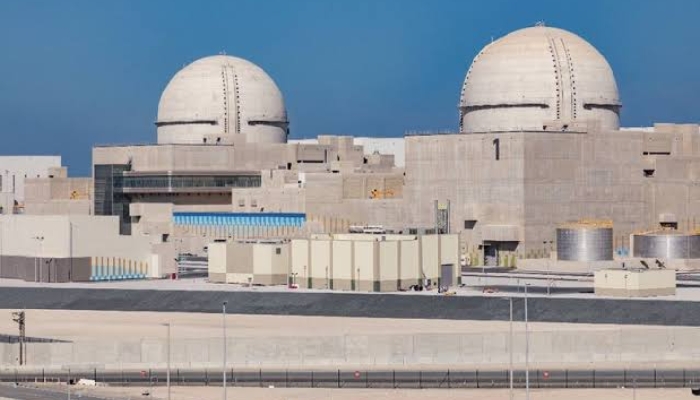
Dubai, Aug 2: The United Arab Emirates (UAE) announced on Saturday that it has started operations in the first of four reactors at the Barakah nuclear power station - the first nuclear power plant in the Arab world.

Emirates Nuclear Energy Corporation (ENEC), which is building and operating the plant with Korea Electric Power Corporation (KEPCO) said in a press release that its subsidiary Nawah Energy Company "has successfully started up Unit 1 of the Barakah Nuclear Energy Plant, located in the Al Dhafrah Region of Abu Dhabi".

That signals that Unit 1, which had fuel rods loaded in March, has achieved "criticality" - a sustained fission chain reaction.

"The start-up of Unit 1 marks the first time that the reactor safely produces heat, which is used to create steam, turning a turbine to generate electricity," said ENEC.

Barakah, which was originally scheduled to open in 2017, has been dogged by delays and is billions of dollars over budget. It has also raised myriad concerns among nuclear energy veterans who are concerned about the potential risks Barakah could visit upon the Arabian Peninsula, from an environmental catastrophe to a nuclear arms race.

Paul Dorfman, an honorary senior research fellow at the Energy Institute, University College London and founder and chair of the Nuclear Consulting Group, has criticised the Barakah reactors' "cheap and cheerful" design that he says cuts corners on safety.

Dorfman authored a report (PDF) last year detailing key safety features Barakah's reactors lack, such as a "core catcher" to literally stop the core of a reactor from breaching the containment building in the event of a meltdown. The reactors are also missing so-called Generation III Defence-In-Depth reinforcements to the containment building to shield against a radiological release resulting from a missile or fighter jet attack.

Both of these engineering features are standard on new reactors built in Europe, says Dorfman.

There have been at least 13 aerial attacks on nuclear facilities in the Middle East - more than any other region on earth.

The vulnerability of critical infrastructure in the Arabian Peninsula was further laid bare last year after Saudi Arabia's oil facilities at Abqaiq and Khurais were attacked by 18 drones and seven cruise missiles - an assault that temporarily knocked out more than half of the kingdom's oil production.

On Saturday, Dorfman reiterated his concern that there is no regional protocol in place to determine liability should an accident or incident at Barakah result in radioactive contamination spreading from the UAE to its neighbours. 

"Given Barakah has started up, because of all the well-rehearsed nuclear safety and security problems, it may be critically important that the Gulf states collectively evolve a Nuclear Accident Liability Convention, so that if anything does go wrong, victim states may have some sort of redress," Dorfman told Al Jazeera. 

The UAE has substantial oil and gas reserves, but it has made huge investments in developing alternative energy sources, including nuclear and solar.

Experts though have questioned why the UAE - which is bathed in sunlight and wind - has pushed ahead with nuclear energy - a far more expensive and riskier option than renewable energy sources.

When the UAE first announced Barakah in 2009, nuclear power was cheaper than solar and wind. But by 2012 - when the Emirates started breaking ground to build the reactors - solar and wind costs had plummeted dramatically.

Between 2009 and 2019, utility-scale average solar photovoltaic costs fell 89 percent and wind fell 43 percent, while nuclear jumped 26 percent, according to an analysis by the financial advisory and asset manager Lazard.

There are also concerns about the potential for Barakah to foment nuclear proliferation in the Middle East - a region rife with geopolitical fault lines and well-documented history of nuclear secrecy.

The UAE has sought to distance itself from the region's bad behaviour by agreeing not to enrich its own uranium or reprocess spent fuel. It has also signed up to the United Nation's nuclear watchdog's Additional Protocol, significantly enhancing inspection capabilities, and secured a 123 Agreement with the United States that allows bilateral civilian nuclear cooperation.


Comments

Add new comment

  • Coastaldigest.com reserves the right to delete or block any comments.
  • Coastaldigset.com is not responsible for its readers’ comments.
  • Comments that are abusive, incendiary or irrelevant are strictly prohibited.
  • Please use a genuine email ID and provide your name to avoid reject.

