


SC refuses to relax ban on crackers in NCR, rejects traders' plea

Agencies
October 13, 2017

New Delhi, Oct 13: The Supreme Court today refused to relax the ban on the sale of firecrackers in Delhi and the national capital region till October 31.

The apex court dismissed the plea of firecracker traders who had sought relaxation in the October 9 ban order and sought permission to sell crackers for at least a day or two before Diwali on October 19.

The top court also expressed pain over certain people trying to give its order a political colour, after advocate Prashant Bhushan, appearing for one of the parties, referred to certain statements made by some political leaders.

A bench of Justices A K Sikri and Ashok Bhushan said that relaxing the ban order "would be against the very spirit" of the verdict passed by the top court.

The bench also said that people would burst firecrackers which they have purchased before the October 9 order.

"We are not going to relax the order as far as sale of firecrackers is concerned," the bench said and directed the Delhi Police to implement the order.

"Sale of firecrackers which has already taken place before the ban order. People will burst it and that will be sufficient. Anyhow, it is not going to be a cracker-free Diwali," the court said.

At the outset, senior advocate Mukul Rohatgi, appearing for the firecracker traders, suggested to the bench that the sale of crackers should be allowed at least a day or two before Diwali.

He also suggested that the court could restrict the time for bursting firecrackers or its sale.

The traders had on October 11 said their licences were revived in pursuance of the court's order passed on September 12 and they had procured firecrackers for sale during Diwali.

They had told the top court that a huge amount of money has been invested by them after their licences were revived and the latest order would cause massive loss to them.

The apex court, while banning the sale of firecrackers till October 31, had said its September 12 order temporarily lifting the stay and permitting sale of firecrackers, would be made effective only from November one.

It had said its November 11, 2016 order suspending the licences "should be given one chance to test itself" to see if there is a positive effect of this, particularly during Diwali.

Comments

jay
 - 
Tuesday, 17 Oct 2017

The destruction of the environment is not only limited to Deepavali. Think about many other celebrations. During Dussehra and Ganesh Puja, loudspeakers blare from morning to night. Large-scale disturbance and noise take place. Can’t we reduce this? The number of idols we immerse in water – don’t they cause pollution in the water bodies? We followed untouchability and Sati for years, but eventually banned them. Any rituals or traditions hurting any individual’s or group’s sentiments or affecting the environment should be stopped or limited. We must think of innovative ideas which will reduce the use of crackers.

Add new comment

  • Coastaldigest.com reserves the right to delete or block any comments.
  • Coastaldigset.com is not responsible for its readers’ comments.
  • Comments that are abusive, incendiary or irrelevant are strictly prohibited.
  • Please use a genuine email ID and provide your name to avoid reject.
coastaldigest.com news network
July 27,2020

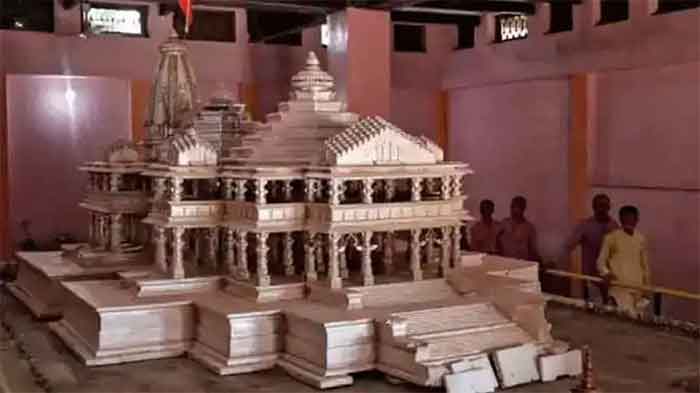
Ayodhya, Jul 27: With days to go for the August 5 "bhoomi pujan" ceremony of the Ram temple in Ayodhya, the mosques adjacent to the demolished Babri Masjid premises are spreading the message of a peaceful coexistence of Hindus and Muslims.

There are eight mosques and two mausoleums located close to the 70-acre Babri Masjid premises mandated by the Supreme Court for a temple of Sri Ram.

Azaan and namaaz are offered in the mosques and the annual "Urs" is held at the mausoleums without any objection from the local Hindus.

The eight mosques located near the upcoming Ram temple premises are Masjid Dorahikuan, Masjid Mali Mandir ke Bagal, Masjid Kaziyana Achchan ke Bagal, Masjid Imambara, Masjid Riyaz ke Bagal, Masjid Badar Paanjitola, Masjid Madaar Shah and Masjid Tehribazar Jogiyon ki.

The two mausoleums are Khanqaahe Muzaffariya and Imambara.

"It is the greatness of Ayodhya that the mosques surrounding the Ram temple are giving a strong message of communal harmony to the rest of the world," Haji Asad Ahmad, the corporator of the Ram Kot ward, said. The Ram temple area is situated in Ahmad's ward.

"Muslims take out the 'juloos' of Barawafaat that goes through the periphery of Ram Janmabhoomi. All religious functions and rituals of Muslims are respected by their fellow citizens," the corporator said.

Asked for a comment on the presence of mosques near the upcoming Ram temple premises, the chief priest of the temple, Acharya Satyendra Das, said, "We had a dispute only with the structure that was connected to the name of (Mughal emperor) Babur. We have never had any issue with the other mosques and mausoleums in Ayodhya. This is a town where Hindus and Muslims live in peace."

"Muslims offer namaaz, we perform our puja. The mosques around us will strengthen Ayodhya's communal harmony and peace will prevail," he added.

Both Hindus and Muslims have accepted the Supreme Court verdict over Ram Janmabhoomi, Das said, adding, "We have no dispute with each other."

Sayyad Akhlaq Ahmad Latifi, the "sajjada nasheen" and "pir" of the 500-year-old Khanqaahe Muzaffariya mausoleum, said Muslims in Ayodhya are performing all religious practices freely.

"We offer prayers five times a day in the mosque at Khanqaah and hold the yearly 'Urs'," he added.

"What a scene would it be -- a grand Ram temple surrounded by small mosques and mausoleums and everyone offering prayers according to their beliefs. That will be representative of the true culture of India," Mahant Yugal Kishore Sharan Shastri, the chief priest of the Sarayu Kunj temple adjacent to the Ram Janmabhoomi premises, said.

Reacting to the presence of mosques and mausoleums near the Ram Janmabhoomi premises, Triloki Nath Pandey, the decree holder of the land as the "first friend of Ram Lalla" as mandated by the Supreme Court, said, "We do not have any objection to either those mosques or any other mosques. We will not trigger a dispute regarding any structure, Ayodhya must live in peace and communal harmony."

Mahant Raju Das, the priest of the Hanumangarhi temple, said, "The presence of the mosques tells the story of Ayodhya's communal harmony. A Ram mandir will be built and there will be no objection to the mosques or religious practices of Muslims."

Comments

Add new comment

  • Coastaldigest.com reserves the right to delete or block any comments.
  • Coastaldigset.com is not responsible for its readers’ comments.
  • Comments that are abusive, incendiary or irrelevant are strictly prohibited.
  • Please use a genuine email ID and provide your name to avoid reject.
News Network
January 30,2020

New Delhi, Jan 30: In a major shift of strategy ahead of the Delhi assembly polls, the Bharatiya Janata Party (BJP) has decided to rope in its senior leaders for massive public rallies.

Its star campaigners like Prime Minister Narendra Modi, Union Home Minister Amit Shah, BJP chief JP Nadda, Uttar Pradesh Chief Minister Yogi Adityanath, and other union ministers would now be addressing massive public rallies in addition to ongoing neighbourhood meetings.

"The big rallies would begin from February 1. While 'Nukkad' meetings will take place till the last day of campaigning, there would be big rallies of the top leadership of the party, " informed a senior party leader.

Sources said the BJP has changed its strategy after the success of its grassroots contact programme as the party wants to consolidate its gains.

"As part of the reworked strategy the BJP has asked its various Mandals to organise public meetings of 10,000-15,000 people in each assembly segment to reach out to the masses," sources added.

While there are two planned for Prime Minister Modi, two have been planned for JDU chief and Bihar Chief Minister Nitish Kumar along with Nadda and Amit Shah. Yogi Aadityanath too would be addressing 12 rallies.

The party is leaving no stone unturned to secure massive gains, which it feels can be converted to victory in the forthcoming polls.

Party sources feel that the relentless campaigning under the guidance of Amit Shah and Nadda has ensured that the morale of party cadre is at an all-time high.

"The neighbourhood meetings have ensured that we have been able to make the people of Delhi aware of the lack of work under the Arvind Kejriwal led Aam Aadmi Party government. They have also been apprised about the anti-national views of the opponents and we think that this is expected to turn the polls into our favour," sources added.

Delhi is scheduled for assembly polls on February 8 and the results for the 70 constituencies will be declared on February 11.

As part of the new strategy, senior leaders like JP Nadda, Amit Shah, Uttar Pradesh chief minister Yogi Adityanath, ministers like Rajnath Singh and Smriti Irani would be holding public rallies in various parts of the city. Several other chief ministers from various BJP ruled states are also expected to be roped in for the campaign.

The strategy for reach out to the masses is an attempt at weakening the hold of AAP on Delhi. With positive feedback coming after the success of the neighbourhood meetings in the past week, the BJP is now looking to increase its potential reach with polls just days away.

Till now the party had deployed 70 union ministers to hold at least one public meeting and one 'padayatra' each as part of the campaign.

Comments

Add new comment

  • Coastaldigest.com reserves the right to delete or block any comments.
  • Coastaldigset.com is not responsible for its readers’ comments.
  • Comments that are abusive, incendiary or irrelevant are strictly prohibited.
  • Please use a genuine email ID and provide your name to avoid reject.
News Network
March 9,2020

New Delhi, Mar 9: A war of words broke out between the BJP and the Congress on Sunday over the Yes Bank crisis with the ruling party seeking to link it with the Gandhi family, while the opposition wondered if the prime minister and finance minister were "complicit" as the bank's loan book grew manifold.

Posting on Twitter a clip of a news channel report that Rana Kapoor, the arrested Yes Bank founder, had bought a painting from Congress leader Priyanka Gandhi Vadra, BJP's information and technology wing in-charge Amit Malviya alleged that every financial crime in India has "deep links" with the Gandhis.

The Congress dismissed the charge "fake" and called it a "diversionary" tactic.

It said Priyanka Gandhi had sold an M F Hussain painting of her father Rajiv Gandhi to Kapoor for Rs 2 crore, and the entire amount was disclosed in her income tax return of 2010.

Malviya tweeted, "Every financial crime in India has deep link with the Gandhis. Mallya used to send flight upgrade tickets to Sonia Gandhi. Had access to MMS (Manmohan Singh) and PC (P Chidambaram). Is absconding. Rahul inaugurated Nirav Modi’s bridal jewellery collection, he defaulted. Rana bought Priyanka Vadra’s paintings."

Congress' chief spokesperson Randeep Surjewala asked how does an M F Hussain painting of Rajiv Gandhi sold 10 years ago by Priyanka Gandhi to Yes Bank owner Rana Kapoor and disclosed in her tax returns connect with unprecedented giving of loans of Rs 2,00,000 crore in five years of the Modi government.

"More so, when (Kapoor's) proximity to BJP leaders is well known," he said.

Rubbishing the BJP's allegation, Congress spokesperson Abhishek Manu Singhvi at a press conference said it was a "diversionary" tactic by the government.

He noted that the bank's loan book rose from Rs 55,633 crore in March 2014, the year Narendra Modi became prime minister, to Rs 2,41,499 crore in March 2019.

"Why did the loan book rise by 100 per cent in two years after demonetisation i.e from Rs 98,210 cr in March 2016 to Rs 2,03,534 ar in March 2018? Were PM and FM sleeping, ignorant or complicit?" he asked.

The entire amount Priyanka Gandhi had received was in cheque and was fully disclosed in the income tax return, Singhvi said.

Surjewala, taking to Twitter, said instead of diverting from the real issue of people's money sinking into a bad bank, should not the government answer questions like how did loans given by Yes Bank rise from Rs 55,633 crore in March 2014 to Rs 2,41,499 crore in March 2019, an increase of almost Rs 2,00,000 crore in fiver years of the Modi government.

Why did the loans given by Yes Bank rise by a whopping 100 per cent in just two years after demonetisation, he asked.

Surjewala also questioned why did the prime minister address a conference sponsored by Yes Bank on March 6 despite the RBI moratorium.

"Why did the Haryana BJP government deposit over Rs 1,000 crore in Yes Bank a month ago, knowing that it was sinking? Is this figure Rs 3,000 cr? Did Fadnavis government in Maharashtra make similar deposits?" Surjewala asked.

"Of course, the government's media proxies won't dare to ask these questions. But the nation wants to know!" he said in a series of tweets.

Kapoor, 62, was arrested by the Enforcement Directorate in Mumbai after charges of alleged financial irregularities and mismanagement in the bank's operations surfaced and the RBI and Union government initiated action to control its affairs.

Comments

Add new comment

  • Coastaldigest.com reserves the right to delete or block any comments.
  • Coastaldigset.com is not responsible for its readers’ comments.
  • Comments that are abusive, incendiary or irrelevant are strictly prohibited.
  • Please use a genuine email ID and provide your name to avoid reject.