SC refuses to relax ban on crackers in NCR, rejects traders' plea

Agencies
October 13, 2017

New Delhi, Oct 13: The Supreme Court today refused to relax the ban on the sale of firecrackers in Delhi and the national capital region till October 31.

The apex court dismissed the plea of firecracker traders who had sought relaxation in the October 9 ban order and sought permission to sell crackers for at least a day or two before Diwali on October 19.

The top court also expressed pain over certain people trying to give its order a political colour, after advocate Prashant Bhushan, appearing for one of the parties, referred to certain statements made by some political leaders.

A bench of Justices A K Sikri and Ashok Bhushan said that relaxing the ban order "would be against the very spirit" of the verdict passed by the top court.

The bench also said that people would burst firecrackers which they have purchased before the October 9 order.

"We are not going to relax the order as far as sale of firecrackers is concerned," the bench said and directed the Delhi Police to implement the order.

"Sale of firecrackers which has already taken place before the ban order. People will burst it and that will be sufficient. Anyhow, it is not going to be a cracker-free Diwali," the court said.

At the outset, senior advocate Mukul Rohatgi, appearing for the firecracker traders, suggested to the bench that the sale of crackers should be allowed at least a day or two before Diwali.

He also suggested that the court could restrict the time for bursting firecrackers or its sale.

The traders had on October 11 said their licences were revived in pursuance of the court's order passed on September 12 and they had procured firecrackers for sale during Diwali.

They had told the top court that a huge amount of money has been invested by them after their licences were revived and the latest order would cause massive loss to them.

The apex court, while banning the sale of firecrackers till October 31, had said its September 12 order temporarily lifting the stay and permitting sale of firecrackers, would be made effective only from November one.

It had said its November 11, 2016 order suspending the licences "should be given one chance to test itself" to see if there is a positive effect of this, particularly during Diwali.

Comments

jay
 - 
Tuesday, 17 Oct 2017

The destruction of the environment is not only limited to Deepavali. Think about many other celebrations. During Dussehra and Ganesh Puja, loudspeakers blare from morning to night. Large-scale disturbance and noise take place. Can’t we reduce this? The number of idols we immerse in water – don’t they cause pollution in the water bodies? We followed untouchability and Sati for years, but eventually banned them. Any rituals or traditions hurting any individual’s or group’s sentiments or affecting the environment should be stopped or limited. We must think of innovative ideas which will reduce the use of crackers.

Add new comment

  • Coastaldigest.com reserves the right to delete or block any comments.
  • Coastaldigset.com is not responsible for its readers’ comments.
  • Comments that are abusive, incendiary or irrelevant are strictly prohibited.
  • Please use a genuine email ID and provide your name to avoid reject.
Agencies
June 30,2020

United Nations, Jun 30: India accounts for 45.8 million of the world's 142.6 million "missing females" over the past 50 years, a report by the United Nations said on Tuesday, noting that the country along with China form the majority of such women globally.

The State of World Population 2020 report released on Tuesday by the United Nations Population Fund (UNFPA), the world organisation's sexual and reproductive health agency, said that the number of missing women has more than doubled over the past 50 years - from 61 million in 1970 to a cumulative 142.6 million in 2020.

Of this global figure, India accounted for 45.8 million missing females as of 2020 and China accounted for 72.3 million.

Missing females are women missing from the population at given dates due to the cumulative effect of postnatal and prenatal sex selection in the past, the agency said.

Between 2013 and 2017, about 460,000 girls in India were missing' at birth each year. According to one analysis, gender-biased sex selection accounts for about two-thirds of the total missing girls, and post-birth female mortality accounts for about one-third, the report said.

Citing data by experts, it said that China and India together account for about 90-95 per cent of the estimated 1.2 million to 1.5 million missing female births annually worldwide due to gender-biased (prenatal) sex selection.

The two countries also account for the largest number of births each year, it said.

The report cites data by Alkema, Leontine and others, 2014 National, Regional, and Global Sex Ratios of Infant, Child, and under-5 Mortality and Identification of Countries with Outlying Ratios: A Systematic Assessment' from The Lancet Global Health.

According to their analysis, India has the highest rate of excess female deaths, 13.5 per 1,000 female births, which suggests that an estimated one in nine deaths of females below the age of 5 may be attributed to postnatal sex selection.

The report notes that governments have also taken action to address the root causes of sex selection. India and Vietnam have included campaigns that target gender stereotypes to change attitudes and open the door to new norms and behaviours.

They spotlight the importance of daughters and highlight how girls and women have changed society for the better. Campaigns that celebrate women's progress and achievements may resonate more where daughter-only families can be shown to be prospering, it said.

The report said that successful education-related interventions include the provision of cash transfers conditional on school attendance; or support to cover the costs of school fees, books, uniforms and supplies, taking note of successful cash-transfer initiatives such as Apni Beti Apna Dhan' in India.

It said that preference for a male child manifested in sex selection has led to dramatic, long-term shifts in the proportions of women and men in the populations of some countries.

This demographic imbalance will have an inevitable impact on marriage systems. In countries where marriage is nearly universal, many men may need to delay or forego marriage because they will be unable to find a spouse, the report said.

This so-called "marriage squeeze", where prospective grooms outnumber prospective brides, has already been observed in some countries and affects mostly young men from lower economic strata.

"At the same time, the marriage squeeze could result in more child marriages, the report said citing experts.

Some studies suggest that the marriage squeeze will peak in India in 2055. The proportion of men who are still single at the age of 50 is forecast to rise after 2050 in India to 10 per cent, it said.

The UN report said that every year, millions of girls globally are subjected to practices that harm them physically and emotionally, with the full knowledge and consent of their families, friends and communities.

At least 19 harmful practices, ranging from breast ironing to virginity testing, are considered human rights violations, according to the UNFPA report, which focuses on the three most prevalent ones: female genital mutilation, child marriage, and extreme bias against daughters in favour of sons.

Harmful practices against girls cause profound and lasting trauma, robbing them of their right to reach their full potential, says UNFPA Executive Director Dr. Natalia Kanem.

This year, an estimated 4.1 million girls will be subjected to female genital mutilation. Today, 33,000 girls under age 18 will be forced into marriages, usually to much older men and an extreme preference for sons over daughters in some countries has fuelled gender-biased sex selection or extreme neglect that leads to their death as children, resulting in the 140 million missing females.

The report said that ending child marriage and female genital mutilation worldwide is possible within 10 years by scaling up efforts to keep girls in school longer and teach them life skills and to engage men and boys in social change.

Investments totalling USD 3.4 billion a year through 2030 would end these two harmful practices and end the suffering of an estimated 84 million girls, it said.

A recent analysis revealed that if services and programmes remain shuttered for six months due to the COVID-19 pandemic, an additional 13 million girls may be forced into marriage and 2 million more girls may be subjected to female genital mutilation between now and 2030.

The pandemic both makes our job harder and more urgent as so many more girls are now at risk, Kanem said.


Comments

Add new comment

  • Coastaldigest.com reserves the right to delete or block any comments.
  • Coastaldigset.com is not responsible for its readers’ comments.
  • Comments that are abusive, incendiary or irrelevant are strictly prohibited.
  • Please use a genuine email ID and provide your name to avoid reject.
Agencies
August 8,2020

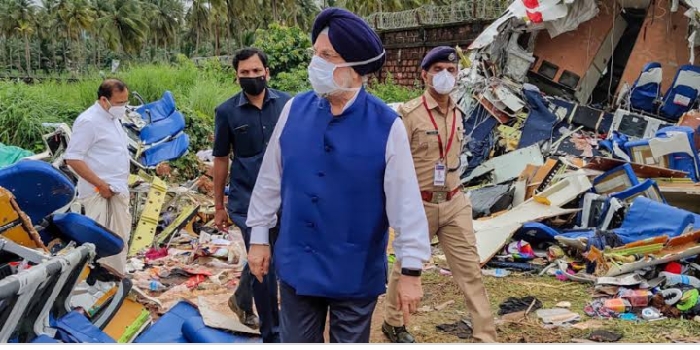
The Civil Aviation Ministry announced an initial assistance of Rs 10 lakh to the dependents of the deceased in the Kozhikode AIE plane crash, while the Kerala government also announced a compensation of Rs 10 lakh each.

Minister of Civil Aviation, Hardeep Singh Puri, who visited the mishap spot on Saturday, said that a detailed probe is already on and the pilot and co-pilot were highly experienced.

He also announced a compensation of Rs 2 lakh each to the injured and Rs. 50,000 each to those who suffered minor injuries. The other normal compensations would be decided in due course.

Puri said that Captain Deepak Vasant Sathe, aged 59, who commandeered the AIE flight, had a flying experience of 10,848 hours, while co-pilot Akhilesh Kumar, aged 32, had a flying experience of 1,723 hours.

"Deepak was one of the most distinguished and experienced pilots. He had a commanding experience of 6,662 hours and was commander of B-737 aircraft for 4,244 hours. He had also operated to Kozhikode international airport 27 times. He joined AIE in 2013 and prior to that he served with the IAF and HAL. He was a figher pilot and a recipient of prestigious sword of honour and a gold medalist," said Puri.

Puri said that even as the flight slipped down to around 35 feet, a major disaster was averted due to timely rescue operations. Local people played an exemplary role and the fire brigade's timely action of cutting the plane body and rescuing the passengers minimised the casualties, he said.

Chief Minister Pinarayi Vijayan also said that the local people and all rescue and relief agencies did a well co-ordinated job. The state government would also meet the entire treatment expenses of the injured.

Till Saturday afternoon, the total number of deaths was 18. While 149 were still in hospitals, 23 were discharged.

Comments

Add new comment

  • Coastaldigest.com reserves the right to delete or block any comments.
  • Coastaldigset.com is not responsible for its readers’ comments.
  • Comments that are abusive, incendiary or irrelevant are strictly prohibited.
  • Please use a genuine email ID and provide your name to avoid reject.
News Network
March 29,2020

New Delhi, Mar 29: The battle against coronavirus is a tough one and it required harsh decisions to keep India safe, said Prime Minister Narendra Modi in his first Mann Ki Baat after the 21-day lockdown was imposed in the wake of COVID-19 outbreak.
"The battle against COVID-19 is a tough one and it did require such harsh decisions. It is important to keep the people of India safe. A disease must be dealt with at the very beginning as delay makes it incurable," said Prime Minister Modi.
He said that as the coronavirus has put the entire world in lockdown, so "India is doing the same."
"It is a challenge before everyone, science and knowledge, poor and rich, powerful and weak. It is neither restricted to a nation nor region or particular weather. This virus is bent upon killing human beings, eliminating them. Hence all of us, the entire humanity, must unite and resolve to eliminate it," he added.
Addressing the 63rd edition of his monthly radio programme 'Mann Ki Baat', the Prime Minister had sought forgiveness from all countrymen, and especially the poor, for the nationwide lockdown in the country in the view of the novel coronavirus.
During his address to the nation on March 24, the Prime Minister had announced a 21-day nationwide lockdown to contain the spread of the deadly virus. 

Comments

Add new comment

  • Coastaldigest.com reserves the right to delete or block any comments.
  • Coastaldigset.com is not responsible for its readers’ comments.
  • Comments that are abusive, incendiary or irrelevant are strictly prohibited.
  • Please use a genuine email ID and provide your name to avoid reject.