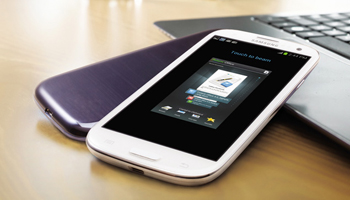
Samsung to launch smart phones priced below Rs 15K this month

September 15, 2013

Samsung_smart_phoneBerlin, Sept 15: Samsung will launch two smart phones in India this month for less than Rs 15,000, intensifying competition in the mid-segment mobile market.

The Korean company, which has a 49 per cent share in India's smart phone segment, will offer options in local languages to attract non-English speaking customers.

"We will be launching two new smart phones priced for the mid-segment market. Every phone from Samsung will have nine vernacular language options," Samsung Country Head (Mobile Business) Vineet Taneja told PTI, without mentioning the prices.

However, a company official said the phones may be priced in the Rs 5,000-15,000 range. Most mobile phones in India are sold in this price range, including Nokia Lumia 520 and 620, Blackberry Curve, Xolo smart phones and Micromax Canvas 2.

The Samsung phones will offer access to content and applications in Hindi, Punjabi, Tamil, Bengali, Telugu, Kannada, Malayalam, Marathi and Gujarati.

"The competition now in the smart phone market is how to make the phone size small without compromising on the screen size," Taneja said.

The company is set to launch its premium high-end smart phone, the Galaxy Note 3, on Tuesday.

Samsung currently offers about 17 smart phones priced between Rs 5,000 (Samsung Star) and Rs 39,000 (S4).

Taneja said the company is focusing on the mid-end to high-end smart phone market and will provide dual-SIM option in all handsets.

"Going forward, you will see more and more dual-SIM phones coming up," he said.

According to telecom magazine Voice&Data, Samsung toppled Nokia from its leadership position in the financial year 2012-13 with revenue of Rs 11,328 crore and a 31.5 per cent market share. Nokia's market share stood at 27.2 per cent.

Comments

Add new comment

  • Coastaldigest.com reserves the right to delete or block any comments.
  • Coastaldigset.com is not responsible for its readers’ comments.
  • Comments that are abusive, incendiary or irrelevant are strictly prohibited.
  • Please use a genuine email ID and provide your name to avoid reject.
Agencies
June 9,2020

Soon, you may be able to withdraw cash from an ATM without touching any part of the machine. AGS Transact Technologies, a provider of cash and digital payment solutions and automation technology, on Monday said it has successfully developed and tested a touchless ATM solution in light of the COVID-19 pandemic.

The ‘contactless' solution, currently under demo at interested banks, enables a customer to perform all the steps required to withdraw cash from an ATM using the mobile app itself. 

The customer simply has to scan the QR code displayed on the ATM screen and follow the directions on their respective bank's mobile application. 

This includes entering the amount and mPIN required to dispense the cash from the ATM machine. 

According to the company, the QR code feature makes cash withdrawals quicker and more secure, and negates the chances of compromising the ATM Pin or card skimming.

"The new Touchless ATM solution is an extension of the flagship QR Cash solution which ensures safety of the users and will provide a seamless cash withdrawal experience with enhanced security," said Ravi B. Goyal, Chairman and MD, AGS Transact Technologies Ltd.

With minimum investment, the banks can enable this solution for their ATM networks by upgrading the existing software.

AGSTTL has so far installed, maintained and managed a network of over 72,000 ATMs across the country and also provides customised solutions to leading banks. 

The company earlier introduced UPI-QR based Cash withdrawal solution in partnership with Bank of India. 

This is how the solution works.

Open the Bank mobile application on your smartphone and select QR Cash Withdrawal. Enter the amount you wish to withdraw on the mobile app and scan the QR code on the ATM screen.

Next, confirm the amount by clicking on ‘proceed' in the app and enter the mPin to authenticate the transaction. Now collect the cash and receipt and you are done.

"The seamless, cardless and touchless withdrawal method is designed to provide easy transaction flow, without the need to touch the ATM screen or enter the pin," said Mahesh Patel, President and Group Chief Technology Officer, AGS Transact Technologies.

Comments

Add new comment

  • Coastaldigest.com reserves the right to delete or block any comments.
  • Coastaldigset.com is not responsible for its readers’ comments.
  • Comments that are abusive, incendiary or irrelevant are strictly prohibited.
  • Please use a genuine email ID and provide your name to avoid reject.
News Network
May 30,2020

May 30: Patients undergoing surgery after contracting the novel coronavirus are at an increased risk of postoperative death, according to a new study published in The Lancet journal which may lead to better treatment guidelines for COVID-19.

In the study, the scientists, including those from the University of Birmingham in the UK, examined data from 1,128 patients from 235 hospitals from a total of 24 countries.

Among COVID-19 patients who underwent surgery, they said the death rates approach those of the sickest patients admitted to intensive care after contracting the virus.

The scientists noted that SARS-CoV-2 infected patients who undergo surgery, experience substantially worse postoperative outcomes than would be expected for similar patients who do not have the infection.

According to the study, the 30-day mortality among these patients was nearly 24 per cent.

The researchers noted that mortality was disproportionately high across all subgroups, including those who underwent elective surgery (18.9 per cent), and emergency surgery (25.6 per cent).

Those who underwent minor surgery, such as appendicectomy or hernia repair (16.3 per cent), and major surgery such as hip surgery or for colon cancer also had higher mortality rates (26.9 per cent), the study said.

According to the study, the mortality rates were higher in men versus women, and in patients aged 70 years or over versus those aged under 70 years.

The scientists said in addition to age and sex, risk factors for postoperative death also included having severe pre-existing medical problems, undergoing cancer surgery, undergoing major procedures, and undergoing emergency surgery.

"We would normally expect mortality for patients having minor or elective surgery to be under 1 per cent, but our study suggests that in SARS-CoV-2 patients these mortality rates are much higher in both minor surgery (16.3%) and elective surgery (18.9%)," said study co-author Aneel Bhangu from the University of Birmingham.

Bhangu said these mortality rates are greater than those reported for even the highest-risk patients before the pandemic.

Citing an example from the 2019 UK National Emergency Laparotomy Audit report, he said the 30-day mortality was 16.9 per cent in the highest-risk patients.

Based on an earlier study across 58 countries, Bhangu said the 30-day mortality was 14.9 per cent in patients undergoing high-risk emergency surgery.

"We recommend that thresholds for surgery during the SARS-CoV-2 pandemic should be raised compared to normal practice," he said.

"For example, men aged 70 years and over undergoing emergency surgery are at particularly high risk of mortality, so these patients may benefit from their procedures being postponed," Bhangu added.

The study also noted that patients undergoing surgery are a vulnerable group at risk of SARS-CoV-2 exposure in hospital.

It noted that the patients may also be particularly susceptible to subsequent pulmonary complications, due to inflammatory and immunosuppressive responses to surgery and mechanical ventilation.

The scientists found that overall in the 30 days following surgery 51 per cent of patients developed a pneumonia, acute respiratory distress syndrome, or required unexpected ventilation.

Nearly 82 per cent of the patients who died had experienced pulmonary complications, the researchers said.

"Worldwide an estimated 28.4 million elective operations were cancelled due to disruption caused by COVID-19," said co-author Dmitri Nepogodiev from the University of Birmingham.

"Our data suggests that it was the right decision to postpone operations at a time when patients were at risk of being infected with SARS-CoV-2 in hospital," Nepogodiev said.

According to the researchers, there's now an urgent need for investment by governments and health providers in to measures which ensure that as surgery restarts patient safety is prioritised.

They said this includes the provision of adequate personal protective equipment (PPE), establishment of pathways for rapid preoperative SARS-CoV-2 testing, and consideration of the role of dedicated 'cold' surgical centres.


Comments

Add new comment

  • Coastaldigest.com reserves the right to delete or block any comments.
  • Coastaldigset.com is not responsible for its readers’ comments.
  • Comments that are abusive, incendiary or irrelevant are strictly prohibited.
  • Please use a genuine email ID and provide your name to avoid reject.
Agencies
July 13,2020

New Delhi, Jul 13: The Income Tax Department has facilitated a new functionality for banks and post offices to ascertain TDS applicability rates on cash withdrawal of above Rs 20 lakh in case of a non-filer of the income-tax return and that of above Rs 1 crore in case of a filer of the income-tax return.

In a statement, the Central Board of Direct Taxes (CBDT) said that now banks and post offices have to only enter the PAN of the person who is withdrawing cash for ascertaining the applicable rate of TDS.

So far, more than 53,000 verification requests have been executed successfully on this facility, a statement by the CBDT said.

"CBDT today said that this functionality available as 'Verification of applicability u/s 194N' on www.incometaxindiaefiling.gov.in since 1st July 2020, is also made available to the Banks through web-services so that the entire process can be automated and be linked to the Bank's internal core banking solution," it said.

On entering PAN by the bank or the post office, a message will be instantly displayed on the departmental utility: "TDS is deductible at the rate of 2 per cent if cash withdrawal exceeds Rs 1 crore", in case the person withdrawing cash is a filer of the income-tax return.

In case the person withdrawing cash is a non-filer of income tax return, the message shown would be: "TDS is deductible at the rate of 2 per cent if cash withdrawal exceeds Rs 20 lakh and at the rate of 5 per cent if it exceeds Rs 1 crore."

The CBDT said that the data on cash withdrawal indicated that huge amount of cash is withdrawn by the persons who have never filed income-tax returns.

To ensure filing of return by these persons and to keep track on cash withdrawals by the non-filers, and to curb black money, the Finance Act, 2020 with effect from July 1, 2020 further amended IT Act to lower threshold of cash withdrawal to Rs 20 lakh for the applicability of this TDS for the non-filers and also mandated TDS at the higher rate of 5 per cent on cash withdrawal exceeding Rs 1 crore by the non-filers.

Comments

Add new comment

  • Coastaldigest.com reserves the right to delete or block any comments.
  • Coastaldigset.com is not responsible for its readers’ comments.
  • Comments that are abusive, incendiary or irrelevant are strictly prohibited.
  • Please use a genuine email ID and provide your name to avoid reject.