


Scientists warn of 'global sleep crisis' due to social pressures

May 7, 2016

Washington, May 7: Social pressures are forcing people to cut back on their sleep, contributing to a "global sleep crisis," according to a new study based on research collected through a smartphone app.
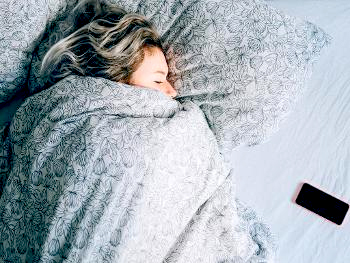
ScientistsIt enabled scientists from the University of Michigan to track sleep patterns around the world -- gathering data about how age, gender and the amount of natural light to which people are exposed affect sleep patterns in 100 countries -- and better understand how cultural pressures can override biological rhythms.

"The effects of society on sleep remain largely unquantified," says the study published Friday in the journal Science Advances.

"We find that social pressures weaken and/or conceal biological drives in the evening, leading individuals to delay their bedtime and shorten their sleep."

Lack of sleep is mostly affected by the time people go to bed, the study found.

Middle-aged men get the least amount of sleep, less than the recommended seven to eight hours.

And age is the main factor determining amount of sleep. The research is based on data collected through the free smartphone app Entrain, launched in 2014 to help users fight jetlag.

Scientists asked some 6,000 people 15 and older to send anonymous data about sleep, wake-up and lighting environment, enabling the scientists to obtain a large amount of data about sleep patterns worldwide.

The app also asks users to input information about their ages, gender, countries and time zones. Sleep is driven by an internal "circadian" clock, a cluster of 20,000 nerve cells the size of a grain of rice located behind the eyes, and adjusted according to the amount of light captured, especially natural light.

The average amount of sleep in the world varies from a minimum of seven hours 24 minutes in Singapore and Japan to a maximum of eight hours 12 minutes in the Netherlands, the study found.

Although a difference of 48 minutes may seem inconsequential, a lack of sleep for half an hour can have significant effects on cognitive function and health, the researchers said.

People who need sleep suffer a reduction in their cognitive abilities without really being conscious of it, the new study says. "Impaired sleep presents an immediate and pressing threat to human health," it says.

Comments

Arif
 - 
Sunday, 8 May 2016

\?????????? ???, ????????? ???\""

Add new comment

  • Coastaldigest.com reserves the right to delete or block any comments.
  • Coastaldigset.com is not responsible for its readers’ comments.
  • Comments that are abusive, incendiary or irrelevant are strictly prohibited.
  • Please use a genuine email ID and provide your name to avoid reject.
News Network
April 5,2020

Bengaluru, Apr 5: Fake news spreads faster and more easily nowadays through the internet, social media and instant messaging and such news about the COVID-19 pandemic have been labeled a dangerous “infodemic”.

These messages may contain useless, incorrect or even harmful information and advice, which can hamper the public health response and add to social disorder and division.

Asking people to avoid fake news on COVID-19, Hemant Nimbalkar IPS, IGP and Additional Commissioner of Police (Administration), shared a photo on his Twitter page and wrote, “One Mask For Ear Too"

Comments

Add new comment

  • Coastaldigest.com reserves the right to delete or block any comments.
  • Coastaldigset.com is not responsible for its readers’ comments.
  • Comments that are abusive, incendiary or irrelevant are strictly prohibited.
  • Please use a genuine email ID and provide your name to avoid reject.
News Network
March 29,2020

Karnataka on Saturday reported 12 new cases, the highest in a single day so far, taking the tally in the state to 76.

Late at night, the Mysuru district commissioner said five more people had tested positive in the district. But it was yet to be confirmed by the state health department.

Of the cases, 41 are from Bengaluru, eight from Chikkaballapur, while Uttara Kannada and Dakshina Kannada districts have seven each.

Interestingly, the highest number of patients are those from Dubai or those who had transit travel via Dubai. Out of 76 cases, 17 cases (22%) have travel history to Dubai, the capital of Emirate of Dubai and the most populous city in the United Arab Emirates (UAE).

Medical Education Minister Dr K Sudhakar, who is also in-charge of COVID-19 operations, said that Dubai has been a major concern as far as Karnataka COVID-19 patients are concerned. “Most of the positive cases have come through Dubai suggesting something amiss there,” he said. 

Echoing the same, Dr Prakash Kumar, Joint Director, Communicable Diseases, Department of Health and Family Welfare, said, “The layover in Dubai is around six to seven hours. We are seeing Dubai to be the new epicentre of the virus as far as India is concerned.”

UAE was initially not on the list of countries from where passengers were screened. It was added much later when clusters of patients with travel history to Dubai began popping up all over the country.

Patient-19 has infected the maximum so far.

Out of the 12 cases that tested positive on Saturday, five are contacts of Patient 19. All of them are being treated at a Chikkaballapur hospital. Two of them are from Hindupur, Andhra Pradesh, and three are residents of Gauribidanur taluk in Chikkabalapur district.

P19, a 31-year-old man from Chikkaballapur, had travelled to Mecca, Saudi Arabia, and returned to India on March 14. Existing patient clusters suggest that P19 had infected the maximum number of people. Officials did not reveal how many people he originally travelled with to Mecca.

Amid the rise in cases, Jawaid Akhtar, Additional Chief Secretary (Health), maintained that the state had not reached stage 3. But he had no definitive answer as to how the Mysuru patient contracted the virus despite health officials he was in touch with not testing positive.

Health Commissioner Pankaj Kumar Pandey said around 1,000 primary contacts of all positive cases have been classified as high-risk and low-risk. The high-risk patients are in government hospitals while the low-risk ones in quarantine facilities.

Comments

Add new comment

  • Coastaldigest.com reserves the right to delete or block any comments.
  • Coastaldigset.com is not responsible for its readers’ comments.
  • Comments that are abusive, incendiary or irrelevant are strictly prohibited.
  • Please use a genuine email ID and provide your name to avoid reject.
News Network
May 8,2020

Kochi, May 8: Five people, who were among 181 individuals evacuated from Abu Dhabi, have been sent to the isolation ward of the district hospital after they displayed symptoms of coronavirus during thermal screening.

The first repatriation Air India Express flight with 181 individuals from Abu Dhabi landed at Cochin International Airport here on Thursday.

Among the returnees, 49 women were pregnant and four were children. They have been home-quarantine.

Meanwhile, the rest have been taken to quarantine centres in their respective districts.

The Air India Express flight IX452 to Kochi with 177 passengers and four infants took off from Abu Dhabi International Airport and touched down at Kochi post 10 pm.

The government has made it mandatory for foreign returnees to be quarantined for 14 days, either in a hospital or in an institutional quarantine on payment-basis, by the concerned state government.

A COVID-19 test would be done after 14 days and further action would be taken according to health protocols.

India on Monday began phased repatriation of its citizens stranded abroad due to coronavirus lockdown.

The government said that Air India will operate 64 flights from May 7 to May 13 to bring back around 15,000 Indian nationals stranded abroad amid the COVID-19-induced lockdown.

Starting from 7 May, 64 flights will take off for 12 countries including the UAE, Saudi Arabia, Kuwait, Qatar, Bahrain, Maldives, Singapore and the US.

Comments

Add new comment

  • Coastaldigest.com reserves the right to delete or block any comments.
  • Coastaldigset.com is not responsible for its readers’ comments.
  • Comments that are abusive, incendiary or irrelevant are strictly prohibited.
  • Please use a genuine email ID and provide your name to avoid reject.