


Scientists warn of 'global sleep crisis' due to social pressures

May 7, 2016

Washington, May 7: Social pressures are forcing people to cut back on their sleep, contributing to a "global sleep crisis," according to a new study based on research collected through a smartphone app.
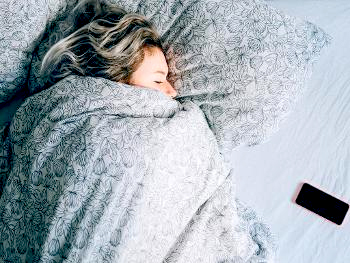
ScientistsIt enabled scientists from the University of Michigan to track sleep patterns around the world -- gathering data about how age, gender and the amount of natural light to which people are exposed affect sleep patterns in 100 countries -- and better understand how cultural pressures can override biological rhythms.

"The effects of society on sleep remain largely unquantified," says the study published Friday in the journal Science Advances.

"We find that social pressures weaken and/or conceal biological drives in the evening, leading individuals to delay their bedtime and shorten their sleep."

Lack of sleep is mostly affected by the time people go to bed, the study found.

Middle-aged men get the least amount of sleep, less than the recommended seven to eight hours.

And age is the main factor determining amount of sleep. The research is based on data collected through the free smartphone app Entrain, launched in 2014 to help users fight jetlag.

Scientists asked some 6,000 people 15 and older to send anonymous data about sleep, wake-up and lighting environment, enabling the scientists to obtain a large amount of data about sleep patterns worldwide.

The app also asks users to input information about their ages, gender, countries and time zones. Sleep is driven by an internal "circadian" clock, a cluster of 20,000 nerve cells the size of a grain of rice located behind the eyes, and adjusted according to the amount of light captured, especially natural light.

The average amount of sleep in the world varies from a minimum of seven hours 24 minutes in Singapore and Japan to a maximum of eight hours 12 minutes in the Netherlands, the study found.

Although a difference of 48 minutes may seem inconsequential, a lack of sleep for half an hour can have significant effects on cognitive function and health, the researchers said.

People who need sleep suffer a reduction in their cognitive abilities without really being conscious of it, the new study says. "Impaired sleep presents an immediate and pressing threat to human health," it says.

Comments

Arif
 - 
Sunday, 8 May 2016

\?????????? ???, ????????? ???\""

Add new comment

  • Coastaldigest.com reserves the right to delete or block any comments.
  • Coastaldigset.com is not responsible for its readers’ comments.
  • Comments that are abusive, incendiary or irrelevant are strictly prohibited.
  • Please use a genuine email ID and provide your name to avoid reject.
News Network
April 19,2020

Kasaragod, Apr 19: Kasaragod, Kerala's COVID-19 hotspot, is the only district in the southern state lacking adequate health infrastructure.

In spite of treating the highest number of COVID-19 patients in the state with meagre infrastructural facilities and even without the support of a medical college in the north Kerala district, no deaths have been reported due to coronavirus.

The state health department views the performance of M Kunhiraman and his team, consisting of Janardhana Naik and Krishna Naik, at the General hospital in Kasaragod as a success story.

"Not only did they control the situation quickly with minimum infrastructure, they also started turning out a large number of negative cases within a few weeks and creditably ensured zero mortality.

This can be showcased as a best global model," Chairman of the Information Education and Communication (IEC) Committee and Project Director Kerala State Aids Control Society, R Ramesh said.

Recalling the ordeal, Janardhana Naik said his first major challenge was the physical examination of a patient with suspected COVID-19.

"Even with the PPE kit, nobody knew how effective they were and it took a whole 30 minutes to wear them properly.

But as time passed, we got accustomed to it," he said.

The traditional method of dealing with a patient involved knowing his or her history, observation and physical examination.

For hundreds of years, the hands-on body approach has been the soul of the doctor-patient relationship -- taking the pulse, tapping on and listening to the chest, feeling lumps.

With the onset of COVID-19 all that has changed.

"In fact, the whole exercise was fraught with grave risks because everything connected with COVID-19 was new.

Doctors have to keep a distance even though the physical examination wearing a Personal Protective Equipment (PPE) is difficult.

Sounds from the body are inaudible, vision is blurred through the smog-covered goggles and a stethoscope seldom has any use," Janardhana Naik said.

It was from March 15 that the hospital started receiving COVID-19 patients, primarily from Dubai.

By the time the first person came, the hospital was ready for him.

Soon, patient numbers began to swell and in a couple of weeks they reached about 91.

From then on, it was teamwork.

Committees were formed for each and every task, including the help desk, IT, treatment, medical board, training, food, waste disposal and data maintenance.

Initially, patients had many misgivings about the hospital.

"Some were disillusioned and even aggressive. Some were not happy with the facilities the hospital had to offer.

But gradually through good treatment and counselling by a psychiatrist, who visited the hospital on alternate days, the confidence and mood of the patients changed and they became friendly with the staff," Naik elaborated.

Counselling was also given to the concerned family members of the patients.

Besides treatment, the medical staff had to spend a considerable amount of time clearing the doubts of patients.

When they got discharged some patients insisted on seeing the faces of the medical staff, who till then were anonymous entities covered from head to toe.

Some even wanted to take selfies with them.

However, the medical team politely turned down their requests and preferred to remain hidden in their work attires.

The mood of the patients also rubbed off on the doctors and hospital staff.

All the physicians and hospital staff are now more confident of dealing with contagious diseases after treating COVID-19 patients.

"Our previous experience of treating H1N1, Chikungunya and Dengue cases helped us a lot.

Words of encouragement from the Health Minister K K Shailaja, Health Principal Secretary Dr Rajan N Khobragade and Health Services Director Dr Sarita R L gave us the impetus to build up confidence.

Moreover, the field health workers did a wonderful job in containing the viral spread," Naik added.

As the number of coronavirus cases rose, the state government on April 5 deputed a 26-member medical team from Thiruvananthapuram to set up a COVID-19 hospital in the district.

They turned a block of the under construction Government Medical College as a hospital-like facility, setting up a 200 bed facility to treat coronavirus patients.

Comments

Add new comment

  • Coastaldigest.com reserves the right to delete or block any comments.
  • Coastaldigset.com is not responsible for its readers’ comments.
  • Comments that are abusive, incendiary or irrelevant are strictly prohibited.
  • Please use a genuine email ID and provide your name to avoid reject.
News Network
July 27,2020

Chennai, July 27: Multi-lingual actress Vijayalakshmi, who attempted suicide yesterday, alleging harassment and bullying by followers of Naam Thamizhar party leader Seeman and Panankattu Padai’s Hari Nadar, is recuperating at a hospital in Chennai. 

Vijayalakshmi is known for films like Friends and Boss Engira Baskaran. She recently made headlines for speaking against Seeman and the torture she was allegedly facing from the actor-turned-politician and his party.

In the video which was uploaded on Sunday evening, Vijayalakshmi said, “This is my last video and I have been in tremendous stress in the last four months because of Seeman and his partymen. I tried my level best to survive all these days because of my mother and sister, but I have been humiliated in the media by Harinadar recently.”

She added, “I would like to tell fans who are watching the video just because I was born in Karnataka, Seeman has tortured me a lot. As a woman, I have put up with it to my highest capabilities. I won’t be able handle the pressure anymore. I am from the Pillai community, the same community LTTE leader Prabhakaran is part of. Prabhakaran is the only reason Seeman is who he is today, but now he has been harassing me on social media continuously. You slut shamed me to make me feel the pain and it is up to me to decide on what to do after facing such insults from you. I request my fans not to let Seeman get away from this case. He should never get anticipatory bail. My death should be a big eye-opener to everyone. I don’t want to be a slave to anybody.”

Comments

Add new comment

  • Coastaldigest.com reserves the right to delete or block any comments.
  • Coastaldigset.com is not responsible for its readers’ comments.
  • Comments that are abusive, incendiary or irrelevant are strictly prohibited.
  • Please use a genuine email ID and provide your name to avoid reject.
News Network
January 8,2020

Udupi, Jan 8: Senior journalist Raviraj Valalambe passed away due to suspected cardiac arrest on Tuesday night at his residence in Kinnimulki, here. He was 50.

Raviraj was rushed to a hospital after he complained of chest pain. He breathed his last on way to medical facility.

He was the director of Prime TV, a local Kannada news channel.

He had worked as a reporter for ETV and Suvarna News channel earlier.

He is survived by wife and two daughters.

Comments

Add new comment

  • Coastaldigest.com reserves the right to delete or block any comments.
  • Coastaldigset.com is not responsible for its readers’ comments.
  • Comments that are abusive, incendiary or irrelevant are strictly prohibited.
  • Please use a genuine email ID and provide your name to avoid reject.