


Scientists warn of 'global sleep crisis' due to social pressures

May 7, 2016

Washington, May 7: Social pressures are forcing people to cut back on their sleep, contributing to a "global sleep crisis," according to a new study based on research collected through a smartphone app.
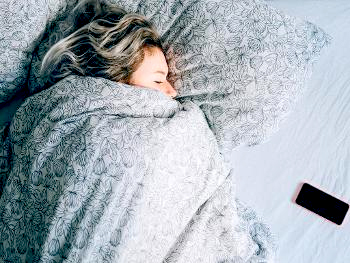
ScientistsIt enabled scientists from the University of Michigan to track sleep patterns around the world -- gathering data about how age, gender and the amount of natural light to which people are exposed affect sleep patterns in 100 countries -- and better understand how cultural pressures can override biological rhythms.

"The effects of society on sleep remain largely unquantified," says the study published Friday in the journal Science Advances.

"We find that social pressures weaken and/or conceal biological drives in the evening, leading individuals to delay their bedtime and shorten their sleep."

Lack of sleep is mostly affected by the time people go to bed, the study found.

Middle-aged men get the least amount of sleep, less than the recommended seven to eight hours.

And age is the main factor determining amount of sleep. The research is based on data collected through the free smartphone app Entrain, launched in 2014 to help users fight jetlag.

Scientists asked some 6,000 people 15 and older to send anonymous data about sleep, wake-up and lighting environment, enabling the scientists to obtain a large amount of data about sleep patterns worldwide.

The app also asks users to input information about their ages, gender, countries and time zones. Sleep is driven by an internal "circadian" clock, a cluster of 20,000 nerve cells the size of a grain of rice located behind the eyes, and adjusted according to the amount of light captured, especially natural light.

The average amount of sleep in the world varies from a minimum of seven hours 24 minutes in Singapore and Japan to a maximum of eight hours 12 minutes in the Netherlands, the study found.

Although a difference of 48 minutes may seem inconsequential, a lack of sleep for half an hour can have significant effects on cognitive function and health, the researchers said.

People who need sleep suffer a reduction in their cognitive abilities without really being conscious of it, the new study says. "Impaired sleep presents an immediate and pressing threat to human health," it says.

Comments

Arif
 - 
Sunday, 8 May 2016

\?????????? ???, ????????? ???\""

Add new comment

  • Coastaldigest.com reserves the right to delete or block any comments.
  • Coastaldigset.com is not responsible for its readers’ comments.
  • Comments that are abusive, incendiary or irrelevant are strictly prohibited.
  • Please use a genuine email ID and provide your name to avoid reject.
News Network
April 28,2020

Bengaluru, Apr 28: Karnataka has found that the rapid antibody test kits for COVID-19 that the Centre supplied to the state have only 47% sensitivity. The state will be returning the kits to the Indian Council of Medical Research (ICMR).

Karnataka had received 11,400 rapid antibody test kits from the ICMR a few days back, out of which it had sent around 200 of them to NIMHANS for validation.

After the ICMR, on Monday, sent a circular to all states to return the test kits to the suppliers, Dr CN Manjunath, Director, Jayadeva Institute of Cardiovascular Sciences and Research, and nodal officer for lab testing in the state's COVID-19 task force, said, "We have cancelled the orders we placed to Guangzhou Wondfo Biotech and Zhuhai Livzon Diagnostics for one lakh rapid antibody test kits. Since the ICMR supplied us with 11,400 kits out of the 6.5 lakh kits it procured, we will be returning the kits to them."

Manjunath told said that the validation at NIMHANS revealed the kits to have only 47% sensitivity. Sensitivity is the ability of a test to identify the true-positives in a population, i.e., the actual number of people who've been infected with the disease. With the rapid antibody testing kits being shelved, the state's plan to randomly test high risk groups has taken a backseat. 

So far, the state has tested 43,791 samples. 

Karnataka now has 22 testing facilities -- 14 government and seven private labs. Many private labs have not tested any samples so far because of the lack of test kits (the state has made it clear that it will not provide test kits to private labs). So, getting an ICMR approval for testing has become a moot point.p

Agreeing to the setback the state's plans of ramping up testing has taken, Manjunath said, "It is true that RT-PCR test kits are in shortage. Even Pune's Mylabs had a shortage in supplying test kits. But we are relying on institutes like Kidwai, Narayana Health and Biocon's Syngene that have received approval for testing. They're big institutes and we hope that they will test a large number of samples."

On reports that the Centre has RT-PCR test kits that will last for only a week, he said, "We have test kits that will last for eight to 10 days. We have ordered for more. We are hoping to receive them before the current kits run out."

Comments

Add new comment

  • Coastaldigest.com reserves the right to delete or block any comments.
  • Coastaldigset.com is not responsible for its readers’ comments.
  • Comments that are abusive, incendiary or irrelevant are strictly prohibited.
  • Please use a genuine email ID and provide your name to avoid reject.
News Network
May 29,2020

Bengaluru, May 29: The Karnataka government clarified on Thursday that it has not sought for imposing a ban on flights emanating from Maharashtra, Gujarat, Tamil Nadu, Madhya Pradesh, and Rajasthan.

The domestic air travel was resumed in several parts of the country on May 25.

The state government also said that it has appealed to the Civil Aviation Ministry to take steps to lessen the incoming air traffic.

"If there is a huge turn out at a short span of time, there may not be adequate quarantine facilities," said the state government.

A total of 115 new COVID-19 cases have been reported in Karnataka, taking the total number of cases to 2,533.

Comments

Add new comment

  • Coastaldigest.com reserves the right to delete or block any comments.
  • Coastaldigset.com is not responsible for its readers’ comments.
  • Comments that are abusive, incendiary or irrelevant are strictly prohibited.
  • Please use a genuine email ID and provide your name to avoid reject.
News Network
April 19,2020

Bengaluru, Apr 19:  Karnataka's Technical Education department following Union Home Ministry’s guidelines, on Sunday directed all its colleges not to use the Zoom application to conduct online classes during the ongoing lockdown period.

Considering Union Home Ministry's advisory that Zoom app is not safe, the department has taken the decision and issued a circular asking all government, aided and unaided engineering, polytechnic (Diploma) colleges to stop using the app immediately.

The department recommended the use of a free app developed by TCS: "TCS iON Digital class room" or any other App recommended by All India Council for Technical Education (AICTE) to conduct the online classes.

Comments

Add new comment

  • Coastaldigest.com reserves the right to delete or block any comments.
  • Coastaldigset.com is not responsible for its readers’ comments.
  • Comments that are abusive, incendiary or irrelevant are strictly prohibited.
  • Please use a genuine email ID and provide your name to avoid reject.