


Scientists warn of 'global sleep crisis' due to social pressures

May 7, 2016

Washington, May 7: Social pressures are forcing people to cut back on their sleep, contributing to a "global sleep crisis," according to a new study based on research collected through a smartphone app.
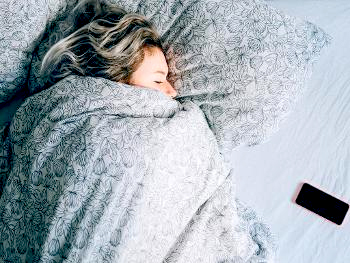
ScientistsIt enabled scientists from the University of Michigan to track sleep patterns around the world -- gathering data about how age, gender and the amount of natural light to which people are exposed affect sleep patterns in 100 countries -- and better understand how cultural pressures can override biological rhythms.

"The effects of society on sleep remain largely unquantified," says the study published Friday in the journal Science Advances.

"We find that social pressures weaken and/or conceal biological drives in the evening, leading individuals to delay their bedtime and shorten their sleep."

Lack of sleep is mostly affected by the time people go to bed, the study found.

Middle-aged men get the least amount of sleep, less than the recommended seven to eight hours.

And age is the main factor determining amount of sleep. The research is based on data collected through the free smartphone app Entrain, launched in 2014 to help users fight jetlag.

Scientists asked some 6,000 people 15 and older to send anonymous data about sleep, wake-up and lighting environment, enabling the scientists to obtain a large amount of data about sleep patterns worldwide.

The app also asks users to input information about their ages, gender, countries and time zones. Sleep is driven by an internal "circadian" clock, a cluster of 20,000 nerve cells the size of a grain of rice located behind the eyes, and adjusted according to the amount of light captured, especially natural light.

The average amount of sleep in the world varies from a minimum of seven hours 24 minutes in Singapore and Japan to a maximum of eight hours 12 minutes in the Netherlands, the study found.

Although a difference of 48 minutes may seem inconsequential, a lack of sleep for half an hour can have significant effects on cognitive function and health, the researchers said.

People who need sleep suffer a reduction in their cognitive abilities without really being conscious of it, the new study says. "Impaired sleep presents an immediate and pressing threat to human health," it says.

Comments

Arif
 - 
Sunday, 8 May 2016

\?????????? ???, ????????? ???\""

Add new comment

  • Coastaldigest.com reserves the right to delete or block any comments.
  • Coastaldigset.com is not responsible for its readers’ comments.
  • Comments that are abusive, incendiary or irrelevant are strictly prohibited.
  • Please use a genuine email ID and provide your name to avoid reject.
News Network
March 31,2020

Bengaluru, Mar 31: Venkara Raghava, a software engineer from Bengaluru, who was infected with the coronavirus has recovered and is currently "doing perfectly well".

"I am doing perfectly well now. I had travelled to Los Angeles via Heathrow airport and that is when I came in contact with many travellers. I might have picked up the infection there," Raghava told news agency.

It was in Los Angeles when he started getting a 'low-grade fever' which led him to prepone his flight to Bengaluru. "When I landed back in Bengaluru on March 8, I had a fever and I isolated myself. The same day I went to a hospital where my travel history was taken and I tested positive for COVID-19", he said.

The next day, he was admitted to the isolation centre. His entire family was also tested but the results came back negative.

When asked about what does suffering from COVID-19 feel like, he responded that it was a like a regular viral fever and was "nothing to be scared of". "The fever is very grinding, and since my childhood, I never had a fever. I had a fever for almost 15 days consistently 100 degrees (F)," he said.

About his experience at the isolation centre, he said that it was an experience unlike that of a hospital. "At the isolation centre, one has to take care of themselves, unlike a hospital where doctors and nurses take care of the patient. I had to put a wet cloth on myself and you cannot overdose yourself with Calpol or Paracetamol," he said.

For him, "The tough times are now over" and now he has fully recovered but in the process, he ended up losing about five kilograms. "After the fifteenth day when I woke up with no fever, they took a test for the nose and the throat and it came back negative," he recalled, and on March 22, he was set free.

For one week, he has been in self-quarantine at home "being completely watchful" that the symptoms do not reoccur.

The number of total coronavirus cases reached 1,251 on Monday. There are 1117 active cases in the country, according to the Ministry of Health and Family Welfare.

Comments

Add new comment

  • Coastaldigest.com reserves the right to delete or block any comments.
  • Coastaldigset.com is not responsible for its readers’ comments.
  • Comments that are abusive, incendiary or irrelevant are strictly prohibited.
  • Please use a genuine email ID and provide your name to avoid reject.
News Network
June 7,2020

Bengaluru, Jun 7: An eminent scientist on Sunday suggested a shift system in schools to prevent spread of the coronavirus and continuing with online classes with focus on project-based learning in a big way to promote creativity.

Former Director General of the Defence Research and Development Organisation (DRDO) V K Saraswat supported the idea of online teaching in the absence of regular classes in view of closure of schools due to the COVID-19 pandemic.

But, he said it should be organised in far better and more interactive ways so that delivery of knowledge can be better. The NITI Aayog member stressed the need for schools to have a strategy when they reopen keeping in mind the safety of students.

May be they will have to organise shifts so that within the same space they can handle the students; May be they will have to employ more teachers, and they can run two shifts. "May be half the strength in a class can come in the morning and others in the afternoon.

Or students of first to sixth standard can come in the morning and seventh to tenth can come in the afternoon, Saraswat told PTI. Reopening strategy will have to be worked out by the education department, added the former Chief Scientific Advisor to the Defence Minister.

Along with normal classes, online education should be continued as a regular system in future, and promoted in a big way because that is the way technology is going to help delivery of knowledge, he added. Saraswat also raised the pitch for reforms in the education sector, saying India is facing the problem of rote learning.

Rote learning has to give way for more project-based teaching, he underlined. Children should be made to work on projects at home and that can be done online. That will also support the changeover from rote learning to creative learning.

I personally believe the education delivery system -- primary, secondary and college levels -- has to be completely changed because creativity in India is less and creativity would come only if we replace rote learning with project-based learning, Saraswat said.

On some academics holding the view that the marks-based model is killing the education system in India as it does not promote creativity, he said evaluation of any outcome is important. Even when we perform in our normal way, evaluation cannot be replaced.

Otherwise, you cant find out how much you have succeeded in delivery. Certainly evaluation cannot be dispensed with. He did not agree with some experts, who favoured a single, uniform system for school education in India by dispensing with CBSE, ICSE and state boards. I am not for normalising everything in life.

I personally believe variety should be there. This concept of one kind of a system is okay for a Communist society, society which was trying to drive everybody like a herd, he said.

Creativity comes with variety, and there is nothing wrong in having different kinds of education system, but one thing which is important is we have to integrate vocational training as part of the education curriculum," Saraswat said. Vocational part cannot be kept away from the education system, he added.

Comments

Add new comment

  • Coastaldigest.com reserves the right to delete or block any comments.
  • Coastaldigset.com is not responsible for its readers’ comments.
  • Comments that are abusive, incendiary or irrelevant are strictly prohibited.
  • Please use a genuine email ID and provide your name to avoid reject.
News Network
July 12,2020

Bengaluru, Jul 12: KCTET 2020: Attention candidates, the Karnataka Deputy Chief Minister has confirmed the exam dates for Karnataka Common Entrance Test, KCET 2020.

As per information, KCET 2020 will be held between July 30 and July 31.

Karnataka Common Entrance Test or KCET is an examination which is held for admission to BTech courses in the state’s institutes.

The Higher Education Minister C N Ashwathnarayan, took to twitter to confirm the KCET dates. The Minister tweeted:

“The K-CET 2020 examinations will be held on the decided dates of July 30 & July 31. All the best to all the students!”

Details regarding KCET exam centers, time, and schedule will be mentioned in the admit card. Candidates can download their admit card fro the official website of KEA i.e. cetonline.karnataka.gov.in.

KCET 2020 was earlier scheduled to be held from April 22 to April 24, 2020, however, due to the ongoing coronavirus outbreak, KEA postponed KCET 2020 exams.

Comments

Add new comment

  • Coastaldigest.com reserves the right to delete or block any comments.
  • Coastaldigset.com is not responsible for its readers’ comments.
  • Comments that are abusive, incendiary or irrelevant are strictly prohibited.
  • Please use a genuine email ID and provide your name to avoid reject.