


Senior judge held for demanding bribe; Rs 94 lakh seized

September 30, 2016

New Delhi, Sep 30: A senior female civil judge, her husband and a lawyer were arrested here on Thursday on charges of demanding a bribe of Rs 22 lakh from a person to settle a complaint in his favour.
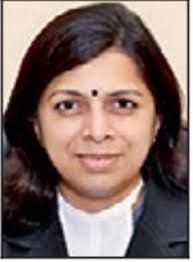
judgeSearches conducted at the residence of the judge, Rachna Tiwari Lakhanpal, led to the recovery of Rs 94 lakh in cash, two locker keys and several documents.

Rachna, the senior civil judge (West) of Tis Hazari courts in Delhi, had appointed lawyer Vikas Mehal as the local commissioner for conducting an inspection of a disputed property and submitting a report.

The lawyer is claimed to have demanded a bribe of Rs two lakh for himself and Rs 20 lakh for the judge for deciding the matter in the favour of complainant, CBI sources said. As an initial payment, Rs five lakh was to be paid by the complainant.

After the complainant approached the CBI, the investigators laid a trap. The lawyer was caught red-handed while reportedly accepting Rs five lakh as bribe on behalf of the judge.

“The advocate disclosed that the bribe amount was meant to be handed over to the said judge. Subsequently, the bribe money was delivered by the advocate to the judge at her residence, out of which she kept Rs four lakh and gave Rs one lakh to the advocate,” a CBI statement said. The bribe money of Rs five lakh was recovered by the CBI.

During investigation, the involvement of Rachna's husband, Alok Lakhanpal, came to the fore and he was also arrested along with Mehal.

Rachna was presented before Judge Sanjeev Aggarwal, who sent her to judicial custody till October 13, while her husband and the lawyer were sent to two-day CBI custody. The judge's bail application will be heard on October 3.

During the hearing, the CBI told the court that a complaint was received against Rachna on September 27, and she was arrested while accepting Rs 4 lakh from the advocate.

Comments

Satyameva jayate
 - 
Saturday, 1 Oct 2016

Naren......your sister in trouble....any joky defence statement...?

suleman byari
 - 
Saturday, 1 Oct 2016

Narain kotian sister. 25K vs 9400K.

Mohammed Rafique
 - 
Friday, 30 Sep 2016

Judges who are hearing cauvery dispute also should be probed for the truth

Can't trust anyone

Ahmed K. C.
 - 
Friday, 30 Sep 2016

The phrase \We have faith in Indian judiciary system\" can not be quoted anymore."

Add new comment

  • Coastaldigest.com reserves the right to delete or block any comments.
  • Coastaldigset.com is not responsible for its readers’ comments.
  • Comments that are abusive, incendiary or irrelevant are strictly prohibited.
  • Please use a genuine email ID and provide your name to avoid reject.
Agencies
January 22,2020

Ahmedabad/New Delhi, Jan 22: Interpol has issued a Blue Corner Notice seeking information about controversial self-styled godman Nithyananda, who fled the country amid allegations of wrongful confinement of children, officials said on Wednesday.

A Blue Corner Notice is issued by the international police cooperation body to collect additional information from its member countries about a person's identity, location or activities in relation to a crime.

The Gujarat Police had sent a request to the CBI, the nodal body for Interpol matters in India, seeking a Blue Corner Notice against Nithyananda, the officials said.

"Interpol issued the Blue Corner Notice against the controversial godman this month," Deputy Superintendent of Police, Ahmedabad (rural), K T Kamariya, told PTI.

The police said they are now working to get Interpol to issue a Red Corner Notice, a global arrest warrant, against Nithyananda.

The Gujarat Police had registered an FIR against Nithyananda after two girls went missing from his ashram in Ahmedabad.

He was charged with kidnapping and wrongful confinement of children to make them collect donations from followers to run his ashram.

Nithyananda was earlier declared wanted by the Gujarat Police.

While police continue to look for him, reports emerged in December last year that he has created a Hindu nation, Kailaasa, with its own flag and political setup, on an island near Ecuador.

Comments

Add new comment

  • Coastaldigest.com reserves the right to delete or block any comments.
  • Coastaldigset.com is not responsible for its readers’ comments.
  • Comments that are abusive, incendiary or irrelevant are strictly prohibited.
  • Please use a genuine email ID and provide your name to avoid reject.
Media Release
February 14,2020

Veteran journalist P. Sainath has said that the nation is in a crisis. And this crisis is not limited to just the rural area. It has become a national crisis at various areas such as agriculture, education, economy, job creation etc.

He was delivering the endowment lecture on the topic ‘Indian democracy at the post-liberalization and post-truth era’ at Media Manthan 2020 organized by the PG department of journalism and mass communication at St Aloysius College (Autonomous). 

Mr Sainath said that the many policies adopted in the 90s led to India becoming unusually unequal. Referring to the speech Ambedkar had made at the Constituent Assembly while handing over the draft of the Constitution, Mr Sainath said, “Ambedkar had warned about the weakness of Indian democracy that liberty without equality allows the supremacy of a few over the multitude. Liberty, equality and fraternity must be kept together as we cannot have one without the other.” 

Mr Sainath stated that the agrarian crisis was no longer about the loss of productivity, employment or about farmer suicide; it was a societal, civilizational crisis. Commenting on the lopsided policies such as cow-slaughter ban, he explained how cow slaughter ban had adversely affected many industries due to their interdependency. While Muslims who slaughtered cows were rendered helpless, the cattle traders who were mostly OBCs lost their earnings as the cattle prices crashed. An important industry like Kolhapur sandals industry in Maharashtra went bankrupt as a result of the cow slaughter ban in Maharashtra. He said the policymakers had no idea how the rural industries were interconnected. Demonetisation too devastated the rural economy as 98 percent of rural transactions happen through cash. 

Mr Sainath also spoke about the crisis of inequality which affects the Dalits and the Adivasis far more than anyone else as 90 percent of the rural households take home less than Rs 10,000/- per month. “Women are yet another group whose labour is never counted in the gross domestic product. Women and girls globally do unpaid work which amounts to about 12.5 billion working hours per year. Monetarily speaking, this is worth 10.8 trillion dollars,” Mr Sainath added. 

Speaking about the crisis of jobs Mr Sainath said that major companies were laying off employees just to create more profits for the investors and the adoption of artificial intelligence in the industry would further destroy millions of jobs.

Rector of St Aloysius College Institutions Fr Dionysius Vaz SJ, Principal Dr (Fr) Praveen Martis SJ, HOD of Journalism and Mass Communication department Dr (Fr) Melwyn Pinto SJ were present.

‘Veerappan and Vijay Mallya’s business models are interesting!’

Addressing the gathering during his endowment lecture on Friday, Mr Sainath made an interesting comment on the so called ‘revenue model’. “Whenever I visit IIMs and IITs for lectures on my PARI project, the students there ask me what my revenue model for my project is. I tell them that I do not have a revenue model. In fact, journalism does not begin with a revenue model. Gandhiji, Ambedkar, Bhagat Singh were all great journalists. But they did not have a revenue model,” Mr Sainath said.

On a lighter note, he said that the best revenue model that he liked was that of forest brigand Veerappan and liquor baron Vijay Mallya. “Veerappan ruled the forest for forty years and from the top ministers to the villagers he could dictate terms and liver royally. Similarly, Mallya’s revenue model was to steal the banks and run away abroad and live like a king,” Mr Sainath added.

Journalism is not and can never be a business. It is a calling, he opined. While newspaper can be a business, television can be a business, journalism per se cannot be reduced to a business. “Unfortunately today, journalists are recruited on a contract basis and they have no bargaining power; and there are no unions to fight for their cause. Hence, they are at the mercy of the corporate media houses for their survival and are made to write stories that cannot be called journalism,” Mr Sainath said.

Answering a question as to the pressures he faced as a journalist, he said that external pressures from the government or others could be very well handled. It is the internal pressures from once own media house that journalists find it difficult to manage.


Comments

Add new comment

  • Coastaldigest.com reserves the right to delete or block any comments.
  • Coastaldigset.com is not responsible for its readers’ comments.
  • Comments that are abusive, incendiary or irrelevant are strictly prohibited.
  • Please use a genuine email ID and provide your name to avoid reject.
News Network
May 27,2020

In a development which highlights the diversity in the United Kingdom’s legal system, a 40-year-old Muslim woman has become the first hijab-wearing judge in the country.

Raffia Arshad, a barrister, was appointed a deputy district judge on the Midlands circuit last week after 17-year career in law.  

She said her promotion was great news for diversity in the world’s most respected legal system. She hopes to be an inspiration to young Muslims.

Ms Arshad, who grew up in Yorkshire, north England, has wanted to work in law since she was 11.

Ms Arshad said the judicial office was looking to promote diversity, but when they appointed her they did not know that she wore the hijab.

‘It’s definitely bigger than me,” she told Metro newspaper. "I know this is not about me.

"It’s important for all women, not just Muslim women, but it is particularly important for Muslim women."

Ms Arshad, a mother of three, has been practising private law dealing with children, forced marriage, female genital mutilation and other cases involving Islamic law for the past 17 years.

She was the first in her family to go to university and has also written a leading text on Islamic family law.

Although the promotion by the Lord Chief Justice was welcome news for her, Ms Arshad said the happiness from other people sharing the news was “far greater”.

“I’ve had so many emails from people, men and women," she said.

"It’s the ones from women that stand out, saying that they wear a hijab and thought they wouldn’t even be able to become a barrister, let alone a judge."

Ms Arshad is regularly the subject of discrimination in the courtroom because of her choice to wear the hijab.

She is sometimes mistaken for a court worker or a client.

Ms Arshad said that recently she was asked by an usher whether she was a client, an interpreter, and even if she were on work experience.

“I have nothing against the usher who said that but it reflects that as a society, even for somebody who works in the courts, there is still this prejudicial view that professionals at the top end don’t look like me,” she said.

A family member once advised her to not wear a hijab at an interview for a scholarship at the Inns of Court School of Law in 2001, warning that it would affect her chances of landing the role.

“I decided that I was going to wear my headscarf because for me it’s so important to accept the person for who they are," Ms Arshad said.

"And if I had to become a different person to pursue my profession, it’s not something I wanted.”

The joint heads of St Mary’s Family Law Chambers said they were “delighted” to hear the news of her appointment.

“Raffia has led the way for Muslim women to succeed in the law and at the bar, and has worked tirelessly to promote equality and diversity in the profession,” Vickie Hodges and Judy Claxton said.

“It is an appointment richly deserved and entirely on merit, and all at St Mary’s are proud of her and wish her every success.”

Comments

Add new comment

  • Coastaldigest.com reserves the right to delete or block any comments.
  • Coastaldigset.com is not responsible for its readers’ comments.
  • Comments that are abusive, incendiary or irrelevant are strictly prohibited.
  • Please use a genuine email ID and provide your name to avoid reject.