


Senior judge held for demanding bribe; Rs 94 lakh seized

September 30, 2016

New Delhi, Sep 30: A senior female civil judge, her husband and a lawyer were arrested here on Thursday on charges of demanding a bribe of Rs 22 lakh from a person to settle a complaint in his favour.
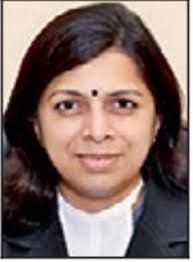
judgeSearches conducted at the residence of the judge, Rachna Tiwari Lakhanpal, led to the recovery of Rs 94 lakh in cash, two locker keys and several documents.

Rachna, the senior civil judge (West) of Tis Hazari courts in Delhi, had appointed lawyer Vikas Mehal as the local commissioner for conducting an inspection of a disputed property and submitting a report.

The lawyer is claimed to have demanded a bribe of Rs two lakh for himself and Rs 20 lakh for the judge for deciding the matter in the favour of complainant, CBI sources said. As an initial payment, Rs five lakh was to be paid by the complainant.

After the complainant approached the CBI, the investigators laid a trap. The lawyer was caught red-handed while reportedly accepting Rs five lakh as bribe on behalf of the judge.

“The advocate disclosed that the bribe amount was meant to be handed over to the said judge. Subsequently, the bribe money was delivered by the advocate to the judge at her residence, out of which she kept Rs four lakh and gave Rs one lakh to the advocate,” a CBI statement said. The bribe money of Rs five lakh was recovered by the CBI.

During investigation, the involvement of Rachna's husband, Alok Lakhanpal, came to the fore and he was also arrested along with Mehal.

Rachna was presented before Judge Sanjeev Aggarwal, who sent her to judicial custody till October 13, while her husband and the lawyer were sent to two-day CBI custody. The judge's bail application will be heard on October 3.

During the hearing, the CBI told the court that a complaint was received against Rachna on September 27, and she was arrested while accepting Rs 4 lakh from the advocate.

Comments

Satyameva jayate
 - 
Saturday, 1 Oct 2016

Naren......your sister in trouble....any joky defence statement...?

suleman byari
 - 
Saturday, 1 Oct 2016

Narain kotian sister. 25K vs 9400K.

Mohammed Rafique
 - 
Friday, 30 Sep 2016

Judges who are hearing cauvery dispute also should be probed for the truth

Can't trust anyone

Ahmed K. C.
 - 
Friday, 30 Sep 2016

The phrase \We have faith in Indian judiciary system\" can not be quoted anymore."

Add new comment

  • Coastaldigest.com reserves the right to delete or block any comments.
  • Coastaldigset.com is not responsible for its readers’ comments.
  • Comments that are abusive, incendiary or irrelevant are strictly prohibited.
  • Please use a genuine email ID and provide your name to avoid reject.
News Network
July 3,2020

Bengaluru, Jul 3: Over 35 acres of land in nine villages on the outskirts of Bengaluru have been earmarked for burial and cremation of bodies of COVID-19 victims after concerns were raised over the safety of funerals being held in burial grounds located in residential areas.

Deputy Commissioner of Bengaluru Urban District GN Shivamurthy issued an order setting apart about 35.5 acres in the villages under four Taluks of Bengaluru North, Bengaluru South, Anekal and Yelahanka.

The order directed the respective Tahsildars to register these chunks of land as reserved for burial grounds and not to use for any purpose.

According to the sources in the district administration, Karnataka Health Minister B Sriramulu and Revenue Minister R Ashoka had directed the officials to identify places on the city outskirts to dispose of the bodies of COVID-19 victims.

Mr Sriramulu had on Wednesday said COVID-19 victims will not be laid to rest in burial grounds in the city and separate places will be earmarked on the outskirts in the backdrop of safety concerns raised by public.

He had also warned against unscientific disposal of used Personal Protection Equipment kits worn by the families of the victim for the final rites, referring to reports about such instances.

In some places, people have also expressed concern over bodies of those who died of the coronavirus being buried in their neighbourhood.

Comments

Add new comment

  • Coastaldigest.com reserves the right to delete or block any comments.
  • Coastaldigset.com is not responsible for its readers’ comments.
  • Comments that are abusive, incendiary or irrelevant are strictly prohibited.
  • Please use a genuine email ID and provide your name to avoid reject.
News Network
June 30,2020

Bengaluru, Jun 30: To instill confidence among its commuters, the Karnataka State Road Transport Corporation (KSRTC) has decided to put stamp on hand of all passengers before they are allowed to board the buses.

In a statement issued here on Tuesday, The decision was taken in the wake of a sudden jump in the number of COVID-19 cases reported from Bengaluru.

The round stamp is, however, different from 'home-quarantine' stamp applied to infected and they were not allowed to travel. Officials said that the measure is aimed at reassuring passengers that those travelling with them do not have symptoms. The left hand will be stamped with an ink which can be washed away by the time they reach home.

Comments

Add new comment

  • Coastaldigest.com reserves the right to delete or block any comments.
  • Coastaldigset.com is not responsible for its readers’ comments.
  • Comments that are abusive, incendiary or irrelevant are strictly prohibited.
  • Please use a genuine email ID and provide your name to avoid reject.
Media Release
March 12,2020

Manipal, Mar 12: Team WGSHA is proud to announce that the culinary museum in WGSHA has been listed in Limca Book of Records as India's First Living Culinary Arts Museum.

Limca Book of Records (LBR) is a catalogue of achievements made by Indians, at home and abroad in diverse fields of human endeavour. LBR is a celebration of exemplary exploits and recognizes accomplishments such as firsts, inventions, discoveries, honours, awards and the truly extraordinary.

Chef Thirugnanasambantham, Principal of WGSHA, while thanking MAHE and ITC Leadership for extending all support towards instituting this museum in Manipal and WGSHA, also appreciated and thanked all those who have directly or indirectly helped towards setting up this museum in Manipal.

"The process for WGSHA's culinary museum to make an entry into the popular Limca Book of Records started almost six months back and after validation by LBR recently, has been listed in the book of records. We are glad that we could be the first of its kind in such endeavour and we also hope to be in Guinness World Records soon", said Chef Thiru.

"We are indeed grateful to Michelin-starred Indian celebrity Chef Vikas Khanna, the founder and curator of this museum, who had this idea of establishing a culinary museum and donated thousands of kitchen tools and equipment worth millions of dollars to this museum for preserving the history of India's rich tradition of culinary arts and to educate the future generations. Chef Vikas Khanna, 'Distinguished Alumnus' of WGSHA, being very desirous of making such a museum in India, what better place it would be than in his own Alma Mater!", he said on the background of having the museum.

Chef Thiru mentioned that Udupi, popular for the famous 'Udupi Cuisine', and being a temple town, is adjacent to International University Town of Manipal Academy of Higher Education (MAHE).

MAHE is home to thousands of international students and visitors. With a great heritage of Udupi, combined with the large number of Indian and International students residing in and around Manipal, it was very apt for the college to create a museum for today's Indian youth and the International visitors to understand the rich culinary heritage of India, through the priceless kitchen tools and equipment donated by Chef Vikas Khanna.

"Has placed WGSHA in the global culinary map and we are proud to have joined all such efforts to preserve the history of cuisines and cultures across the world", said Chef Thiru.

The culinary art academic block housing the museum was opened in April 2018, spread approximately over 25,000 sq ft and is shaped in the form of a giant pot very similar to the ones found in Harappa.

There are historical as well as regular household items such as plates made by the Portuguese in India, a 100-year-old ladle used to dole out food at temples and bowls dating to the Harappan era, an old seed sprinkler, an ancient Kashmiri tea brewer known as 'samovar', vessels from the Konkan, Udupi and Chettinad regions, apart from a large collection of rolling pins, utensils of all shapes and sizes, tea strainers of different types etc.

Comments

Add new comment

  • Coastaldigest.com reserves the right to delete or block any comments.
  • Coastaldigset.com is not responsible for its readers’ comments.
  • Comments that are abusive, incendiary or irrelevant are strictly prohibited.
  • Please use a genuine email ID and provide your name to avoid reject.